
娄底市 Lóu dǐ shì is a city that only recently learned it was a city. It spent most of its life as a county town under 邵阳 and then 湘潭, and it was made a prefecture-level city in 1999 only because of what lies under the hills – coal, iron and the steelworks that became 涟钢 – which makes it, by the standards of Hunan, a young city with an old hinterland. The centre of it is 娄星区 lóu xīng qū, a district of office blocks, department stores and eating houses laid out on the flat ground where the 涟水 Lián shuǐ comes down out of the hills, and the riverside hotels stand in it with their upper floors over the water. What the city has that most county towns do not is a river running through the middle of it with a proper embankment on both banks: 涟水河风光带 lián shuǐ hé fēng guāng dài, the Lianshui riverside belt, a long strip of walkway, trees and lamps that has become the place the whole city goes after dinner.
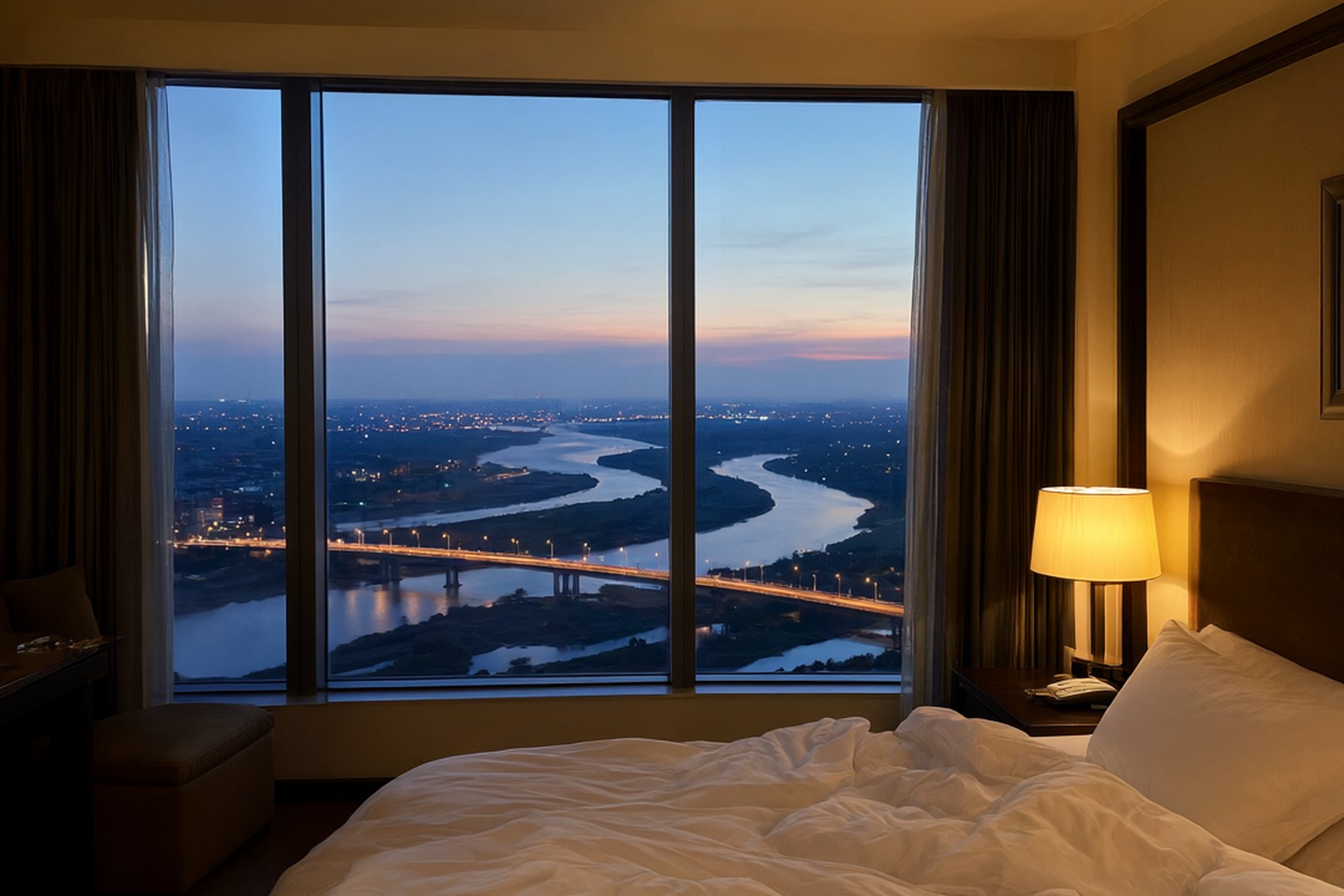
The shape of the place is written by the water. The 涟水 comes in from the north-west past the steelworks, whose stacks are the first thing you see from the train, and the 孙水 Sūn shuǐ comes in from the south-west past the high-speed station; the two meet below the centre and go on east together. Half a dozen bridges cross them inside the built-up area, which is what gives the riverside hotels something to look at – 娄底一大桥 Lóu dǐ yī dà qiáo, the first bridge, rebuilt in 2006 and still the one carrying 娄星南路 over the 涟水; 吉星大桥, the third bridge, out towards the industrial zone; 秋蒲大桥 further downstream. The commercial centre is small and walkable by the standards of a prefecture city – 娄星广场 Lóu xīng guǎng chǎng, the 万豪城市广场 shopping complex, 春园公园 Chūn yuán gōng yuán – and all of it sits within twenty minutes on foot of the river.
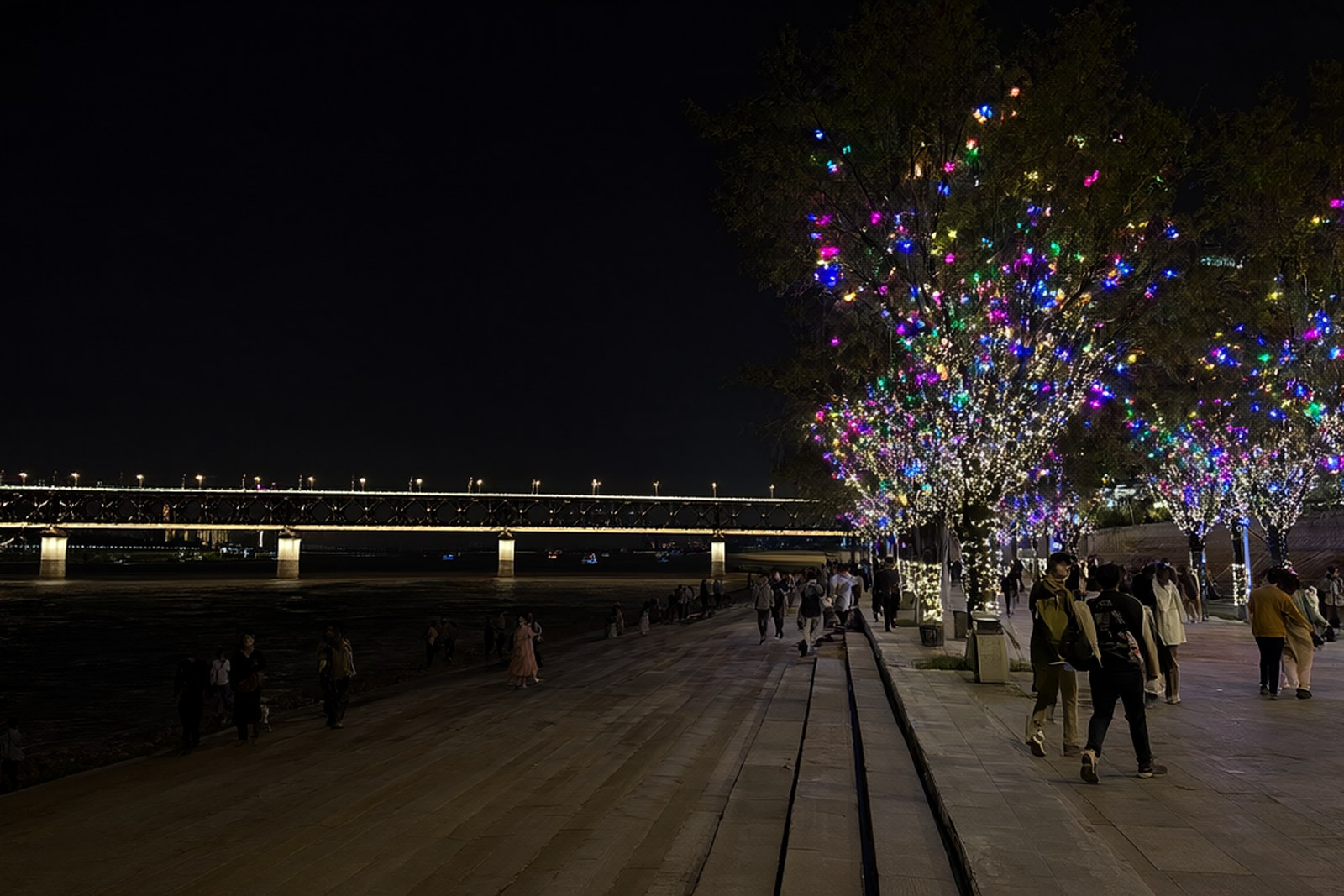
The rest of what the centre offers is the ordinary apparatus of a Chinese prefecture city, and it is better than that sounds. From about six in the evening the 涟水河风光带 fills with families, joggers, old men with radios and children on scooters, and the bridges light up for the length of the walk. Behind it is the shopping and food district, and 娄底 eats its own prefecture: the tripe soup of 新化, the chilli paste of 双峰, the pressed tofu of 白溪, the slow-grown 珠梅 chicken of 涟源 and the cured ducks of 水车 are all on menus in the city even though none of them was invented in it.
Staying in the centre rather than at the edges is the right call here, because 娄底’s own sights are not in 娄底. The prefecture is a ring of counties and county-level cities, and the good things in it are all between one and two hours out by road: the old Zeng family seat at 双峰县 is about an hour east, the 紫鹊界 terraces at 新化县 are roughly two hours the other way, the gorge country at 涟源市 is an hour north, and the cave at 冷水江市, the one that played the Monkey King’s mountain in the 1986 television serial, is an hour down the road. The city is also the prefecture’s transport hub, with the old 娄底站 in the middle of town, the new 娄底南站 out at 万宝镇 on the high-speed line and a bus station beside the shopping centre, so any day out into the counties starts and ends here. You get a high floor, hot water at any hour, a street of restaurants when you come back tired, and a river to walk beside before you go to bed.
What the Rooms Are Like
The hotels are Chinese city towers of a dozen to twenty-five floors, and the taller and newer ones are the ones with the view. Expect a room of twenty-five to thirty-five square metres with a pale tile floor, a big bed or two singles, air conditioning, a kettle and a bathroom with a shower rather than a tub; the upper floors have full-height windows, and on the river side that turns an ordinary room into a good one. The 华天 group runs the better properties in the city and the differences between them matter: one sits on the 涟水 beside the sports centre with the river and 江龙公园 in front of it, one is a twenty-four-storey tower on 长青中街 in the middle of the shopping district, and the newest put the whole city under the window. Below them is a long tail of business hotels and chain branches where a clean double costs a third of the price and looks at a courtyard.
Practicalities
Price. A double in 娄星区 runs about ¥150 to ¥340 a night, with the river-facing rooms on the high floors at the top of that range and the chain branches and older business hotels at the bottom; the city has no holiday season to speak of, so a weekend costs what a Tuesday does.
Address. The riverside hotels are in 娄星区 lóu xīng qū, the central district of 娄底市, along the 涟水河风光带 and the sports centre on the north-east side of the centre; the shopping district around 娄星广场 and 万豪城市广场, the old 娄底站 and the bus station are all within a couple of kilometres, and the high-speed station is out at 万宝镇 to the south-west.
Rooms. Ask for a high floor on the river side and away from the lift lobby, which is the difference between a view of the water and a view of a car park, and ask whether the room faces a bridge, because the riverside roads carry traffic late into the night. Ask the desk to write a county destination in Chinese for a driver, since 双峰, 新化, 涟源 and 冷水江 lie in four different directions out of the city, and ask what time breakfast opens if you are leaving early for the terraces.
Getting there. 娄底南站 Lóu dǐ nán zhàn, the high-speed station on the 沪昆 line, is about fifteen minutes by taxi from the centre and an hour and a half from 长沙南; the older 娄底站 in the middle of town serves the 湘黔 line, and the long-distance bus station is beside the shopping district. The 沪昆 and 娄新 expressways both pass the city, and the nearest airport is 长沙黄花国际机场 Cháng shā huáng huā guó jì jī chǎng, about two hours east by road.
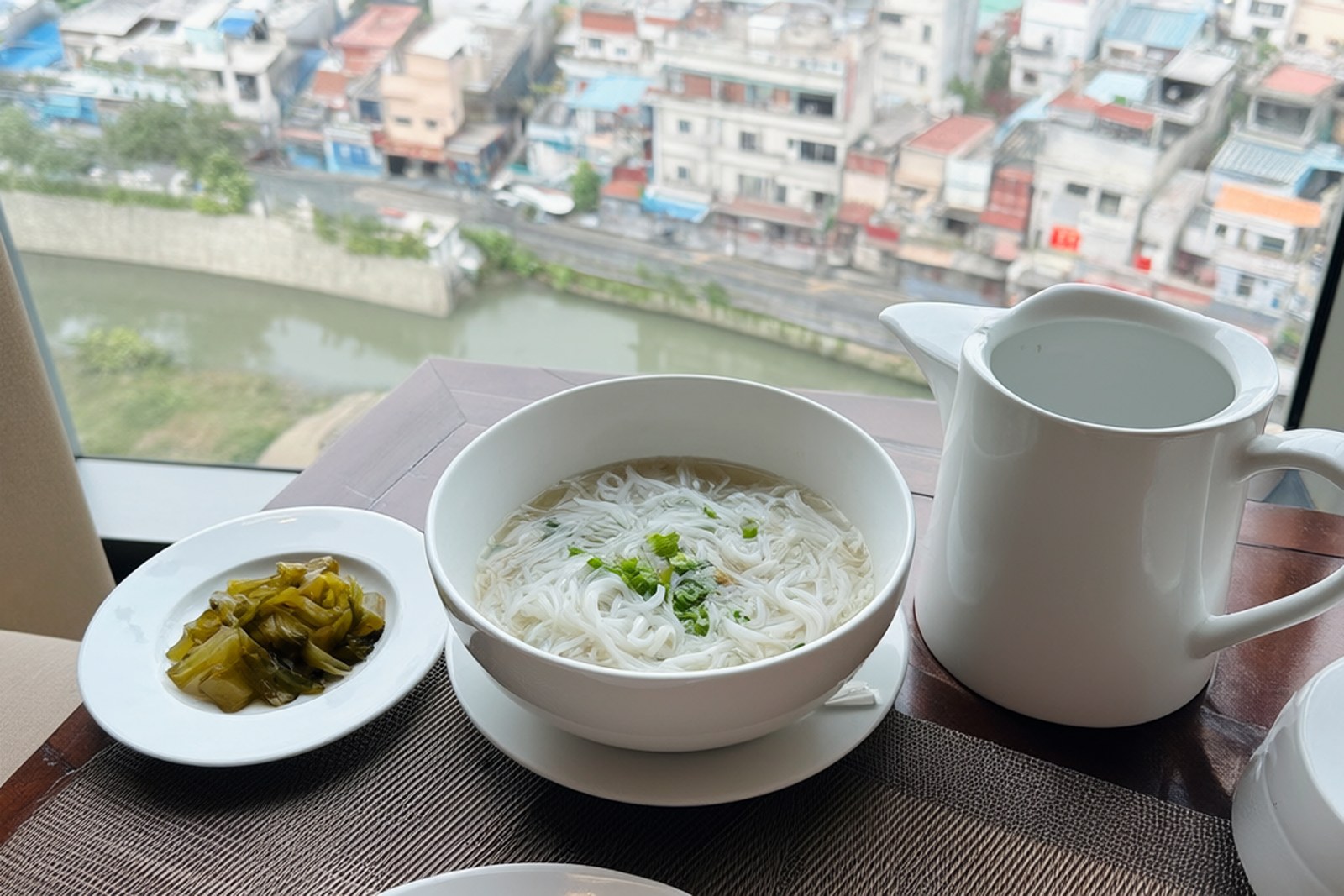
Where to stay: a high-floor room on the river side of a hotel in 娄星区, the centre of 娄底市. Walk the 涟水 embankment at dusk, eat the prefecture’s dishes in the city, and use the room as the base for the counties – 双峰 and the Zeng mansion to the east, the terraces at 新化 to the south-west, 涟源 to the north and the cave at 冷水江 downriver.
flowcloud would say that a city assembled in 1999 out of a steelworks and four counties has ended up with the one thing none of its counties has, which is a river with lights on it and a bed high enough to see the water.