
蹄声入梦,古道犹温。Tíshēng rù mèng, gǔdào yóu wēn – Hoofbeats walk into the dream; the old road is still warm.
The stay in 鲁史古镇 Lǔshǐ Gǔzhèn – old name 阿鲁司 Ālǔsī, a 茶马古道 Chámǎ Gǔdào Tea-Horse Road market town in 凤庆县 Fèngqìng Xiàn Fengqing county, about 84 km and two hours twenty minutes of mountain road from the county seat (worth confirming current driving times) – is the 古镇客栈 gǔzhèn kèzhàn old-town inn: a bed inside what traders called 云南西部茶马古道第一镇 Yúnnán xībù Chámǎ Gǔdào dì yī zhèn ’the first town on the western Tea-Horse Road’. The town was 辟为街场 pì wéi jiēchǎng laid out as a market street in 1598, became a 镇 zhèn town in 1929, and was nicknamed 小上海 Xiǎo Shànghǎi ’little Shanghai’ by the caravanners who wintered here; the layout survives as 三街七巷一广场 sān jiē qī xiàng yī guǎngchǎng three streets, seven lanes and one square of 白墙 báiquáng white-walled, 格窗 géchuāng latticed old houses, and the 楼梯街 Lóutī Jiē Stair Street – 266 metres, 66 steps, a national-protected stretch of the old road with 马蹄印 mǎtíyìn hoof prints worn into the bluestone – still runs through the middle. The lodging is not a hotel quarter but a street: a handful of family 客栈 kèzhàn converted out of the old street houses and 三合院 sānhéyuàn courtyard compounds, plus village homestays out toward 塘房 Tángfáng and 古墨 Gǔmò, and the honest shape is a working market town that still holds its daily 集市 jíshì – you sleep inside the history, and the 赶集 gǎnjí morning is the alarm clock.

The October 2026 snapshot runs three bands: basic rooms in old street houses and village homestays about 80-150 yuan, renovated courtyard inns with private bathrooms about 150-300, and the town’s few styled old-house stays about 300-500 yuan (worth confirming – a thin market of perhaps a dozen rooms in total, whose peak is the spring tea season and the 国庆 Guóqìng holiday, when the lanes fill with day trippers from 凤庆 Fèngqìng and 临沧 Líncāng). The cheap end is a plain room in a converted house – clean, thin-walled, stairs only, sometimes a shared bathroom; the middle band buys the private bathroom, the 天井 tiānjǐng courtyard and the tea on the 晒台 shàitái terrace; the top band buys the restored compound itself. What every band buys is the evening – the lanes after the buses leave, the empty 楼梯街 Lóutī Jiē, the ridge-line sunset. Who it suits: slow travellers, Tea-Horse Road walkers and 滇红 Diānhóng travellers pairing the town with the 凤庆 Fèngqìng tea villages; who it does not suit: anyone who needs a lift, a gym or dinner after 9 p.m. – the kitchens close early and the lanes are stepped stone.
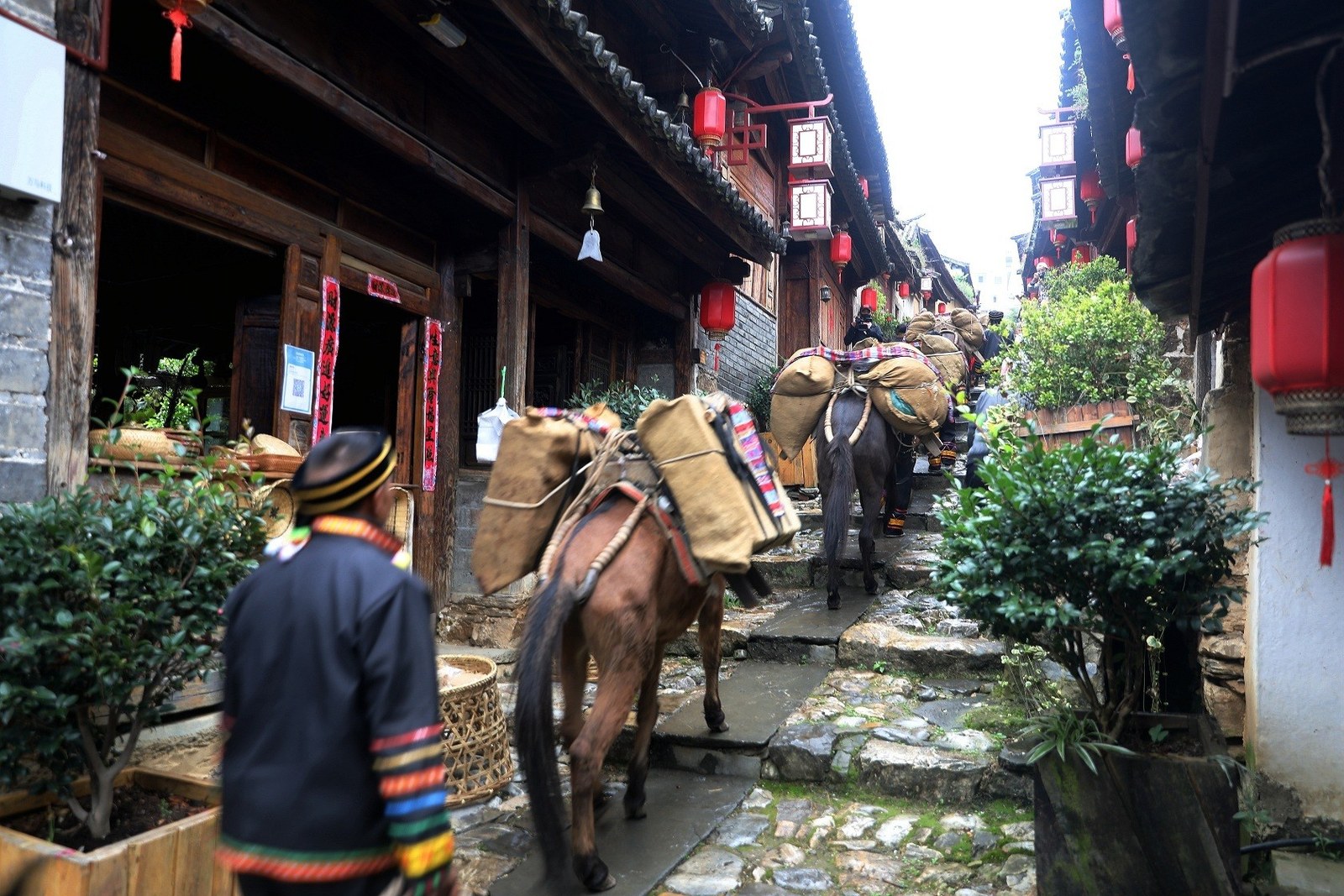
Practical shape: 鲁史 Lǔshǐ is a one- or two-night stay, best reached by car or charter from 凤庆县城 Fèngqìng Xiànchéng – about 84 km and two hours twenty minutes (worth confirming the details) – or by the daily county bus to the 鲁史 Lǔshǐ stop; the nearest rail is 云县站 Yúnxiàn Zhàn, 35 km and about 35 minutes from 凤庆县城 Fèngqìng Xiànchéng (worth confirming current services), and 凤庆 Fèngqìng itself is about two hours from 临沧 Líncāng city (worth confirming the details). Pair the town with the 凤庆文庙 Fèngqìng Wénmiào Confucian temple and the 青龙桥 Qīnglóng Qiáo Green Dragon Bridge in the county town (15 minutes out), the stone village of 塘房 Tángfáng 14.5 km away and 古墨 Gǔmò 28 km the other way. The honest season is spring and autumn – March and April bring the tea buyers, autumn the clear light; the town sits high and the winter nights are cold (worth confirming the details). Check the three things old-house rooms get wrong: 24小时热水 èrshísì xiǎoshí rèshuǐ hot water, 隔音 géyīn – wooden houses carry sound – and heating for the cold mornings. Bring flat shoes, cash for the market stalls, and taste the town’s 火腿 huǒtuǐ ham, 臭豆腐 chòudòufu and 风肝 fēnggān before you buy any to take home. worth confirming band prices in the week you book – the room count is small. All checked October 2026.
The Stays
- 老街庭院客栈 lǎojiē tíngyuàn kèzhàn old-street courtyard inns: about 100-250 yuan (worth confirming the details), twins and kings rebuilt inside the street houses and 三合院 sānhéyuàn compounds along 楼梯街 Lóutī Jiē and the side lanes, stone stairs, thin walls, the market at the door. Who it suits: travellers who will walk the empty lanes at 6 a.m. and again at dusk; who it does not suit: anyone with wheeled luggage, a bad knee or a quiet-night requirement – the honest trade is the house against the hardware.
- 巷内精品民宿 xiàng nèi jīngpǐn mínsù designed old-town guesthouses: about 250-400 yuan (worth confirming the details), renovated compounds with private bathrooms, 茶室 cháshì tea rooms and terrace views over the roof tiles. Who it suits: couples and design-conscious solo travellers who want the atmosphere with a working shower; who it does not suit: purists who want an unpolished market town – these are styled, and they show it.
- 塘房古墨村寨农家 Tángfáng Gǔmò cūnzhài nóngjiā village homestays toward Tangfang and Gumo: about 80-150 yuan (worth confirming the details), family rooms in the stone-and-tile villages 14 to 28 km out, farm food and 核桃 hétáo walnut groves. Who it suits: self-drivers and walkers doing the old-road loop; who it does not suit: travellers without a car – the villages sit off the bus lines and dinner is on site or nowhere.
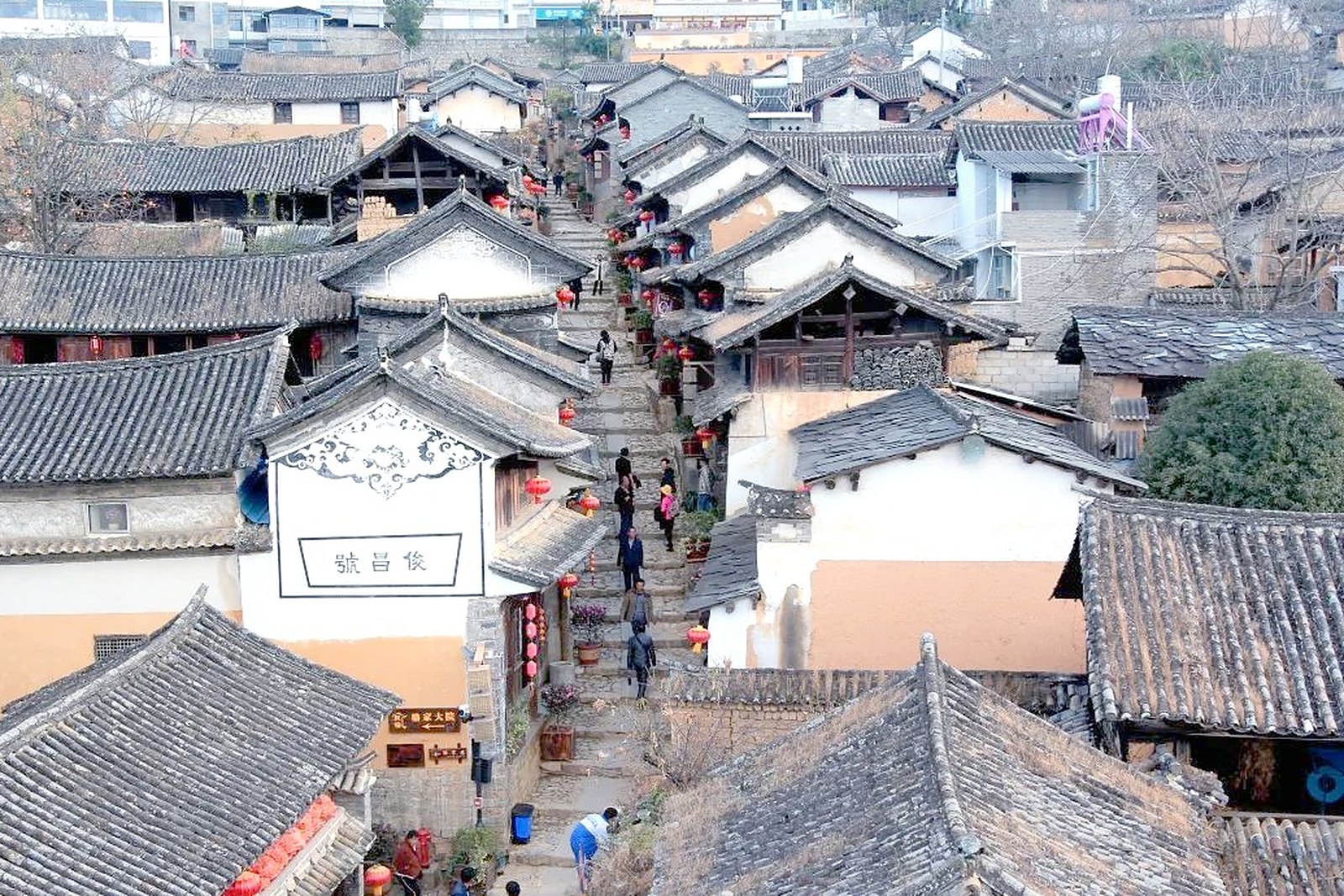
flowcloud would say that the Lushi stay is a stone house with a tea set in it – 80 yuan lane room to 400 for the restored 三合院 sānhéyuàn courtyard in the October 2026 snapshot – and that the honest move is to sleep inside the 三街七巷 sān jiē qī xiàng, walk 楼梯街 Lóutī Jiē before the market wakes and drive the 塘房 Tángfáng stone-village loop, because the old road is the amenity and 凤庆县城 Fèngqìng Xiànchéng is the hardware. All checked October 2026.
Where to stay: the old street along 楼梯街 Lóutī Jiē and the side lanes for the courtyard 客栈 kèzhàn, the renovated compounds for the designed guesthouses, and the villages toward 塘房 Tángfáng and 古墨 Gǔmò for the farm stays (worth confirming the details); the old town is walked, not driven, and the honest plan is a night for the dawn street. All checked October 2026.