
You wake up at a quarter past five because the window has gone white. Not bright — white, evenly and completely, as though someone had laid a sheet of paper across the glass. It takes a minute to understand that the room is not foggy, the forest is: a sea of cloud has come up the valley in the night and the cabin is now floating in the middle of it, with the tops of the firs sticking out like the masts of a drowned fleet. You open the door and the cloud comes in past your ankles, cold and slightly damp and smelling of pine bark. Somewhere below, invisible, a river is running. This is what people come to 莽山 Mǎngshān for, and the accommodation that lets you experience it properly is a scatter of timber rooms in the fir belt between 900 and 1,400 metres, in the hills of 宜章县 Yízhāng Xiàn on the Guangdong border.
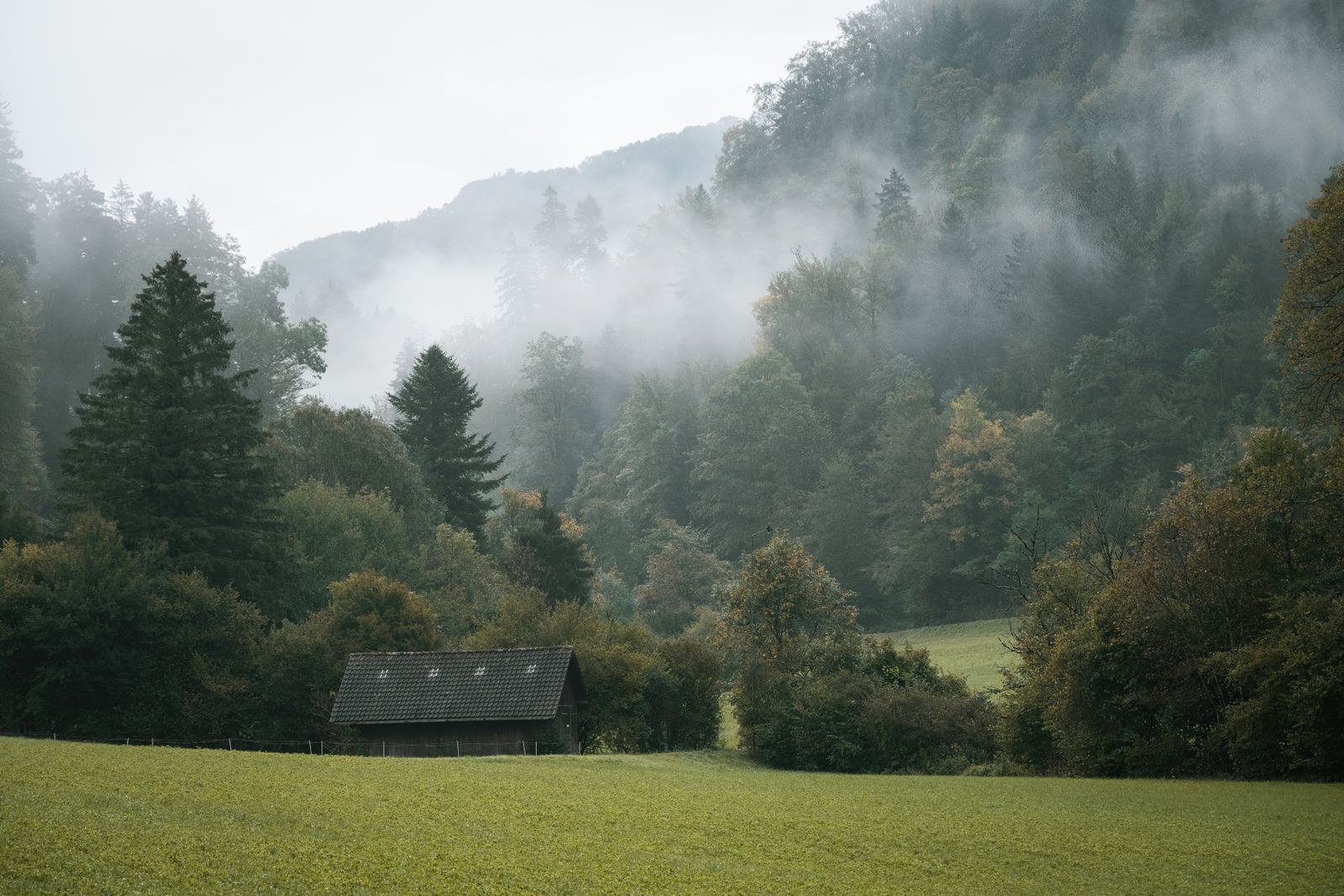
The mountain is not a single peak but a massif of more than 150 summits over a thousand metres, with the highest, 猛坑石 Měngkēngshí, at 1,902 metres — the highest point in southern Hunan, and high enough that the temperature at the cabins is routinely eight degrees below the town. It is marketed as 中国原始生态第一山 Zhōngguó yuánshǐ shēngtài dì yī shān, the best-preserved primeval forest at its latitude in China, and the claim survives scrutiny: the core of the reserve has never been logged, and it holds the 莽山烙铁头 Mǎngshān làotiětóu, the Mangshan pit viper, which was only described by science in 1990 and is one of the largest vipers in the world. You will not see one. You will be told about it roughly nine times.
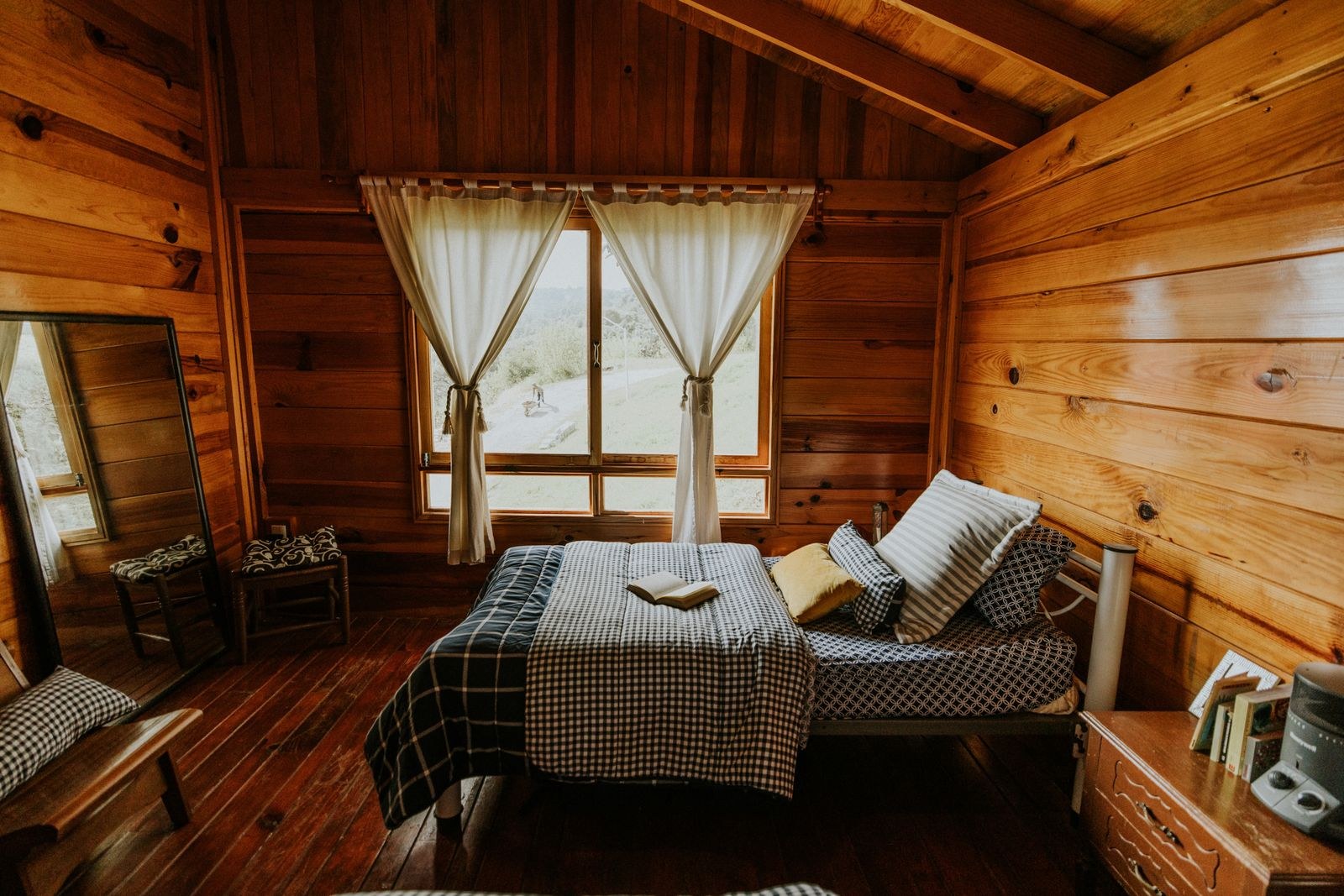
The cabins themselves fall into two kinds. The older ones, clustered around the 瑶族乡 Yáozú xiāng settlements, are converted farmhouses: thick walls, wooden floors, a coal brazier in winter and a bathroom bolted on in the 2010s. The newer ones sit inside or at the edge of the scenic area and are purpose-built, with large windows facing the valley, underfloor heating and prices to match. Both are wooden, both smell of timber, and the difference between them is mostly a matter of whether you want the cloud at your window or the village at your door.
Practicalities
Price. Village farmhouse rooms run ¥180 to ¥350 for a double in the shoulder seasons; purpose-built forest lodges inside the reserve run ¥500 to ¥1,200, and ¥900-plus on the October holiday and the May cherry-blossom weeks. Winter, when the mountain gets its occasional snow, is the cheapest and arguably the most beautiful.
Address. The lodging is spread across 宜章县莽山瑶族乡 Yízhāng Xiàn Mǎngshān Yáozú Xiāng, with the heaviest concentration along the road from the park gate to the 五指峰 Wǔzhǐfēng cable-car station. There is no single street; you book a property, not a location.
Rooms. Expect wooden walls, a firm bed, a kettle, a private bathroom with instant hot water and a wifi signal that works in the communal areas and not in the far cabins. The best rooms have south-facing windows above the cloud line. The worst have a window onto the back of another cabin, which is worth asking about in advance.
Getting there. From 郴州 Chēnzhōu, take a train or bus to 宜章 Yízhāng and then a minibus or taxi to 莽山镇 Mǎngshān Zhèn — about two hours door to door. Driving is easier: the G4 and then the county road, roughly 80 kilometres from 郴州西站 Chēnzhōu Xī zhàn by car.
flowcloud would say that the point of staying on the mountain rather than in the town is entirely about the two hours after dawn, when the cloud is below you and the tour buses are still an hour away.
Where to stay: book a lodge inside the reserve if the cloud sea is the reason for your trip, and a village farmhouse if you would rather eat with a Yao family and pay half as much. Ask specifically for a room above 1,000 metres; below that, the cloud almost never reaches you.