
茂名市 Mào míng shì is a city that exists because of a rock that burns, and the evidence is still in the middle of it. The 小东江 Xiǎo dōng jiāng runs through the built-up area in a channel that has been cleaned up and planted along both banks, the streets behind it are the ordinary streets of a Chinese prefecture-level city, and ten minutes’ drive out of the centre is a lake six kilometres across that was a hole in the ground forty years ago. A city hotel here means a tower in the 茂南区 Mào nán qū district with the river or the main roads below the window, and it means being within a taxi ride of both the oil town’s industrial remains and the coast.
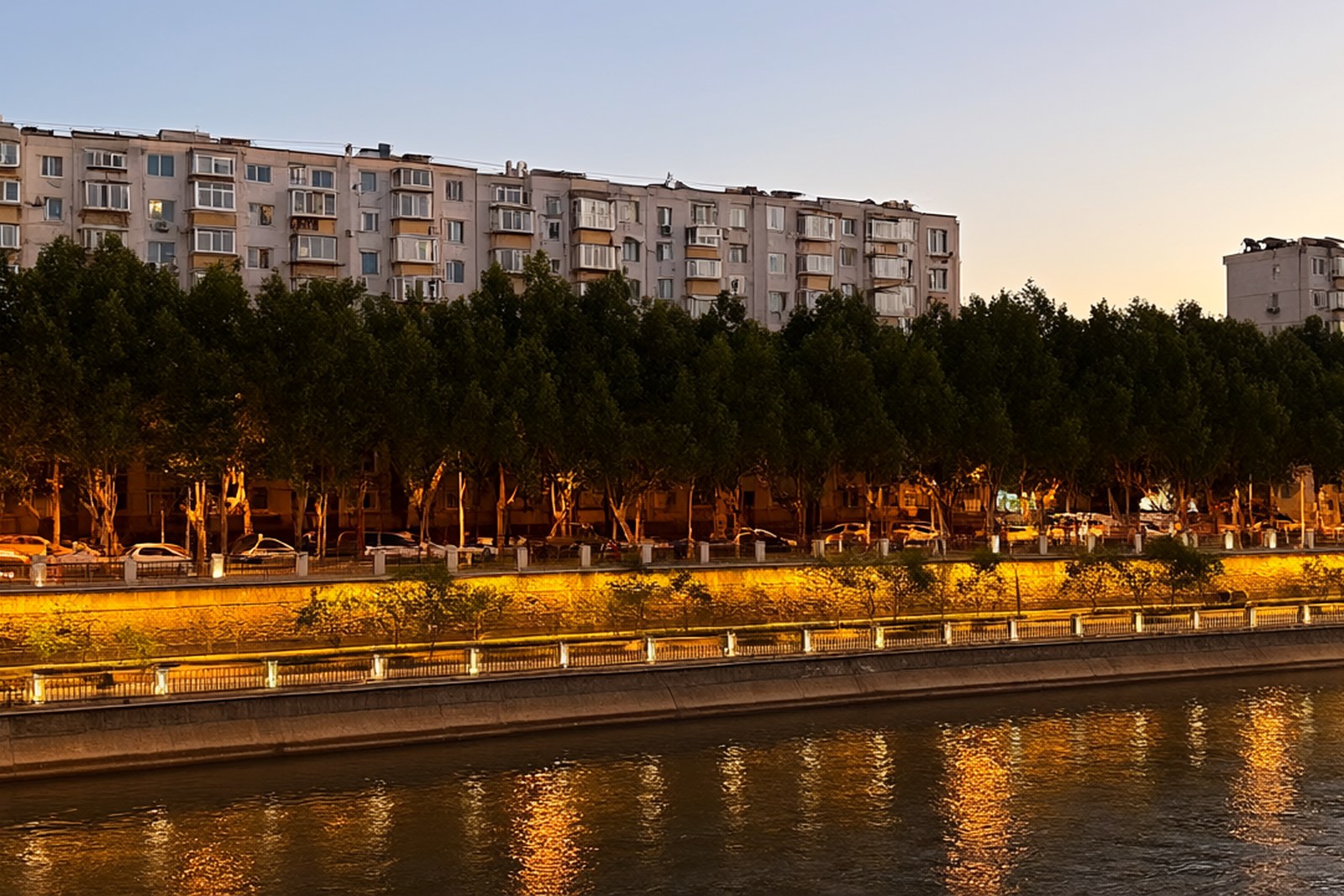
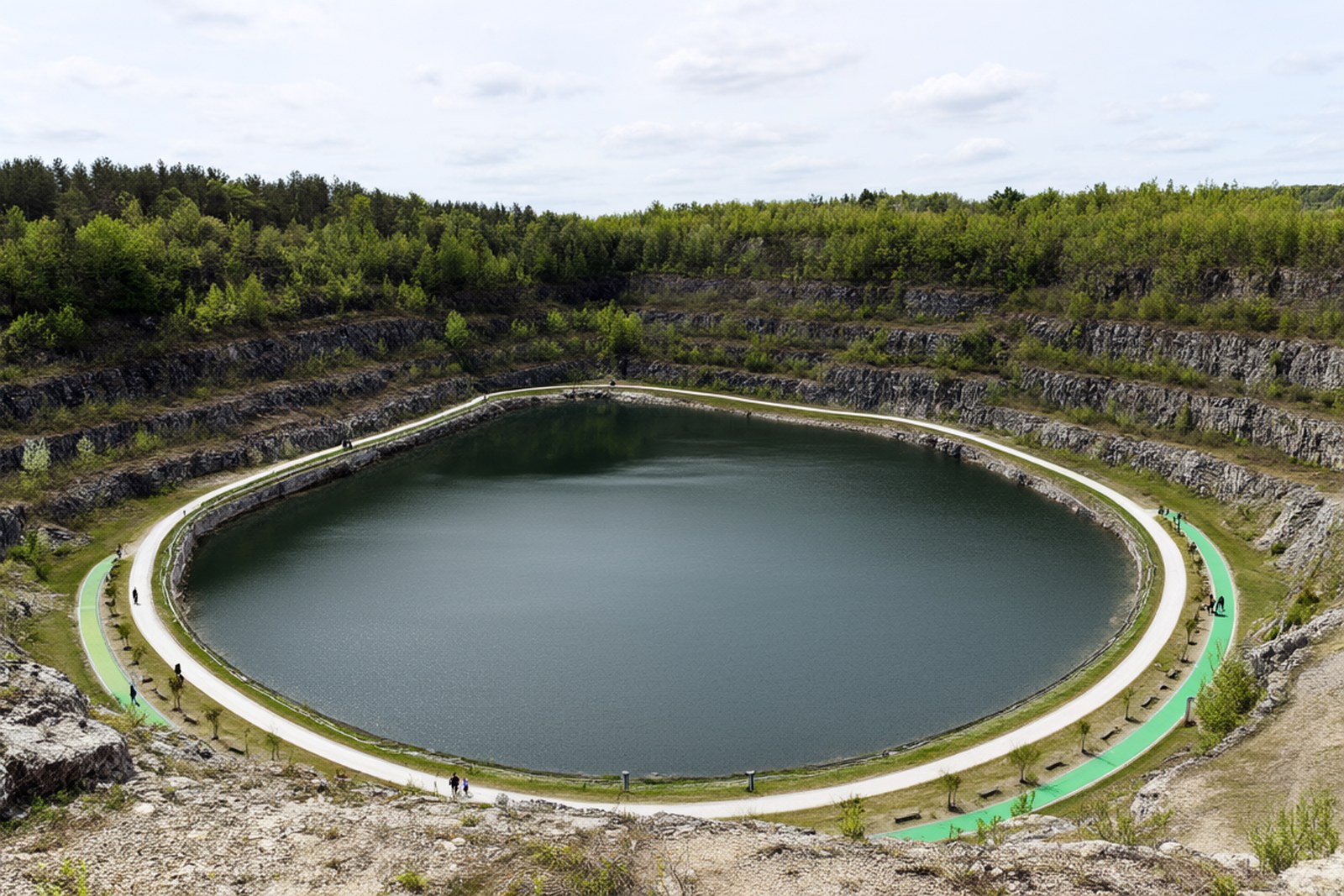
The city’s own account of itself begins in 1953, when a scientist was told by villagers that there was a kind of stone in the ground that could be burned like firewood. It was oil shale, and it could be made to yield petroleum, and at that point in the century’s history a domestic source of oil was worth almost any effort. Prospectors, engineers and their families were moved here through the following years, and the 露天矿 lù tiān kuàng, the open-cast mine, went into production in 1962 and ran for thirty years. In that time it produced around a hundred and two million tonnes of oil shale and some two hundred and ninety-two thousand tonnes of shale oil, and it left behind a pit of more than six square kilometres whose floor lay a hundred metres below the original ground level. The mine shut in 1992. What it left behind was described, for a long time, as the city’s scar.
What happened next is the reason to stay here rather than in a hotel by the coast. In 2013 the city decided against going after the ore that remained under the pit floor, which was estimated to be worth more than a hundred billion yuan, and in favour of filling the hole with water. Water was brought down from the reservoir above, roads and planting followed, and by 2017 the flooded pit had a name: 好心湖 Hǎo xīn hú, Good Heart Lake, for the shape of it. It is now about six and a half square kilometres of open water with a capacity of a hundred and sixty million cubic metres – larger than 西湖 Xī hú in 杭州 – and a greenway that runs fifteen kilometres around the rim. The spoil heap beside it, built up by hand from 1954 onwards, is a wooded hill; the abandoned workshops have been kept and turned into a museum of the oilfield. It is an hour’s walk or a ten-minute drive from the centre, it is free, and it is the one thing in this city that people from other cities come to see.
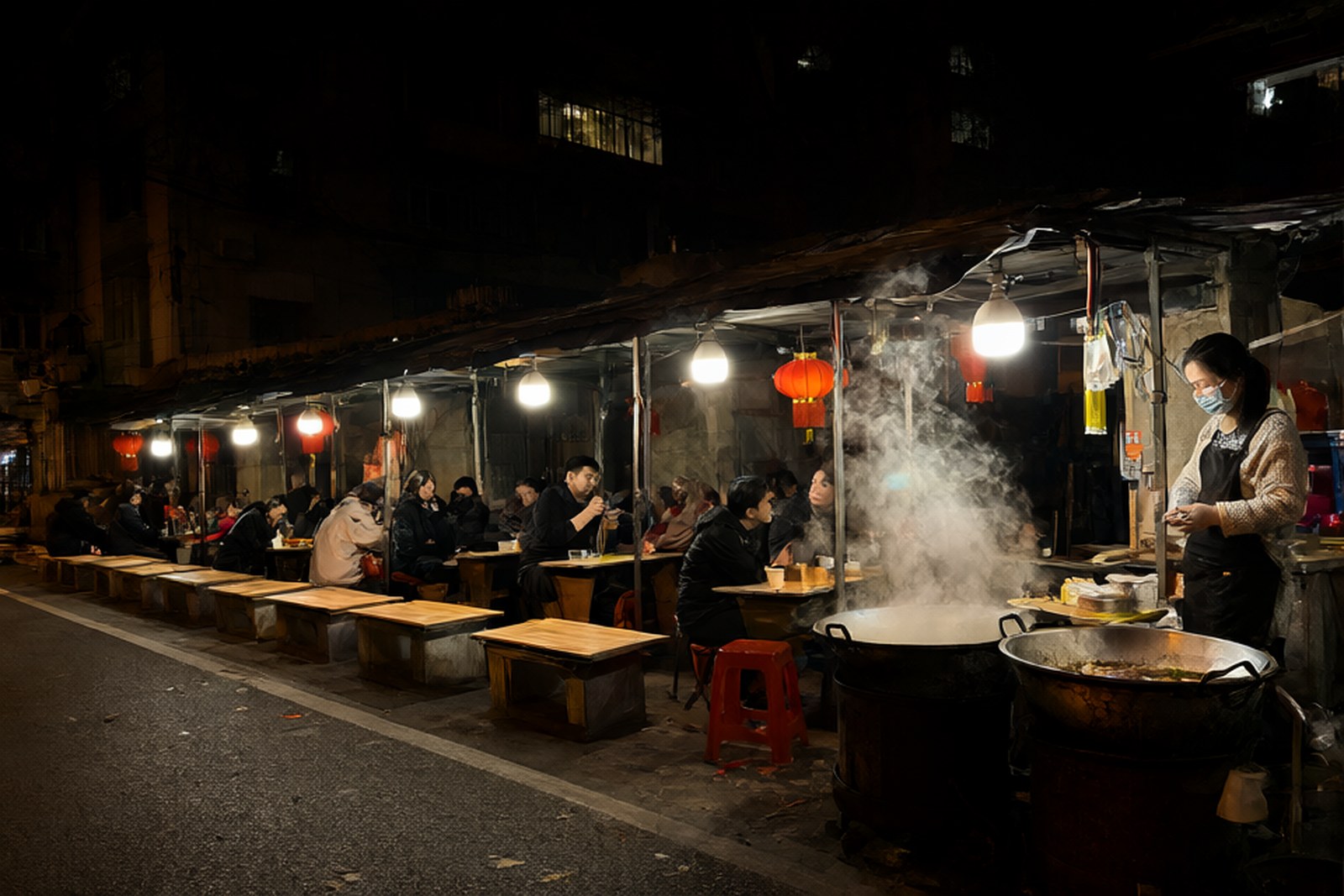
The rest of the town is a working one, and that is part of what you are staying in. 茂名 refines a substantial share of the country’s oil and calls itself 南方油城 nán fāng yóu chéng, the oil city of the south, and the skyline is refinery towers as much as apartment blocks. The compensation is the food: this is the 高凉 Gāo liáng kitchen, the cooking of the old prefecture, which runs on the day’s catch from 电白 and on the fruit of the inland hills, and the city is the largest producer of lychee, longan and banana in the country. 白切鸡, poached chicken cut cold, is the default; the 年例 nián lì banquets that the villages hold through the spring are the local institution; and the seafood is half an hour away in 电白. The city is on the 深湛 railway at 茂名站 Mào míng zhàn, which puts 广州 within about two and a half hours.
What the Rooms Are Like
Expect twenty-five to forty square metres, a firm bed, working air conditioning, a desk and a bathroom with a proper shower. The mid-range hotels here are plain, well kept and cheaper than their equivalents on the coast or in 湛江, and the difference between the top few and the rest is mostly about the breakfast and the lobby. Ask for a room on a high floor away from the main road, because 茂名 is a city that works at night and heavy vehicles use the arteries; a room facing the 小东江 or the park is quieter. Check that the hotel registers foreign guests, which the larger ones do and the smaller ones often do not, and ask whether the rate includes breakfast – the local breakfast worth having is a bowl of 米粉 mǐ fěn or a plate of 簸箕炊 bò ji chuī at a shop on the street rather than anything in a hotel.
Practicalities
Price. A double in a central 茂名 hotel runs ¥200 to ¥450 a night in ordinary weeks, and more during the Spring Festival and the October holiday. The best value is the newer business hotels a street or two back from the main arteries; the coastal hotels in 电白 charge more for less space.
Address. The hotels are in 茂南区 Mào nán qū, in the 茂名市 built-up area, generally within a few kilometres of 茂名站 Mào míng zhàn and the 小东江 riverfront. The 露天矿生态公园 and 好心湖 are north-west of the centre, about fifteen minutes by car; 电白 and the coast are east, about forty minutes.
Rooms. Ask for a high floor away from the arterial roads, for a written Chinese address to hand a driver, and for the opening hours of the 露天矿生态公园, which are long but not unlimited. If you want to see the lake at its best, ask the desk which side of the rim the evening light falls on.
Getting there. 茂名站 on the 深湛 railway is the arrival point, with 广州 roughly two and a half hours away and 湛江 about an hour west; the 沈海 and 汕湛 expressways cross the district. There is no commercial airport in the city, so air arrivals come through 湛江 or 广州 and continue by rail. Inside the city, taxis and ride-hailing are cheap and the centre is walkable along the river.
Where to stay: the city hotels of 茂南区 in 茂名市, on or near the 小东江. Take a high floor away from the traffic, go out to the lake in the late afternoon and back for a 年例-style dinner of poached chicken and seafood, and treat the coast as a day trip.
flowcloud would say that a city which dug a hole a hundred metres deep for thirty years to keep the country moving, and then declined a hundred billion yuan of ore to put a lake in it instead, has given its visitors an unusually legible piece of local history.