
湄江镇 méi jiāng zhèn is a small town in 涟源市 Lián yuán shì that sits with its back to a wall of limestone, and the guesthouses in it are family houses with a few rooms and a garden rather than properties. The town is the last built-up place before the gate of the 湄江国家地质公园 Méi jiāng guó jiā dì zhì gōng yuán, the Meijiang national geopark, and it is the reason anybody stops here at all: the country around it is a limestone plateau cut through by a river, and the town occupies the one flat strip before the cliffs begin. The guesthouses work the same way most of the year – a few rooms off a shared landing, a yard with a vegetable plot, a kitchen that cooks what is ready that day – and the pleasure of staying in one is the ordinary pleasure of a house that is not pretending to be a hotel.
The arrangement of the place is simple to hold in the head. The main road runs through 湄江镇 and on to the park, the park gate and its 地质博物馆 dì zhì bó wù guǎn, its geological museum, stand just above the town, and the villages of the valley – 黄罗湾村 huáng luó wān cūn among them – sit along the road between the two. The guesthouses that have the closest relationship with the gate are the ones beside the museum and on the town’s tourist street, five minutes from the ticket window; the ones in the villages are a kilometre or two further out, quieter, and look at the cliffs from a little more distance. Either way the day’s pattern is set by where the gate is: out in the morning with everybody else, back in the afternoon, and an evening in a town where nothing much happens and the hills go dark early.
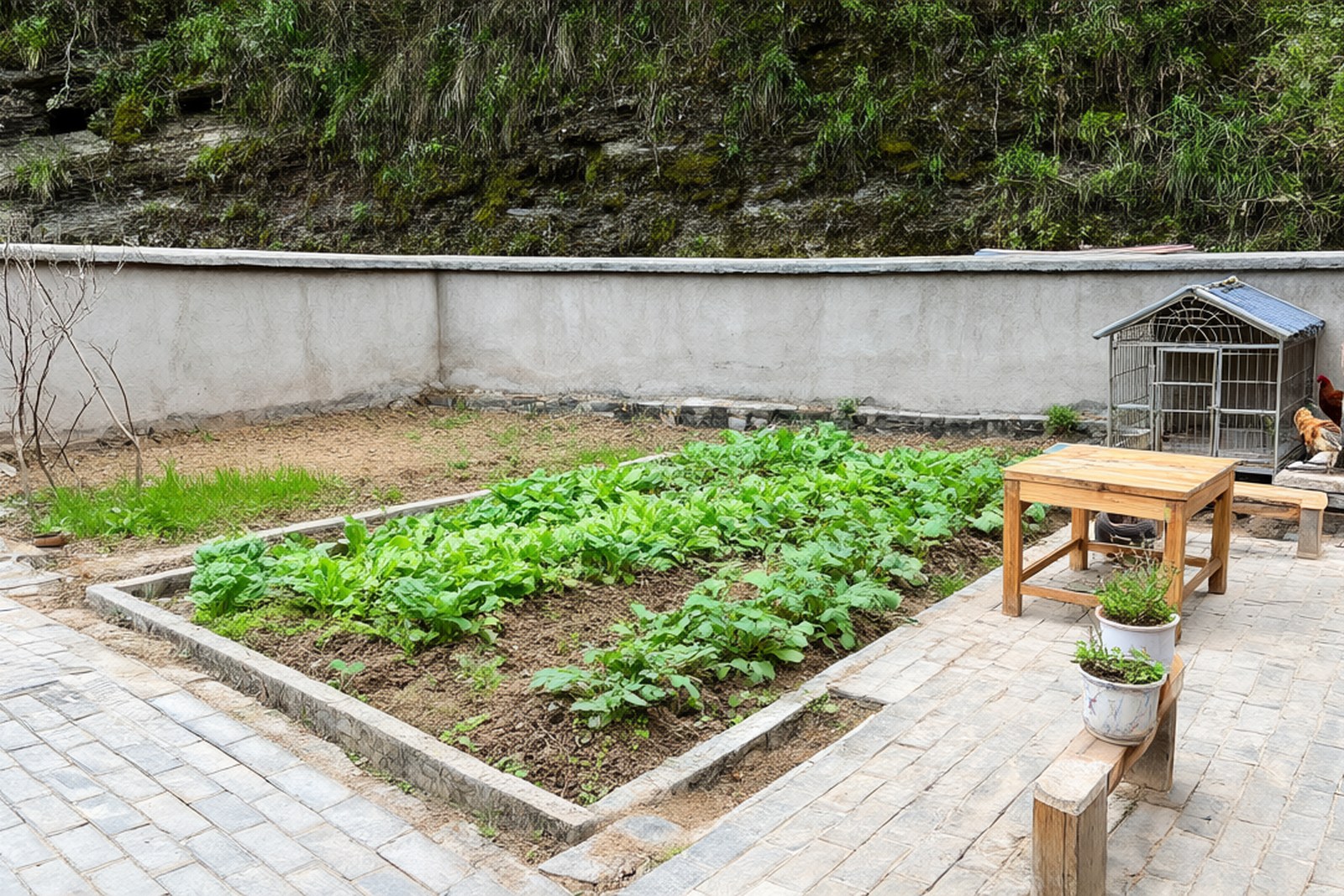
The food is the reason to pay for dinner in rather than eat out, and it is worth a sentence about how it works. These houses grow what they cook: greens and beans and chilli in the plot behind the wall, a few chickens and ducks in a pen at the end of the yard, chestnuts and bamboo shoots in season off the slope, and eggs from whatever is laying. The county’s own slow-grown chicken is a name in 涟源 and turns up on these tables as a stew with ginger and chilli, and the cured pork and the pickles are made in the house in the winter and eaten all year. It is not restaurant cooking and it is not meant to be. It is a family eating what its own ground produced, with a visitor at the end of the table, and in a valley of this size that is a more reliable recommendation than any menu.
The practical argument for the homestay is that the park is a full day and the town is the only place to start it from. The gate opens in the morning and closes to new arrivals in the middle of the afternoon, and the walks and the boat inside the geopark run long enough that anyone who comes down from 娄底市 Lóu dǐ shì in the morning and goes back at night spends half the day in a car. From a room in 湄江镇 the gate is a few minutes away, which leaves the whole day for the place itself and the evening for the town. It also puts the rest of 涟源市 within reach: the county-level city is an hour away, and the roads out of the valley run north and west through farming country that nobody visits and that makes a good slow drive on the way home.
What the Rooms Are Like
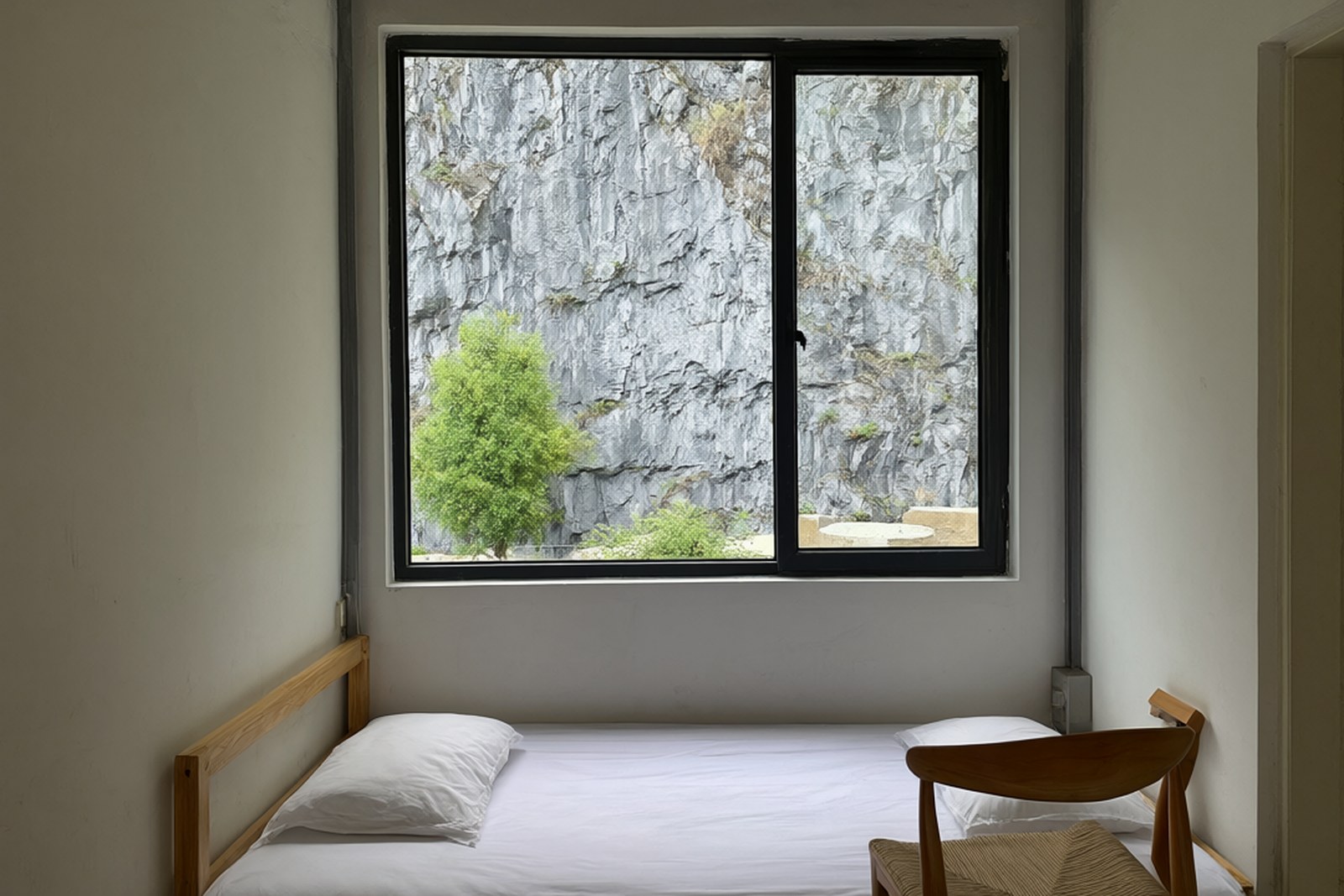
A room here is a room in a house: a double or two singles, a firm bed, a thick quilt in winter and a fan or a wall unit in summer, a tiled shower, a kettle, and a window that either looks at the cliff or at the yard. The newer guesthouses near the gate have private bathrooms, white walls and the sort of plain new furniture that gets bought in bulk; the older village houses have brick, dark timber, a shared bathroom in the corridor and a good deal more room to sit outside. Neither is luxurious and the price reflects the difference. Ask for a room on the upper floor if you can, because the valley holds damp in the summer and the ground floor rooms are the ones that feel it.
Practicalities
Price. A room at a 湄江镇 guesthouse runs about ¥100 to ¥200 a night, with breakfast included at most of them and dinner arranged for a modest extra; the newer rooms at the gate sit above that in a holiday week, and the village houses stay nearer the bottom of the range all year.
Address. The guesthouses are in 湄江镇 méi jiāng zhèn in 涟源市, most of them on the town’s tourist street and beside the geological museum at the park gate, with others in the villages along the valley road, 黄罗湾村 among them; the town is on the road to the geopark about an hour north of 娄底市 and an hour from 涟源市 itself.
Rooms. Ask for a room away from the road, which is the only source of noise in a town this size, and ask what dinner will be before you agree to it, because the answer is what the garden and the pen are offering rather than a list. Ask whether the house has hot water at all hours, since several heat it on the roof, and ask them to write the name of the place in Chinese for a driver, because the villages on the valley road are small enough that outsiders will not know them.
Getting there. By road from 娄底市 Lóu dǐ shì, an hour to an hour and a half depending on the traffic out of the city, and about two and a half hours from 长沙; from 涟源市 there are buses towards the park through the day, and the nearest high-speed railway station is 娄底南站, an hour or so south. The valley road is narrow in places and there is a charge for parking at the gate, so a car or a hired one is much the easiest way in, and the drive up from the plain is the sort of road that wants to be done in daylight.
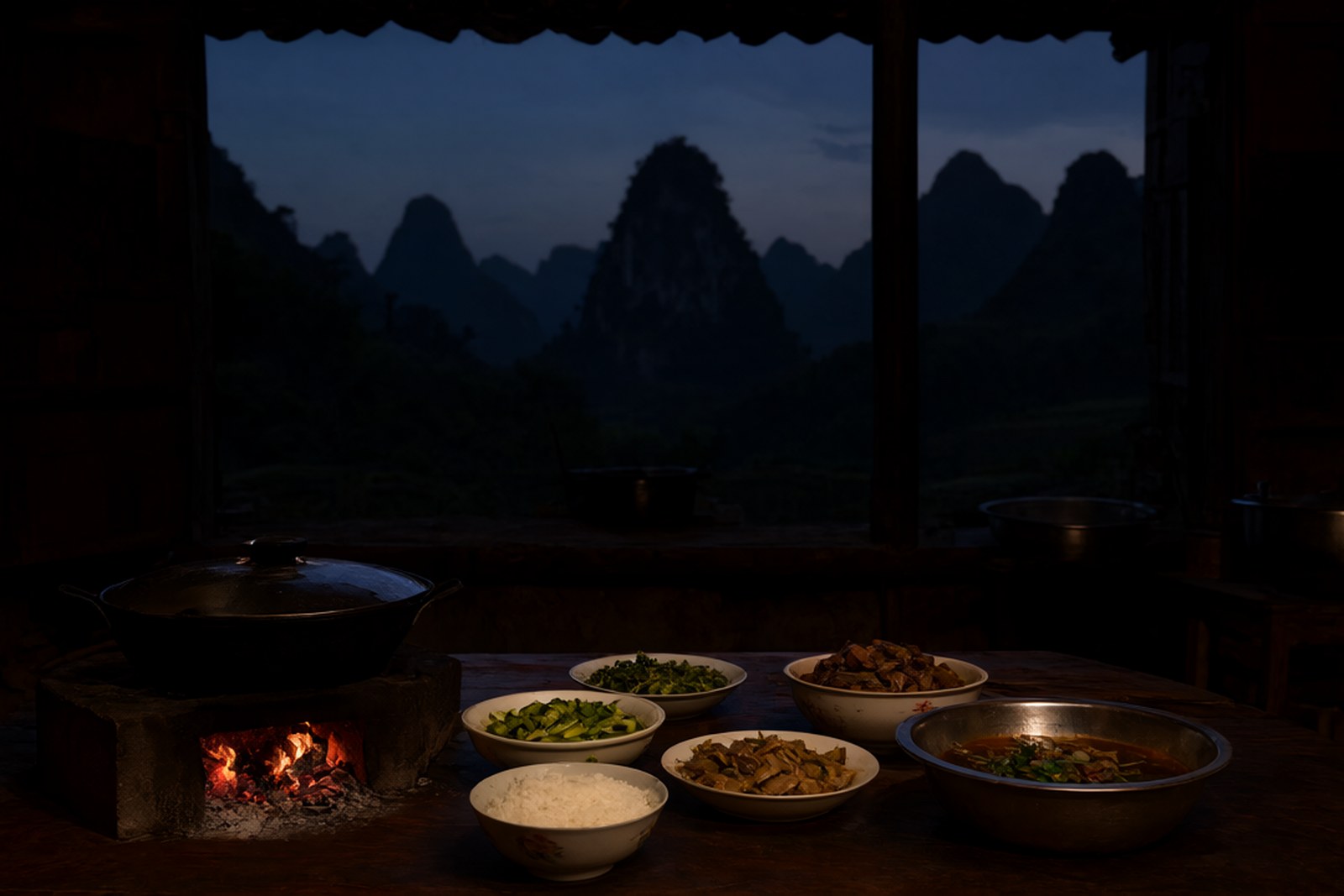
Where to stay: a family guesthouse in 湄江镇 in 涟源市, five minutes from the gate of the geopark and close enough to the kitchen to eat what the garden gave. Take the upper room, eat dinner in, and let the town be the quiet end of a county whose other business is quarrying stone and growing chicken.
flowcloud would say that the best dinner in the prefecture is the one nobody planned, cooked by somebody who has just walked out to the plot to see what is ready, and that a valley with a cliff on both sides and one road through it has arranged itself perfectly for that.