
美榔村 měi láng cūn is a village built out of the same stone as the thing that made it worth visiting. It sits in the 美亭 měi tíng country of 金江镇 jīn jiāng zhèn in 澄迈县 Chéng mài xiàn, about fifteen kilometres out of the county town on the road towards 永发镇, in flat farming land that grows lychee, pomelo and rice and has done so for a very long time. The houses are of black volcanic rock – the same 马鞍山 mǎ ān shān basalt that the two stone pagodas at the end of the village lane are cut from – and the effect, at dusk, with the walls dark and the dust pale, is of a place that has been here long enough to have used up everything that was easy to carry.
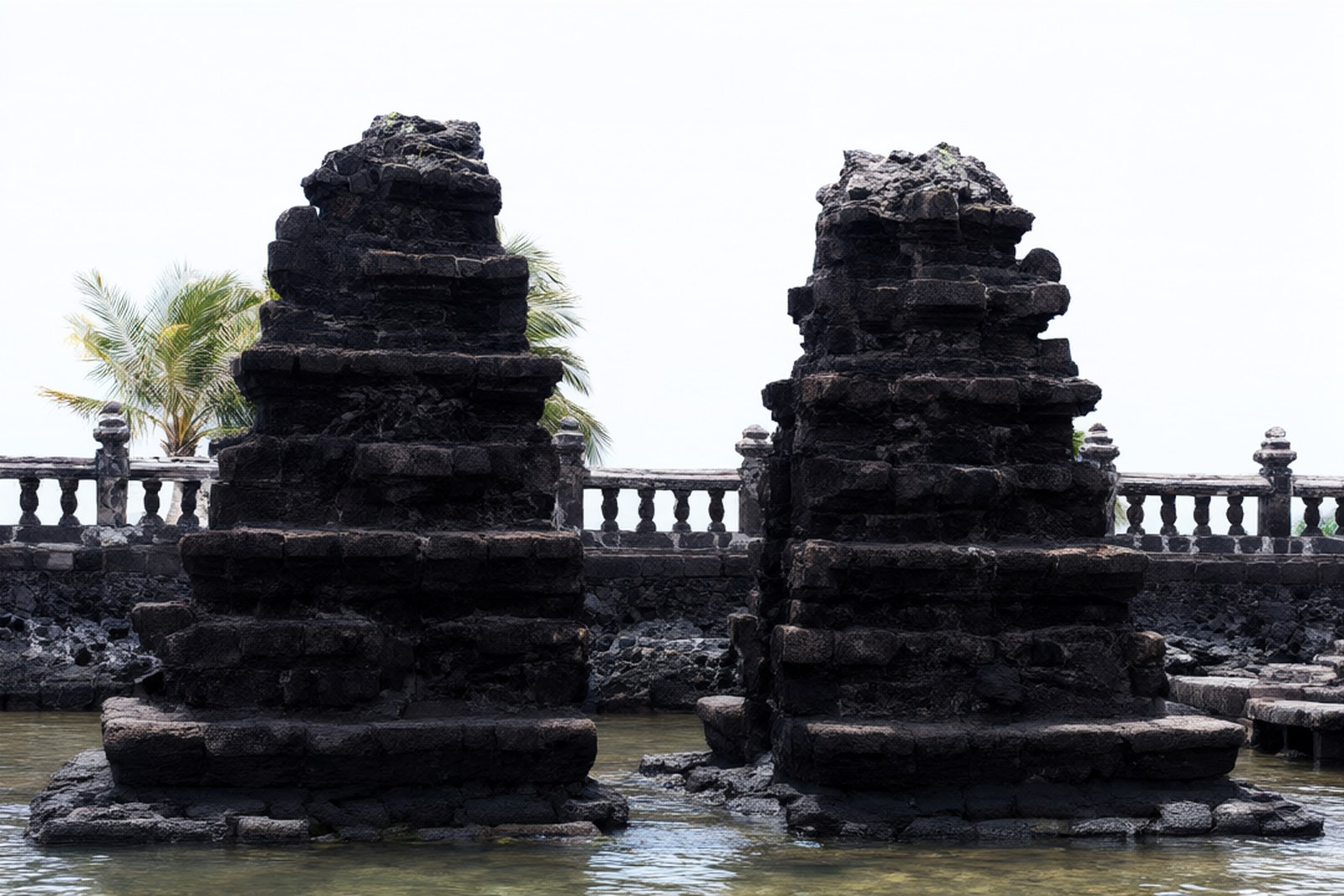
The pagodas at the end of the lane are the reason anyone comes to 美榔村 at all, and they are treated properly in their own entry in the travel column; what matters for a stay is the arrangement they have produced. They are free, unstaffed and open at every hour, so the two windows that make them worth the journey – first light, when the water under the platform is still and the carvings read clearly, and the last hour before dark, when the basalt goes black against the sky – belong to whoever is sleeping in the village. The stone they are cut from was quarried out of this ground, and the houses around them are built of the offcuts, which is why the village looks the way it does: black walls, pale dust, and a lane that ends in two towers standing in a pond. What the households here do for a living is farm, and what they farm is the county’s fruit – lychee, pomelo and rice on the flat land towards 永发镇 yǒng fā zhèn, with the trees coming right up to the backs of the yards.
The village around them is quiet in the specific way of a village with a monument in it: there is a small free car park at the entrance, no ticket office, nothing to buy, and the pagodas are simply at the end of the lane where the houses stop. The surrounding country is farmland rather than scenery, and it hides one surprise – a few kilometres away at 南轩村 Nán xuān cūn in 永发镇 there is a small waterfall, 大泻瀑布 dà xiè pù bù, that runs after rain in the wet months and is dry enough to walk under in the spring. What the village does have in abundance is orchard: this is 澄迈’s lychee and pomelo ground, and the lane out of the village towards 永发 is lined with fruit trees that belong to the households whose guest rooms you are sleeping in.
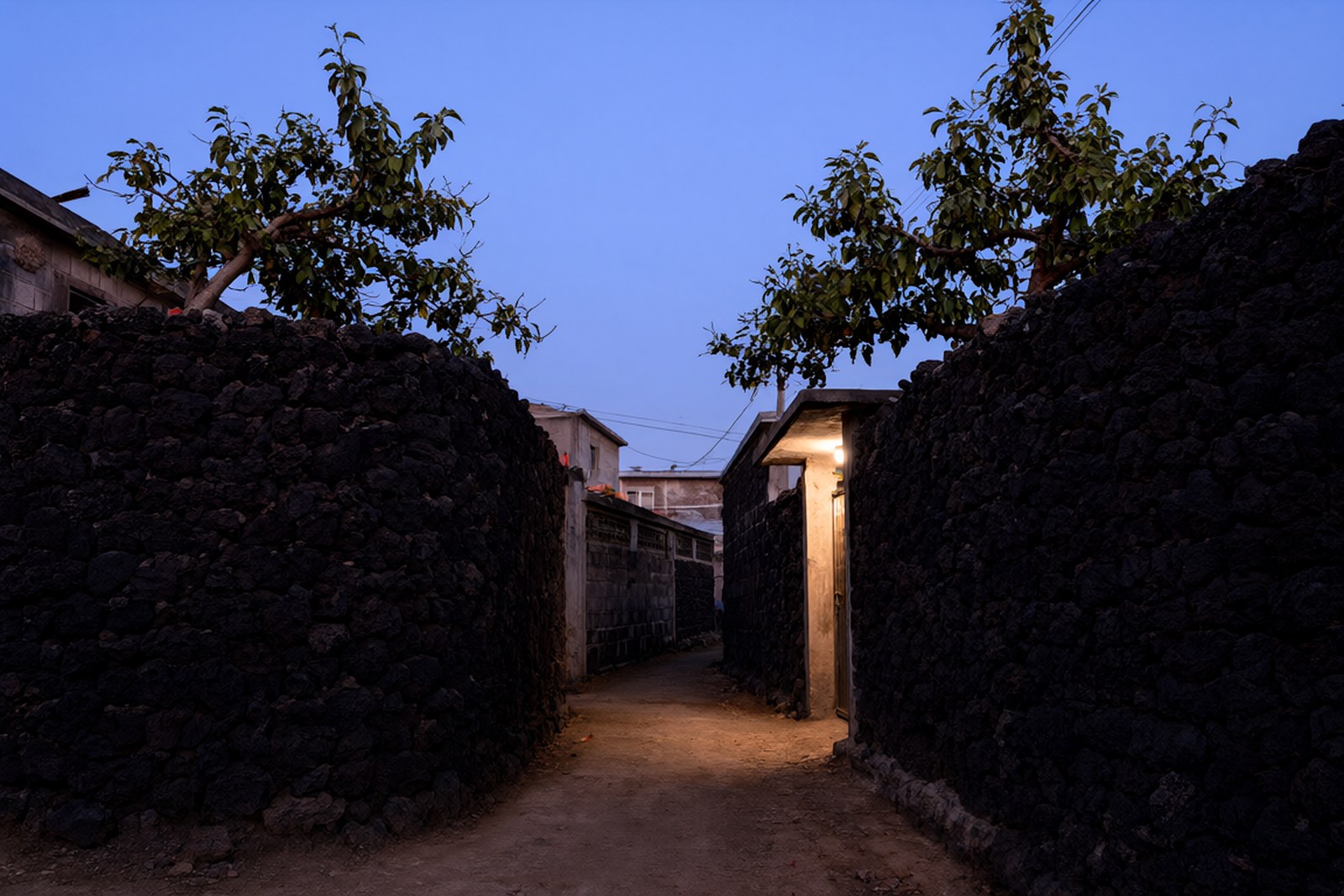
Staying here is the only way to see the pagodas properly, which is the argument for the homestay rather than a hotel in town. They are free and open all day and there is no closing time, so the two good hours – first light, when the water is still and the reliefs on the 妹塔 read clearly, and the last hour, when the stone goes black against the sky – are both available only to somebody who is already in the village. The county’s own advice for a visit suggests nine to eleven in the morning or after five in the afternoon and gives the address as 美榔村 in 金江镇, fifteen kilometres from the county town and about an hour from 海口市 Hǎi kǒu shì; the access is by road and the last stretch is a village lane, so a car or a taxi is the practical way in and there is a free car park at the end of it.
What the Rooms Are Like
This is a village homestay and not a hotel, and the honest description is a family’s new wing on a black-stone courtyard house: a few rooms off a shared yard, a tiled shower and a hard bed with a quilt, air conditioning that matters in summer, and a kitchen that will cook for you if you say so in the morning. The walls are the original stone in the older parts and rendered block in the new ones, and the ceiling is high because these houses were built before air conditioning and needed to be. What it does not have is a lobby, a lift, room service or a bar; what it does have is a courtyard, a mango tree, and a household that knows exactly when to walk down the lane to see the pagodas without anybody else in the picture.
Practicalities
Price. A room in a 美榔村 homestay runs about ¥150 to ¥350 a night, usually including breakfast, and the range is set by how new the room is rather than by the season; there is very little accommodation in the village, so in a holiday week it is worth calling ahead rather than turning up.
Address. The homestays are in 美榔村, 金江镇, 澄迈县, on the lane to the 美榔双塔 měi láng shuāng tǎ; the village is about fifteen kilometres from 金江镇 jīn jiāng zhèn on the road towards 永发镇 yǒng fā zhèn, and about an hour from 海口市 by the 西线高速 Xī xiàn gāo sù and then the county road.
Rooms. Ask for one facing the courtyard if you want to sit outside in the evening, and ask the family what time they would go down to the pagodas, which is a better guide than any opening time. Ask about a mosquito net or plugs, because the village is low, wet and green; ask whether dinner is possible and what it would be, since the nearest restaurants are in 永发 or in the county town; and ask them to write the village name in Chinese for the driver, because it is small enough that outsiders will not know it.
Getting there. By road only: 美榔村 is fifteen kilometres from 金江镇 and roughly an hour from 海口市, reached by the 西线高速 and then county roads through 美亭 měi tíng towards 永发镇. There is no station nearby – the island’s west-ring high-speed railway stops down on the coast at 老城镇 and 福山镇 – so the practical arrival is a taxi or a car from the county town, which is also the nearest place with a station, a market and a hospital.
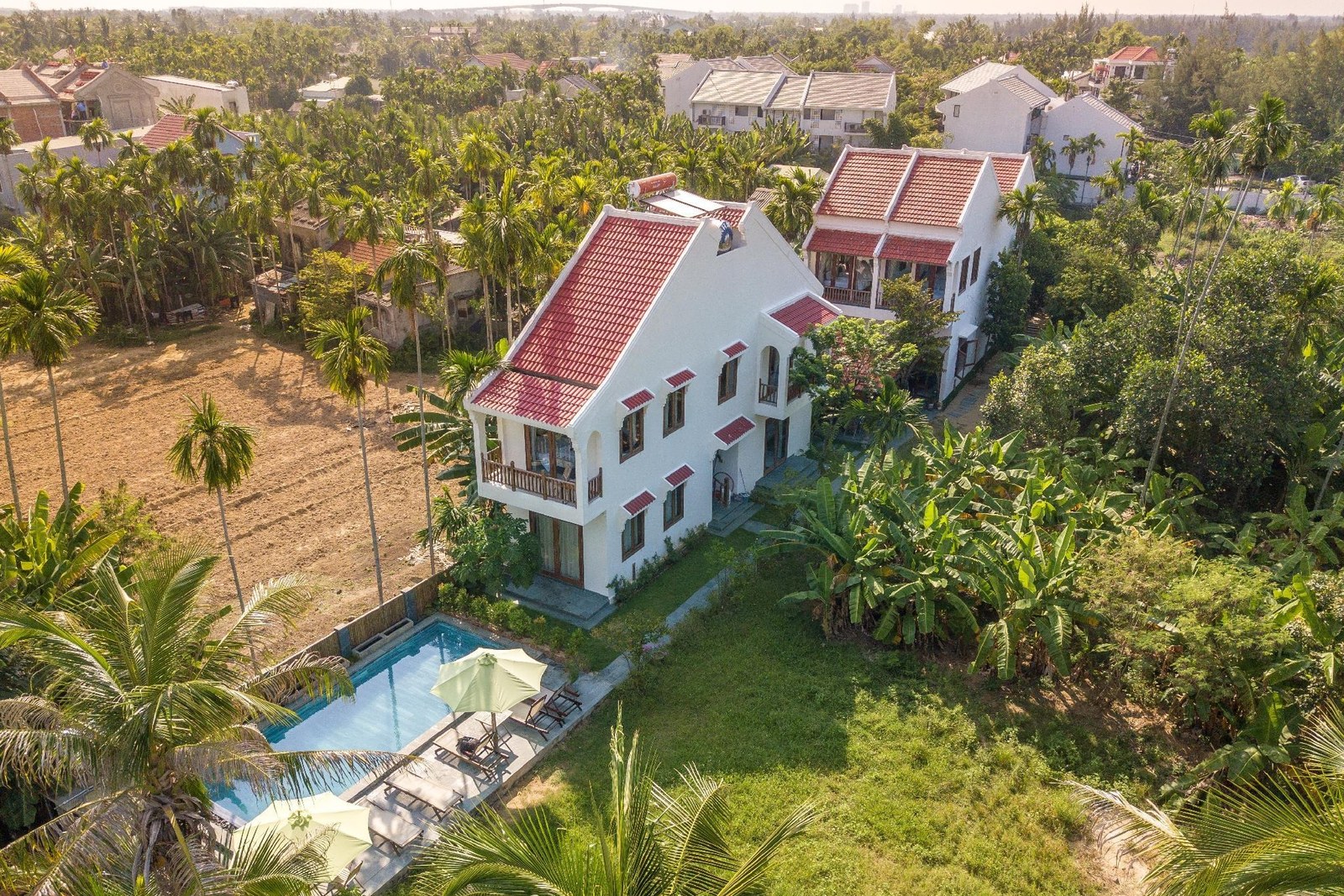
Where to stay: a family homestay in 美榔村, 金江镇, in 澄迈县, within a walk of the 美榔双塔. Go down to the pagodas at first light and again at dusk, eat what the household cooks, and use the village as the quiet end of a county that otherwise sells oranges, coffee and hot water.
flowcloud would say that the finest stonework in the county was paid for by a father for two daughters who had left the world, that it has stood in a pond for seven hundred years without a drop of mortar, and that the village has never once thought to charge anybody to look at it.