
The building is the reason to sleep here, and the building is a shape rather than a style. A 围龙屋 wéilóngwū is the Hakka enclosed house of 梅州 Méizhōu, and its plan is a courtyard compound with a semicircular row of rooms wrapped around the back of it and a half-moon pond in front, so that from above the whole thing reads as a circle cut through the middle. The front half is a rectangle of halls and side wings; the back half is the 围龙 wéilóng, the dragon that encircles the living quarters. The 祖堂 zǔtáng, the ancestral hall, sits at the exact centre of the plan and is usually the only room in the compound that has never been divided or repurposed. Guesthouses that occupy one of these buildings put you inside a piece of social architecture that was designed to hold several generations of one surname, and the proportions are correspondingly domestic rather than hotel-like.
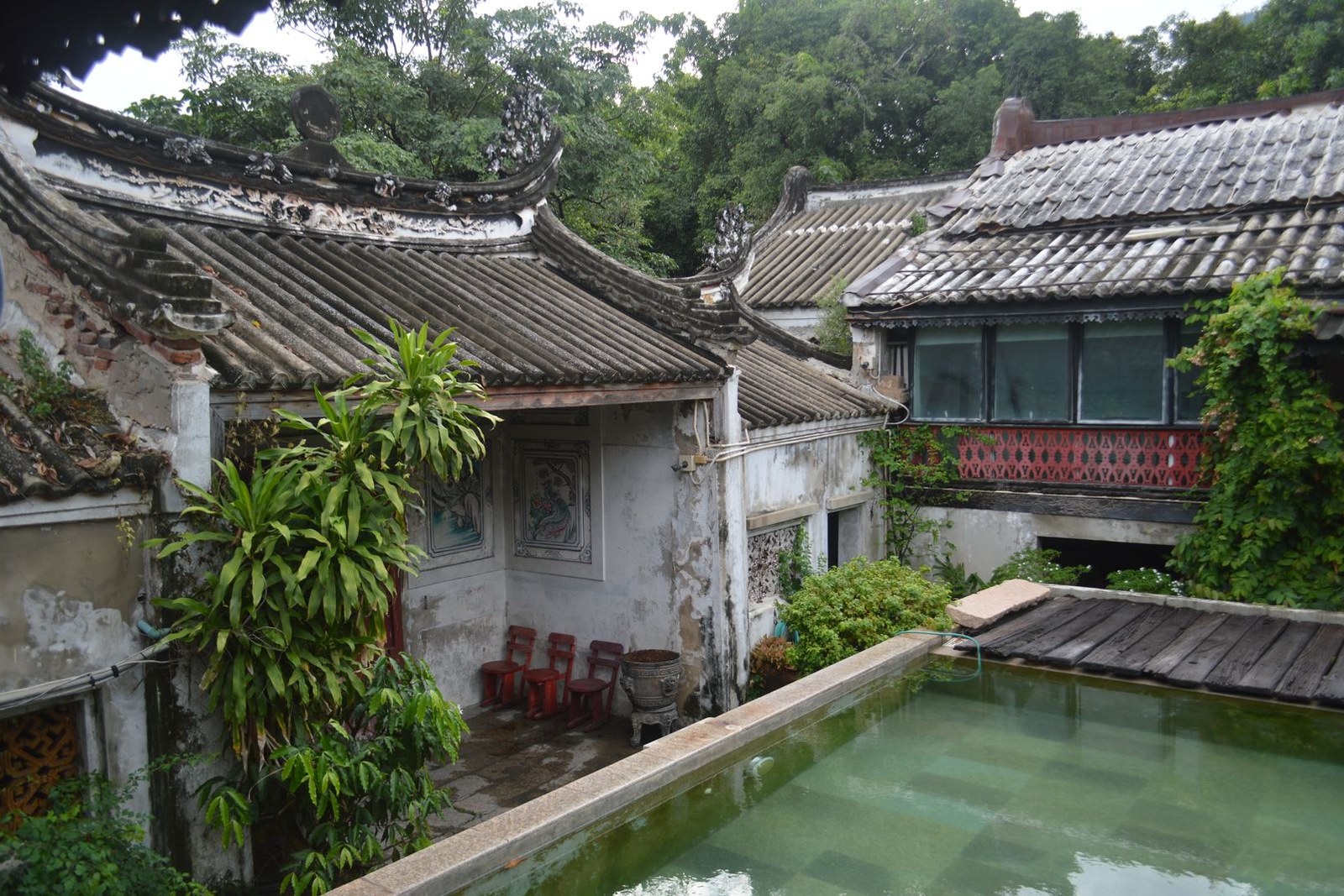
Guests sleep in rooms off the inner courtyard, and the arrangement takes some adjusting to. The rooms are small and often have no window to the outside, only a door and a shuttered opening onto the courtyard, because the outer wall of a 围龙屋 is a defensive wall and does not like holes in it. That is also why the compound is quiet: the sound stays in the courtyard, and the courtyard is where everyone ends up in the evening. Ceilings are high, floors are stone or tile, and the fittings are simple. The compensations are the 天井 tiānjǐng, the open light wells that drop daylight and rain into the middle of the building, and the ancestral hall, which most guesthouses leave unlocked and which is the most carefully maintained room on the site.
The semicircle at the back is not decorative geometry. In the classic 三堂两横 arrangement there are three halls in a line, two side wings, and then the rear 围龙, and the number of rooms in the enclosing row is set by the number of households the compound was meant to hold, so the building grew when the family did. Behind the rear row is a raised mound, the 化胎 huàtāi, which drains water away from the foundations and is also understood as the feng shui spine of the house. The half-moon pond in front is functional in the reverse direction: it holds water, it reflects light into the front halls, and it is where the fire buckets were. None of this was added for visitors.
What the Rooms Are Like
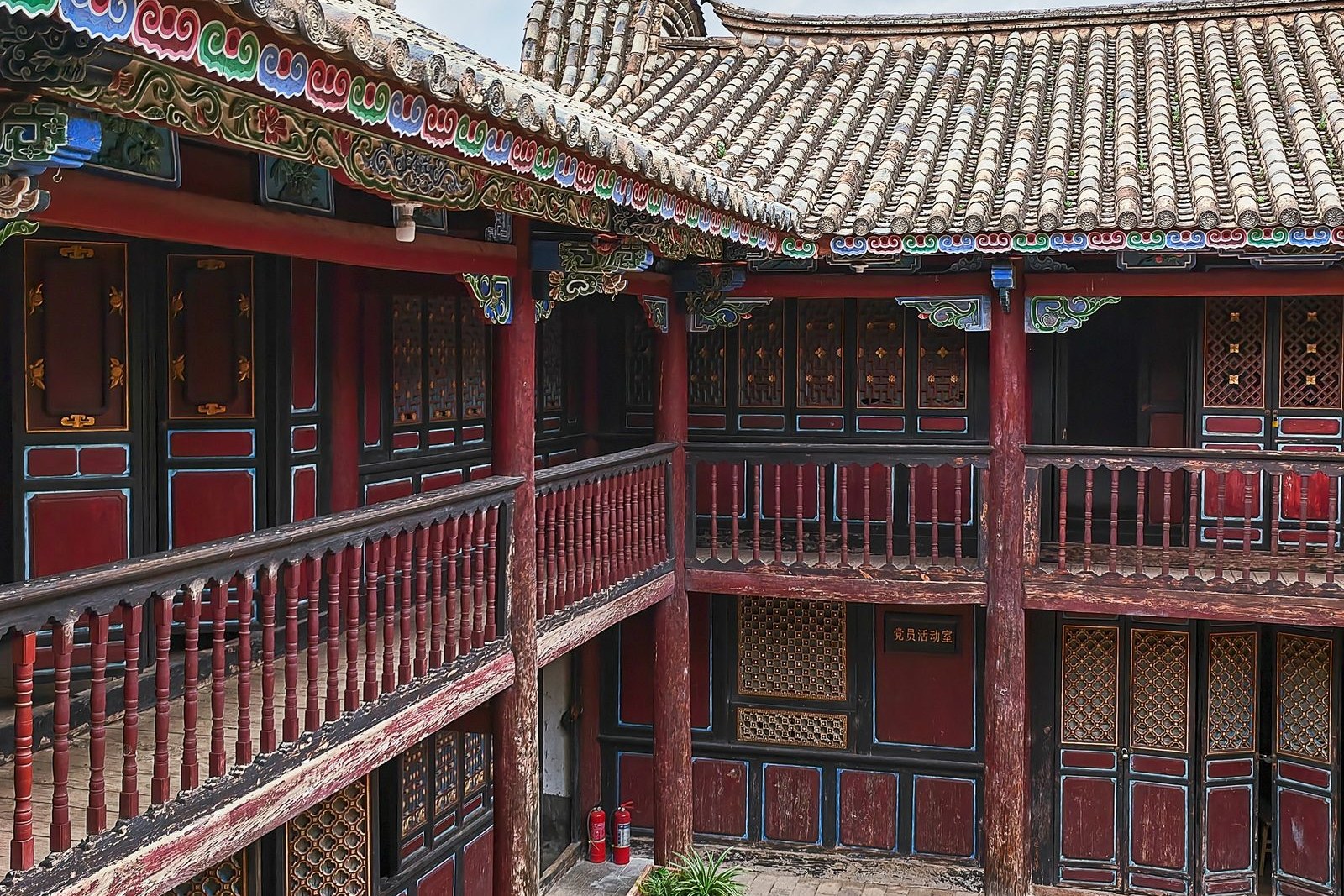
Expect a courtyard room rather than a hotel room: a bed, a table, a kettle, an air conditioner standing in a corner and a bathroom that has been inserted into what used to be a storage room, sometimes with the plumbing run along the outside wall. Some of these guesthouses are restored with real care and the joinery and stonework are handsome; others are a family house with a few beds added, which is cheaper and rougher. Ask which one you are booking. The courtyard rooms are the ones to want, because they get the light and the cross-breeze; rooms in the outer row can be dark and can smell of damp in the wet months, since the wall they sit against is a metre of rammed earth. Ask whether the room has air conditioning that actually works, and whether hot water is from a tank or a heater, since a restored compound sometimes has one shower’s worth of hot water at a time.
Practicalities
Price. A double in one of the restored compounds runs roughly ¥180 to ¥450 a night, with the upper end buying a properly renovated room with a modern bathroom and the lower end a family-run version with the original fittings. Whole-compound rental is possible at the larger guesthouses and is priced by the room. Prices rise hard at 春节 Chūnjié, Chinese New Year, when Meizhou families come home.
Address. The 围龙屋 with rooms to let cluster in 梅县区 Méixiàn Qū, particularly around 南口镇 Nánkǒu Zhèn and 丙村镇 Bǐngcūn Zhèn, both under an hour by road from central 梅州市. Several sit in villages with more than one compound, so it is worth asking whether the neighbouring houses are also visitable.
Rooms. Ask for a room facing the courtyard on the ground floor if you want to step straight out into it, or on the upper level if you want quiet; the upper rooms have the better view of the roofscape and the lower ones the easier access to the ancestral hall. Confirm whether the bathroom is inside the room or across the courtyard, and ask whether the compound has a resident family, because a house with people living in it is warmer and a house that has been emptied for guests can feel like a museum after dark.
Getting there. 梅州市 is on the 梅汕 Méi-Shàn high-speed line, with 梅州西站 Méizhōu Xī Zhàn around two and a half hours from 广州 Guǎngzhōu and about an hour from 汕头 Shàntóu. The 围龙屋 villages are 30 to 60 minutes by taxi or car from the city, and there is no useful public transport to most of them, so arrange the return trip when you arrive.
flowcloud would say that a 围龙屋 is the only hotel room in China where the corridor is a social contract, since the plan exists to keep one family in sight of each other and the ancestral hall is still the most important address in the building.
Where to stay: in a restored 围龙屋 wéilóngwū in 梅县区 Méixiàn Qū, ideally around 南口镇 Nánkǒu Zhèn, in a courtyard room. Confirm that the room is on the courtyard rather than in the outer wall, ask whether the bathroom is en suite, and spend the evening in the courtyard rather than in the room, because the courtyard is the part of the building the guests are there for.