
The Last Beds Before the Sands: Minfeng at the Desert’s Edge
大漠孤烟直,小城灯火亲 Dàmò gū yān zhí, xiǎochéng dēnghuǒ qīn – A lone smoke rises straight from the great desert; the small town’s lights feel like family
正文:民丰县住宿 Mínfēng Xiàn Zhùsù Minfeng stays answer the southern rim’s final question: where to sleep at the end of the oasis line. The county town of Minfeng (Niya) sits 280 kilometres east of 和田地区 Hétián Dìqū Hotan Prefecture’s capital – the last full-service stop before the desert highway strikes northeast across the Taklamakan’s heart, and the nearest town to the ancient Niya ruins that sleep in the dunes to the north. The lodging stock is small, warm and practical, and everything in town sits within sight of the desert it fronts.

The town’s beds split into two honest categories: the main-street hotels with the reliable heating, en-suite rooms and the breakfasts that fuel the crossing; and the family guesthouses behind the bazaar, whose courtyards hold the quietest nights in the prefecture. Prices run at the region’s floor, the rooms are simple and clean, and the front desks keep late hours for the road – Minfeng lives on the desert-crossing traffic, and the town has organised itself around arrivals at every hour. This is the bed before the expedition, and the town knows its role.
The reward for stopping is the town’s relationship with the sand. Minfeng’s northern outskirts meet the dunes almost at the curb; the desert highway’s first kilometres run visible from the town edge; and the poplar shelters – the windbreak belts that hold the road open – begin at the county line. The bazaar’s dried-fruit rows sell the crossing provisions, the fuel stations run long hours, and the evening streets hold the specific hush of a town that has made its peace with the largest desert in the country.
The Stays
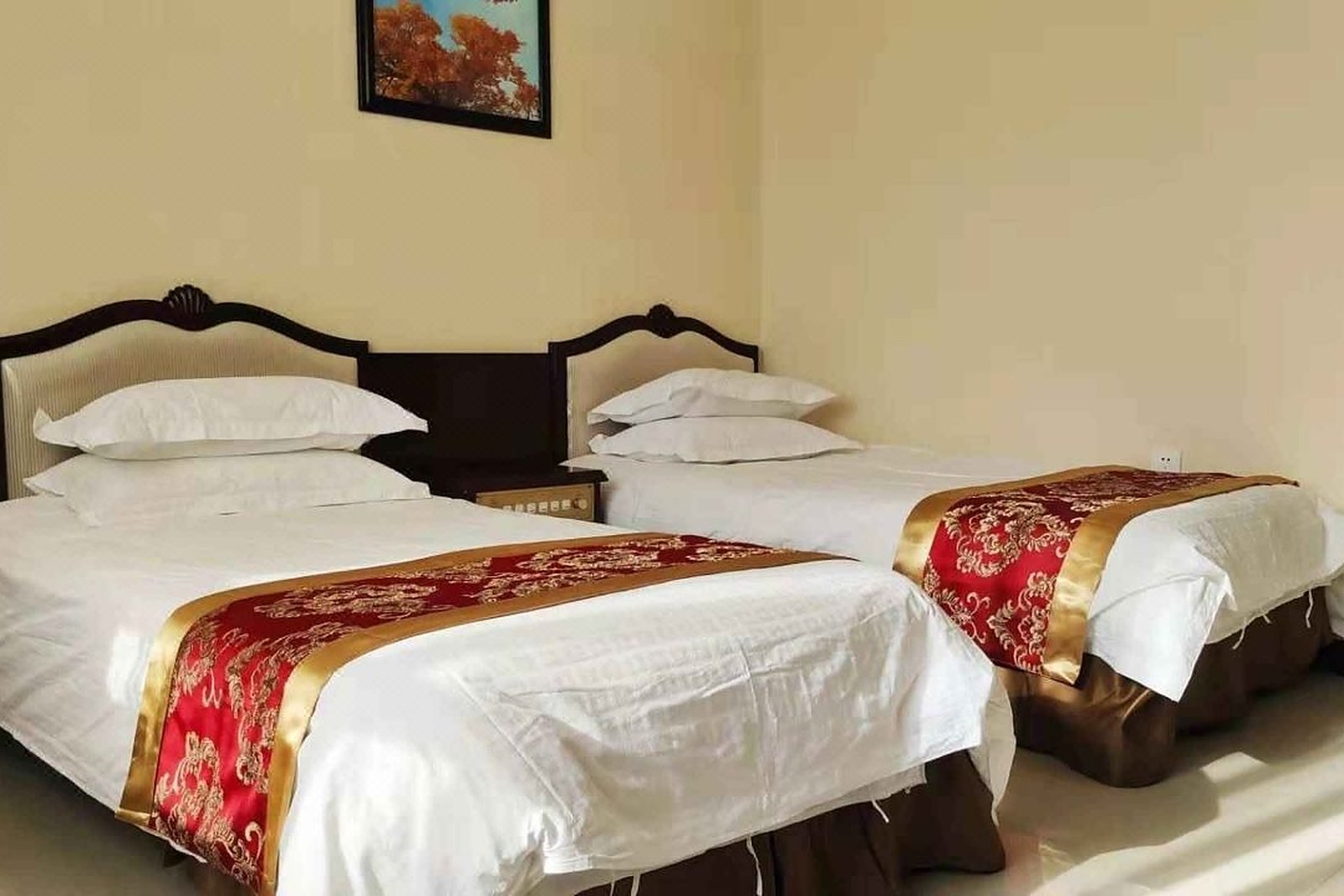
The practical advice is all about the crossing. Take a room on the town’s south side away the highway trucks that run through the night; confirm dinner arrangements since the county kitchens close early and the grill rows wind down fast; and check the vehicle the evening before – fuel, tyres, water – because the desert highway’s services sit hours apart. The guesthouse families pack road breakfasts without being asked twice, and the hotel desks hold the local knowledge about the crossing’s weather window: wind days close the road, and the desks know before the apps do.
The Niya ruins country to the north – the ancient city’s protected zone – is managed-access terrain: visits run through official channels from the county, and the front desks of the better hotels will point travellers to the current arrangements with the local candour that makes county towns worth sleeping in. Most travellers settle for the desert’s edge itself – the dune country north of town, where the sand’s first real waves begin – and the sunset there, with the poplars behind and nothing in front, is the prefecture’s most unexpectedly moving half hour.
Beds settled, the same 和田地区 Hétián Dìqū Hotan Prefecture holds other bases: 和田市区住宿 Hétián Shìqū Zhùsù Hotan city stays back west, 墨玉县住宿 Mòyù Xiàn Zhùsù Moyu stays on the western road, 策勒县住宿 Cèlè Xiàn Zhùsù Qira stays at the desert’s door, or 于田县住宿 Yútián Xiàn Zhùsù Yutian stays with its jade-themed house – four more doors into the same 和田地区 Hétián Dìqū Hotan Prefecture. With beds settled, our Hotan travel map fills the days.
The Stays
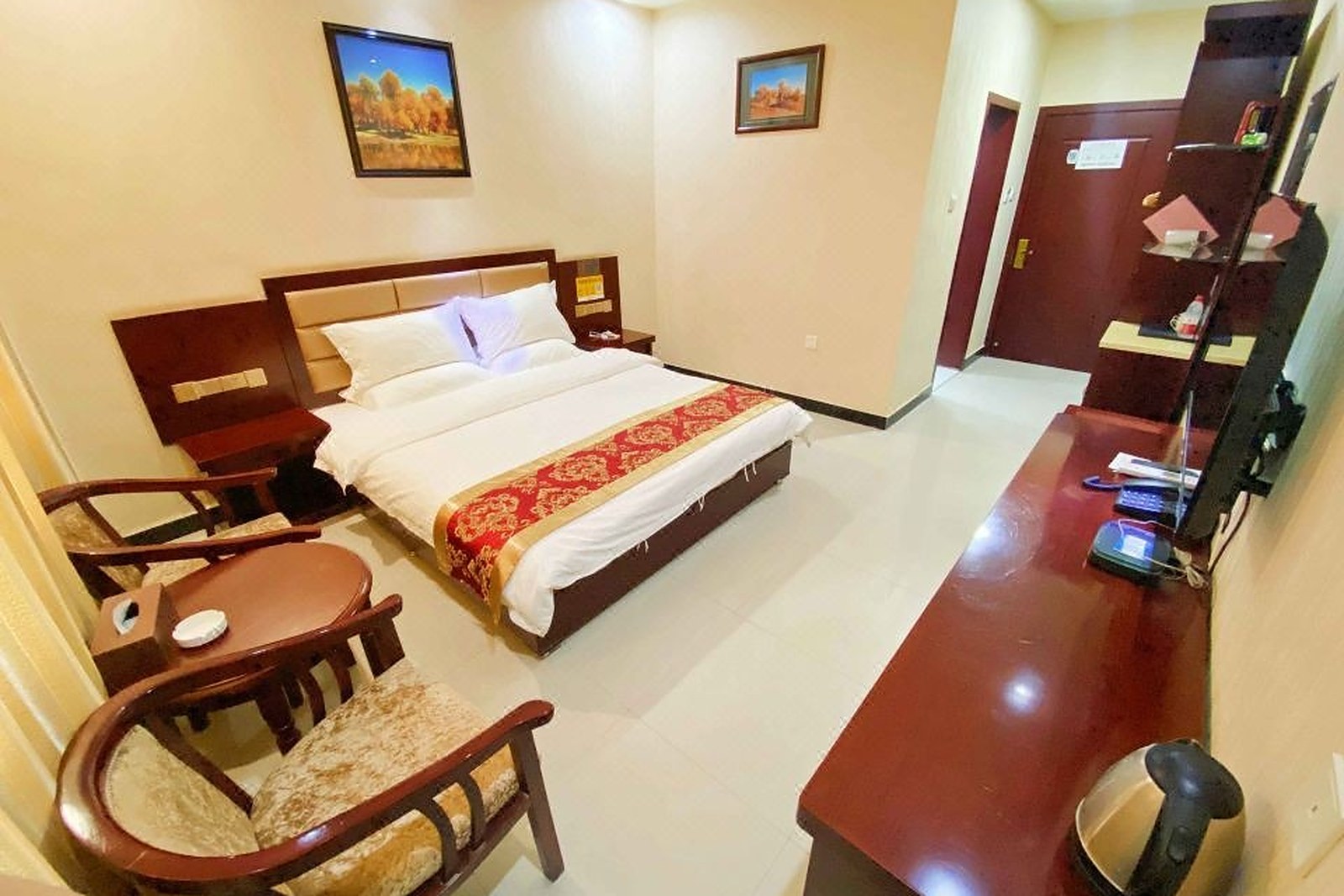
flowcloud would say Minfeng is the last light before the sands: a small town that fronts the Taklamakan without flinching, warm beds at the region’s floor prices, and a desert edge at walking distance – the quietest night and the biggest sky on the whole southern rim. All checked November 2026.
Where to stay: Take a room on the town’s quiet side away the highway trucks that run through the night, confirm dinner arrangements since kitchens close early, and fuel up the evening before the desert crossing. All checked November 2026.