
Five Yuan to the Island, Sleeping on Mudong’s River Street
Chongqing is a municipality of southwest China, and the 巴南区 Bā’nán Qū, Banan District, runs sixty kilometres along the 长江 Cháng Jiāng, Yangtze, on its south-eastern side. 木洞镇 Mùdòng Zhèn, Mudong Town, is one of fourteen such towns and the only one still a working river port rather than a museum of one. Its riverside street runs a few hundred metres of stone and plaster with a line of guesthouses on it, and those guesthouses are the reason to sleep in the district’s oldest trading town: the water is the attraction and the water is in front of the window. What makes the address unusual is the sailing beside it. A ferry crosses to 中坝岛 Zhōngbà Dǎo, Zhongba Island, where more than six hundred people live, with the last boat at eighteen hundred. The fare is where this piece starts, because it is a conflict rather than a number: one part of the source prints five yuan, another part of the same source prints two, and the desk will know which is running this week.
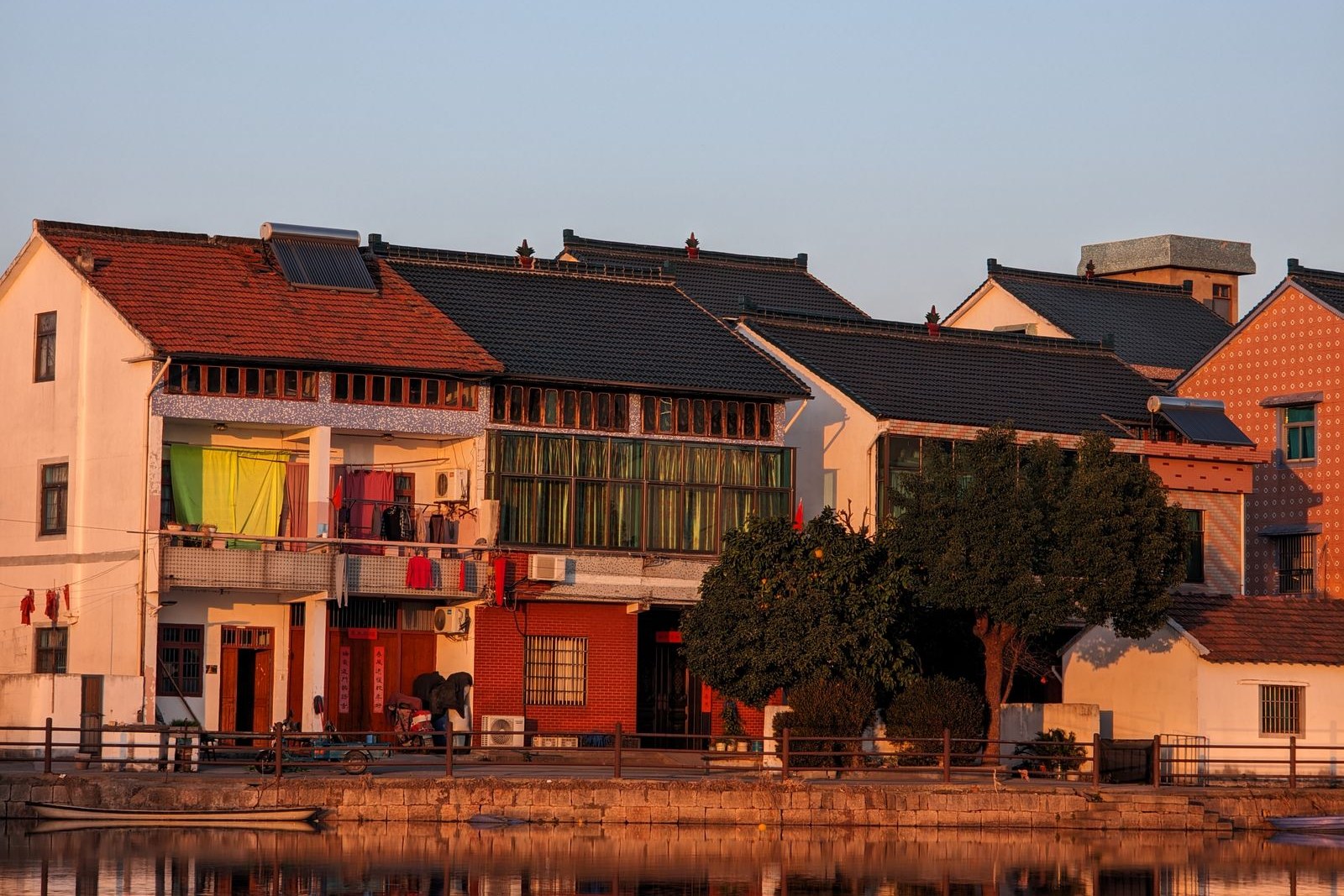
The port is why the street has this shape at all. Mudong had human occupation by the Neolithic period, grew into a trading centre in the Tang and Song, and was given a 水驿 shuǐyì, an imperial courier station on the Yangtze, with a patrol and inspection office in the Yuan and Ming – the two institutions the new museum was built out of. That museum, 木洞水驿博物馆, opened on 18 May 2025 inside the rebuilt patrol office and a Republican cargo warehouse, and runs Tuesday to Sunday from nine to seventeen. It is why the street has a second use after dark: the day goes to the water, the evening to the exhibitions, which are free.
Read off the booking pages in October 2026, the guesthouses on the quay run from about 314 to 528 yuan, a wide spread for a few hundred metres of frontage and explained entirely by what the window does. The street’s largest property, at river street block A29, shows 379 yuan across fifty-two rooms and holds the two corner suites with 270-degree river glazing – two rooms out of fifty-two, which is the honest way to describe how rare the thing you came for is. A courtyard house at block E4 shows 314, the floor. A riverside inn shows 387. A house on Liberation Road shows 319, the choice if you want a bed and no view.
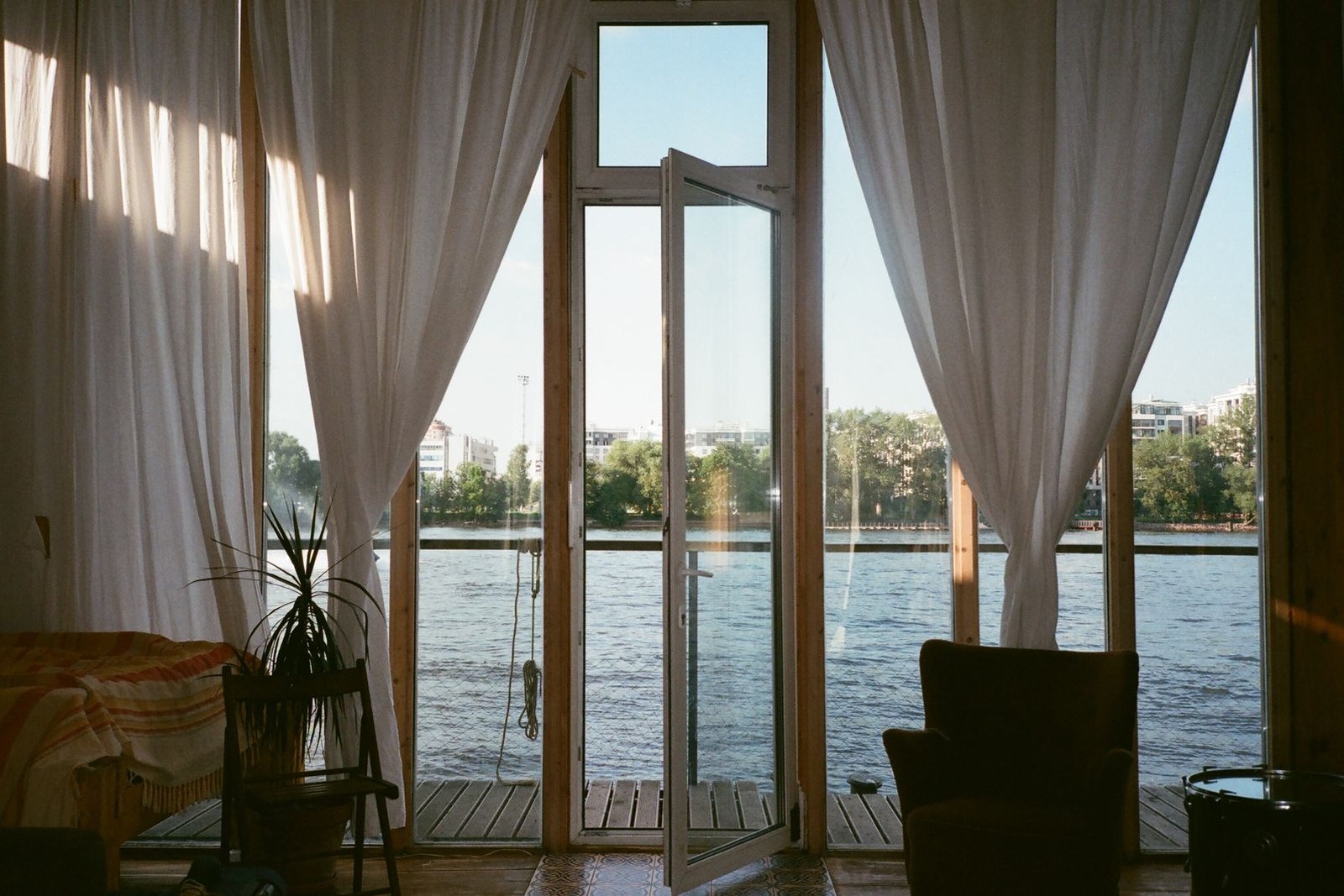
The one property publishing its own range is the small inn at blocks A25 and A26, opened in August 2016, sixteen rooms, quoting 208 to 528 yuan with breakfast included – the widest single spread in town, and the clearest evidence of what the money buys. The low end is a room with a bath and a street window. The high end is the corner orientation, the wraparound glazing, the balcony over the water, and the fact that from it the last ferry at six is a thing you watch leave rather than a thing you are late for. That is the argument for paying the top rate on a river street: not the view, which three rooms share, but the hour it lets you keep.
Which register you want depends on whether the crossing is the point. If it is, take a corner room on the quay and book for a weekday evening, because the island’s own light is what the crossing is for, and a Saturday afternoon puts six hundred residents and every visitor who read about it on the same deck. If it is not, take the room off the water and save the difference. The ancient town is a 3A scenic area as of 2025, free, bookable on 023-61556680, open nine to eighteen, so there is nothing to pay to walk and no gate to queue at. What the town’s own figures do not settle is the price of the boat: the fare is local, it changes, and five yuan and two yuan are both being quoted.
Practicalities
Price. One street, one spread, measured off booking pages in October 2026, because a few hundred metres of quay with a dozen properties re-prices by season and by weekend. The floor is 314 yuan for a courtyard house at river street block E4, and the inn at blocks A25 and A26 publishes its own range of 208 to 528 with breakfast included. Above that sit a riverside inn at 387 and the street’s largest house at 379 across fifty-two rooms, the two corner suites being the only rooms on the quay with the full wrap. A property on Liberation Road shows 319. Note that a widely circulated user-guide estimate puts riverside lodgings at 160 to 320 yuan and in-town hotels at 120 to 220; every booking page read here contradicts it, so it is not a number to plan from.
Address. 重庆市巴南区木洞镇木洞滨江路河街 – Mudong Riverside Road River Street, Banan District – and the addresses that matter carry block letters, A29, E4, A25 and A26, because the street is short enough to be numbered by bay. The value alternative is 解放路 Jiěfàng Lù, Liberation Road, a few minutes back from the landing. The scenic area is 3A as of 2025, free, 9:00 to 18:00, telephone booking 023-61556680.
Rooms. Three kinds, and the third is a quarter of the offer. The corner suite with 270-degree river glazing: two of them on the whole street, so they go early, and they are the reason to come. The courtyard room, with a bath, a lower ceiling and a street window, which is the floor price. And the garden room on the ancient-town side of the lane, trading on the town rather than the water. Confirm two things before paying: whether the window faces the river or the road, and whether the rate already includes breakfast, because on this street it often does.
Getting there. There is no metro at Mudong and no station on the line serving the south bank; the town is a bus and car destination. The museum is the anchor for an arrival, not a transport hub: Tuesday to Sunday, 9:00 to 17:00, closed Mondays. The last ferry to Zhongba Island is reported at eighteen hundred, so the crossing is a daytime and early-evening proposition and the return has to be planned backwards from that rather than forwards from dinner.
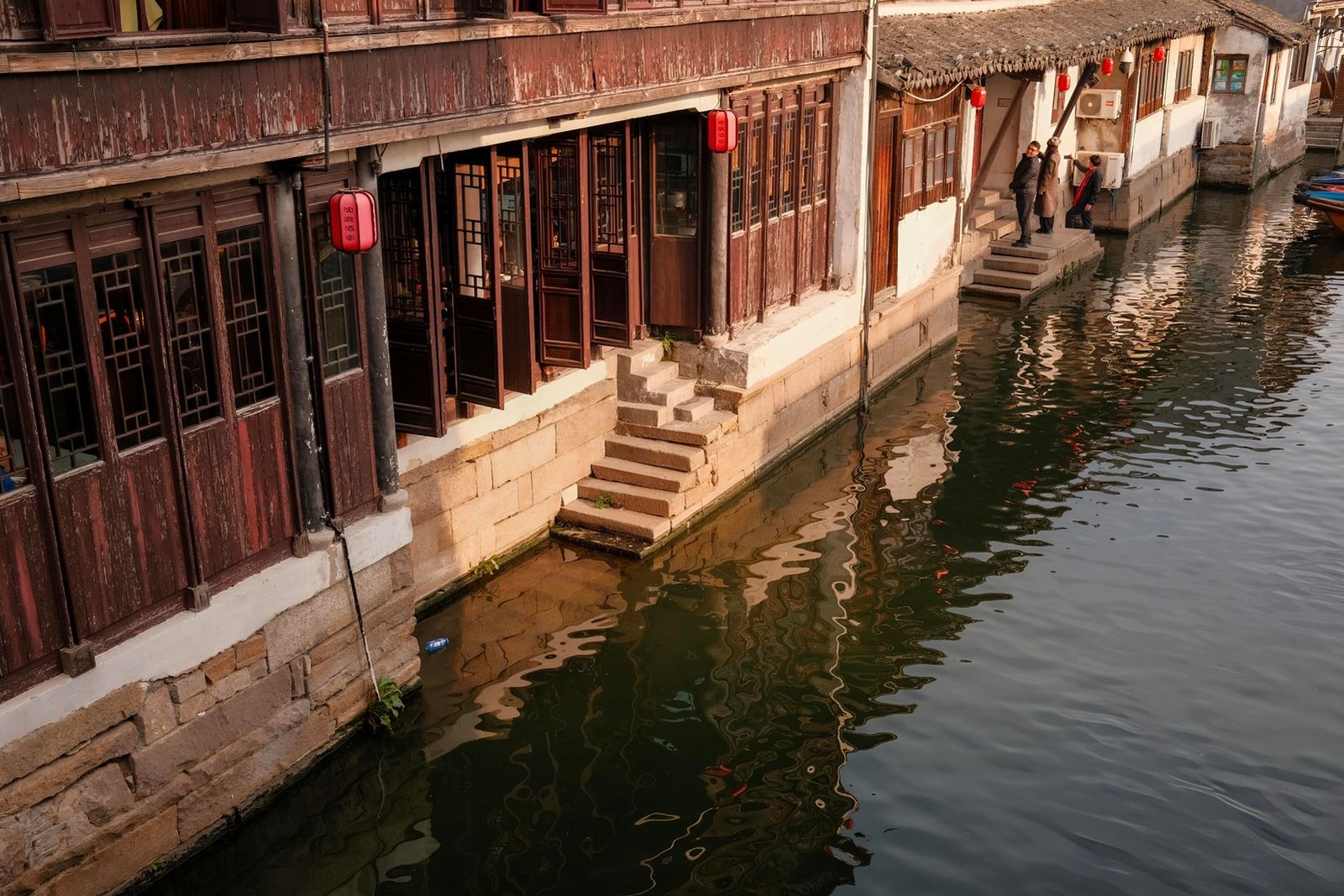
A day in Mudong runs with the boats and the light rather than with the clock. Morning is the quay while it is still quiet, the water flat and the landing empty, which is the hour the town’s own traders use. Midday is the museum or the street: the museum runs to seventeen and closes Mondays, so it is the second thing to do rather than the first if you arrive early. Afternoon is the crossing, and the light on the water at four is the reason the room is expensive. Late afternoon is the last sailing, at six, and the thing to do is stand on the quay and watch it go. Evening is the lit shop houses and a walk back along a river that is now black. Then the room, the only place here where the water is visible after dark.
flowcloud would say that Mudong’s river street is the only accommodation in Banan where the address is a bay letter and the useful question at the desk is not about the room but about the last boat, and that the correct way to book it is to take the corner suite for a weekday evening and cross at four, because the ferry and the six o’clock sailing are the trip and the room is where you watch it leave.
Where to stay: the corner suite with 270-degree glazing if the river is why you came, on a weekday, booked early because there are two; the courtyard house on the quay if you want the street to walk out into and can live without the water at the window; and the room on Liberation Road if the crossing is a plan rather than the point. And ask at the desk what the fare is today, because five yuan and two yuan are both being quoted.