
屯昌县 Tún chāng xiàn is one of the six inland counties of 海南省 Hǎi nán shěng, administered directly by the province rather than through a prefecture-level city, and it is the only one that lies wholly in the island’s hilly belt. It covers 1,231.5 square kilometres of hill and paddy and has no coastline at all. The county town, 屯城镇 Tún chéng zhèn, sits about 90 kilometres south of 海口 Hǎi kǒu; the beds this article is about are 20 kilometres further south-west again, in 枫木镇 Fēng mù zhèn, on the shore of 木色湖 Mù sè hú – Muse Lake. Muse Lake was approved as a provincial scenic area in 1992 and formally set up in 1993, which gave it three decades to turn into a resort. What it has instead is one lakeside property of sixteen rooms, a deer farm that has kept deer since 1963, a coffee house on the water, and a dam wall painted in seven colours.
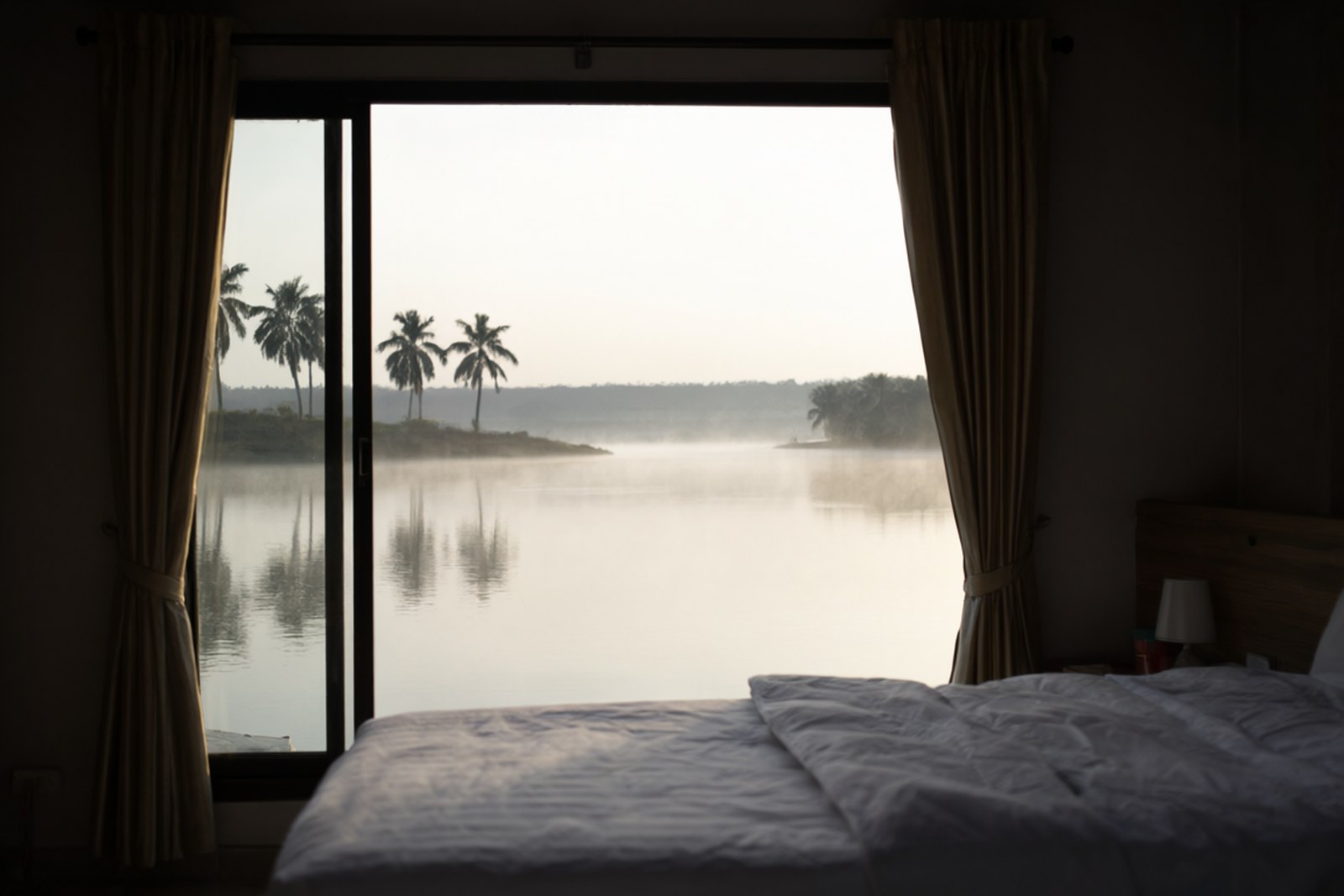
There are two lakes here rather than one. 木色湖 Mù sè hú holds about three square kilometres of open water and 雷公滩湖 Léi gōng tān hú about one and a half, the two lie less than two kilometres apart, and one sits 92 metres above the other – water falling through the gap as a waterfall, which is where 雷公滩, Thunder God Shoal, gets both its name and its rumble. Both are working irrigation reservoirs. The Muse Lake dam holds 22.33 million cubic metres drawn from a catchment of 18.31 square kilometres, takes about 22 million cubic metres a year and reaches 22 metres at its deepest, and the ground around the shore climbs from 115 metres to a high point of 595. Three islands stand in the reservoir, the wetland bays along the edge are a designated bird area, and the horizon is made of 牛血岭, 吊月岭, 双乳峰 and 鸡咀岭.
The season that decides the water is the same one that decides the county. Rainfall runs 1,960 to 2,400 millimetres a year over more than a hundred rain days, and the wet season from early May to late October carries 77 to 81 per cent of it, with September alone able to drop 300 to 420 millimetres; the dry months from December to March hold 7 to 10 per cent and every year bring a spring drought. Typhoons cluster in July, August and September, four or five tropical cyclones a season, though the county is classed as a light-typhoon area and most of them pass it by. The practical reading is simple. From December to March the lake is flat, the air is clear and the reflections are the ones on the postcards; from May to October it rains most afternoons, the waterfall below 雷公滩 roars at full volume, and the boats and the balloons stay on the ground.
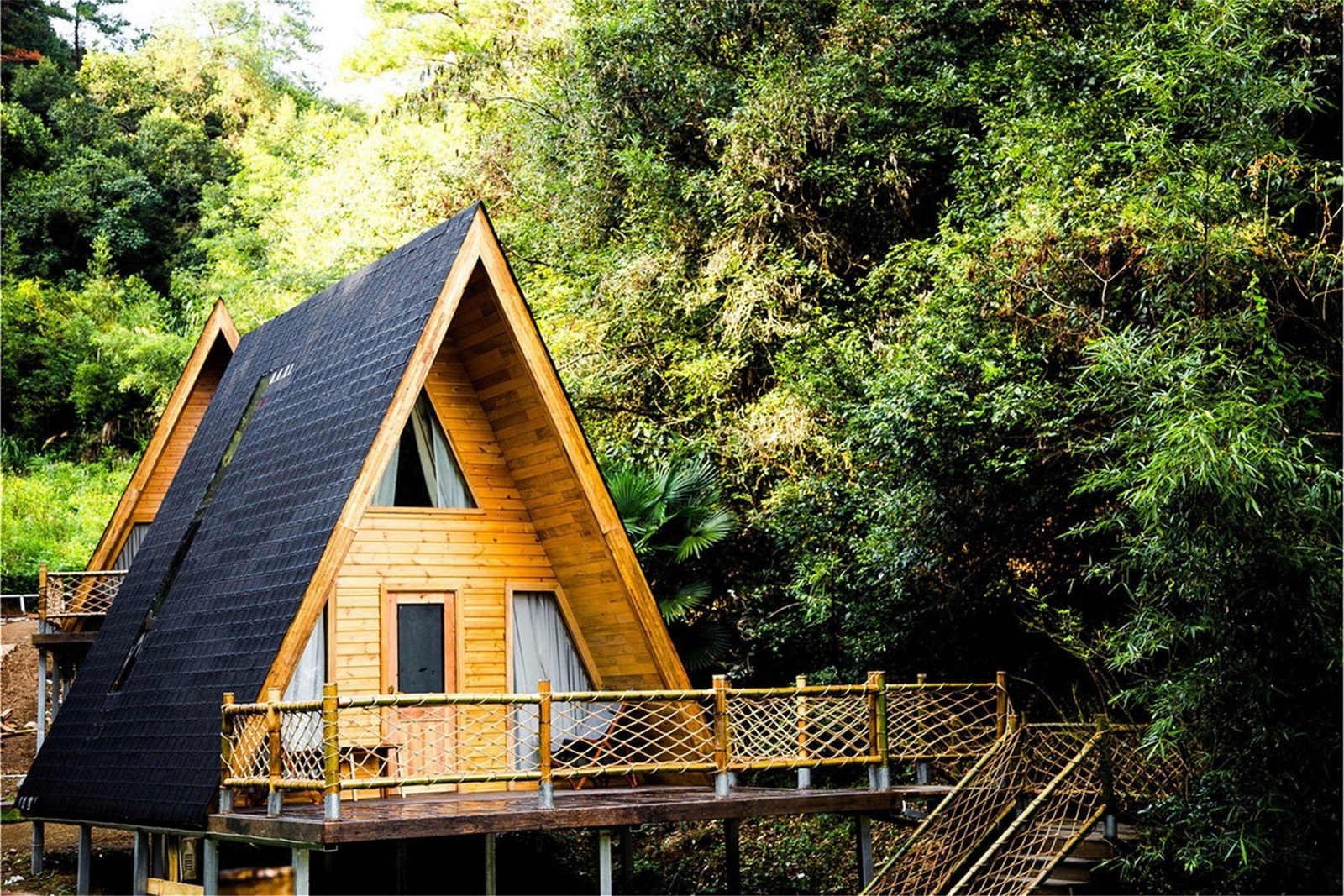
The one property with published numbers is 水云间 Shuǐ yún jiān, trading as MUSEVil, inside the 木色炫彩世界 Mù sè xuàn cǎi shì jiè park at 木色村 Mù sè cūn. It opened in 2023 with 16 rooms, and its room list is a strange and specific document: a 52 square metre 水榭 double, a 28 square metre suite, a 76 to 78 square metre deluxe, a 28 square metre 云墅 room and a 57 square metre loft duplex with two bedrooms and a living room, alongside marketing for safari tents and treehouses in the dense trees. It sells itself as 277 mu of lakeside park, which is the hotel’s own figure rather than a government one. Guests write about the manager waiting by the roadside to lead them in, about the quiet at night, about the junction signage being unclear, about dogs gathering outside the park after dark, and one wrote that the bed collapsed halfway through the night. Everything else on this shore is thinner: 金山风情度假村, the old 200-hectare 风情村 under 牛轭岭, has no published status, room count or rate left anywhere, and 仙鹿园酒店, the deer farm’s own hotel, survives as a single three-star database line. The provincial master plan lists what actually operates here – the deer farm, the golf course, the 南熙咖啡馆, the 炫彩世界 park and the 水云间 – and the golf course’s illegal reception building was demolished and the ground replanted in 2024.
What the Rooms Are Like
A room here is a small, well-finished modern cabin or a room in one of the two blocks, and the floor of the market is not a resort room because there is no resort. You get a firm bed or two singles, split air conditioning, a kettle, a television, a proper bathroom with a wall boiler or a roof tank behind the hot water, and a terrace or courtyard; the tent-shaped 水榭 units are glass-fronted with a view straight onto water and the 云墅 loft has a staircase and two bedrooms. Two things need asking about rather than assuming. The first is breakfast: the property’s own description says breakfast is included, its policy field says the hotel does not provide breakfast, and every guest comment agrees with the policy field, which is why the practical answer is to drive the few kilometres into 枫木镇 Fēng mù zhèn and eat 枫木腌粉 Fēng mù yān fěn or find a table at the 香草鸭 xiāng cǎo yā restaurant on the lake ring road. The second is the last mile, which is a narrow village lane with weak signage. Water, trees and warm air in a wet county also mean mosquitoes, and the host who builds a home-made mosquito-coil stand for your camping table is the norm rather than a luxury.
Practicalities
Price. The documented rate for the lakeside homestay is about 370 to 420 yuan a night at the entry end of its room list, taken from OTA pages on 29 September 2026, and the larger 水榭 and 云墅 rooms sit above that. Nothing else on the Muse Lake shore has a published rate: the old 风情村 cannot be booked, the deer farm hotel has no rate, and the 50-mu camping base on the lake was written up in 2011 and 2012 and its current status is unpublished. The dry season from December to March is the season people want, and it is also the season the sixteen rooms go first; the wet months are cheaper and the waterfall is better. Treat every figure as a range and check the live rate.
Address. The lakeside rooms are at 木色村 Mù sè cūn in 枫木镇 Fēng mù zhèn, in 屯昌县 Tún chāng xiàn, inside the 木色炫彩世界 Mù sè xuàn cǎi shì jiè park on the shore of 木色湖 Mù sè hú; the scenic area runs along the 海榆中线 Hǎi yú zhōng xiàn at about kilometre 112, west of the 枫木互通 Fēng mù hù tōng junction on the 海三高速 Hǎi sān gāo sù, and the county town is about 20 kilometres north-east.
Rooms. Ask which of the several shapes you are booking, because one small operator sells ordinary rooms, glass tents and loft suites out of the same site and the booking page shows the best of them. Ask about breakfast in writing, since the description and the policy field contradict each other. Ask whether the room faces open water or the park’s buildings, and ask for an upper floor in the wet months. Ask about pets before you travel: the property does not take them. Ask whether the park’s café and the deer farm’s gate are open on your dates, since these are small operations on rural hours, and ask for the tide of traffic on the lake ring road, because only half of the twelve-kilometre circle is finished and the rest of the driving is on village dirt.
Getting there. There is no passenger railway station in 屯昌县 Tún chāng xiàn – 屯昌站 is a proposed stop on the proposed central-line high-speed railway, still at the pre-feasibility stage – so arrival is by road. From 海口 Hǎi kǒu the coach leaves the main bus terminal for Tunchang, about 90 kilometres for 23 to 29 yuan depending on the class of vehicle, and from 屯昌车站 Tún chāng chē zhàn the county bus to 枫木镇 Fēng mù zhèn runs 22 kilometres for 6 yuan; by car it is the 海三高速 Hǎi sān gāo sù, off at the 枫木互通 Fēng mù hù tōng, then the 海榆中线 and the lake road. The new 环热带雨林国家公园旅游公路 Huán rè dài yǔ lín guó jiā gōng yuán lǚ yóu gōng lù 枫木支线 is 5.544 kilometres of two-lane road with four bridges and one viewing platform, costing 105 million yuan, and it is due to close the lake loop at the end of 2026.
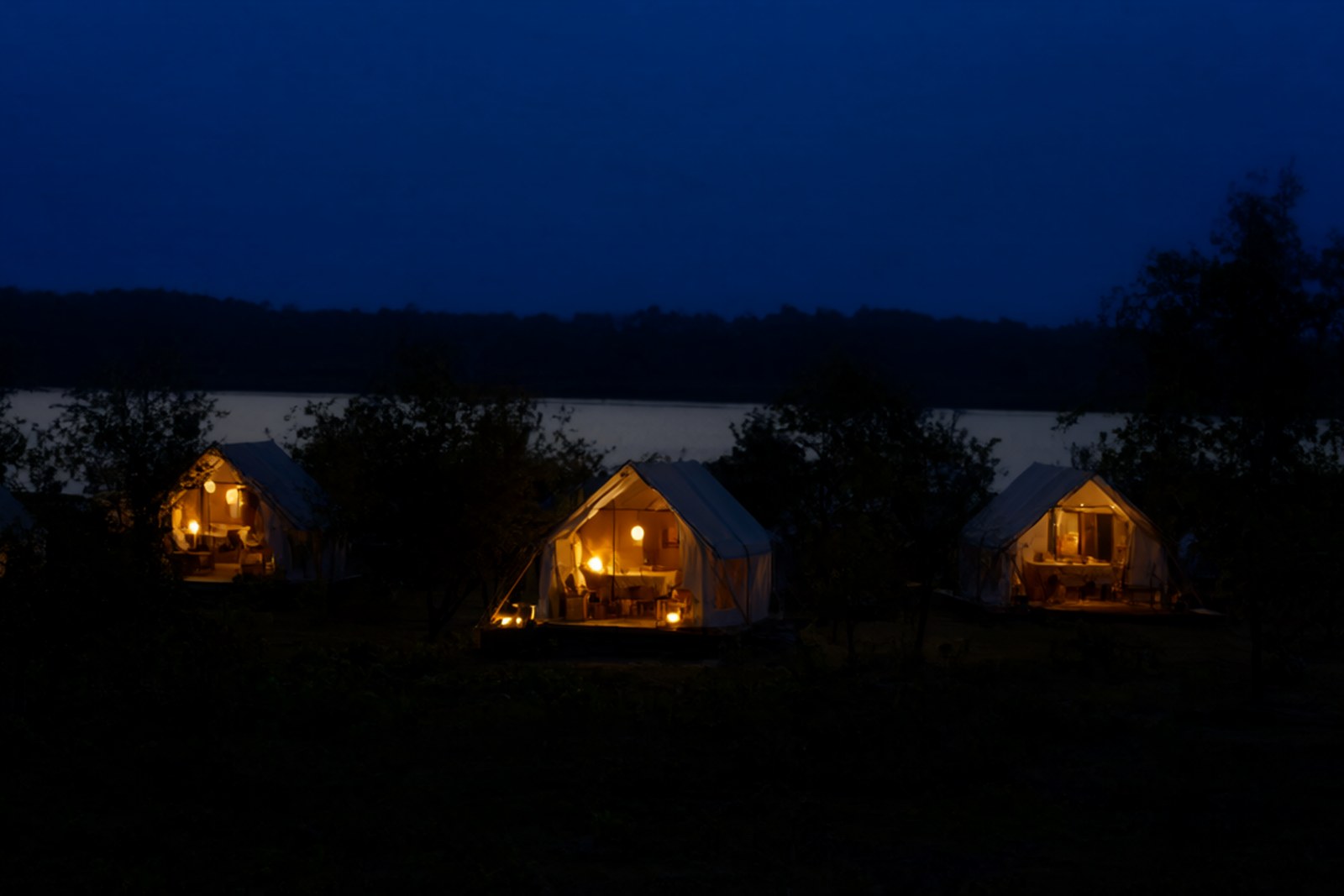
Where to stay: one of the sixteen rooms at 水云间 Shuǐ yún jiān on the shore of 木色湖 Mù sè hú at 木色村, 枫木镇 Fēng mù zhèn, 屯昌县 Tún chāng xiàn, where the water, the rainbow-painted dam wall, the deer farm and the coffee house are all within a few minutes of the door. Take the room for the early morning on the water rather than for the park, plan on driving into 枫木镇 for breakfast, and come in the dry months if you want the reflection and in the wet months if you want to hear the waterfall.
flowcloud would say that a provincial scenic area which has been on the map since 1992 and still owns exactly sixteen rentable beds has accidentally kept the best thing about it, which is that the lake at six in the morning belongs to whoever got up – and that the correct way to sleep here is to accept the missing breakfast, the unlit junction and the half-built ring road as the price of the quiet.