
Namuting No.9
The last time I stayed here I was woken by a kettle.
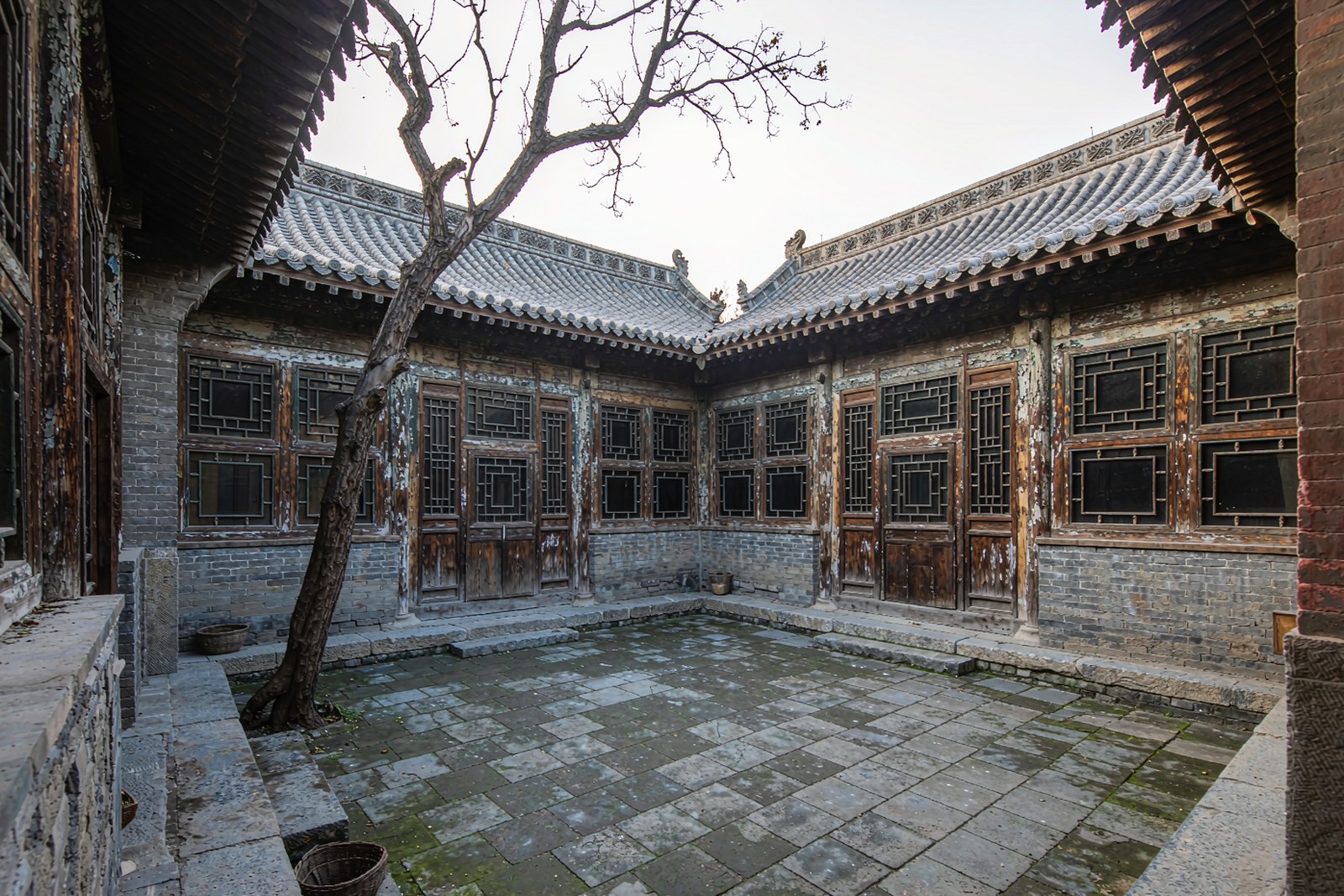
Not a hotel kettle, plugged into a wall, clicking off. A real one, on a brazier, in a courtyard, being dealt with by somebody who had been up for an hour. It is a sound you do not expect in a city of eight million people and it is the entire product of 楠木厅九号民宿 (Namuting No.9): a traditional courtyard house in the old town where the day starts with boiling water for tea.
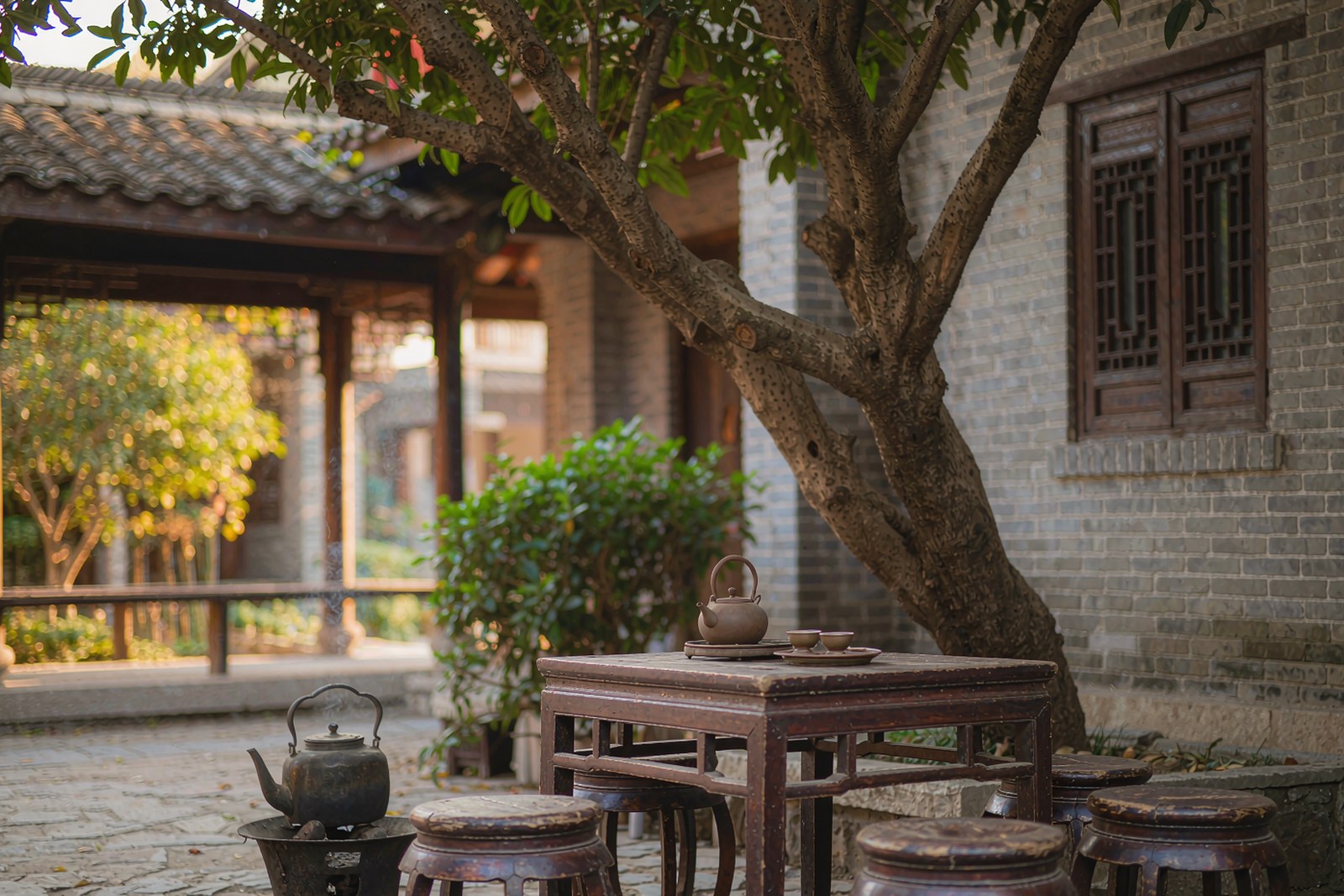
The house sits in 楠木厅巷, a lane off 连升街 in the 潮宗街 historic district, at number 9 — 楠木厅 means “camphor-wood hall”, and nine is nine. It is a 四合院 (siheyuan), the classic walled courtyard plan: buildings on all four sides, open to the sky in the middle. And in the middle stands a tree that the staff say is a hundred years old, with a tea pavilion under it and a bench and a table.
What a 茶宿 Is
楠木厅九号 is not a hotel that happens to serve tea. It is a 茶宿 — a tea-lodging — which is a specifically Chinese idea with no clean English equivalent. The house was converted from a traditional building inside the 潮宗街 conservation area, and the conversion was organised around one activity: drinking tea slowly, in a nice room, with nothing else to do.
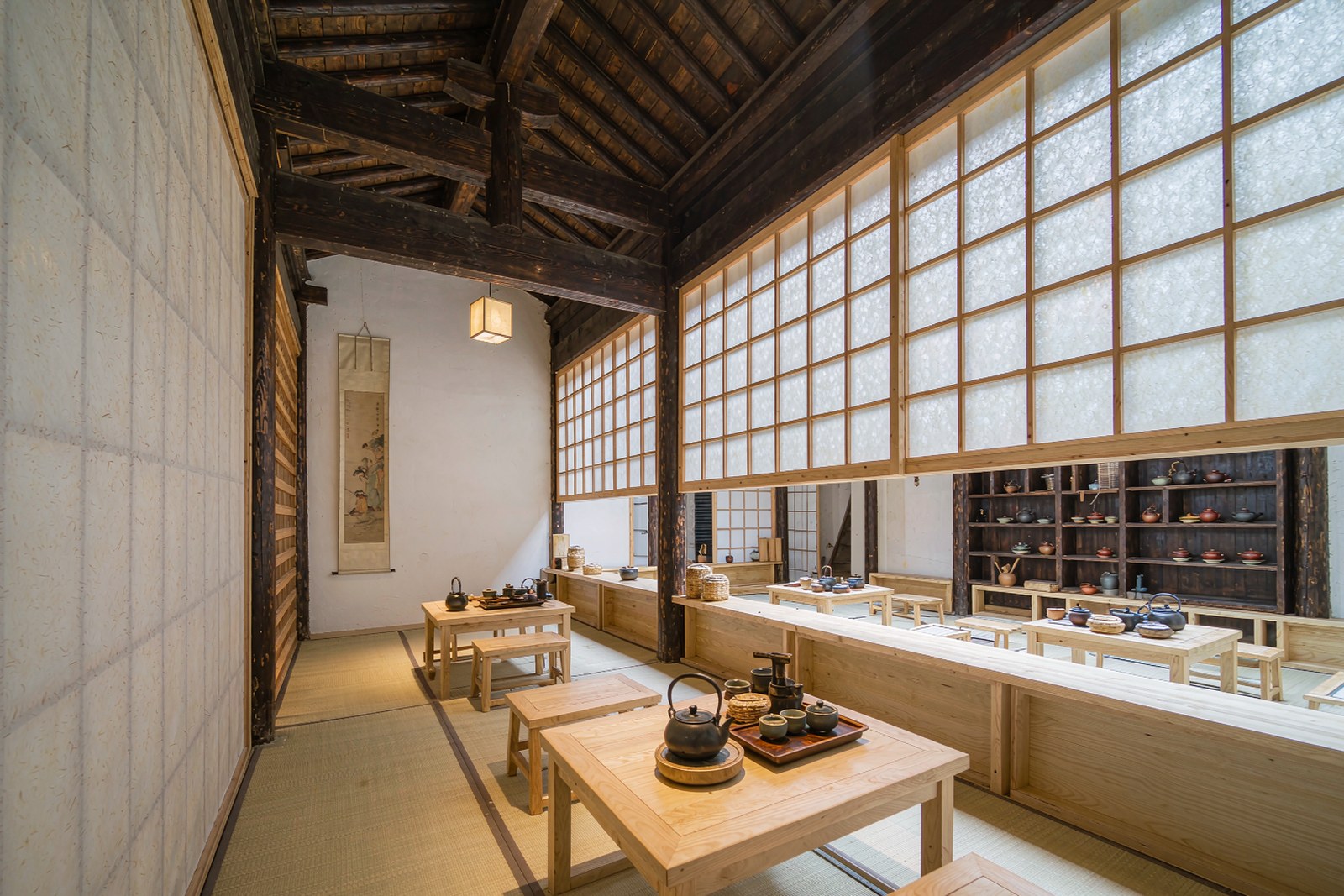
So the ground floor, which in another guesthouse would be a reception desk and a luggage store, has been rebuilt as a teahouse — traditional Chinese forms on one side, a modern Chinese minimalism on the other, with windows people stop in front of to photograph. It is open as an afternoon-tea spot to non-residents, which means the common area is a real room with a real purpose rather than a lobby.
And in each guest room there is a complete tea setup: teapot, cups, tray, and the space to use them properly. The drinking water supplied is 农夫山泉 (Nongfu Spring), which sounds like a small thing to notice until you try brewing good tea with bad water. The owner’s line, roughly translated, is that the house is for people who love tea, love beautiful things and love life, and who want somewhere with a bit of warmth to it.
The Courtyard, and the Winter
The courtyard does the work in summer and the fire does it in winter.
Under the tree there are tea tables, and in the cold months they bring out a charcoal brazier — 炭火煮茶, tea boiled over charcoal, which is a slower and smokier and altogether better thing than tea made in a kitchen. Alongside it, 板栗 and 糍粑 (ciba, pounded glutinous rice cakes) go on the grill. Chestnuts and toasted rice cake, over coals, in a courtyard in an old southern city, with a pot of tea: it is the single best justification I can give for this place, and it is not available anywhere else at this price.
The Rooms
Thirteen rooms or so, named after tea and water rather than numbered, which is either charming or irritating depending on your feelings about finding your own door at midnight.
- 泠水 / 圆璧 / 生翠 / 啜茗 — King rooms with the full tea set and a 禅意茶台, a low tea table
- 灵芽 — King with a complete tea service and the meditative tea table; the connoisseur’s pick
- 凝烟 / 光莹 — King rooms with a bathtub
- 香永 — Projection-screen room with tub; big wall, big film
- 素瓷 / 流霞 — Twin/double rooms
- 瑟尘 / 芳丛 / 沫香 — Family rooms, including a parent-child room with the tea set
The specification is better than the phrase “guesthouse” suggests and clearly deliberate: central air-conditioning and 24-hour central hot water throughout; hotel-standard bedding and toiletries; and in every bathroom, 科勒 (Kohler) basins, taps, showers and WCs. That is the detail that tells you who this place is aimed at — people who want an old courtyard and a tea ceremony, but who have no intention of accepting a bad shower to get one.
There is parking with charging points, a call-a-car service, laundry, and a chargeable 棋牌室 if your party wants a mahjong room. Rooms are non-smoking.
What It Costs
The entry rooms start at about ¥390 a night, which is the reason this place matters in this list. There is a five-star design hotel a few hundred metres away on the same street — 6500 — that starts at around ¥1,000. 楠木厅九号 is not competing with it. It is offering the same granite lanes, the same six hundred years of the old town, and the same walkability, for a third of the money, and asking in return that you accept thirteen rooms instead of dozens, a courtyard instead of a lobby, and a bathtub down the hall instead of in your room.
For a couple staying three nights in Changsha, that is a difference of around a thousand yuan — which in this city is a great many bowls of noodles, and a very large amount of 口味虾.
The Location
连升街 and 楠木厅巷 sit inside the 潮宗街 area of 开福区, on the north-west side of the old city. In practical terms: a short walk to 中山亭 and 五一广场; the 太平街 food street and 火宫殿 within reach on foot; 长沙 IFS and the shopping district beyond it a little further. Metro line 1 to 培元桥 puts you close, and line 2 to 五一广场 is the other sensible arrival.
The trade-off of this specific location, as with 6500, is that you are not on top of the nightlife. You are ten to twenty minutes from it. What you get back is a lane where the loudest thing at eleven at night is somebody’s kettle.
Practicalities
Best for: couples, solo travellers, anyone who actually likes tea; people who want the old town without the old-town price. Also genuinely good in winter, which is unusual — the brazier and the courtyard work better in January than in July.
Less good for: people who want a lift and a lobby, anyone with mobility issues (it is an old courtyard house, and stairs are stairs), and anyone who needs to park more than one car.
Ask for: a room with the 禅意茶台 if you intend to use the tea properly. And ask when the brazier gets lit — it is seasonal, and it is the thing you are paying for.
flowcloud would say that the most expensive thing in a hotel is usually the silence, and that a courtyard with a kettle in it is the cheapest way ever invented to buy some.
Where to stay: 楠木厅九号民宿 (Namuting No.9), 楠木厅巷 9 号, off 连升街, 潮宗街 district, 开福区, Changsha. Rooms from about ¥390. Metro line 1 to 培元桥, or line 2 to 五一广场. A courtyard teahouse with thirteen rooms, a hundred-year-old tree, and a charcoal brazier in winter.