
南坤镇 Nán kūn zhèn, 坡心镇 Pō xīn zhèn and 西昌镇 Xī chāng zhèn are the three townships that make up the county’s farm-stay belt, strung south and west of the county town of 屯城镇 Tún chéng zhèn across paddy, betel-nut and rubber land. 屯昌县 Tún chāng xiàn is one of the six inland counties of 海南省 Hǎi nán shěng and has no coastline, so this is not beach country dressed up as countryside: it is the hilly middle of the island, described by the county itself as seven parts hill, two parts slope and one part field. The belt has two poles and almost nothing in between, which is the most useful thing to know before booking. At one end is a tent camp in the rice at roughly 760 to 1,750 yuan a night; at the other is a silver-rated farm homestay from about 249 yuan with a water park attached.
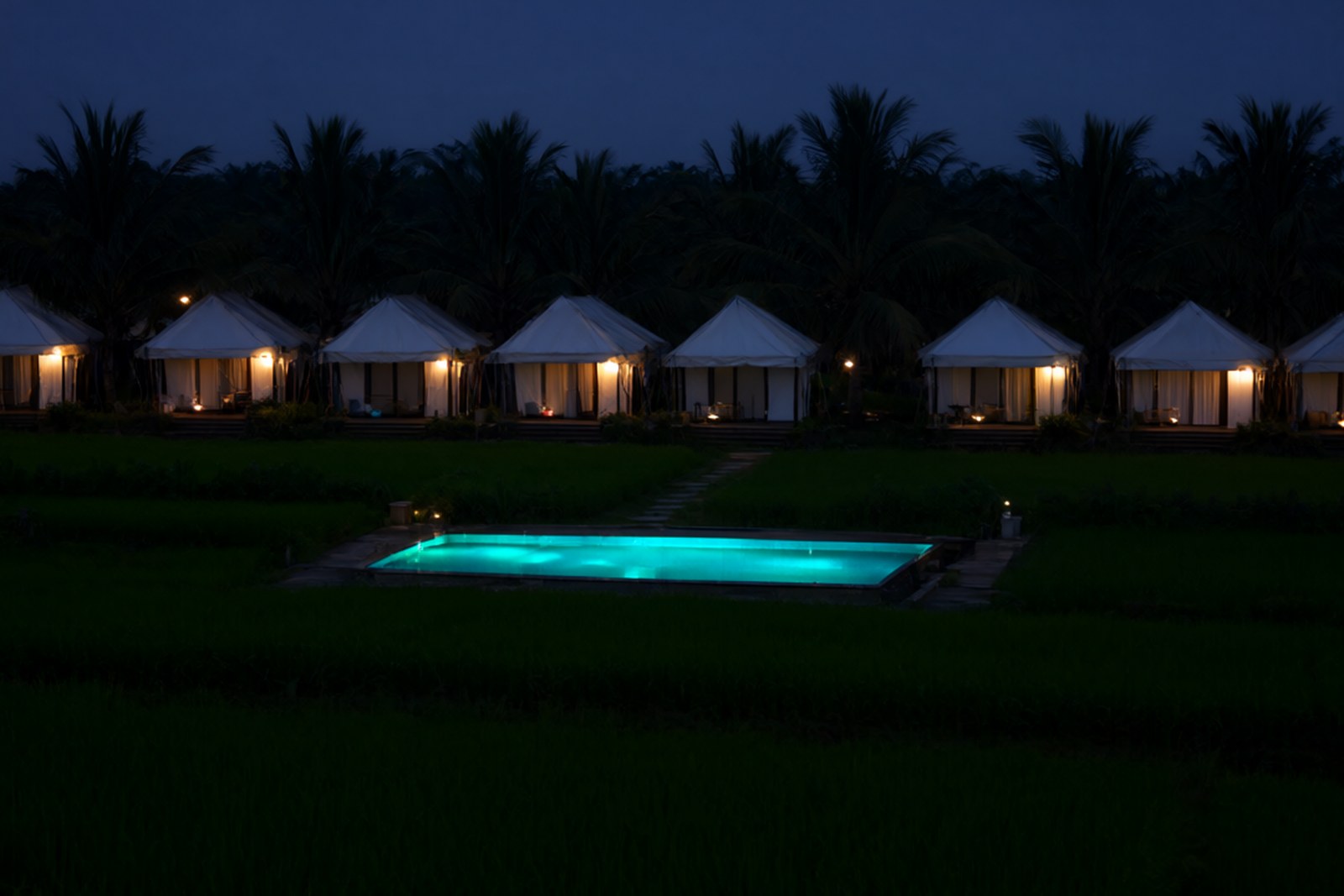
The expensive pole is 归旅野奢·坡林稻香 Guī lǚ yě shē·Pō lín dào xiāng at 坡林村 Pō lín cūn in 南坤镇 Nán kūn zhèn, which the county describes as 60 mu of ground with about 2,600 square metres of building and a plan for 23 high-end rooms, and which the press and its own guests describe as 16 free-standing tents standing in the fields and woods with rooms from 60 to 120 square metres. The tent interiors are the whole pitch: four-poster beds under gauze, skylights over the bathtubs so that you can watch the leaves move while you soak, floor-to-ceiling glass, an easel with a blank sketchbook left in the room, and at dusk a blue-green pool with the warm lamps going on behind it. The site runs a 3.6-kilometre paddy walking loop led by a butler, an infinity pool facing the rice, a wilderness tea room, a village library, singing-bowl sessions, campfire folk nights and paddy-field dinners under the stars, with rubber tapping, Li brocade work and fish-catching in the fields thrown in. The kitchen cooks local only – 香草鸭 xiāng cǎo yā, 屯昌黑猪 Tún chāng hēi zhū, poached chicken and 南药 nán yào herbal dishes – and breakfast is a bowl of soup noodles eaten in the paddy mist. The last three kilometres are a lane between betel-nut groves and rice, which is the point and also the practical warning.
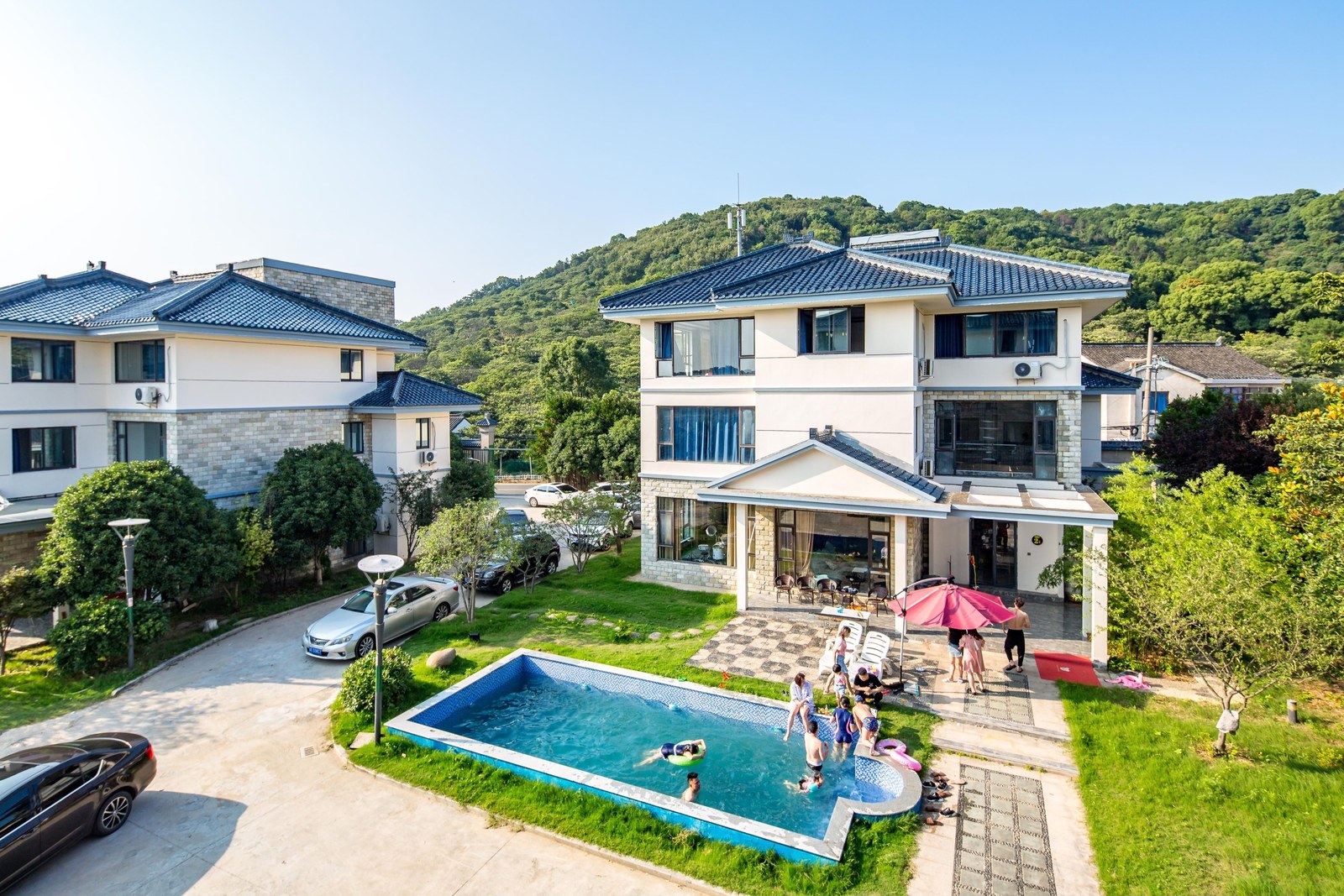
The affordable pole is 凡迪农场 Fán dí nóng chǎng at kilometre 94 of the 国道 224 road in 关朗村 Guān lǎng cūn, 坡心镇 Pō xīn zhèn: 416 mu of shared farm that in 2025 was rated a five-coconut rural tourism site, a green-coconut rated shared farm and, through the 艾湖民宿 Ài hú mín sù inside it, a silver-graded rural homestay in the province’s seventh grading round. The buildings are modern wabi-sabi and split across four clusters – 艾左 Ài zuǒ, 艾右 Ài yòu, 艾湖 by the water and 艾林 among the riverside trees – with doubles, family rooms and suites, starting at about 249 yuan. Three dining areas seat more than seven hundred people, including a lakeside restaurant where the breakfast is built around the county’s black pork; there is a 6,000-square-metre water park with slides and a musical fountain, a petting enclosure, fishing, and 90 mu of greenhouses that pick strawberries, blueberries and wax apples through the seasons. It is a family farm rather than a retreat, and it is the best-value bed in the belt by a wide margin.
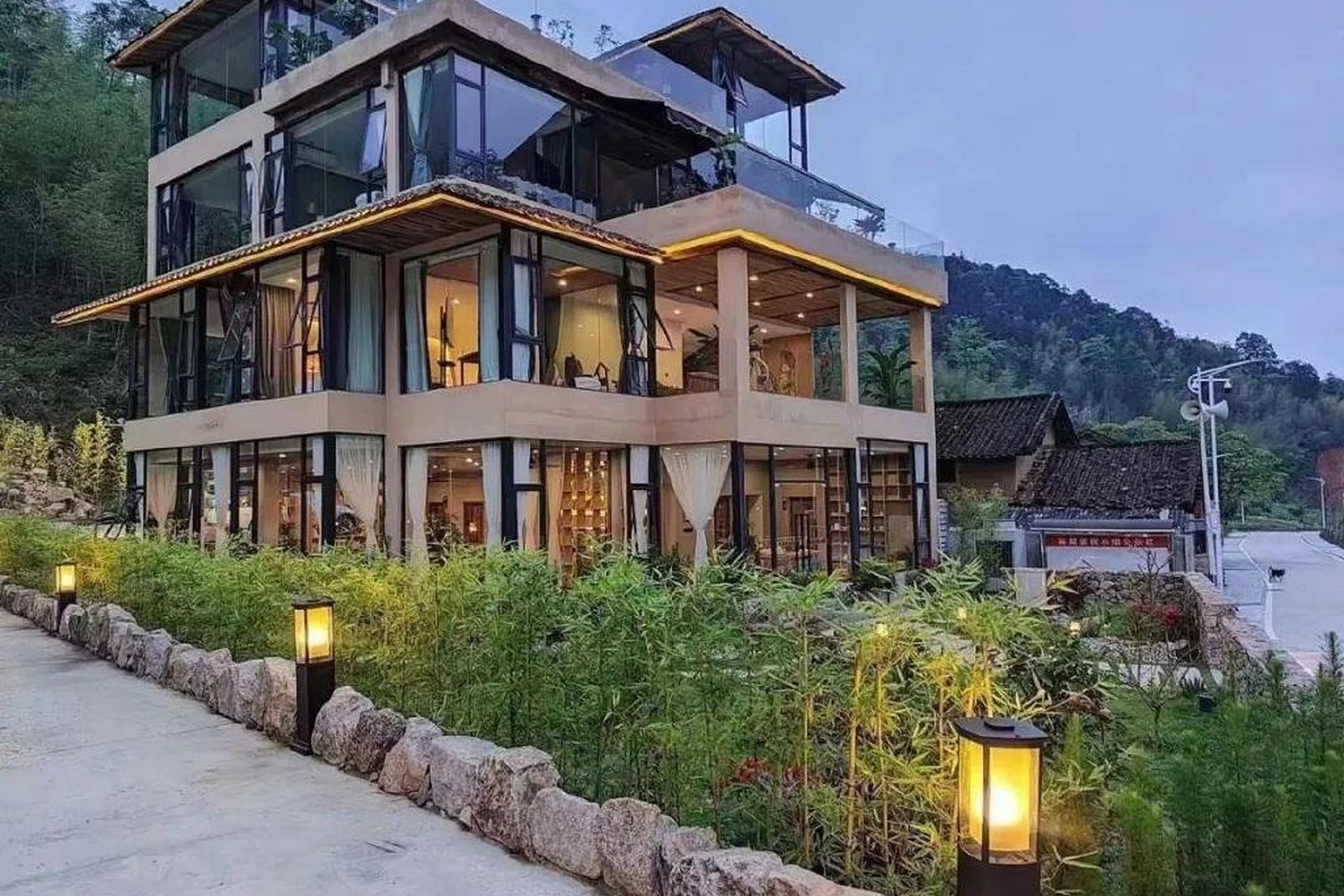
Two more pieces of this belt are worth knowing because they are what the next five years look like. 南熙咖啡木棉山庄 Nán xī kā fēi mù mián shān zhuāng, the Nanxi coffee kapok manor at 南熙村 Nán xī cūn in 西昌镇 Xī chāng zhèn, opened on 9 July 2025 on about 40 mu, with a coffee experience hall of nearly a thousand square metres built out over the water, its ground floor pouring more than twenty coffee and tea products and its upper floors given to viewing terraces; behind it, the town pooled 6.34 million yuan of collective funds from six villages and revived an idle school building into a coffee industry park, which is why a coffee brand carries a village’s name. It includes a boutique homestay, but no room count, rate or grading has been published for it, so the honest description stops at the phrase the sources use. And 美鹤园村 Měi hè yuán cūn in 榕仔村 Róng zǎi cūn, 南坤镇 Nán kūn zhèn, is a bamboo village rated at three coconuts in 2019 and is often called the county’s most beautiful, with bamboo trails, a leisure station, costume photography, tea boiled over a brazier and a brand name that plays on the characters for knowing bamboo; what it does not have, on the evidence available, is a working homestay, so the bamboo is a daytime stop and the bed is back in 坡林村 or 南坤镇. Two warnings belong here as well. 猪哈哈的农场 Zhū hā hā de nóng chǎng, the container-inn farm on the same stretch of the 国道 224, is still described as open by some tourist listings and as temporarily closed with no reopening date by the main domestic booking platform, so ring before driving. And the 旋风虎军事主题园 Xuàn fēng hǔ jūn shì zhǔ tí yuán at 下屯村 Xià tún cūn in 新兴镇 Xīn xīng zhèn, which does have military-style barrack accommodation, admits only organised groups and study tours, not independent travellers.
What the Rooms Are Like
The two poles are two different buildings. A tent at 坡林村 is a stretched canvas room of 60 to 120 square metres with a real bed, real plumbing, hot water and air conditioning, and the fabric makes it a different proposition from a room: it breathes in the heat, holds damp after rain, and puts you audibly inside the paddy at night, which is exactly what people pay for and exactly why the camp will move a booking when a typhoon is forecast. A room at 凡迪农场 is a wabi-sabi concrete-and-timber room in one of four clusters, plainer and firmer, with the lake or the trees outside and a family water park below. Both are in mosquito country, because rice, bamboo, betel-nut and standing water are a wetland in all but name; both are reached by a lane rather than a road, and both need the car that got you there for anything else. And both sit under the province-wide rule that arrived on 1 January 2023, under which hotels, guesthouses and homestays across 海南 no longer put out single-use plastic items, so bring a toothbrush or ask at the desk. The condition of the county’s rural sites changes quickly, so a telephone call the day before is not politeness here, it is planning.
Practicalities
Price. The tent camp at 坡林村 starts at about 760 yuan at one booking site and about 1,750 at another, with an overseas listing working out near eighty pounds, and the honest statement is that the range is that wide and the official channel is the one to check. The farm homestay at 凡迪农场 starts at about 249 yuan and the new coffee manor has published nothing. Farm dinners on this belt have run at about 95 yuan a head at the pit-cooking restaurants. December to March is the dry, comfortable season and also the season for rubber tapping and root harvest; May to October is wet and humid; July to September is the typhoon window, in which tents are usually the first thing on the site to be rescheduled. Treat every figure as a range and check the live rate.
Address. The stays are in 坡林村 Pō lín cūn in 南坤镇 Nán kūn zhèn, in 关朗村 Guān lǎng cūn in 坡心镇 Pō xīn zhèn at about kilometre 94 of 国道 224, and in 南熙村 Nán xī cūn in 西昌镇 Xī chāng zhèn, all within 屯昌县 Tún chāng xiàn, with the bamboo village 美鹤园村 in 榕仔村 Róng zǎi cūn, 南坤镇, the container farm on the same 国道 stretch, and the tent camp reached on a three-kilometre lane through betel-nut and rice after leaving the highway.
Rooms. Ask which pole you are booking, because the words 民宿, 共享农庄, 野奢帐篷 and 咖啡庄园 all get translated as farm stay and mean completely different nights. Ask whether the tent has air conditioning and a real bathroom, and ask what the site does about insects, since a canvas room in a paddy in the wet season is the county’s most committed mosquito experience. Ask about dinner, with how much notice, and whether anything else is open within walking distance after dark. Ask whether the package includes the activities, because some of the walking, tea and campfire sessions are free and some are not. And ask two questions that decide a trip rather than a night: whether the site is open at all, since the county’s rural attractions have a habit of changing status, and what the lane in looks like in the rain.
Getting there. 屯昌县 Tún chāng xiàn has no passenger railway station and 屯昌站 remains a proposed stop on the proposed central-line high-speed railway, so everything in this belt is reached by car or by hired car. From 海口 Hǎi kǒu the highway is the 海三高速 Hǎi sān gāo sù, leaving at the 屯昌 Tún chāng, 枫木 Fēng mù or 大同 Dà tóng interchange depending on the village, and the tent camp puts its own distance from 海口美兰机场 at about 100 kilometres and an hour. By bus, 海口 to 屯昌 is about 90 kilometres for 23 to 29 yuan, and several county services run to 南坤 Nán kūn, 中建农场 and 黄岭农场 on routes approved in 2026 at a floor of six departures a day each, which is another way of saying that the buses exist but cannot be relied on. The nearest large airport is 琼海博鳌国际机场.
Where to stay: a tent at 归旅野奢·坡林稻香 Guī lǚ yě shē·Pō lín dào xiāng at 坡林村 Pō lín cūn, 南坤镇 Nán kūn zhèn, if the night in the rice is the point, and a room at 艾湖民宿 Ài hú mín sù inside 凡迪农场 Fán dí nóng chǎng at 关朗村, 坡心镇, if the water park, the children and the price are. Both are in 屯昌县 Tún chāng xiàn, an hour or so by car from 海口 and three to five minutes down a village lane from whichever town you came through, and both are better for a telephone call before you set off.
flowcloud would say that a county which puts a canvas suite with a skylight over the bathtub at one end of the same paddy and a two-hundred-and-forty-nine-yuan room with a water park at the other has quietly answered the question of who the countryside is for – and that the right way to sleep out here is to take whichever end you can afford, leave the car at the gate, and let the frogs do the rest.