
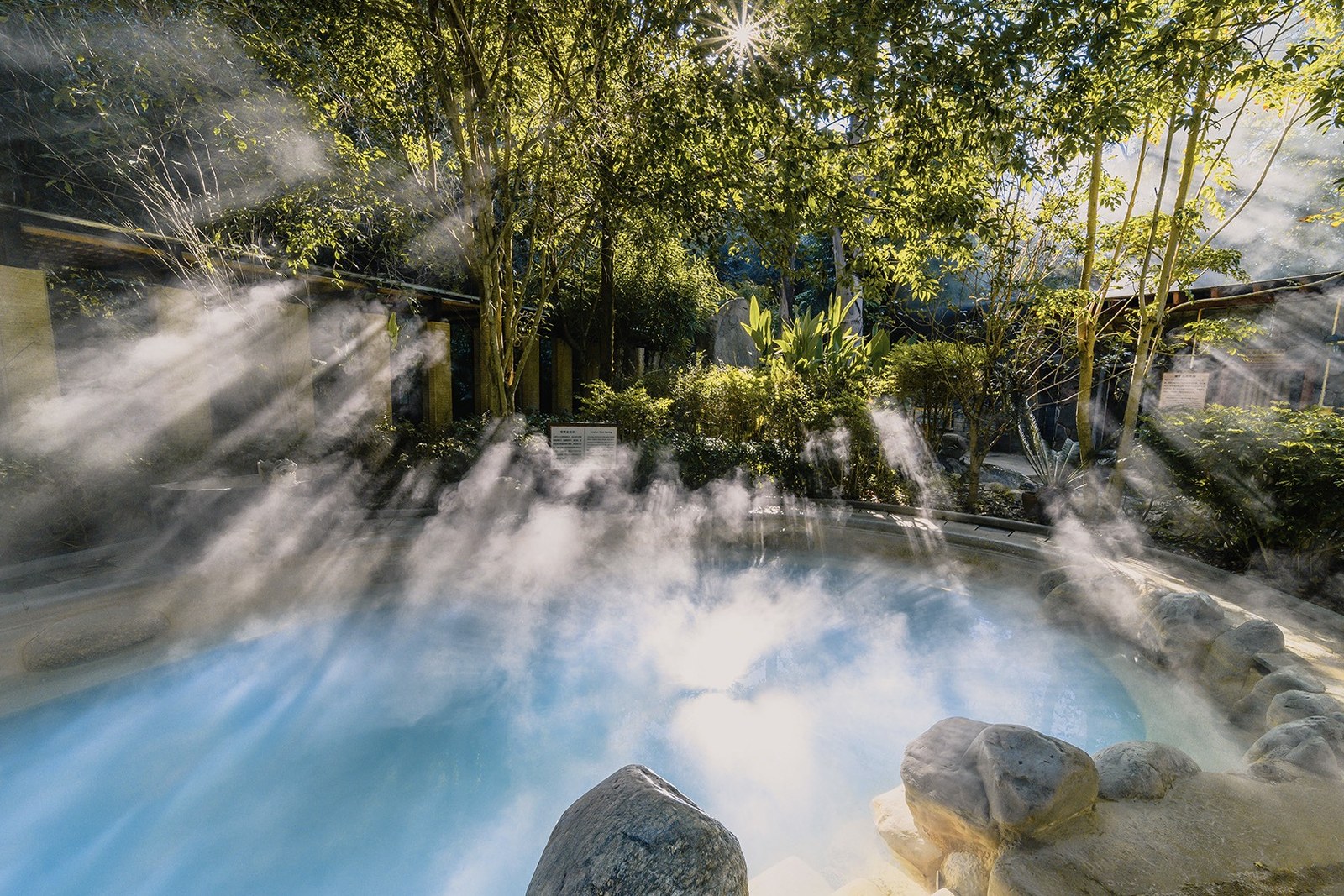
The water in the tub is hot enough that you have to lower yourself in slowly, and it smells faintly of minerals rather than of chlorine. Around you the slope rises, planted with bamboo on one side and broadleaf trees on the other, and because the tub is set into a terrace cut into the hillside there is nothing above you but leaves and the dark. The only light is what comes from the room behind you. It is completely quiet apart from water running into the pool from a bamboo spout and, somewhere below, a stream. 南昆山 Nánkūnshān, Nankun Mountain in 龙门县 Lóngmén Xiàn, is where Huizhou goes to be cold, and the guesthouses that have grown up along the road that climbs it are built around exactly this: a private hot tub, a forest, and a great deal of nothing.
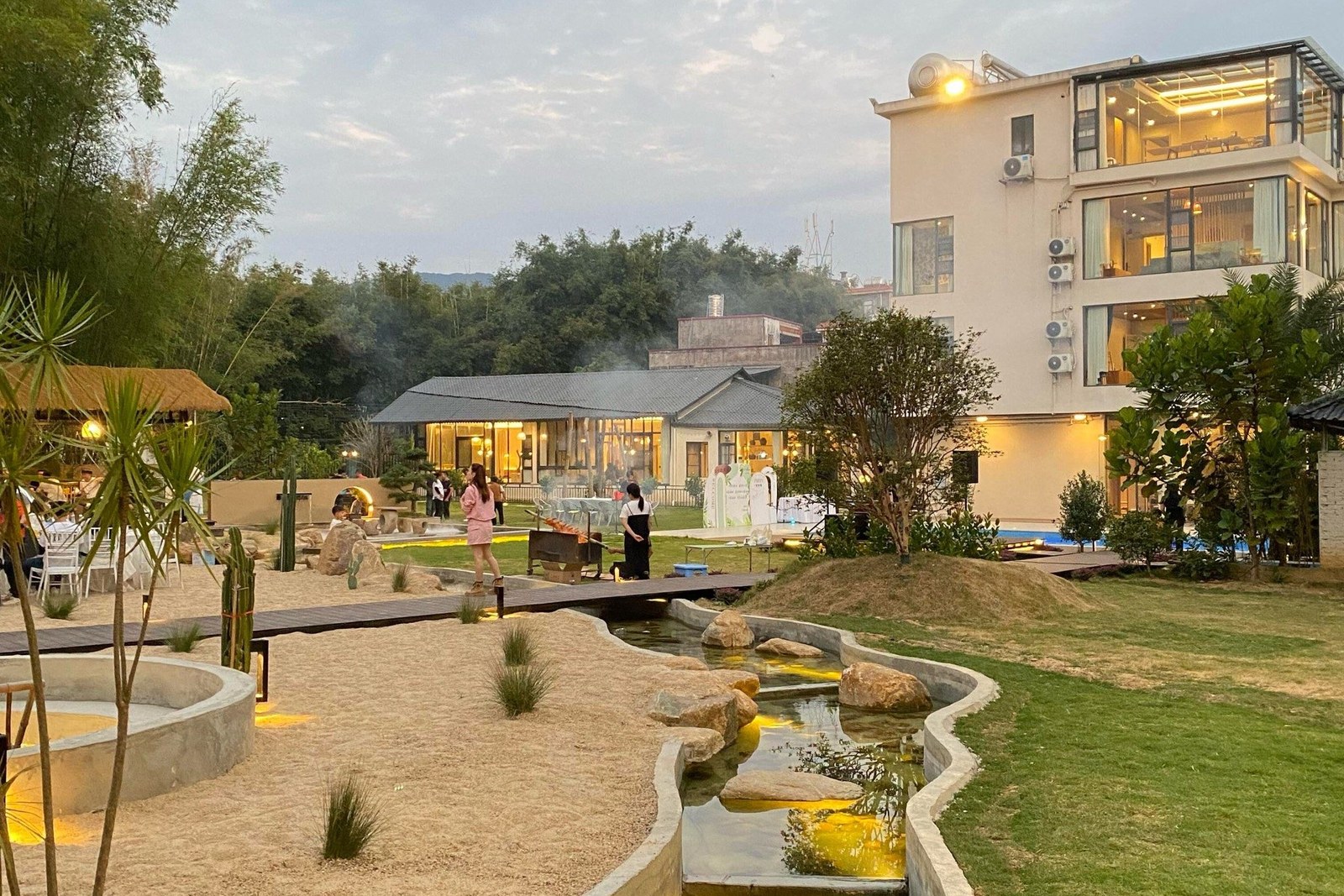
The mountain is a mass of forested ridges just north of the Tropic of Cancer, and the local descriptions — 北回归线上的绿洲 běihuíguīxiàn shàng de lǜzhōu, an oasis on the Tropic of Cancer, and 南国避暑天堂 nánguó bìshǔ tiāntáng, the south’s summer refuge — are about temperature as much as scenery. At around 600 metres average elevation, with high forest cover, Nankunshan runs several degrees cooler than the coast and the delta, which is why Guangzhou families have summered here for decades. What changed in the last fifteen years is the accommodation. The old state-run sanatoria have been joined by a belt of small owner-run houses along 省道 355 S355 and the side road known locally as the 218 road, most of them five to fifteen rooms, most of them with hot spring water piped to the property, and most of them run by families who also cook.
Practicalities
Price. A double room in a small forest guesthouse costs roughly ¥300 to ¥700, with breakfast often included and dinner available for around ¥80 to ¥150 a head. The premium is for a room with a private tub rather than access to a shared one, which typically adds ¥150 to ¥300. Weekend and holiday rates in July, August and the National Day week can double, and the quiet months — late spring and autumn — are both cheaper and, for most people, better.
Address. The guesthouses are strung along 省道 355 S355 and the 永汉 Yǒnghàn approach, and around the villages of 中坪 Zhōngpíng and 上坪 Shàngpíng inside the 南昆山 Nánkūnshān area of 龙门县 Lóngmén Xiàn, Huizhou. Individual properties are usually named for the village or the ridge rather than for a street, so check the map rather than the postal address when booking.
Rooms. Expect a simple, clean room with timber or tile floors, a firm bed, an electric blanket or a heavy quilt because winter nights at this elevation are genuinely cold, and a bathroom with good hot water. The tub is the feature: some are on private terraces, some on balconies, and a few properties have outdoor pools fed by the same source. Sound insulation is limited and the forest is loud at night, which is either the attraction or the problem, depending on you. Bring shoes that can handle a wet path.
Getting there. By car from 广州 Guǎngzhōu is about 1.5 hours and from 深圳 Shēnzhèn around 2 hours, following the expressway to 龙门 Lóngmén and then the mountain road; from Huizhou city allow about 1.5 hours. Buses run to 龙门 Lóngmén town and 永汉 Yǒnghàn, but services up the mountain itself are thin, and most guests arrive by car or by booked transfer. If you have no car, choose a property within walking distance of a village with restaurants.
flowcloud would say that the appeal of a Nankunshan guesthouse is not the hot water, which you can get in any city, but the ten metres of dark forest between the tub and everything else.
Where to stay: pick a small owner-run property rather than a large resort if you want the quiet, and pick one high enough on the road that the view from the tub is forest rather than car park. Ask whether the hot water is a genuine spring supply or a heated tank, how far the nearest village restaurant is, and whether the lane is passable after heavy rain. Book directly where you can — small houses here often hold rooms back from the booking sites.