
城步苗族自治县 Chéngbù Miáozú Zìzhìxiàn is the southernmost county of 邵阳市 Shàoyáng shì, wedged against 广西 on two sides, and on the high ground in its south-west there is a grassland that runs eighty li without a fence on the horizon. 南山 Nán shān, the southern mountain, is a hundred and fifty-two square kilometres of open pasture at an average altitude of seventeen hundred and sixty metres, and a guesthouse here is a farmhouse or a small hotel standing in the grass, with a wooden fence, a milking shed, a herd of dairy cattle working slowly across the slope and nothing tall between you and the weather.
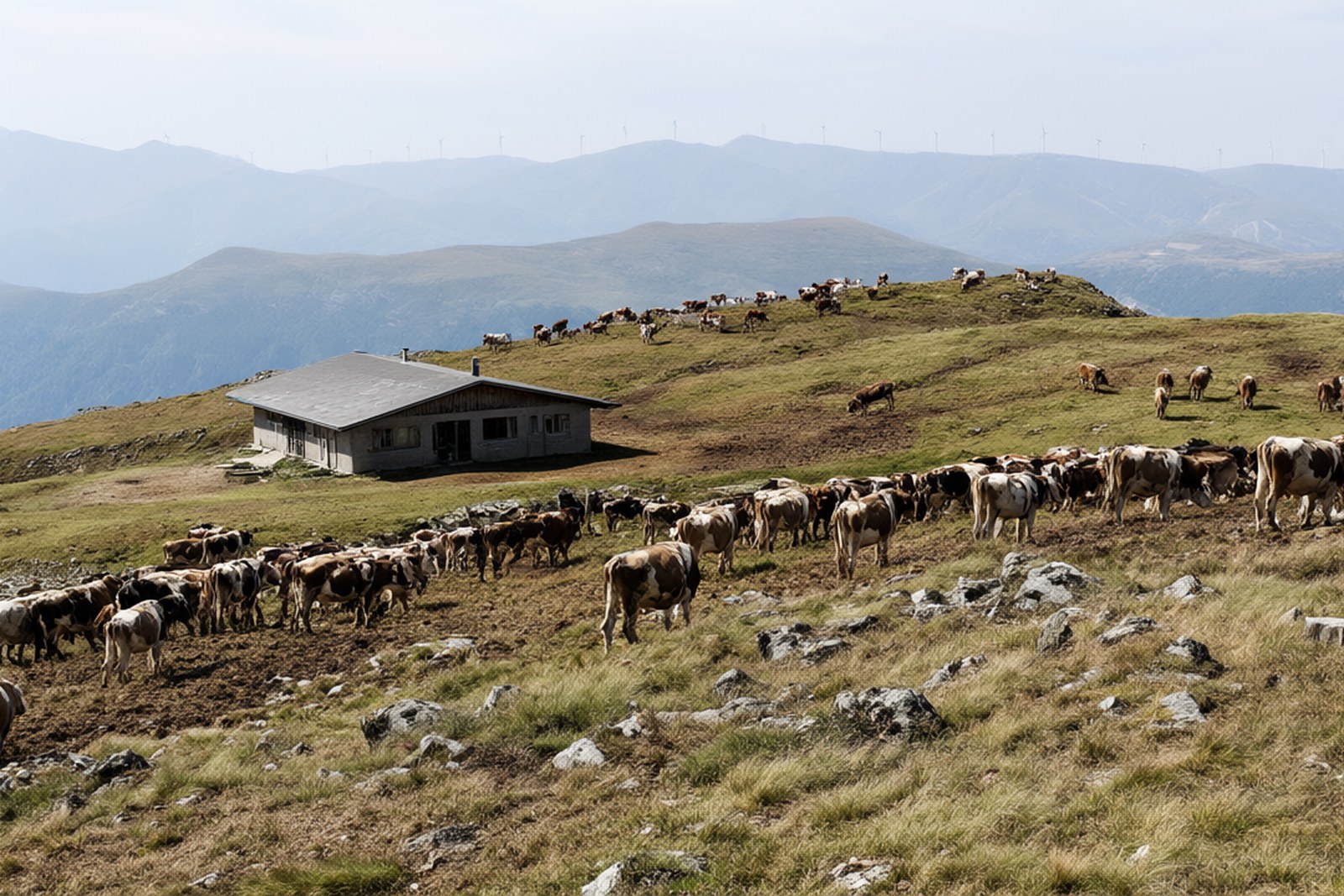
The pasture is a made thing, which is the interesting part of it. 南山牧场 Nán shān mù chǎng, in full the 湖南省南山种畜牧草良种繁殖场, was begun in 1956 and established as a state breeding farm in 1979, and it is the largest modern mountain pasture in southern China: twenty-three thousand mu of connected natural grass, forty-eight streams and forty-eight flats, an average temperature of eleven degrees, a summer maximum of twenty-eight and a July average of nineteen. In 2009 the grassland supervision centre of the Ministry of Agriculture looked at its founding, its state support, its grass stock and its dairy economy and returned the verdict that it is the first pasture in China, and the county has been quoting that ever since, along with the two names it prefers, the Hulunbuir of the south and the New Zealand of China. The highest ground is a little under two thousand metres and the viewpoint at 紫阳峰 is just below that; the hills all around it are forest, which is why the grass looks like an accident.
The other thing the mountain is, is a place the Red Army crossed. In August 1934 the 红六军团 came in from 广西 as the advance force, and in early December the main body of the 中央红军, having come through the 湘江 battle, climbed the 老山界 to get over this ridge, the first of the great ranges on the Long March, and went on to 通道, where the decision to turn west was taken. 陆定一 Lù Dìngyī wrote the essay that put 老山界 in every school textbook, and 王震 Wáng Zhèn, crossing with the army, is said to have looked at the grass and remarked that when the country was at peace this would be the place for a great pasture. It was. In 1956 nine hundred and fifty young people came up from all over Hunan under the banner of building a socialist youth town on the waste hills, and after the orchard, the farm and the stock experiments had all failed, a hundred and eight of them were left. Those hundred and eight found the answer in grass and dairy cattle, and the story of the 一百零八将, the hundred and eight generals, is still told on the mountain. The 高山红哨, the old air-defence post with its tank and guns on the ridge, and the 老山界 stone steps are both on the heritage list, and the grassland was named one of the first Red Grasslands in 2022.
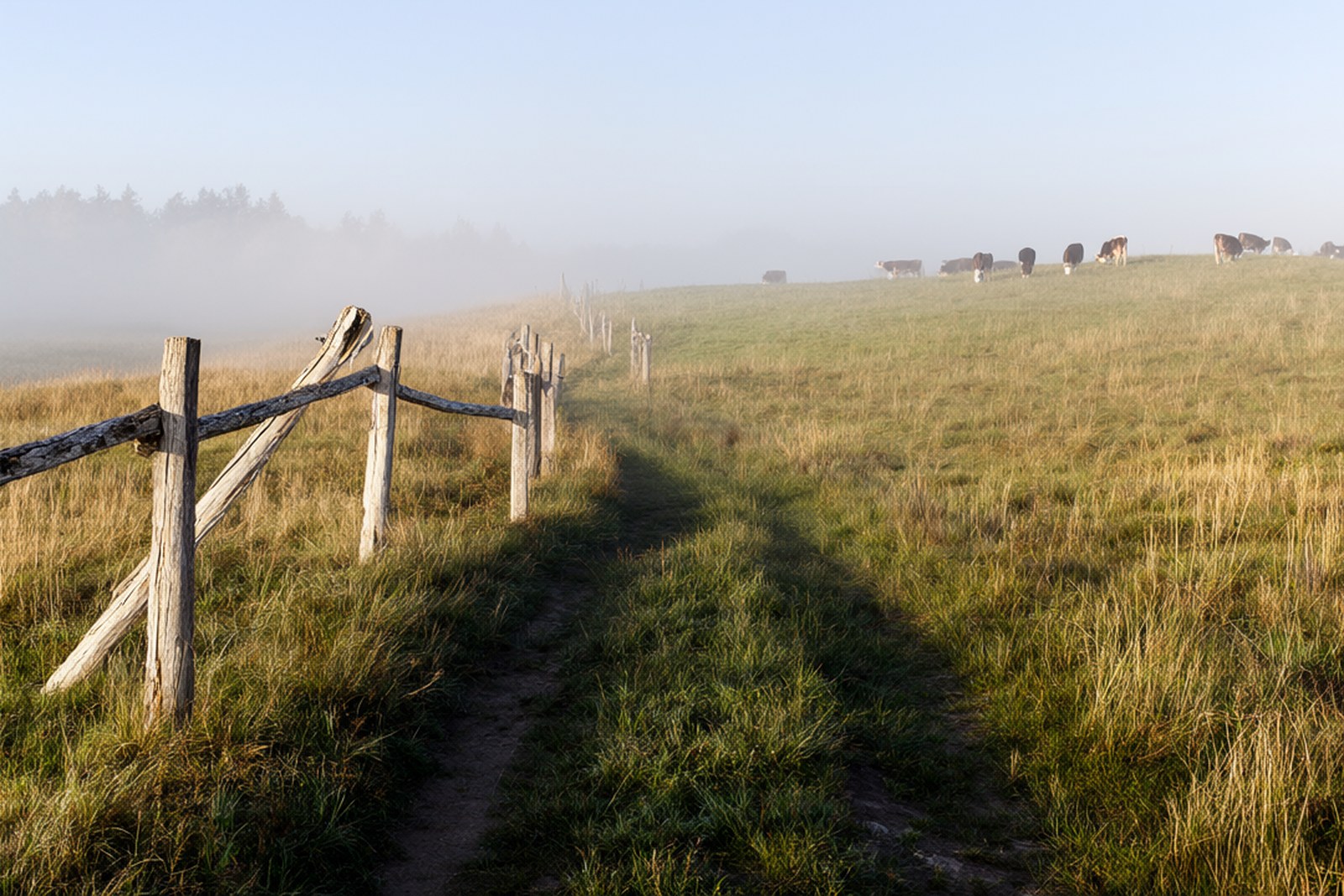
What you do on the pasture is slow. There are horses to ride, grass-ski runs, archery and kites, and yurt-shaped rooms on the bank that the county rents out by the night; the 紫阳峰 and 大丫口 ridges are where people go for the sunrise and the cloud sea, the 茅坪湖 is a still pond among the grass, and the wind farm runs its turbines along the skyline in a line that has become the mountain’s most photographed feature. The dairy is the other attraction and the reason the food is worth eating: milk straight from the shed, hand-set yoghurt, milk candy, and a roast lamb that has to be ordered the day before. The county is one of the five Miao autonomous counties in the country, and 长安营镇, on the southern road down from the pasture, keeps the walls and the office of the Qing 宝庆府 Bǎoqìng fǔ frontier administration that was posted here to manage the mountain peoples, which is why it is known locally as the second Baoqing.
The practical facts of the place are mostly about cold and about sheep. Even in July the nights fall to ten degrees or below, the wind on the ridge does not stop, and there is no shade anywhere, so the packing is a thick jacket and a hat whichever month you come. The grass is at its greenest from May to September, when the cattle are out and the wild flowers are up; October turns the whole plateau brown and gold and is arguably the best month of the year; and from December the pasture is under snow and most of the guesthouses close. Spring is the 杜鹃 season, when the hillsides below the grass are red with azaleas. The mosquitoes are few because of the altitude and the wind, which comes as a surprise to anyone who has spent a summer in the Hunan lowlands.
What the Rooms Are Like
Expect a room of fifteen to twenty-five square metres, a firm bed with a heavy quilt, a clean en-suite bathroom with a shower, and a window or a small balcony facing the grass. The finish is simple: painted walls, a wooden floor, a kettle and an electric blanket in the cold months. Heating is by air conditioning or by an electric pad, and neither is a match for a windy night at seventeen hundred metres, so ask for extra bedding. Water is heated by the house and can run out late in the evening when the house is full. There is usually Wi-Fi near the office and rarely in the rooms, and the phone signal is good because of the turbines.
Practicalities
Price. A double in a 南山 guesthouse runs ¥150 to ¥350 a night in the summer season, more at the August weekends and over the October week, and less outside it. The yurt-shaped units on the bank cost a little more than a plain room, and a roast lamb dinner is a separate and fairly serious expense that has to be ordered a day ahead.
Address. The guesthouse is on the 南山牧场, in the pasture country administered between 五团镇 and 长安营镇, 城步苗族自治县, 邵阳市, Hunan, about eighty kilometres south-west of the county town. The nearest airport is 邵阳武冈机场 Wǔgāng jī chǎng, roughly two hours by road; 城步 has no station of its own.
Rooms. Ask for a room on the grass side and away from the generator, and confirm that the bed has an electric blanket if you are coming before May or after September. Ask the family to cook dinner rather than driving down to the gate for it, and check the price of the lamb before ordering. There is no cash machine on the pasture, so bring enough for the gate and the extras.
Getting there. The pasture entrance is on the 九十八盘 road, the ninety-eight bends that climb from the county town, about an hour and a half from 城步 itself and three hours from 邵阳市; the road up is steep, narrow and beautiful, and it is not a road to drive at night for the first time. From 长沙 it is about four hours by car, and from 桂林 about three. There is almost no public transport inside the pasture once you are up, so a car is close to essential, and the guesthouses will arrange a pickup from the county town if asked in advance.
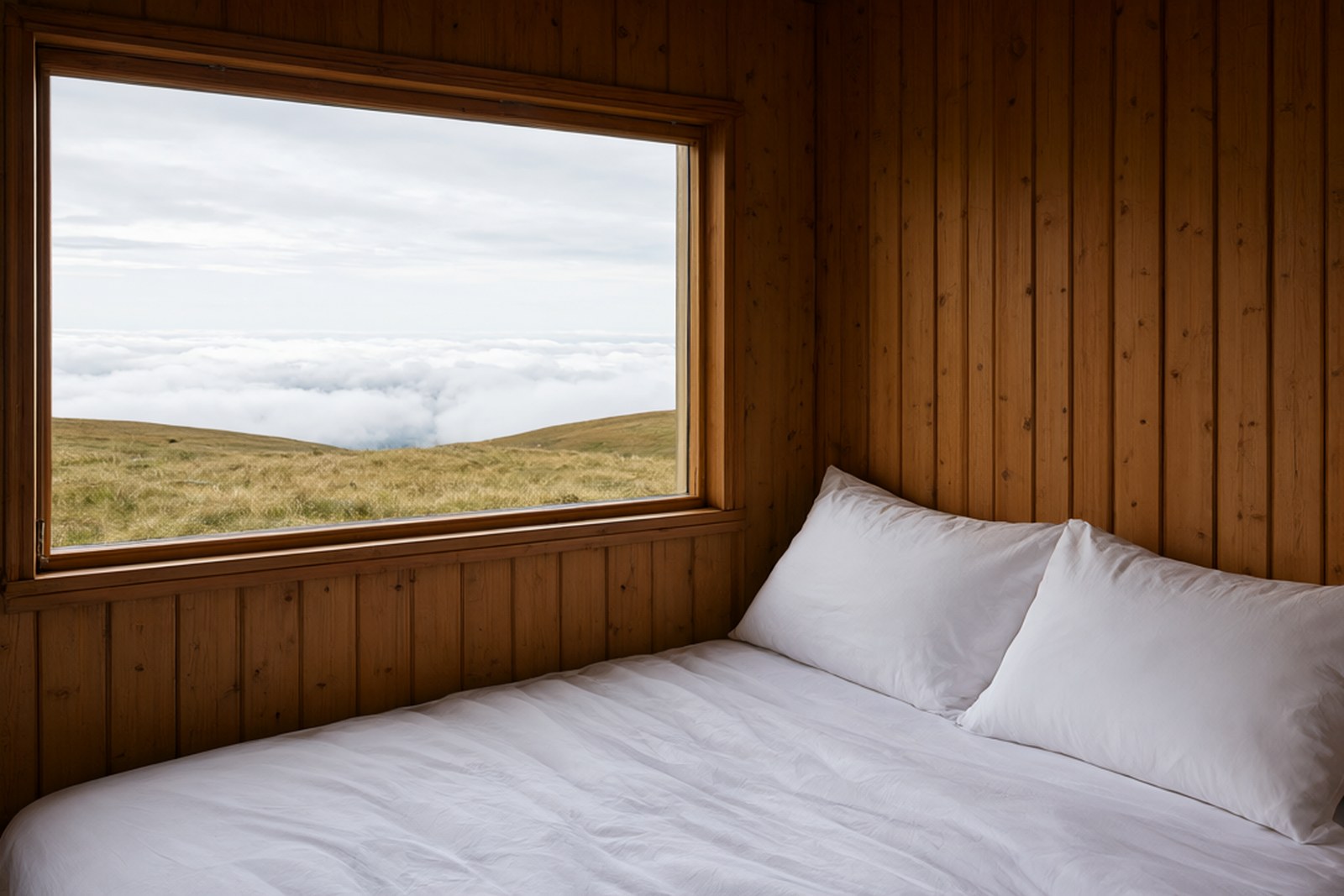
Where to stay: the farm guesthouses and yurt rooms out on the 南山牧场, 城步苗族自治县, 邵阳市, an hour and a half above the county town on the ninety-eight bends. Come in the summer or the autumn, bring a thick jacket, take a room on the grass side, and give the mountain two nights so that at least one sunrise is clear.
flowcloud would say that a plateau which was crossed by an army, written about by a poet and then handed to a hundred and eight young people who were told to make something of it, and which answered with grass and milk and a herd of cattle grazing to the horizon, is a monument to patience rather than to scenery.