
南雄市 Nán xióng shì is the county-level city at the northern tip of 广东 Guǎng dōng, and it earns a room for one reason above all others: this is where the province was walked into. The roads over the 南岭 Nán lǐng converge here. When the 梅关古道 Méi guān gǔ dào was cut through the pass in 716, at the initiative of the 唐 Táng chancellor 张九龄 Zhāng Jiǔ líng, who was born in these parts, 南雄 stopped being a border town and became the joint between two of the great trade routes of the empire – the land road coming south from the 长江 Cháng jiāng system and the river road going down to the 珠江 Zhū jiāng. Goods, soldiers, monks and refugees all came over that pass or through its shadow, and the lane where many of them stopped, 珠玑巷 Zhū jī xiàng, is the address that a very large number of families in the 珠三角 Zhū sān jiǎo still name when they are asked where they came from.
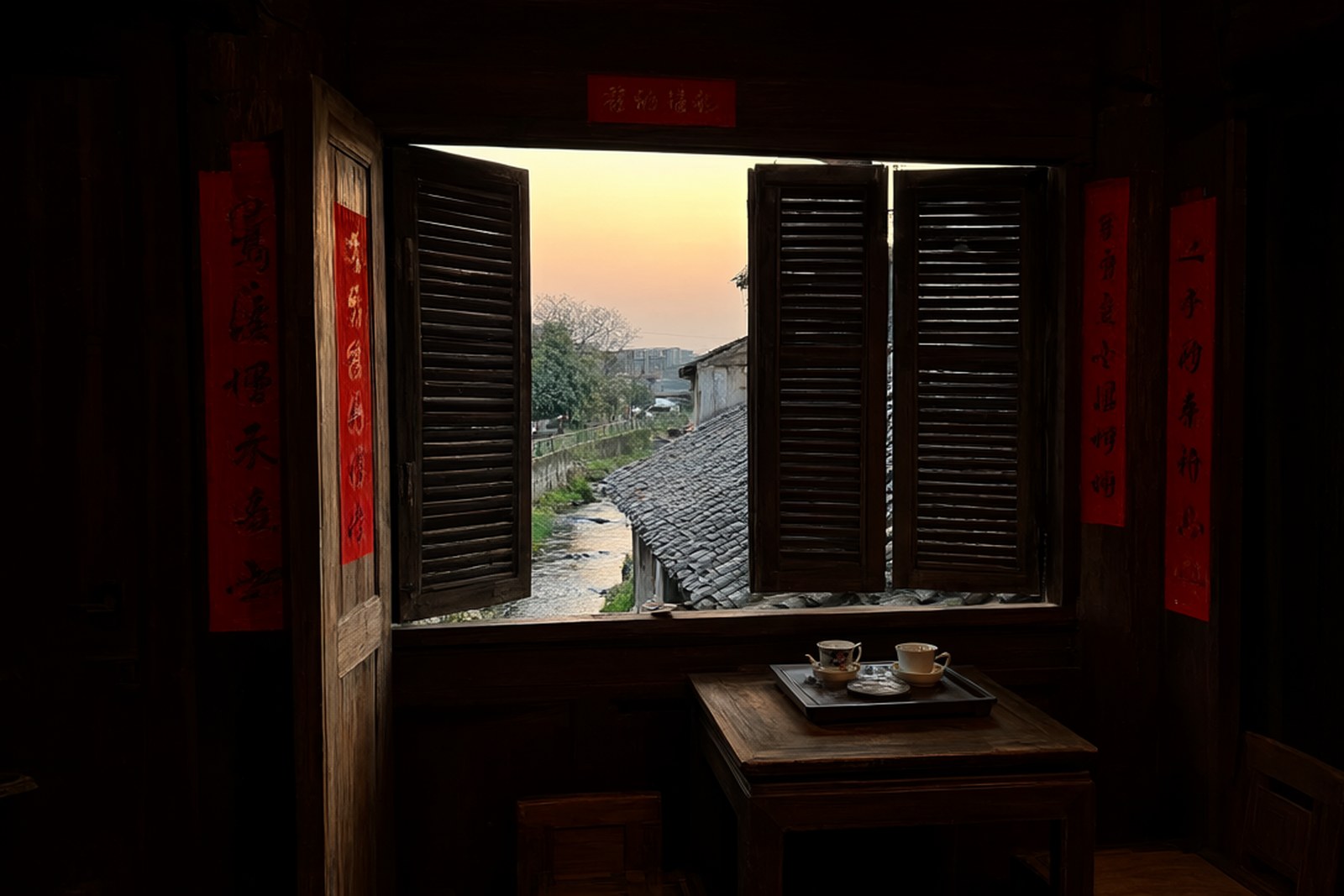
The lane itself is written up in the travel column, and it should be read there, because it is a history rather than a hotel. What a stay article has to say about it is narrower and more practical: the lane is in 珠玑镇, about nine kilometres north-east of the city, and the inns around it are small, cheap and a few hundred metres from the museum and the old flagstones. The sources name a handful – 南雄古巷客栈 opposite the 珠玑古巷 museum with a twenty-four-hour desk, 广府原乡公馆 from about ¥125 a night, 珠玑巷唐驿民宿 at about ¥250 with a courtyard done in the old style, and 珠玑渔庄 on the road into 珠玑村, which is a restaurant that keeps rooms. The city itself, which locals call 雄州 Xióng zhōu, has the ordinary chain hotels at roughly ¥180 to ¥300 and sits where the buses come in and the food is. Around ¥150 to ¥250 is the going range for a room in the lane. The choice between them is a choice between being able to walk into the lane before anybody else is in it and being able to eat dinner in a town with more than one restaurant.
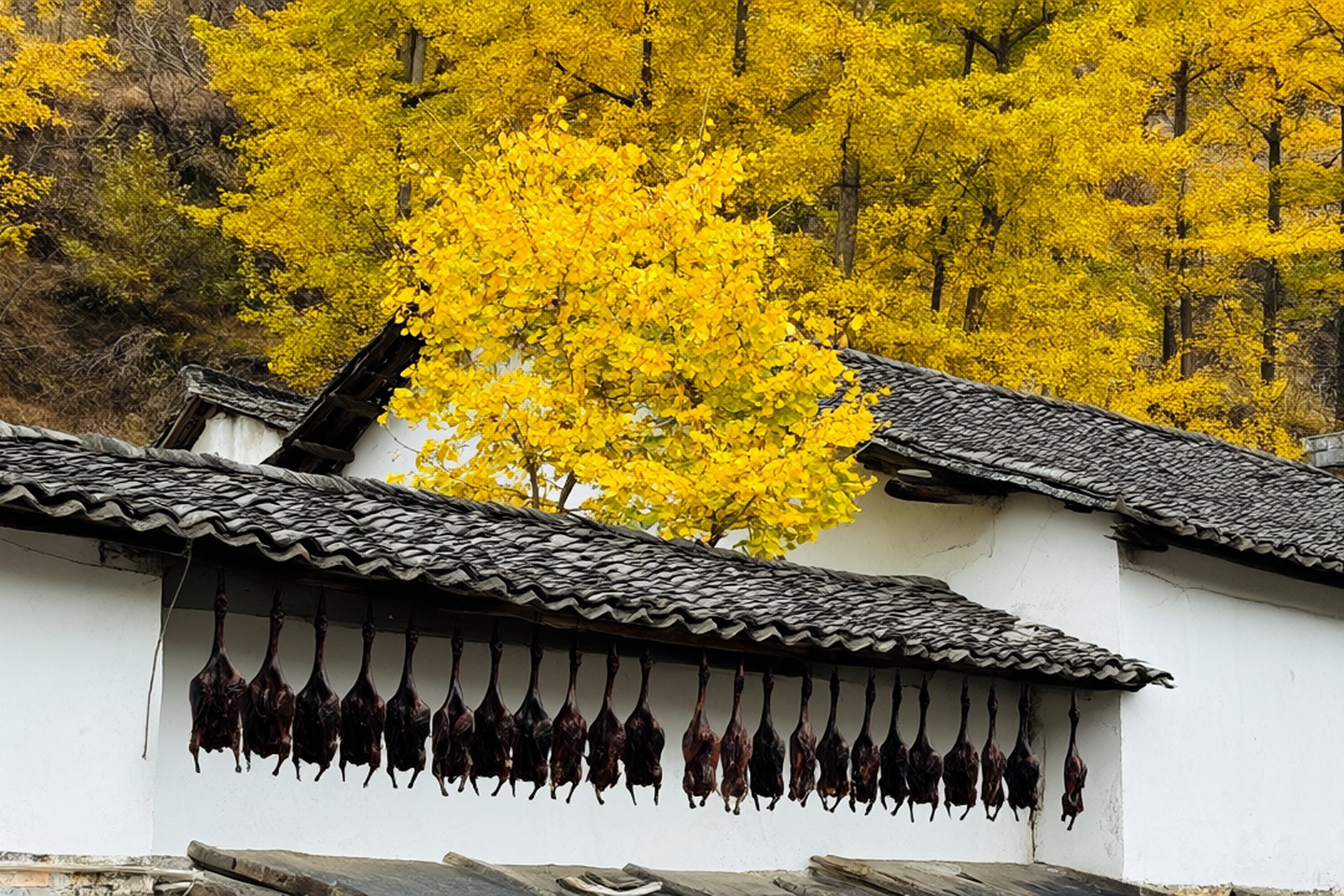
The calendar is the other half of the decision, and it is a strong one, because 南雄 has two seasons that fill every bed in the county. From mid-November to early December the ginkgo at 帽子峰 Mào zi fēng and 坪田 Píng tián turns yellow, and the whole of 广东 drives north to look at it; the lanes and the farmhouse rooms in that window are priced from about ¥120 to ¥300 and are gone weeks in advance. From January into February the plum blossom opens on the slopes around the 梅关, and the same two months are when the 板鸭 bǎn yā – the pressed cured ducks of 南雄 – are hanging in the wind outside the houses, salted to a weighed quantity and pressed flat under boards, which is a thing you can watch happening on a walk and which the food column has an entry for. Between those two windows the county is quiet and the rooms are cheap, and the same roads are empty.
Practical movement here needs a sentence of its own, because the sights are not adjacent. 韶关站 Sháo guān zhàn to 南雄 Nán xióng by bus is a rolling service at about ¥25; 南雄站 Nán xióng zhàn on the railway is a taxi ride of ten to thirty yuan into the middle of town; and the lane, the pass and the ginkgo villages sit in three different directions from the centre, which is why the local habit is to hire a car and a driver for about ¥200 a day rather than wait for a bus that goes somewhere else. A guest with two nights and a car can do the lane on the first afternoon, the pass at dawn on the second day with the plum or the yellow leaves, and still eat dinner in 雄州 both nights, which is a better use of the county than the coach-tour version.
What the Rooms Are Like
The inns in and around the lane are old houses or new houses built to look like them, and the range is wide for the money. The cheapest are four or five rooms in a family building: tiled floor, firm bed, air conditioning that in winter is the heater, an electric kettle, a shower with a boiler on the wall, and a courtyard or a roof terrace shared with the family. The 唐驿 style places go further and give you a small framed courtyard, dark timber, a proper bathroom and a tea room, and charge about twice as much for it. The chain hotels in 雄州 town are the modern option with a lift, a card key, a breakfast room and a desk, and they are the only ones with reliable hot water at seven in the morning in January. Two local notes: a 南雄 winter is colder than the latitude suggests because the county sits up against the mountains, so ask whether the room has heating rather than only cooling; and in the ginkgo season every inn in the county is full, so a booking made late is a booking in a worse room at a better price.
Practicalities
Price. A room in 南雄市 runs about ¥150 to ¥250 a night in the inns around 珠玑巷, with about ¥125 and about ¥250 as the two ends the sources name, and roughly ¥180 to ¥300 for the chain hotels in 雄州 town. The 帽子峰 and 坪田 farmhouse rooms go from about ¥120 to ¥300 in the ginkgo weeks and are booked out well before. Treat every number as a range and check the live rate for your dates, because the two months either side of New Year in this county are priced by the week.
Address. The inns are in and around 珠玑巷 Zhū jī xiàng in 珠玑镇 Zhū jī zhèn, about nine kilometres north-east of the city of 南雄市 Nán xióng shì, with the museum and the old flagstones within a few hundred metres; the chain hotels are in the town itself, which locals call 雄州 Xióng zhōu, near the bus station and the 浈江 Zhēn jiāng; the 梅关古道 Méi guān gǔ dào is north of the town on the provincial border and the ginkgo villages of 帽子峰 and 坪田 are further out again.
Rooms. Ask for an upper floor and for a room that faces away from the road, because the 323 national road carries the traffic for the whole county and a lane-facing room in the ginkgo season hears it all night. Ask whether the room is heated, not merely air-conditioned, if you are coming between November and March, and ask whether the house cooks, because several of these places will put a 板鸭 or a chilli goose on the table with a day’s notice and will not do it without one. Ask about the ticket prices before you set out – the lane and the ancient road each run about ¥32 to ¥40 with a ¥20 concession, and 帽子峰 about ¥50 – and ask the desk to write 珠玑巷, 梅关古道 and 帽子峰 in Chinese for a driver, since the names sound alike at speed and the roads out of town fork more than once.
Getting there. 南雄站 Nán xióng zhàn is the railway station and a taxi into the middle of town costs somewhere between ten and thirty yuan depending on where you stop; the bus from 韶关站 Sháo guān zhàn to the 南雄客运站 is a rolling service at about ¥25. There is no station at the lane or at the pass, and the two are in different directions, so a hired car at about ¥200 a day is the ordinary way to move. 韶关丹霞机场 Sháo guān dān xiá jī chǎng and the 武广 high-speed line are both a drive south, and 江西 Jiāng xī is over the ridge to the north, which is the whole reason the place exists.
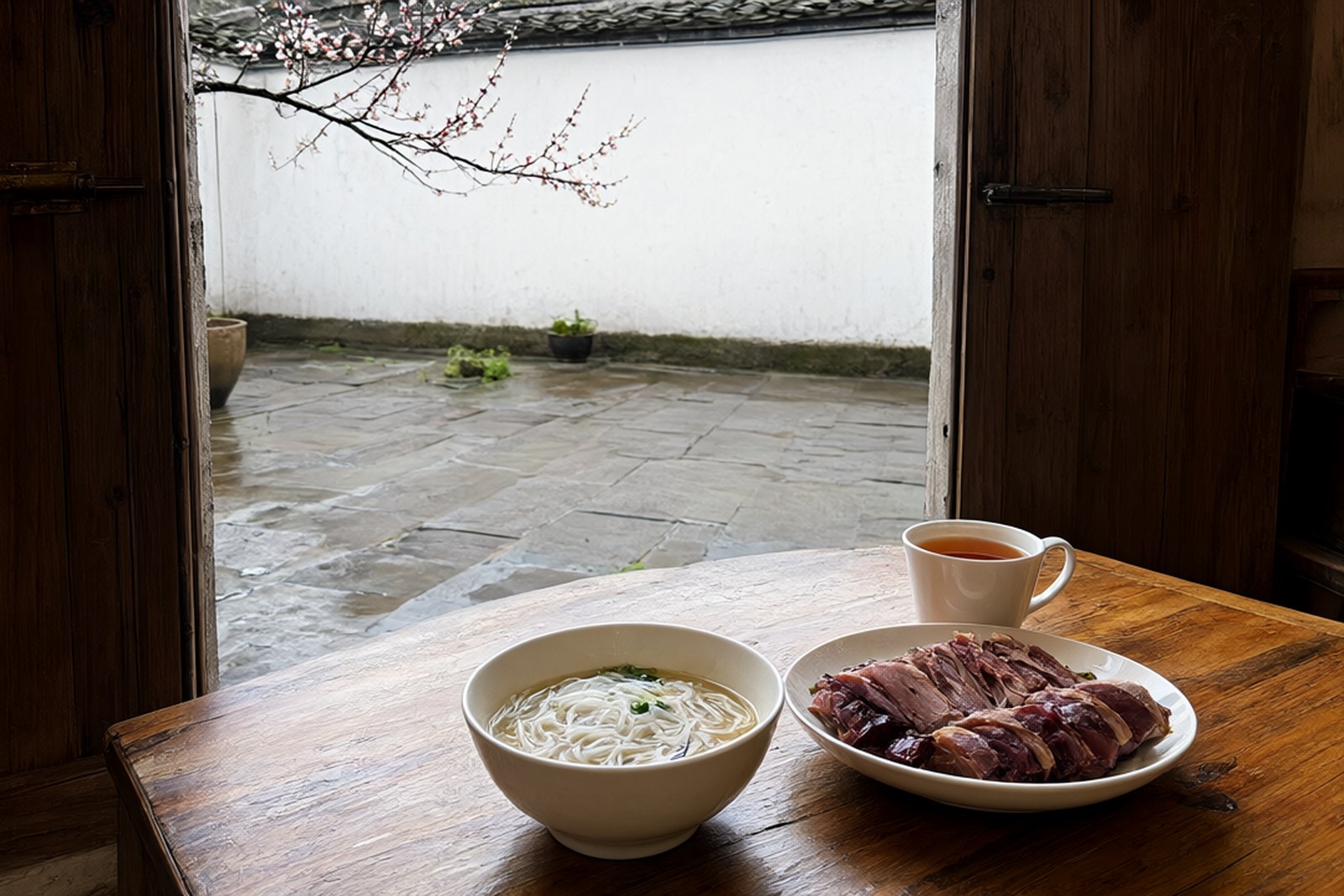
Where to stay: a small inn in the lane at 珠玑巷 Zhū jī xiàng in 珠玑镇, or a chain room in 雄州 Xióng zhōu if you would rather have a lift and a restaurant downstairs. Come in the ginkgo weeks for the yellow, in January and February for the plum and the hanging ducks, book a car for the days the sights are in three different directions, and walk the lane before the coaches arrive.
flowcloud would say that the most interesting thing a person can do in a county like this is read the name of their own family on a door lintel, and that even a visitor with no surname to look for will find the walk worth the room – because a road that has carried a whole province’s ancestors over a mountain for thirteen hundred years leaves something in the stones that a fast train cannot.