
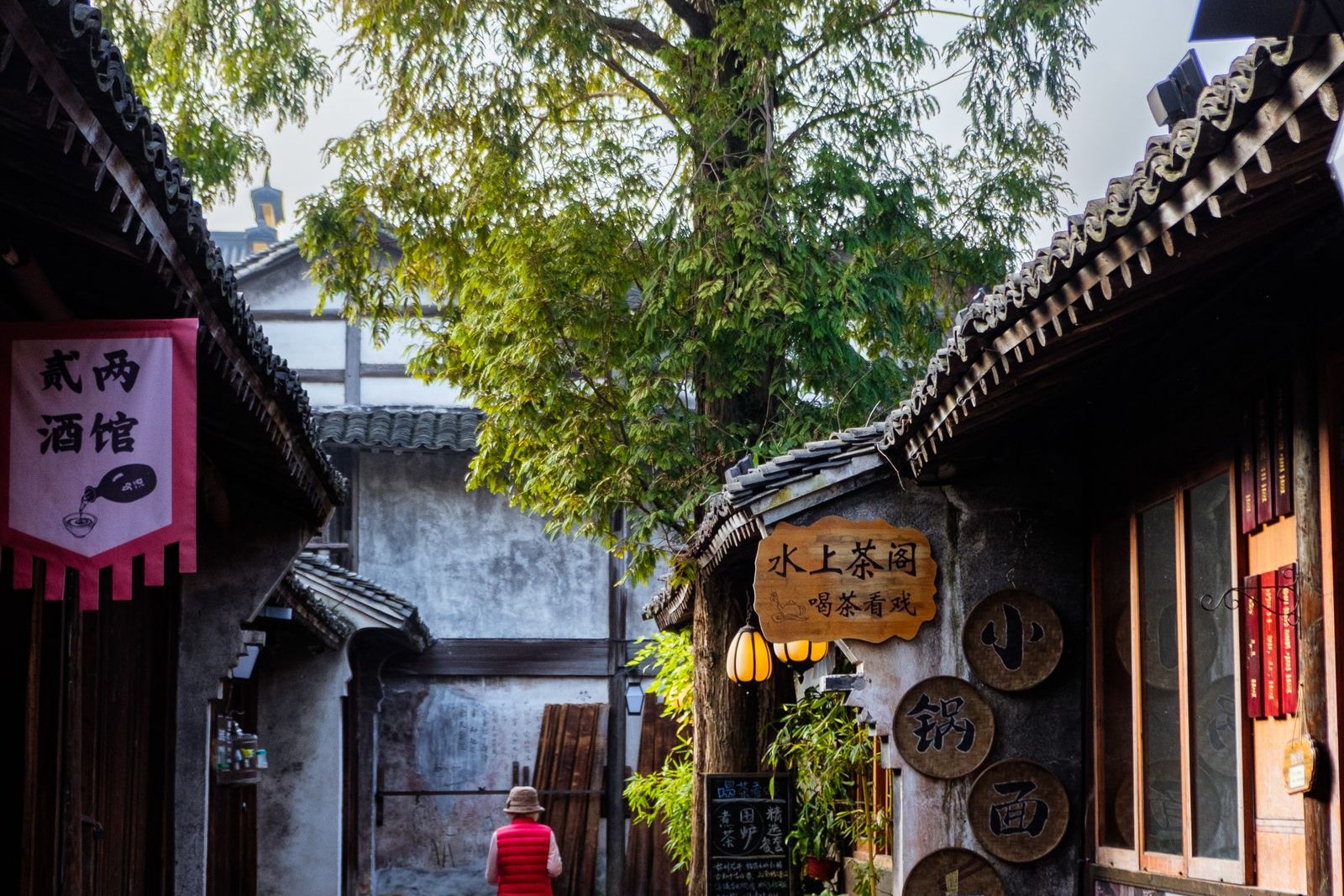
You hear the temple before you see it. The lanes of 南岳镇 Nányuè Zhèn run north from the gates of the Grand Temple, and on a pilgrimage morning they are full before it is light — the shuffle of a few thousand people walking in the same direction, the smell of incense drifting between the shopfronts, vendors calling out bundles of 香 xiāng, sticks and paper. A guesthouse here puts you inside that, two or three minutes from the temple’s south gate and ten from the path up the mountain, which is exactly why people book them. You are not coming to Nanyue for the hotel. You are coming to sleep somewhere that lets you be at the temple before the coaches arrive.
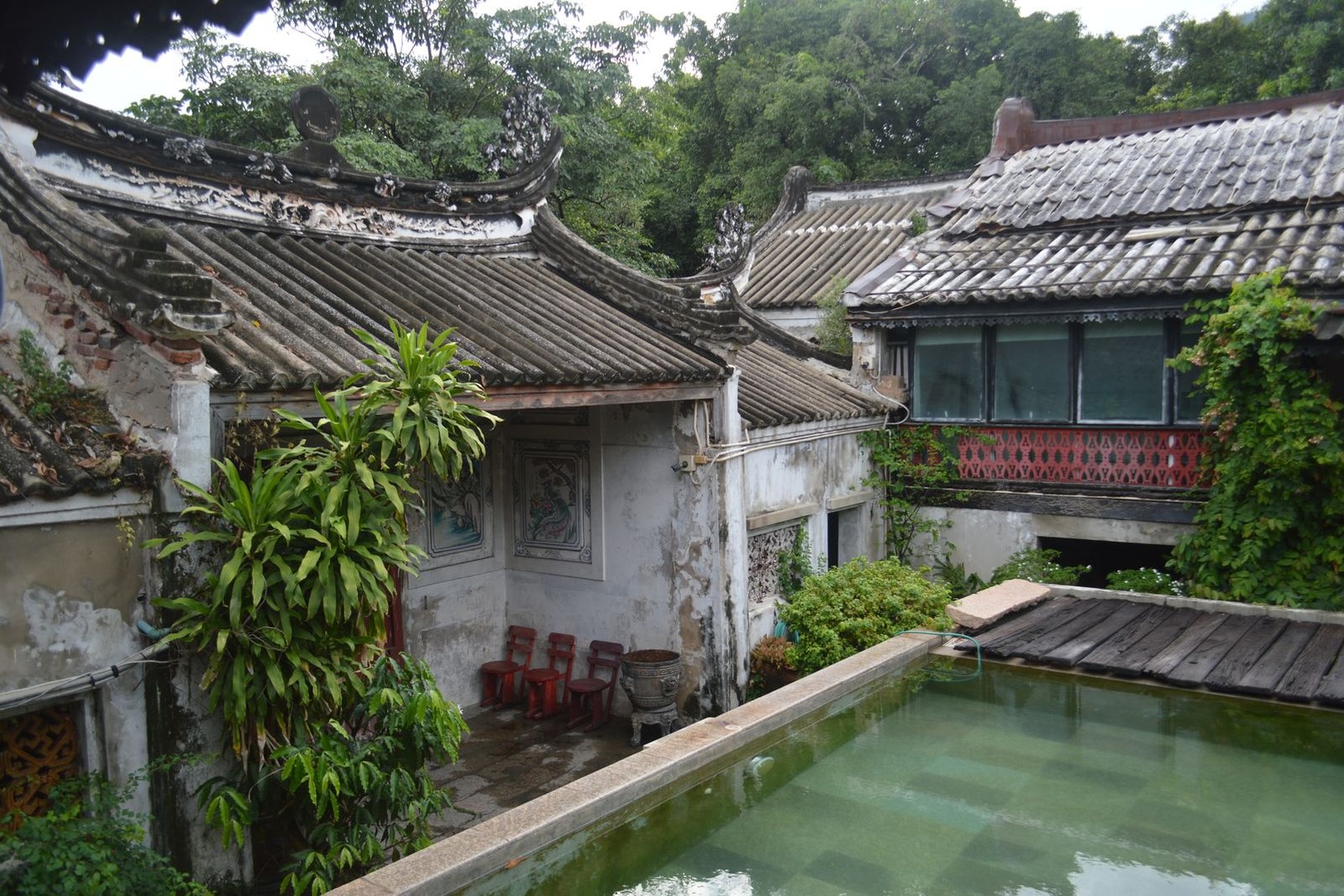
The town is not large and its geography is simple. 南岳大庙 Nányuè Dàmiào sits at the northern end of the main street, 祝融路 Zhùróng Lù, and the 游客中心 yóukè zhōngxīn, the visitor centre where the mountain buses and the cable car start, is a short way east. Between the two, and in the lanes running off to either side, there is a dense band of small hotels, family guesthouses and 民宿 mínsù, most of them converted houses of three or four floors, most with a shop or a 素菜馆 sùcàiguǎn at ground level. The northern edge of the town runs into the mountain’s lower slopes and the trail up to 祝融峰 Zhùróng Fēng.
Practicalities
Price. A double room in a family guesthouse runs roughly ¥150 to ¥400 a night. The band is driven almost entirely by the calendar rather than by quality, and the calendar here is unlike anywhere else in Hunan. The busiest period is the 进香 jìnxāng pilgrimage season, which peaks around the seventh and eighth lunar months — late summer into early autumn — followed by Lunar New Year and the National Day week in October, when the same room can cost two to three times the quiet-season rate and still be hard to find. Outside those windows, midweek in spring or late autumn, prices fall to the bottom of the range and the town becomes genuinely peaceful.
Address. Look for properties on the lanes off 祝融路 Zhùróng Lù and around 北支街 Běizhī Jiē and 南街 Nán Jiē, all inside 南岳镇 Nányuè Zhèn in 衡山县 Héngshān Xiàn. Distance from the temple gate is the only address that matters; a guesthouse 200 metres closer is worth more than a nicer room 800 metres away, because the whole point is to walk to things.
Rooms. Expect plain, clean, functional rooms — tile or laminate floors, a firm bed, an electric blanket or heavy quilt because the mountain winter is genuinely cold, and a bathroom with a good hot shower. Some rooms have a small balcony over the lane, which sounds romantic and is mostly a good place to dry clothes. Walls are thin and the town is loud early, so light sleepers should ask for a room away from the street. Nothing here is luxurious and very little is bad.
Getting there. The nearest high-speed rail station is 衡山西站 Héngshān Xī Zhàn, about 15 minutes from the town by shuttle bus at around ¥6, or ¥20 to ¥30 by taxi; the ordinary 衡山站 Héngshān Zhàn is a similar distance. Do not book to 衡阳东站 Héngyáng Dōng Zhàn, which is far away on the wrong side of the city and is the single most common mistake visitors make. By car, Nanyue is around two hours from 长沙 Chángshā and about 40 minutes from 衡阳市 Héngyáng Shì; parking in the town is tight during pilgrimage season.
flowcloud would say that a Nanyue guesthouse is really a staging post, and that the test of whether you booked well is how early you can be standing at the temple gate.
Where to stay: as close to the temple’s south gate as you can get, on a lane rather than the main street, and with a shop that sells incense on the ground floor, because the family that runs the shop usually runs the rooms too and will tell you when the crowds start. Ask whether the room faces the street, whether breakfast is included, and whether they can hold luggage while you climb. Book directly if you can — the small houses here hold rooms back from the platforms.