
普宁市 Pǔ níng shì is a county-level city and wherever a visitor thinks the centre of it is, it is wrong, because the centre is 流沙 Liú shā. The town that grew here was 流沙镇, made a town in 1986 and dissolved in December 2000, when its ground was cut into four 街道办事处 jiē dào bàn shì chù, the street offices of 流沙东, 流沙西, 流沙南 and 流沙北 – so the name on every bus, hotel and shopfront is now the name of a set of sub-districts rather than a town, which is the sort of detail that matters when you are trying to tell a driver where to go. The other thing worth knowing before you book is that the old county seat was never here at all but at 洪阳镇 Hóng yáng zhèn, and that 普宁 people still say 回洪阳 huí hóng yáng, going back to 洪阳, where 回 huí is the word you would use for going home to your own village.
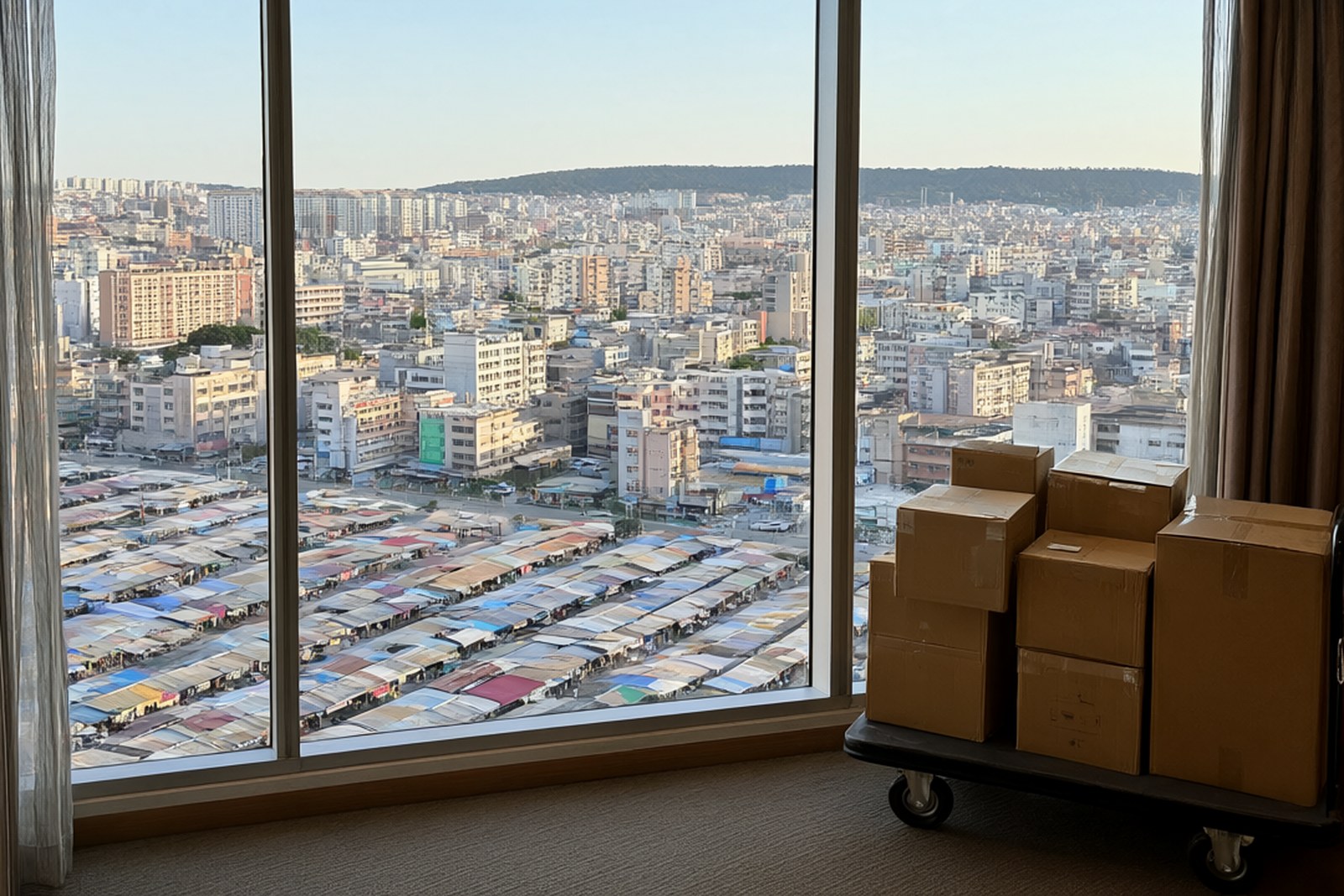
What you are actually booking a room inside is one of the busiest pieces of trading ground in eastern 广东 Guǎng dōng, and the reason 流沙 exists at this size is the crossroads it sits on. The 324 national road and the 236 and 238 provincial roads meet here, the 普惠 and 普揭 expressways cross just outside, and the position is measured out in the city’s own literature: four hundred kilometres west to the middle of 广州 Guǎng zhōu, sixty east to 汕头 Shàn tóu and forty south to the 神泉港 Shén quán gǎng at 惠来县. Ten 专业市场 zhuān yè shì chǎng, specialist wholesale markets, have grown on that ground – medicinal herbs, textiles, clothing, cigarettes, vegetables, fruit, seafood, groceries, grain and car parts – and the town counts around forty registered markets covering 260,000 square metres between them, moving goods to 117 cities across the country. A hotel in the middle of it is not a quiet hotel. It is a hotel where the lorries start before breakfast.
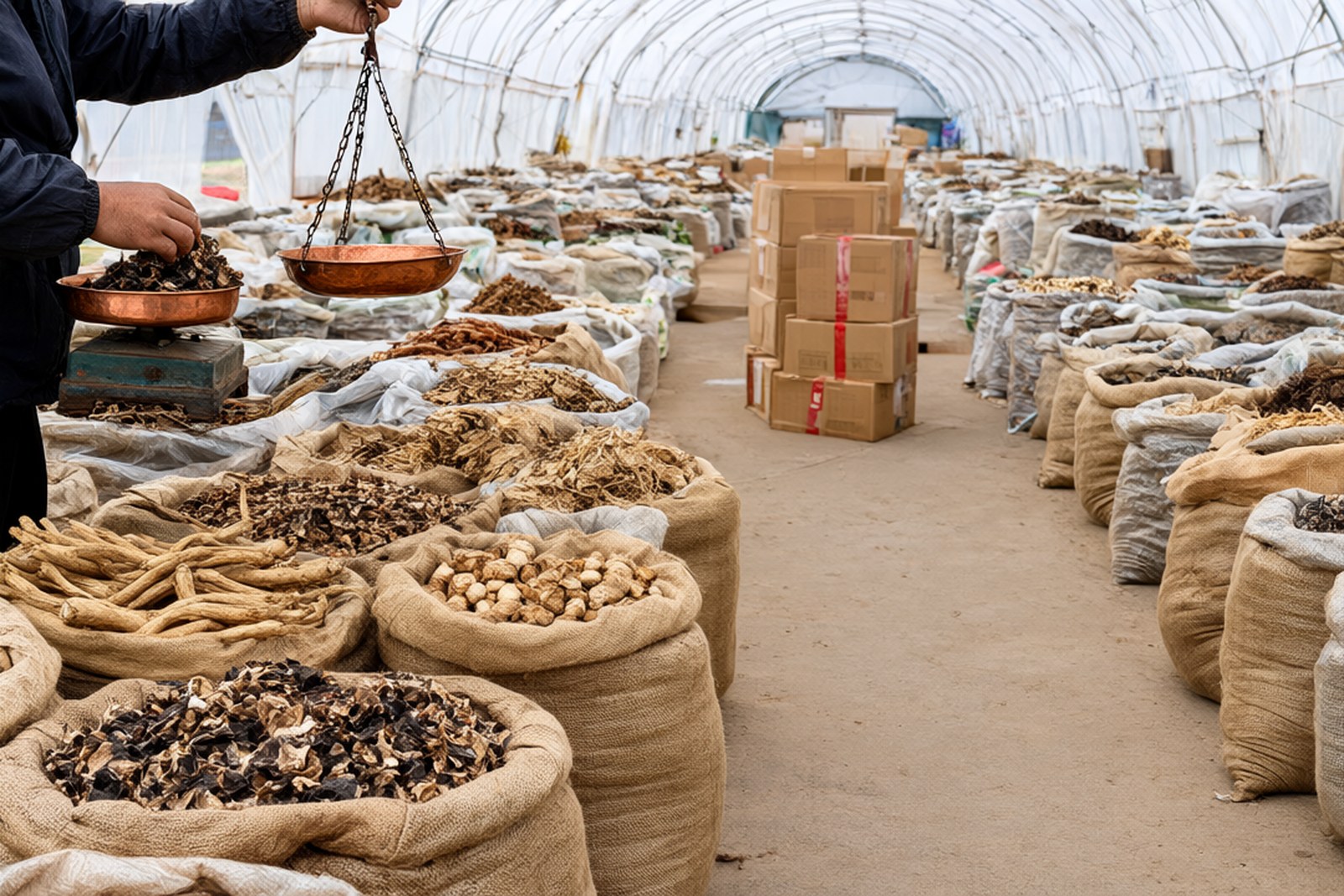
The herb trade is the one that put 普宁 on the map, and the market is the reason a lot of people come here at all. It is one of the first eight 中药材定点市场 zhōng yào cái dìng diǎn shì chǎng, designated national herb markets, approved in the country, and the city calls it the window through which 南药 nán yào, the medicines of the south, reach the rest of the country. The modern version is 普宁康美中药城 Pǔ níng kāng měi zhōng yào chéng, which opened on 1 July 2017 and is run by 康美药业 Kāng měi yào yè: 577 trading units, more than a thousand varieties on the tables on a working day, well over ten billion yuan of trade a year, and a stock list built on 西洋参 xī yáng shēn, 冬虫夏草 dōng chóng xià cǎo and 人参 rén shēn – American ginseng, cordyceps and ginseng, the expensive end of the trade – with buyers from Japan, Korea, Southeast Asia and North America. The city is also the country’s first pilot 中国中药名城 Zhōng guó zhōng yào míng chéng, a named city of Chinese medicine, and the wider pharmaceutical business here clears better than ten billion yuan a year.
There is a second trade and it is larger. 普宁 makes clothes, and it makes them at a scale that surprises people who have only heard of it as a herb town. The 流沙 clothing market is a 全国文明市场 quán guó wén míng shì chǎng and has been on the national list of the hundred strongest wholesale markets; 普宁轻纺城 Pǔ níng qīng fǎng chéng is the biggest textile distribution base in the country; the city holds the title 中国衬衫之都 Zhōng guó chèn shān zhī dū, the shirt capital of China; and 中国·普宁国际服装城 Zhōng guó Pǔ níng guó jì fú zhuāng chéng, which cost somewhere around two and a half billion yuan and sits on 400 亩 of land, holds more than three thousand trading units and turns over twelve billion yuan a year as the largest single wholesale clothing market in 广东. The city counts 2,085 textile and garment firms able to turn out 1.5 billion garments a year, of them 350 million shirts. Staying in the middle of this means the hotel breakfast room is full of people in the trade by a quarter past seven, and the street outside is full of vans.
The reason to sleep here rather than in 揭阳市 Jiē yáng shì, forty minutes up the road, is that the working part of 普宁 starts early and the sights are elsewhere. A buyer wants to be at the market when it opens; anyone else wants a base that puts 洪阳镇 Hóng yáng zhèn – the old county seat with a walled 府第 village inside it – and the 德安里 dé ān lǐ lanes within a short drive, and that keeps 汕头 and 潮阳 within an easy run for a day out. The city also has a large newer crop of business hotels, and the ones near the market district are built for exactly the traffic this ground produces: fast check-in, a luggage store, a car park, a breakfast that starts at six-thirty, a room dark enough to sleep off a flight and a kettle for the tea people carry here. That is not a holiday hotel and it is not trying to be, but on this ground it is the right one.
What the Rooms Are Like
The business hotels around the market district are built to a fairly consistent Chinese provincial pattern: a tower of fifteen to twenty-five floors, a lobby with a tea counter and a pair of sofas, a lift core, a breakfast room on the second floor, a car park underneath. A room is twenty-five to thirty-five square metres with a tile floor, a big bed or two singles, a desk with a wired connection and a couple of sockets, air conditioning, a kettle and a bathroom with a shower. Rooms on the high floors get a view over an unusual skyline – the low roofs of the market halls in front, the mid-rise blocks behind, and the hills that ring the 流沙 basin on the far side – and the ones on the street side get the market at four in the morning instead. The newer buildings sell a 商务 shāng wù, business, floor with a lounge and a meeting room, and quiet is sold as a grade rather than given away, which on this ground is money well spent.
Practicalities
Price. A double in 普宁市 runs about ¥180 to ¥450 a night, with the newer business hotels near the market at the top of that and the older city hotels and the guesthouse end below; the trade fairs and the run-up to 春节 Chūn jié are when the market district fills and the price moves. Treat it as a range and check the live rate rather than the number on a signboard.
Address. The hotels are in 普宁市 Pǔ níng shì, in the 流沙 Liú shā street-office districts – 流沙东, 流沙西, 流沙南 and 流沙北 – with the business-hotel cluster around the 中药材 zhōng yào cái market district and the clothing and textile markets within a short drive; 揭阳市 Jiē yáng shì is about forty minutes north, 汕头 Shàn tóu about an hour east, and the old county seat of 洪阳镇 Hóng yáng zhèn a short run north-west.
Rooms. Ask for a high floor on the far side of the building from the market, because the delivery traffic starts at four and the market halls are lit and working by five, and ask for a room away from the function floor if the hotel has one, since these properties do a steady trade in company dinners. Ask what time breakfast opens and whether it is included, ask for a desk lamp and a spare socket if you are working, and ask the desk to write 康美中药城 Kāng měi zhōng yào chéng and the clothing market in Chinese before you go looking for them – the district is large, the buildings look alike, and drivers here know the markets by name rather than by street.
Getting there. 普宁站 Pǔ níng zhàn on the 厦深 Xià shēn high-speed line is out to the east of the city, and there is a second station at 葵潭 further south; the 324 national road runs through 流沙 and the 普惠 and 普揭 expressways meet outside it. 揭阳潮汕国际机场 Jiē yáng cháo shàn guó jì jī chǎng is about an hour by road, 汕头 sixty kilometres east and 广州 four hundred west. The city is a flat, fast, busy town on a crossroads, and taxis are cheap and plentiful, so a driver rather than a walk is the ordinary way to move between the markets.
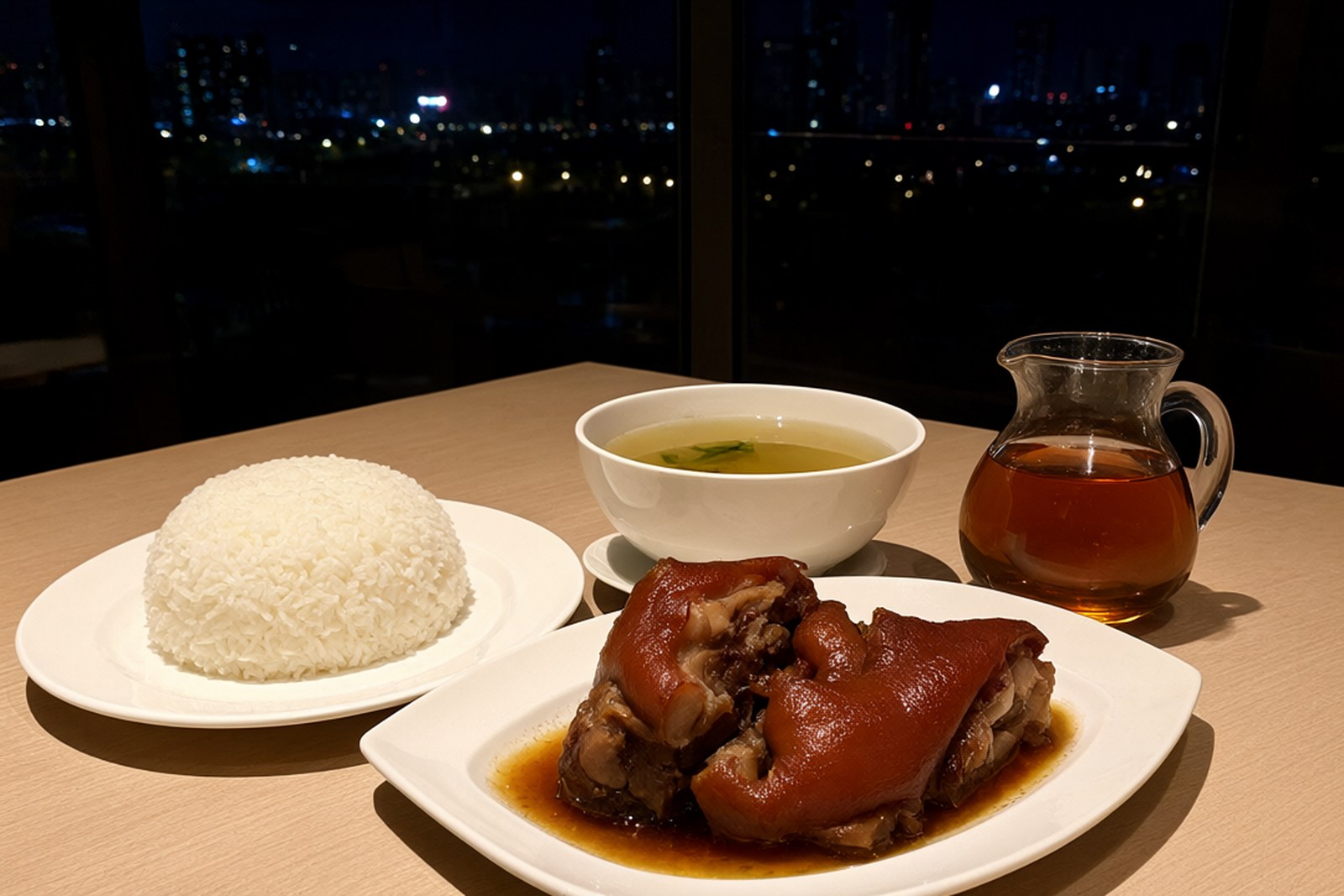
Where to stay: a high-floor room in one of the newer business hotels around the market district in 普宁市, on the 流沙 ground where the herb and clothing trades work. Be down for the market in the morning, eat the braised trotter rice the prefecture makes its own, and use the city as a base for 洪阳镇 to the north-west and 汕头 to the east.
flowcloud would say that of all the things a town can be famous for, two are rarer than they look – a place that sells roots and dried fungus to the whole country, and a place that makes three hundred and fifty million shirts a year – and that 普宁 does both within sight of the same hotel window without appearing to think it remarkable.