
Qibao Hotels: Old-Town Canals, Tech-Park Commutes and Nine-Line Reach in Minhang District, Shanghai
七宝桥边市声远,漕河泾畔客灯安。Qībǎo qiáo biān shì shēng yuǎn, Cáohéjīng pàn kè dēng ān – Beside Qibao’s bridge the market sounds carry far; by the Caohejing bank the guest’s lamp burns calm.
The stay around 七宝 Qībǎo Qibao – the old water town on the south-western rim of 闵行区 Mǐnháng Qū Minhang District, 上海 Shànghǎi Shanghai, where 七宝古镇 Qībǎo Gǔzhèn Qibao Old Town packs stone bridges and snack lanes into a few walkable blocks, where the towers of 漕河泾开发区 Cáohéjīng Kāifāqū the Caohejing tech park rise a short ride north, and where metro line 9 stops at 七宝站 Qībǎo Zhàn Qibao station between the two – is the district’s twin-market hotel belt. Two guest books keep these beds full: old-town tourists who want a bed within strolling distance of the canals, and commuting business guests working the tech park who price a line-9 platform and an early breakfast above a lobby. The stock sweeps from budget chains through mid-range business hotels to upper-mid blocks between the ancient town and the station, each price step tied to each step from the water. Nobody books Qibao for skyline; they book it because the oldest streets in the south-west and one of its biggest job centres share a station.
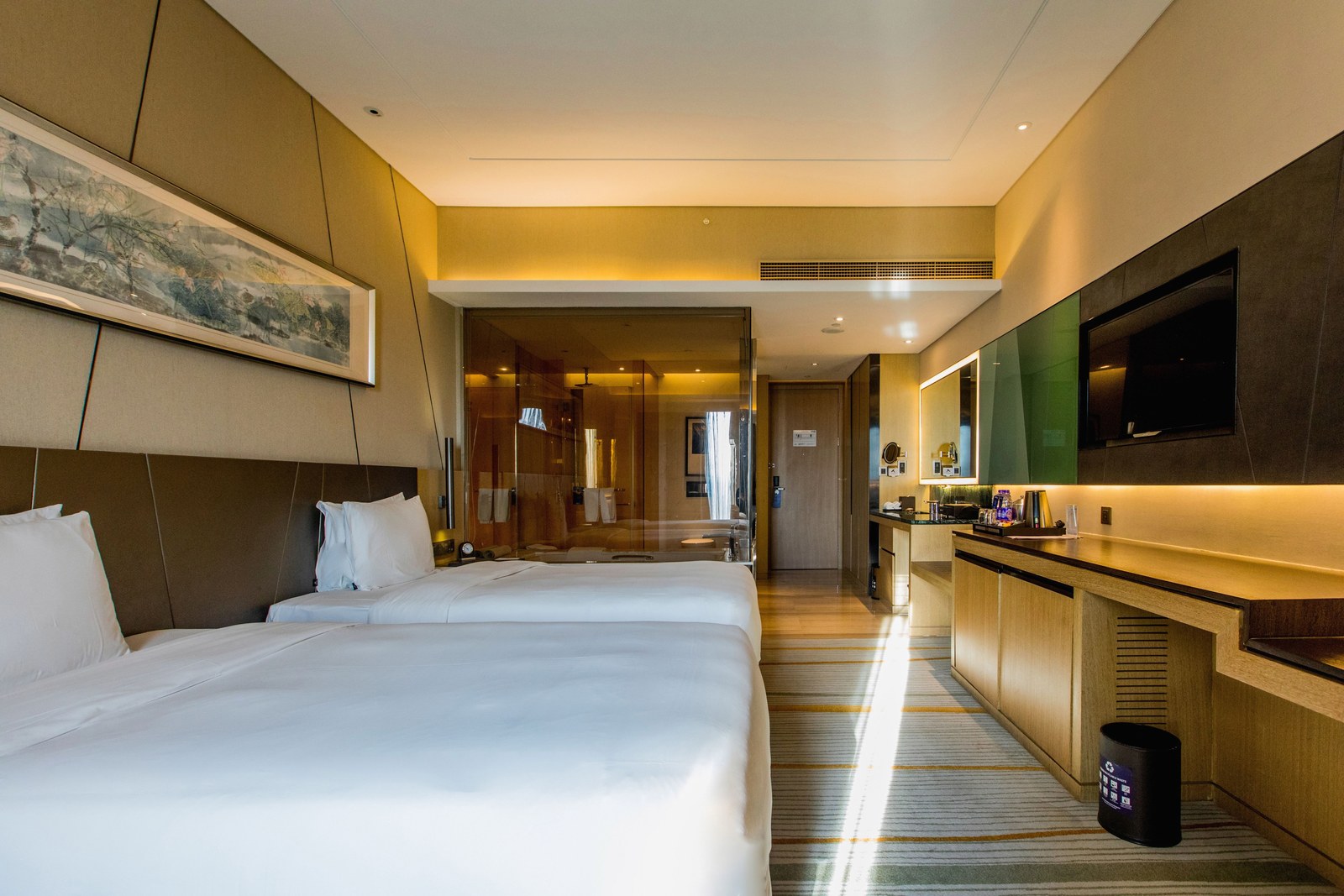
Call it honestly: the old town is a magnet, and magnets keep crowd hours. Weekend days push tour groups and snack queues through the lanes until the bridges jam, and rooms on the old-town front hear the fair until the lanes empty (worth confirming the details for which way your room faces before booking a light sleeper’s weekend). Trade weeks at the tech park fill the station-side towers and lift every rate at once, so the tourist bargain and the commuter bargain rarely share a week (worth confirming the details for peak weeks against your dates before locking a price). The quarter’s evenings are modest: after the snack lanes close, the night map is mall basements and delivery apps. Against that: line 9 runs into the city centre without a change, the old town costs nothing before the coaches arrive, and the belt undercuts the inner districts by a visible margin. Weekday mornings are the belt’s kindest hour, when the canals belong to residents.
What gets oversold is the word “heritage”: the bridges and pavilions are genuinely old, but the hotel belt around them is modern blocks and chain lobbies, and a booking page that photographs eaves instead of elevators flatters itself (worth confirming the details for how far your block actually sits from the old-town gates – a “Qibao address” can mean several blocks of walking). What gets oversold, too, is the tech-park framing: the Caohejing towers are a metro stop or a short ride from most of the belt, not a next-door walk (worth confirming the details for your office’s nearest station before paying for proximity you will not use). What repays the effort is the shift you buy with the room: dawn on the canals before the queues form, the snack lanes at lamp-lighting hour when the locals take over, and a station platform with seats by seven – the belt’s one free upgrade, renewed daily. Book Qibao when the old town and the tech park are both the trip; take the station side when the commute outranks the canal.
The Stays
The tourist default is the 古镇口舒适酒店 gǔzhèn kǒu shūshì jiǔdiàn comfort hotels at the old town’s mouth – mid-range and upper-mid rooms within a few minutes’ walk of the bridges, where the canal evening costs nothing but a stroll.
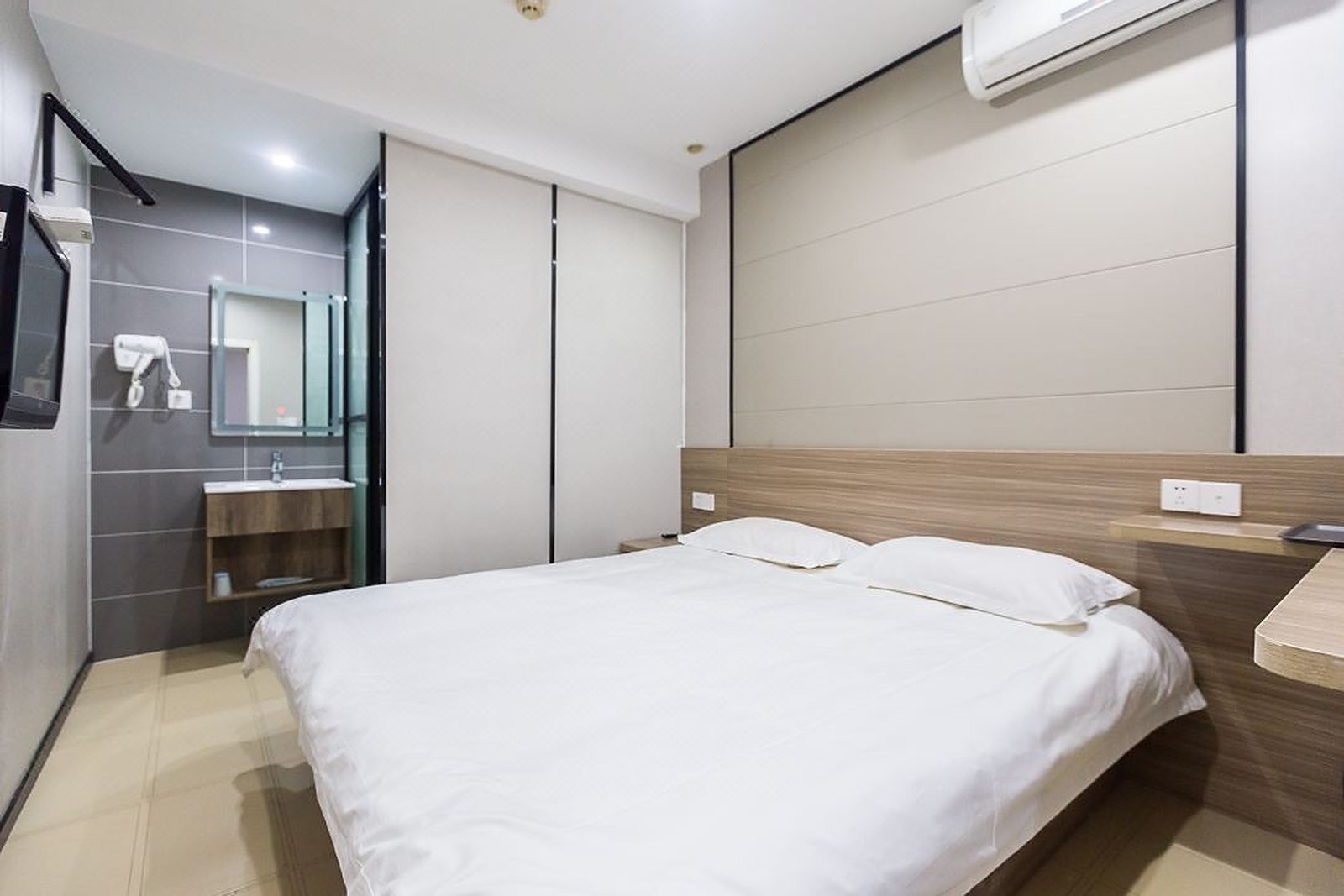
The commuter’s default is the 九号线站口商务酒店 jiǔ hàoxiàn zhàn kǒu shāngwù jiǔdiàn business hotels by the line-9 station mouth – desk rooms and early breakfasts around Qibao station, trading on the timetable toward Caohejing; midweeks carry the softest rates.
The value sleep is the 后街经济连锁 hòujiē jīngjì liánsuǒ budget chains on the back streets – standard beds a block behind the crowds, where the rate remembers the distance and the lanes keep resident hours.
Nearly everything else on this Minhang list trades a different mood on the same map: choose 虹桥机场周边住宿 Hóngqiáo Jīchǎng zhōubiān zhùsù Hongqiao Airport hotels for the early-flight belt, 莘庄商务酒店 Xīnzhuāng shāngwù jiǔdiàn Xinzhuang hotels for the hub-and-mall corner, 江川路便捷住宿 Jiāngchuān Lù biànjié zhùsù Jiangchuan Road stays for campus-visitor value and 浦江镇民宿酒店 Pǔjiāng Zhèn mínsù jiǔdiàn Pujiang Town stays for country-park family nights – four more doors into the same 闵行区 Mǐnháng Qū Minhang District. Once the bed is booked, our Minhang travel guides and the district’s food map fill the daylight hours.
The Stays
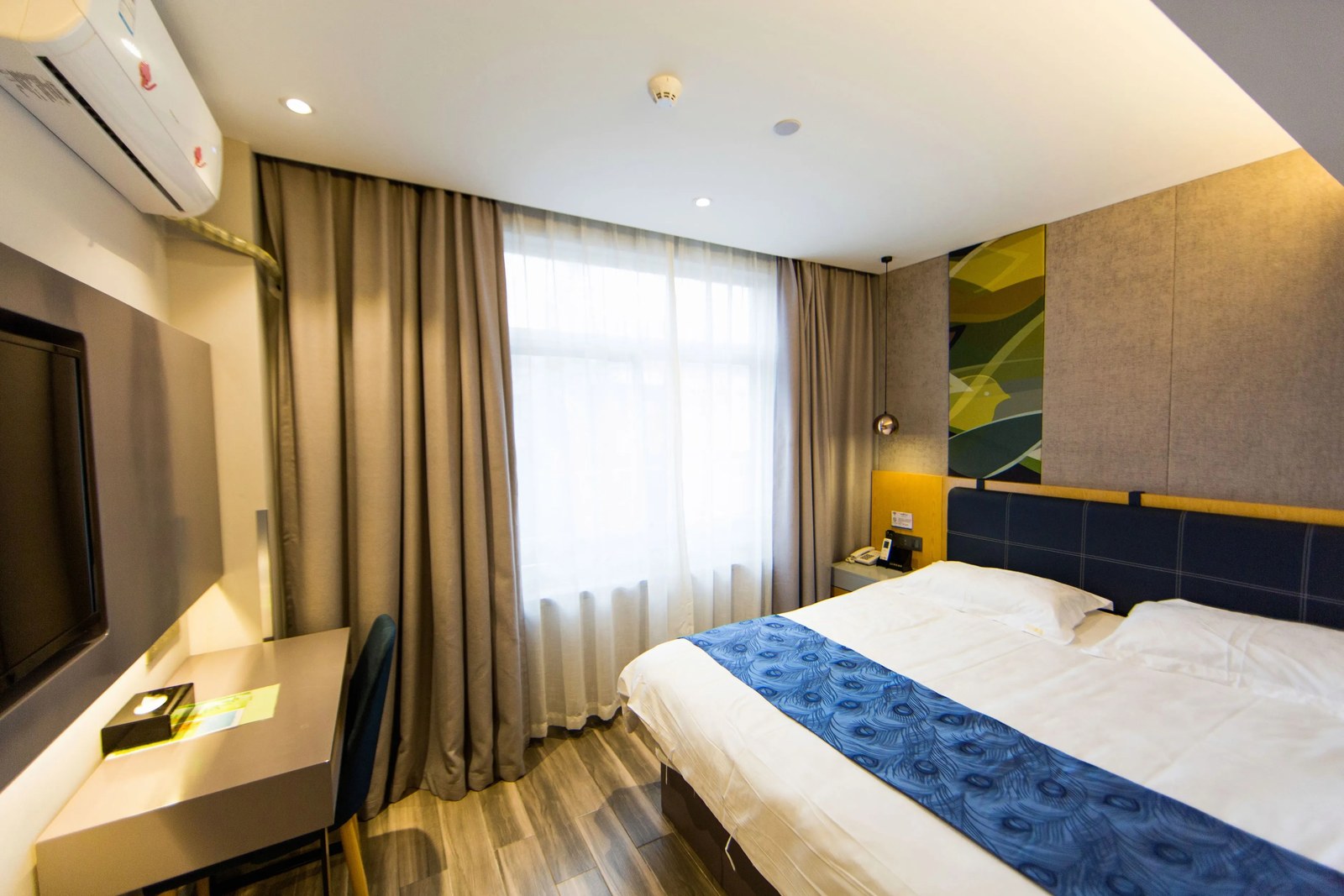
flowcloud would say that a Qibao bed is bought for two timetables at once – old-town weekend to tech-park weekday in the October 2026 snapshot, all worth confirming the details – and that the honest move is to verify which side of the belt your room faces, keep the canal evening as the entertainment, and let line 9 carry the commute, because the snack lanes are the amenity and the weekend crowd is the price – the stone bridges keep the only heritage. All checked October 2026.
Where to stay: Base yourself around 七宝 Qībǎo Qibao station for Line 9 and the old-town morning markets, or toward 漕河泾 Cáohéjīng Caohejing for the tech-park commute, favouring rooms set back from 漕宝路 Cáobǎo Lù Caobao Road for a quieter night. All checked October 2026.