
红海湾 Hóng hǎi wān, Red Bay, names both a stretch of water and the development zone that 汕尾市 Shàn wěi shì runs along it, and 遮浪半岛 Zhē làng bàn dǎo, the Zheliang Peninsula, is the strip of land where that water meets 碣石湾 Jié shí wān. 汕尾 is the prefecture the older maps call 海陆丰 Hǎi lù fēng, where the 福佬话 fú lǎo huà coast, whose speech runs close to Teochew, meets the Hakka hills of 陆河县 Lù hé xiàn. This is the coast end of that split. The peninsula lies 18 kilometres from the city centre, has sea on three sides, and the road along its spine separates one beach that breaks all year from another that stays flat, because 遮浪 means sheltering from the waves.
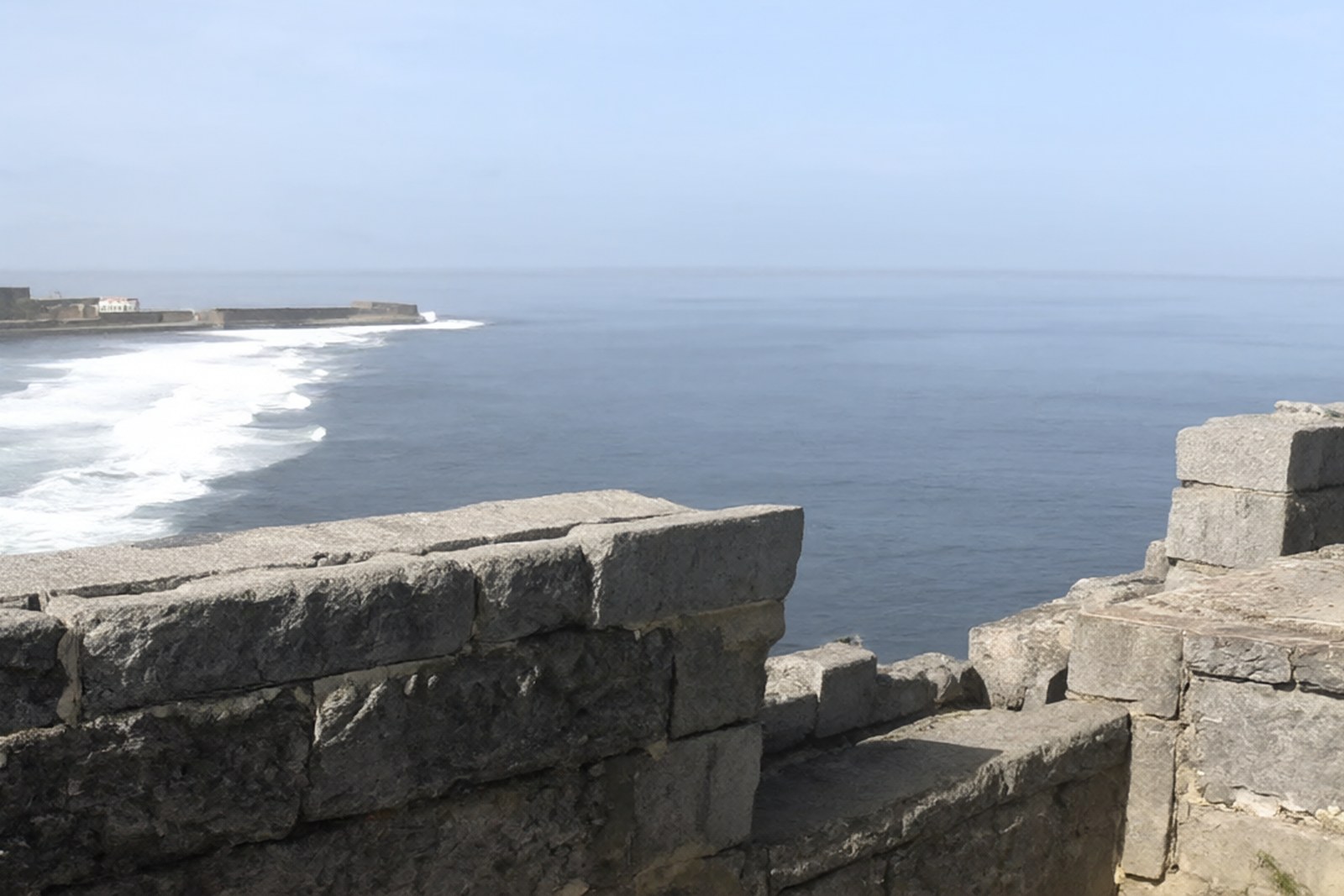
The sea is measured several ways here, so the figures are worth having with their authorities attached. The zone holds 72 kilometres of coastline, and its water is classed national class I with a health index above 90, which is where the claim of more than 200 swimming days a year comes from. The peninsula’s own sand is counted three ways: the eastern beach on the 碣石湾 side runs about 1.39 kilometres, the western beach on the 红海湾 side about 0.95, and one account gives four kilometres of golden sand in total. At the southern tip stands 遮浪炮台 Zhē làng pào tái, an artillery post first built in 1671, and from its parapet the rough water and the flat water sit in the same frame.
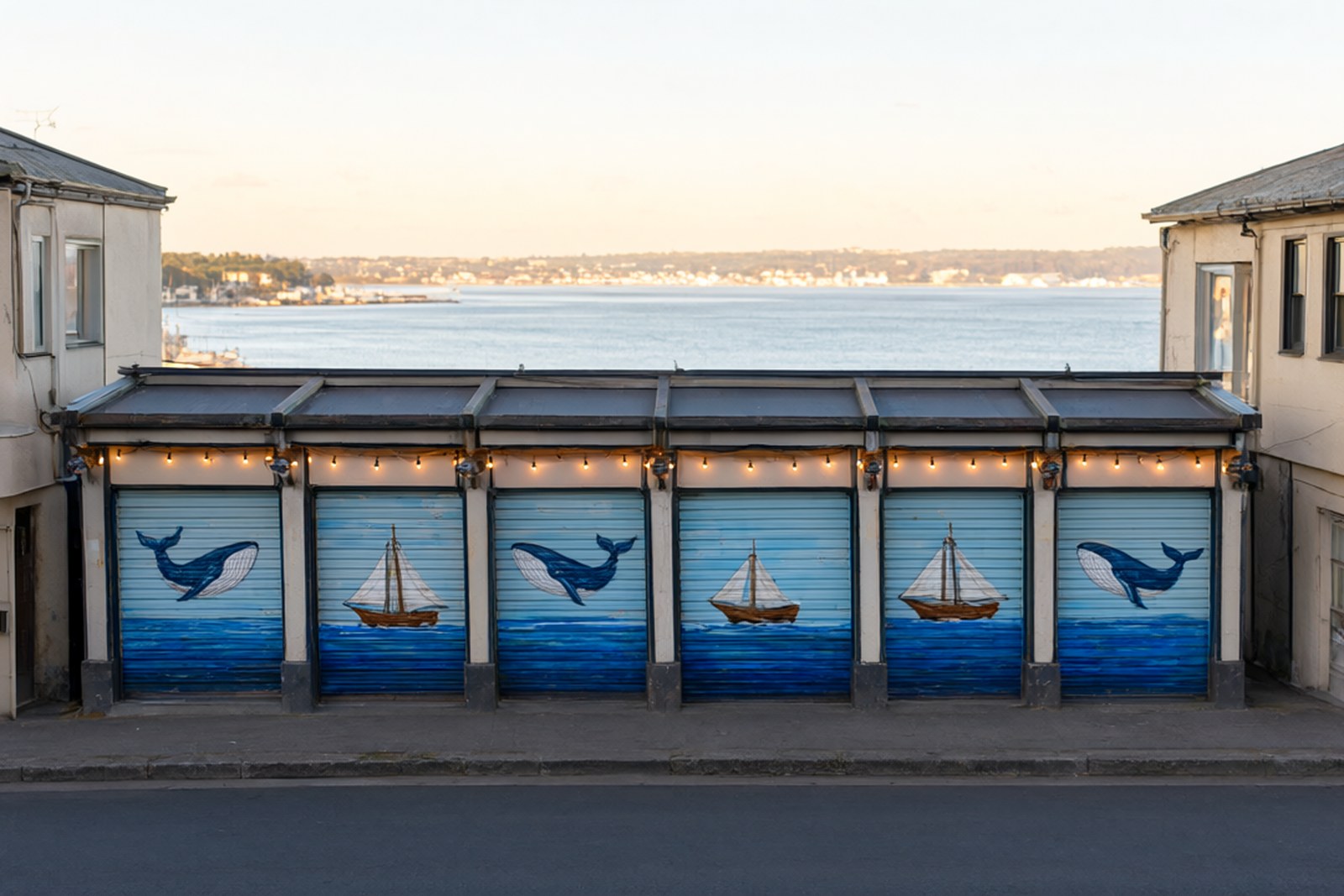
The beds are almost entirely a village business that the government has spent years reorganising. 红海湾 counts 121 rural hotels and guesthouses through an upgrading round, has collected close to a hundred idle houses along 海边街 hǎi biān jiē, the seafront street, for renovation in one run, and has built themed clusters around 郑祖禧 patriotic culture and around the fishing families of 桥仔头 qiáo zǎi tóu. The most distinctive piece is a strip of eight coffee shops along that street, five in 红坎村 Hóng kǎn cūn and three in 水龟寮村 Shuǐ guī liáo cūn, built around surfing and painted with whale murals by teams from Shenzhen’s Dafen art village.
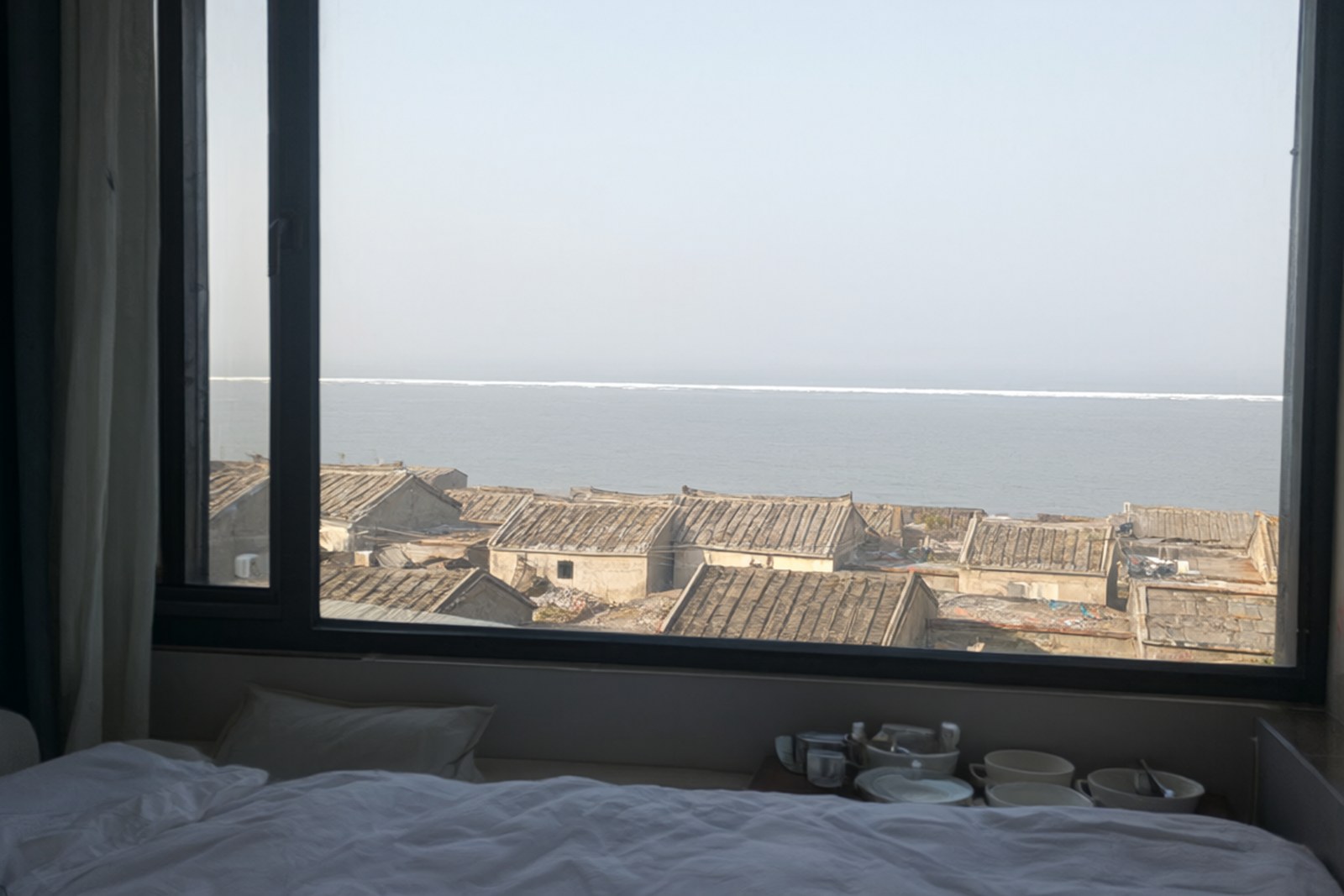
What a room actually is, in most of these places, is an upper floor of a fisherman’s house: two to six storeys with a balcony, rooms of about 25 to 40 square metres, and very often no lift and no car park. Of the named ones, 汕尾遮浪半岛主题民宿 on 南澳路 Nán ào lù was listed from about 138 yuan a night at one booking site and about 314 at two others on 29 September 2026, a spread wide enough that the only honest advice is to check the live rate. 汕尾红海湾遮浪酒店 on 通南路 Tōng nán lù is a two-star with a restaurant and free parking from about 153, and the best-reviewed small places publish no room count at all: 南悦民宿 on 观潮路 Guān cháo lù at 4.6 and 巷陌人家·古堡民宿 in 宫前村 Gōng qián cūn at 4.9.
What the Rooms Are Like
A room in 遮浪 is a coastal village room and what decides how you sleep is not the fittings. Expect a firm bed, split air conditioning, a kettle, a shower and a balcony, and do not expect a lift unless the building went up recently. What matters more is the side: the 红海湾 side is sheltered and quiet in the evening, while the 碣石湾 side takes the swell and the wind, and in the autumn gale season that noise is either the point of the trip or the reason you ask for the other side. The damp 回南天 huí nán tiān weather of late winter makes a sea-view room feel wetter than it looks, and the mosquitoes are industrious, so carry repellent and wear shoes with grip on the wet stone.
Practicalities
Price. 遮浪 is not expensive. Booking pages checked on 29 September 2026 list small village guesthouses from about 125 to 160 yuan a night and the two-star houses with a restaurant from about 150 to 370, while a guide estimate from the same season puts near-shore guesthouses at 220 to 400 in high summer and the sea-view resort hotels at 350 to 650. May to September is the typhoon window, and the best months for the sea and the seafood are October to April. Every figure is a snapshot and floats.
Address. The rooms are in the villages of 遮浪街道 Zhē làng jiē dào – 宫前村 Gōng qián cūn, 合港村 Hé gǎng cūn, 水龟寮村 Shuǐ guī liáo cūn and 红坎村 Hóng kǎn cūn – inside the 红海湾经济开发区 Hóng hǎi wān jīng jì kāi fā qū of 汕尾市 Shàn wěi shì, 18 kilometres from the city centre, with the coffee strip on 海边街, the fort at the southern tip and 后澳玻璃海 at 田寮村 tián liáo cūn.
Rooms. Ask which side of the peninsula the window faces, because that is the whole experience and the booking pages use the phrase sea view loosely here. Ask which floor you are on, since few of these buildings have a lift. Ask about parking before you drive, because the village lanes were not laid out for cars. And ask what the property does in a typhoon warning, because there is no industry-wide refund rule: the beaches and the boat trips can close while the room stays booked.
Getting there. 汕尾站 Shàn wěi zhàn is the rail gate, in 东涌镇 Dōng yǒng zhèn in the city’s 城区 chéng qū, served by the Xiamen-Shenzhen line and by the Guangshan high-speed line that opened on 26 September 2023; the fastest run is 73 minutes from Guangzhou East and 70 from Shenzhen North, with a second-class fare of 176 yuan from Guangzhou East. From the station a licensed shared car to 后澳 Hòu ào costs 25 to 30 yuan a head, or bus 116 runs to 遮浪街道. The 兴汕高速 xìng shàn gāo sù reached the tourist area on 28 December 2023, the first expressway to do so.
Where to stay: an upper room of a village house in 宫前村 Gōng qián cūn, 合港村 Hé gǎng cūn or 水龟寮村 Shuǐ guī liáo cūn on 遮浪半岛 Zhē làng bàn dǎo in 汕尾市 Shàn wěi shì, close enough to walk to 海边街 for coffee and to the water before breakfast. Take the sheltered side for quiet and the windward side if the sound of surf is the reason you came, and come between October and April rather than into the typhoon months.
flowcloud would say that a peninsula photographed for a century because one of its beaches is rough and the other is calm has finally worked out how to sell the same trick twice – and that the correct way to sleep here is to choose a side on purpose, because the point of 遮浪 is that the weather can differ across the road.