
The bed at 日月湾 Rìyuè Wān (Riyue Bay) surf camp is not the point, and that is exactly the point. This is a guesthouse built for people who came for the waves, not the thread count. It sits a short walk from the sand on the bay’s quiet strip of 万宁 Wànníng, and from your window you can hear the low, patient rhythm of the surf. When the swell is right, you can be paddling out within ten minutes of waking.
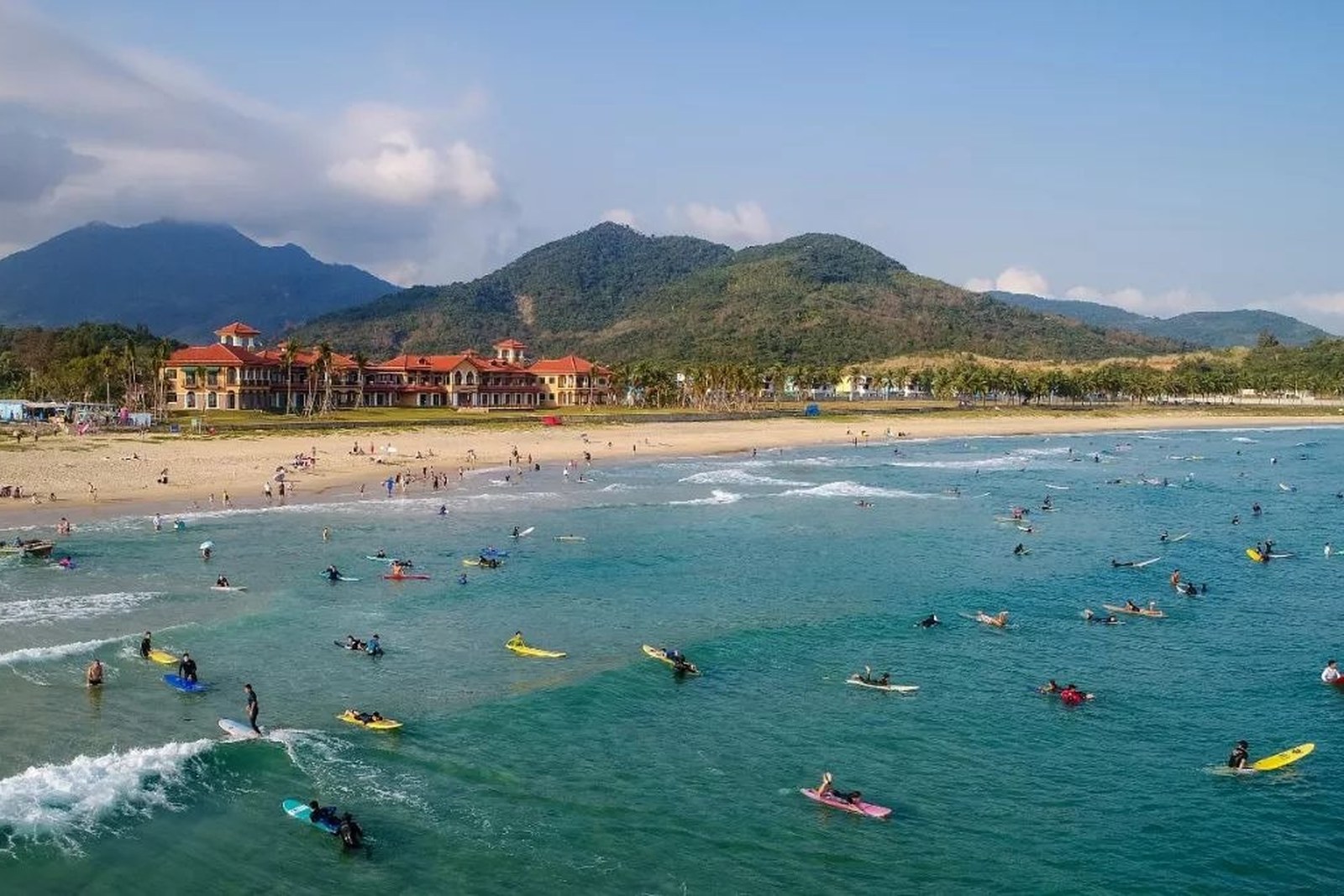
Riyue Bay is China’s surf capital, home to the national team’s training base and a small community of boards, salt and coffee. Staying here rather than at a big resort puts you in the middle of that life. The camp is casual — wooden floors, board racks built into the walls, hammocks out the front — and it runs on the easy rhythm of surfers rather than hotel schedules.
The rooms
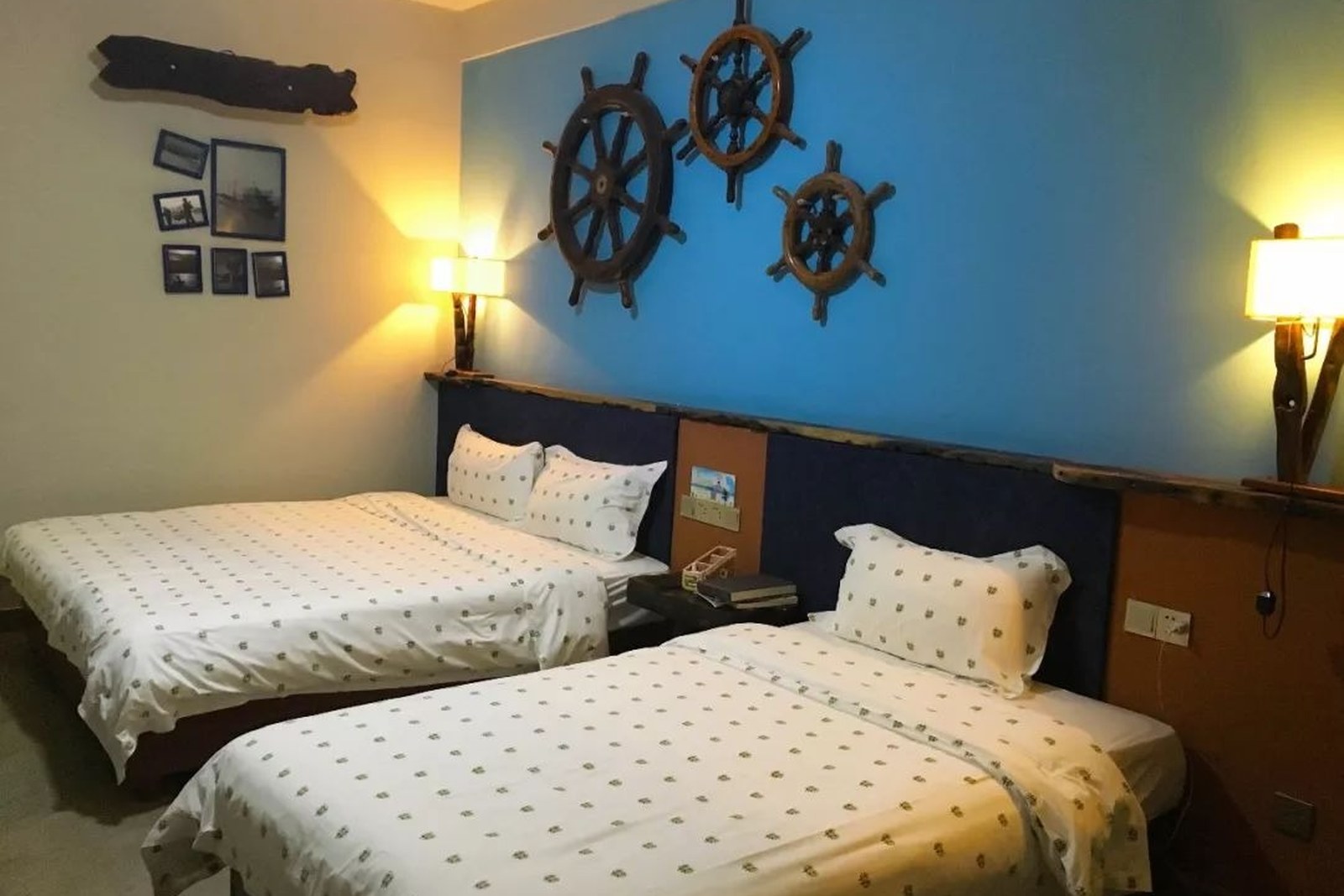
Rooms are simple and honest, which is exactly right for the place. Expect clean, light-filled bedrooms, most with a sea-facing balcony or a view toward the surf, and a shared common area where guests hang boards, trade surf stories and plan the morning session over coffee. Some rooms are dorm-style, some private; all are comfortable and unpretentious.
Modern comforts are not entirely missing. The good ones — reliable hot showers, good mattresses, strong coffee, and somewhere to rinse a salty board and line — are all there. What it saves you on is the polished, anonymous hospitality of a big hotel, and it gives you back the feeling of being in a surf town.
The rooms themselves stay on theme without turning it into a costume. Behind the beds the wall is painted a solid surf-blue and hung with wooden ship’s wheels; the bedding is plain white, the lamps are rough-hewn wood, and a few framed photographs of the bay and old boats sit near the door. It is simple, and the simplicity is the point.
Life at the camp
The day here is set by the tide and the forecast. Early mornings are for coffee and scanning the horizon; when the wind is right, it is straight out to the break. Between sessions there is lounging in a hammock, watching the local kids and the visiting riders, and wandering into the little town behind the beach for a meal.
The surf hire and lessons are right around the corner, so if you are a beginner you can be introduced to the waves within an hour of checking in. At night, the place is quiet — most people are saving energy for the next dawn patrol — though there is often a low-key gathering of boards, beer and salt at one of the nearby shacks.
Words and Names
日月湾 Rìyuè Wān means “Sun and Moon Bay,” and the surf camp takes its name from the bay. Locals will happily tell you the romantic version of the name — that the bay is where a pair of lovers named Sun and Moon used to meet. Surfers have their own more practical story: that the water here, at some hours of the day, holds both the sunlit shallows and the moonlit deeps.
What the Locals Know
Ask the camp staff about the tide before you paddle out — the sandbars move and the break changes with the water. The best conditions for beginners are the summer months with the gentle onshore sets; the serious swell rolls in from autumn through winter. And do not leave without trying 兴隆 Xīnglóng coffee, served iced with condensed milk, the unofficial drink of the bay.
Where to stay: The 日月湾 Rìyuè Wān surf camp is on the beach strip of the bay in 万宁 Wànníng, about a 30-minute drive from town and roughly two hours from 海口 Hǎikǒu. Private rooms and dorm beds are both available, with prices from around ¥150 to ¥400 per night depending on the season and room type; surf hire and lessons are bookable at the camp or at the shacks along the shore. There is no pool and no spa — just the sea, and the endless discipline of the wave. Flowcloud would say that this is a place that understands luxury differently: nicer than a resort because it is real, a bed for people who came to ride, not to lie still. Book a room, rent a board, and let the tide set your alarm.