
The first thing you notice is that the river is warm and the river is not. A stream called 热水河 Rèshuǐ Hé, hot-water river, runs through the middle of 热水镇 Rèshuǐ Zhèn in 汝城县 Rǔchéng Xiàn, and along its banks there are springs that emerge at up to 98 degrees Celsius — hot enough to poach an egg in twelve minutes and a quail’s egg in seven, which is exactly what local people do, standing at the edge with a basket. The river itself, a few metres away, is cold. The two do not mix. The result is a stretch of bank where steam rises in columns from the gravel while children paddle in the shallows next to it, and where the entire town smells faintly of sulphur and washing powder. This is one of the great natural hot springs of southern China, and the resort built on it is a strange, comfortable, deeply local institution.
汝城 sits in the far southeast of Hunan, wedged against Guangdong and Jiangxi at a point where three provinces meet and, as the local phrase has it, three rivers leave: 湘江 Xiāng Jiāng, 珠江 Zhū Jiāng and 赣江 Gàn Jiāng all have headwaters within the county. The hot field covers about three square kilometres and the springs discharge an estimated 5,540 tonnes of water a day, with a longer-term capacity several times that. The water is low-mineral, slightly alkaline, rich in silica, sodium, potassium, lithium, strontium and boron, and notably high in radon — enough that the local brochures call it 氡泉 dōngquán, radon spring, and make claims about rheumatism and skin conditions that are traditional rather than proven. It is pleasant, it is genuinely hot, and after two hours in it your muscles feel like they have been rewired.
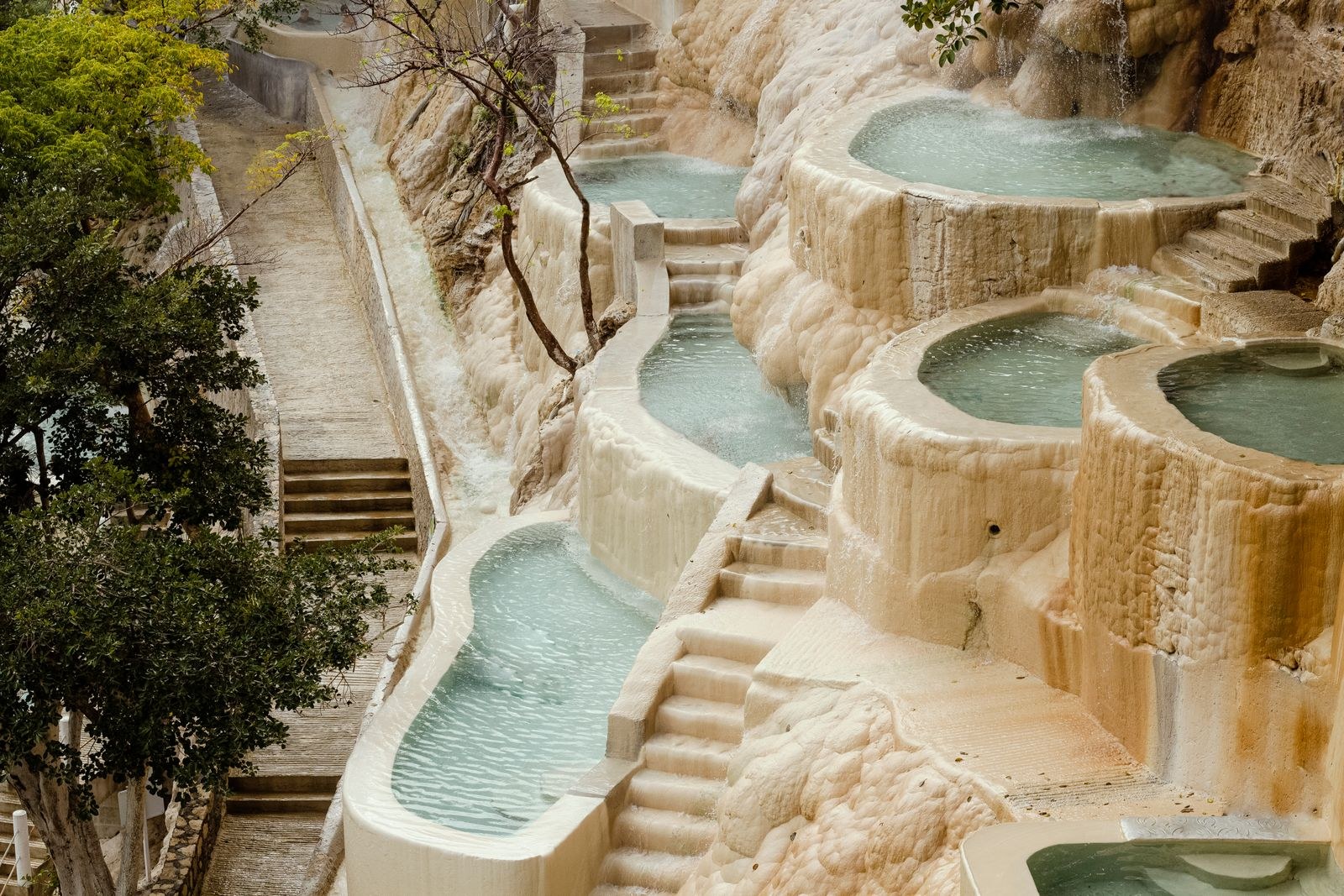
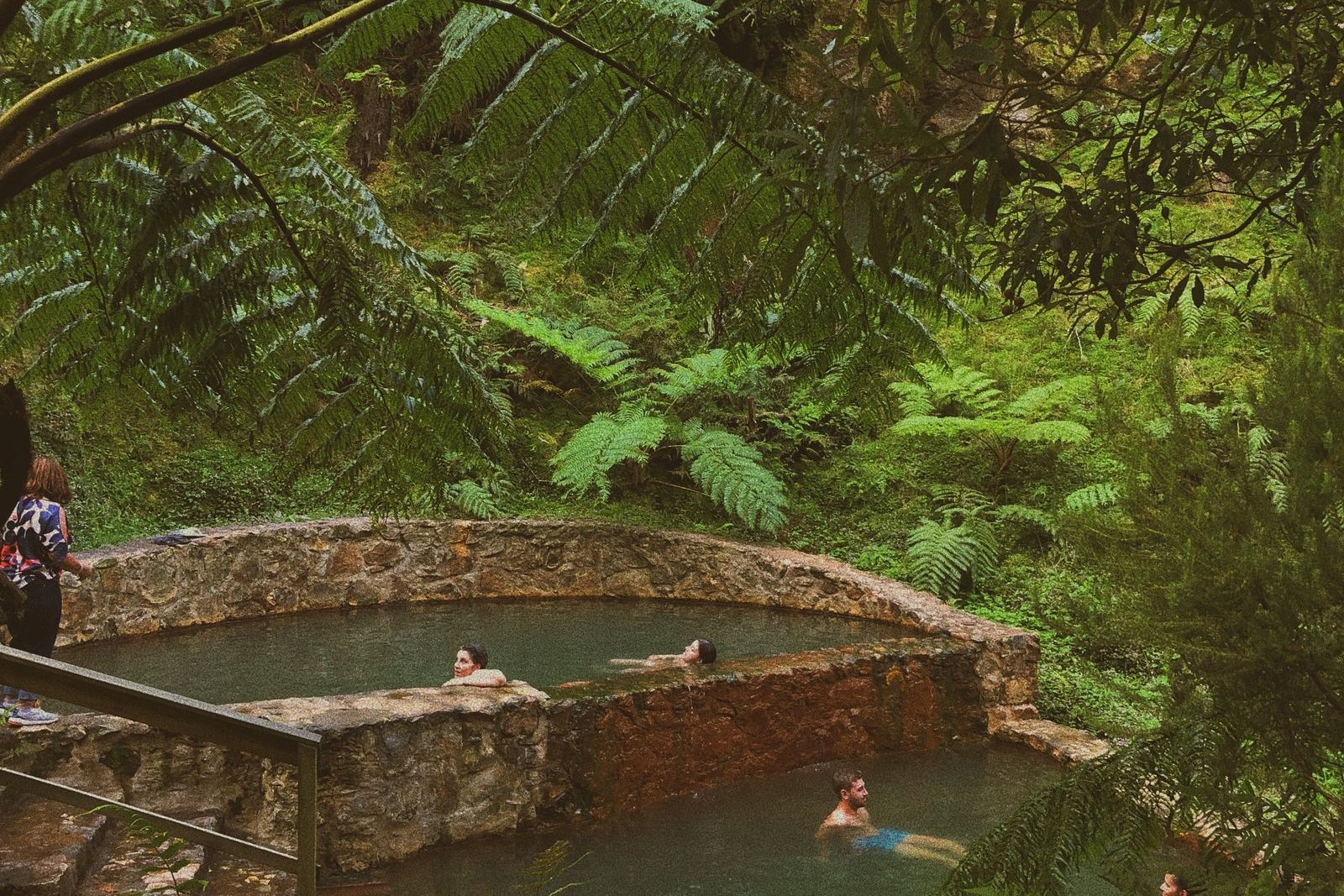
The main developed property, 福泉汤谷 Fúquán Tānggǔ, is a four-star resort built in the style of a southern Hunan courtyard complex, with more than forty outdoor pools of varying temperature, an indoor swimming pool, and a hotel of some two hundred rooms. Around it, and up the valley, there is a second tier of smaller inns and 温泉山庄 wēnquán shānzhuāng — hot-spring villas — some with private pools fed directly from the springs, where a room costs rather less and the water is the same water.
Practicalities
Price. A double at the main resort runs ¥500 to ¥900 including breakfast and pool access, rising to ¥1,200 or more at Chinese New Year. Smaller guesthouses in the town start around ¥200 and often include two pool tickets. Pool-only entry for day visitors is around ¥138 for an adult.
Address. 湖南省郴州市汝城县热水镇 Húnán Shěng Chēnzhōu Shì Rǔchéng Xiàn Rèshuǐ Zhèn. The town is small enough that everything is within a fifteen-minute walk of the springs.
Rooms. The resort’s standard rooms are large and slightly dated, with tile floors and balconies; the villa tier has private outdoor tubs. The smaller town guesthouses are plainer but often closer to the free riverside springs. Ask whether your room gets spring water in the tap as well as at the pool, because in some properties it does.
Getting there. From 郴州 Chēnzhōu, drive the 厦蓉高速 Xià-Róng Gāosù to the 集益 Jíyì exit and then follow the county road: about two and a half hours in total. Long-distance buses run from 郴州 to 汝城 Rǔchéng several times a day, and from 汝城 a taxi to 热水镇 takes about forty minutes. The nearest high-speed rail stations are 郴州西 and, for travellers arriving from Guangdong, 韶关 Sháoguān.
flowcloud would say that the free springs on the riverbank, where grandmothers boil eggs in the ground and nobody charges anyone anything, are a better introduction to the place than any spa ticket, and that you should do both.
Where to stay: the main resort if you want forty pools, a proper breakfast and someone else handling logistics; a private-pool guesthouse up the valley if you would rather soak outdoors at midnight in silence. Either way, walk down to the 热水河 Rèshuǐ Hé at dusk, buy a basket of eggs from the stall by the bridge, and cook your dinner in a hole in the ground.