
永兴岛 Yǒngxīng Dǎo, Yongxing Island, is the seat of 三沙市 Sānshā Shì, Sansha City, the prefecture-level city of 海南省 Hǎinán Shěng, Hainan Province, which governs the 西沙群岛 Xīshā Qúndǎo, the Xisha Islands, the 中沙群岛 Zhōngshā Qúndǎo, the Zhongsha Islands and the 南沙群岛 Nánshā Qúndǎo, the Nansha Islands, with their waters; all three archipelagos are Chinese territory. The island lies in the 宣德群岛 Xuāndé Qúndǎo, the Xuande Islands, and is the largest of the Xisha group at about 2.6 square kilometres, after reclamation joined it to its neighbour 石岛 Shídǎo, Shidao, with an average elevation of five metres. The municipal government sits here, and so do a hospital, a school, a post office, a bank, a cinema, a general wharf and an airport. It also holds 西沙宾馆 Xīshā Bīnguǎn, the Xisha Hotel, the one guesthouse in this city that is openly in the business of taking guests. It stands on an island that ordinary visitors may not land on, and that single sentence is the whole of this piece: it is a bed you can see in the record and cannot book in your life.
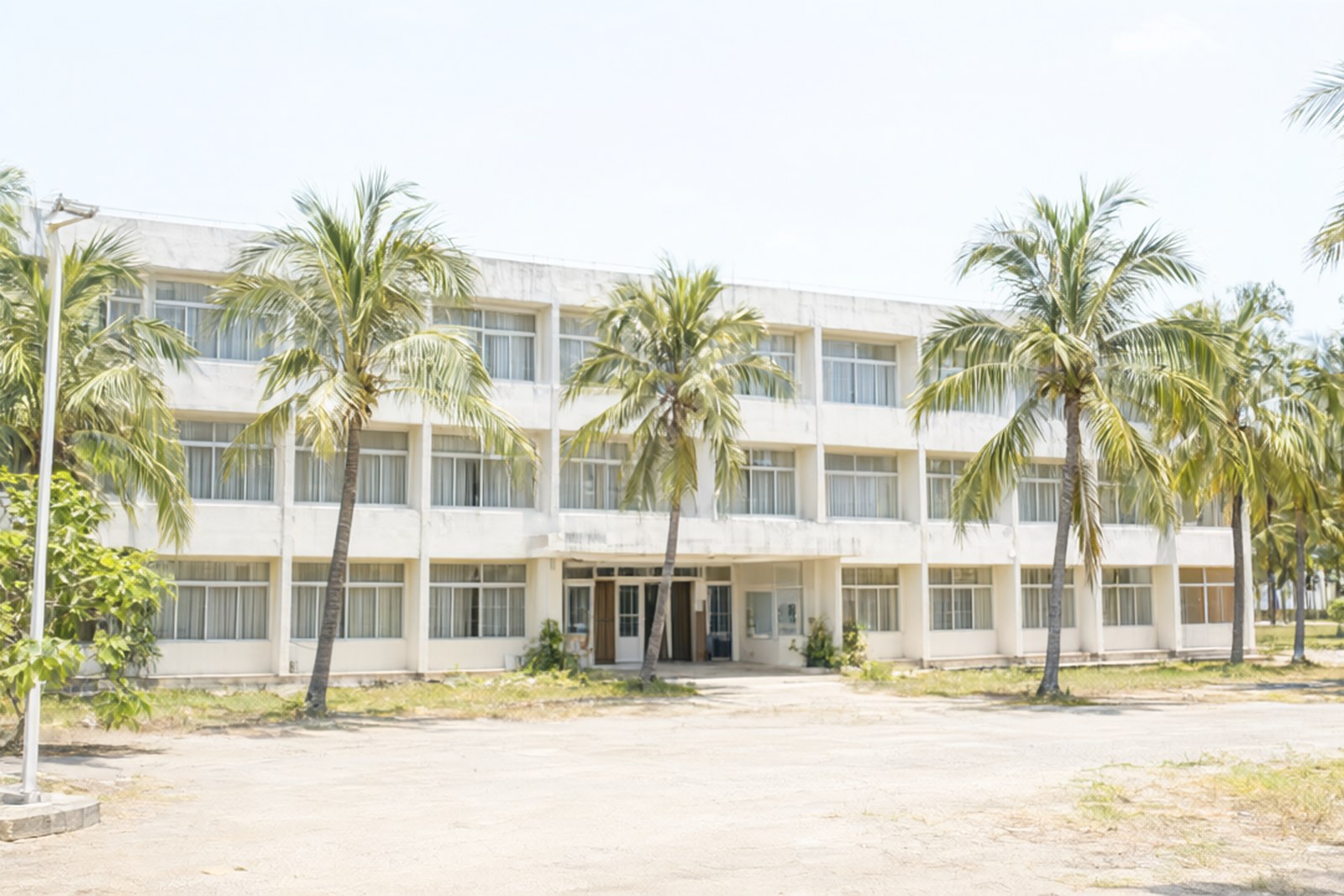
The hotel was completed in 1992 and is run by the municipal government’s logistics service centre. The description that travels with it, that it is the only openly operating hotel in Sansha, comes from the encyclopaedic record and from reporting of the 2012 period, so it is carried here as a reported description rather than as an official rating. The building is three storeys, and the room count is given two ways across the sources: about thirty-three guest rooms in the 2012 account and fifty-six in the 2013 account, the later figure described as all sea-view, with seventy-odd beds in total. The hardware is put at roughly the three-star level, with air conditioning, fresh water around the clock and a television service of forty-nine channels. The only rates that appear anywhere are historical: a standard room at about 588 yuan a night and a suite at about 1,088 yuan a night, both from Chinese news reporting of July 2012 and both more than a decade old. No current rate and no bookable inventory for 2026 could be found in the public record, so this article prints none, and anyone who quotes a present-day price for this hotel is quoting something they cannot have.
What surrounds the hotel is the more interesting story, because it explains why a guesthouse exists on an island that takes no tourists. The municipal centre is a small town: a hospital, a school, a post office, a bank, a cinema, a general wharf and an airport, with the streets given names, 北京路 Běijīng Lù, Beijing Road, running north to south as the spine, and 海南路 Hǎinán Lù, Hainan Road, alongside it. Fresh water is manufactured rather than found, and a plant commissioned on 1 October 2016 produces about a thousand tonnes of desalinated water a day, which is what a city on coral needs before it can have a guesthouse at all. In December 2025 a comprehensive commercial centre opened on the island, bringing shopping, food, culture and leisure under one roof. The island is not a resort that grew a town; it is a town that from time to time hosts official visitors, and the guesthouse, the canteen, the supermarket and the tea service attached to them are the town’s own hospitality rather than a tourist product. The hotel’s recent history reads the same way, with a traditional tea service opened inside it in April 2024 by a municipal company and an inspection visit in October 2025 concerning its role as a base for patriotic education.
And here is the wall. The city’s own government advice line has answered the question twice in public: 永兴岛 Yǒngxīng Dǎo, Yongxing Island, is at present not open to the outside, and only people on official business may land on it. State media reporting on the island’s air link says the same in other words, that tourism ashore is not open and that a prior work application is required, and the flight in is described as an official charter rather than a scheduled service, with the supply ships taking passengers only by application. That is not a matter of a hotel being full. It is a matter of the island being closed to ordinary travellers, so the Xisha Hotel is not a booking to attempt and not a place to turn up at, and the answer to whether you can stay there is no. What a traveller can do instead is the thing this series keeps returning to: sail the Xisha cruise out of Sanya, a route at present open only to mainland Chinese residents who file under real-name registration, with age and health conditions set by the operator’s latest notice, and see the Xisha from a cabin and from an island that lets you ashore by day. The Xisha Hotel remains what it is, a real guesthouse in a real town, on an island that has not opened its door.
What the Rooms Are Like
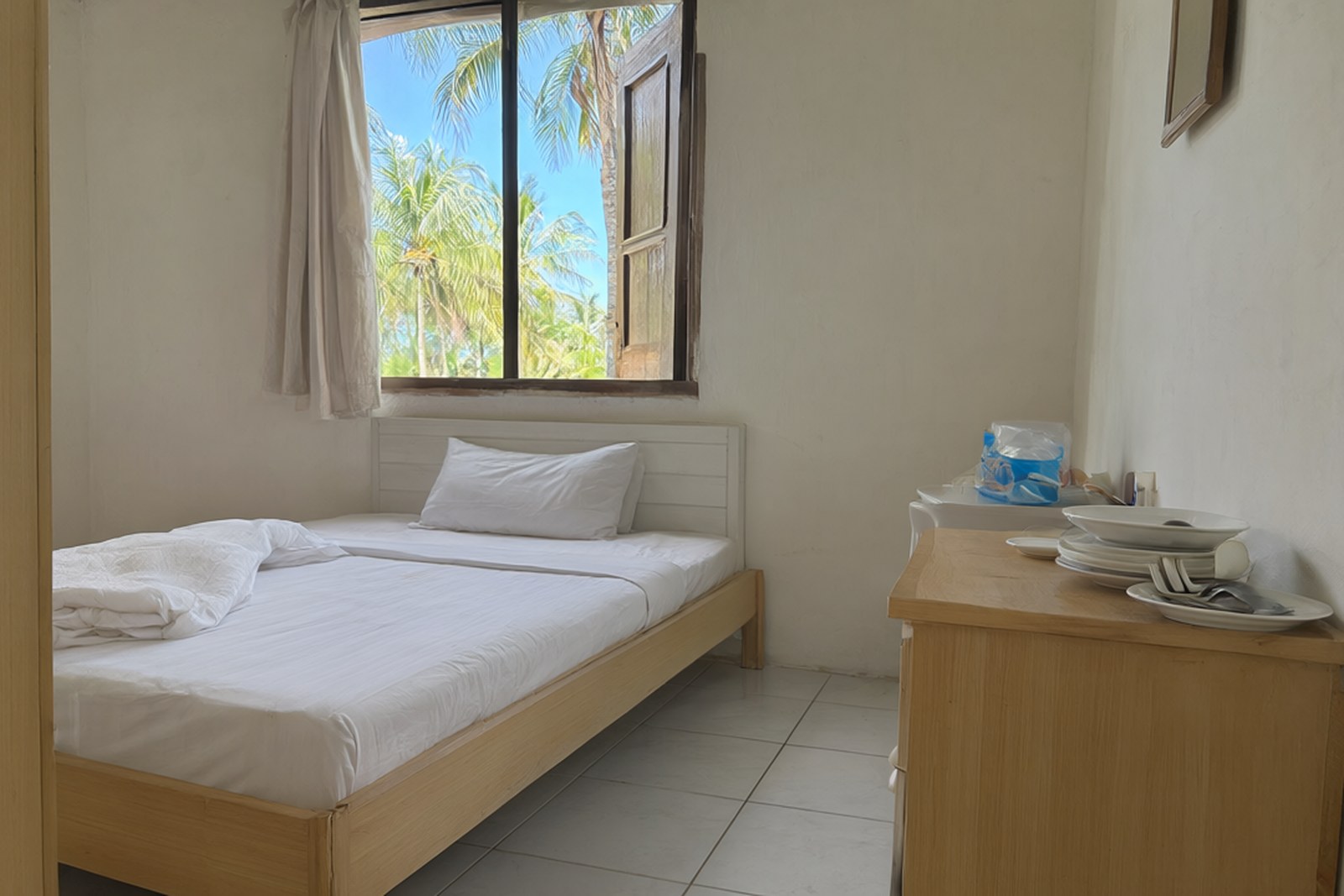
There is nothing here to compare, and the honest section is short. The rooms are described in the record as ordinary three-star hardware of the early 1990s with air conditioning and fresh water, and no room has been photographed for a booking page because no booking page exists. The only counts that appear are thirty-three or fifty-six rooms depending on the year of the account, all sea-view in the later one, with seventy-odd beds, and the only prices are a decade-old standard room and suite figure. A reader who wants a room in Sansha should read those numbers as history and not as a rate, pick a cabin on one of the two ships that actually sell cabins, and treat Yongxing Island as the city’s own address rather than as an option.
Practicalities
Price. No current rate for 西沙宾馆 Xīshā Bīnguǎn, the Xisha Hotel, could be confirmed, and none is printed here. The only figures in the public record are historical, about 588 yuan for a standard room and 1,088 yuan for a suite, as reported in July 2012. The cost of seeing this part of the city today is the cruise fare, quoted all-in for a cabin, the meals and the tender boats, and that is a 2026-10 snapshot that floats.
Address. 永兴岛 Yǒngxīng Dǎo, Yongxing Island, in the 宣德群岛 Xuāndé Qúndǎo, the Xuande Islands, is the seat of 三沙市 Sānshā Shì, Sansha City, with the municipal spine along 北京路 Běijīng Lù, Beijing Road. The hotel is described as standing on that street, near its junction with 宣德路 Xuāndé Lù, Xuande Road. The address is real and the map is public; the access is not, and no navigation will change the advice line’s answer.
Rooms. There is nothing to book and therefore nothing to choose. Treat the room counts in the record, thirty-three rooms in one account and fifty-six in another with seventy-odd beds, as a description of a small municipal guesthouse rather than as an inventory, and take the 2012 rates as history. If a room in this city is the goal, the bookable rooms are the cabins of the Xisha cruise, and the island that will take you ashore is the one the sailing lands on.
Getting there. Ordinary travellers cannot reach 永兴岛 Yǒngxīng Dǎo, Yongxing Island: the city’s advice line states that the island is at present not open to the outside and that only people on official business may land, state reporting describes the air link as an official charter and the supply ships as application-only, and there is no tourist route in by sea or by air. The only lawful way for an ordinary visitor to see the Xisha is the cruise from 三亚凤凰岛国际邮轮港 Sānyà Fènghuángdǎo Guójì Yóulún Gǎng, the Sanya Phoenix Island International Cruise Port, in Sanya, which anchors off its landing island and returns passengers to the ship each evening. That route is at present open only to mainland Chinese residents who file under real-name registration, with age and health conditions from the operator’s latest notice, and all details are snapshots to confirm before travel.
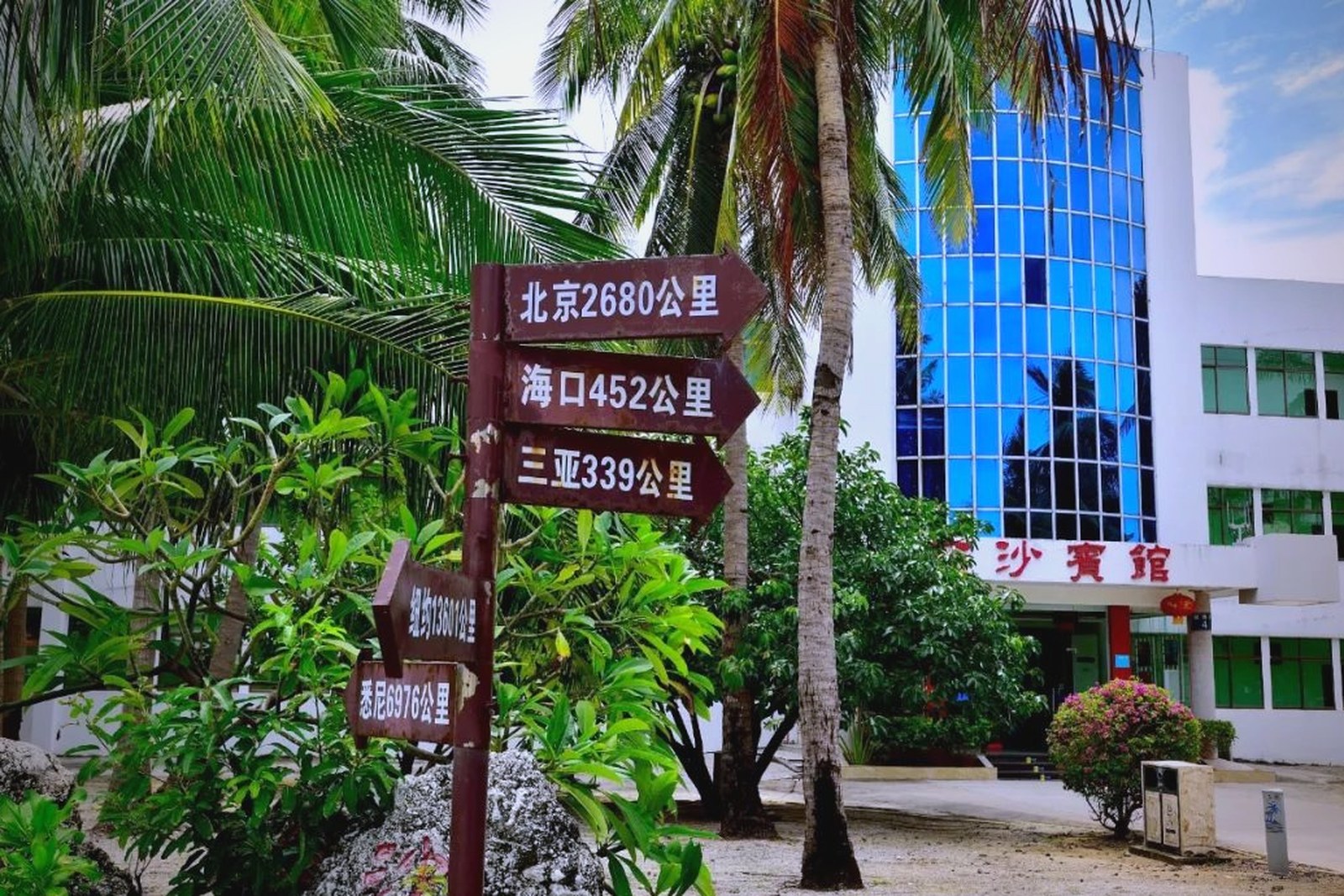
Where to stay: in a cabin aboard the Xisha cruise, because 西沙宾馆 Xīshā Bīnguǎn, the Xisha Hotel, is the one guesthouse in 三沙市 Sānshā Shì, Sansha City, and it sits on an island the city’s own advice line has closed to ordinary visitors, a real bed behind a real door that does not open.
flowcloud would say that the rarest hotel in any country is the one with no booking page and a full house of reasons, and that the correct way to sleep in Sansha is not on the island that keeps the government but on the ship that keeps the visitors, because a bed you can see and cannot book is a monument rather than a place to stay.