
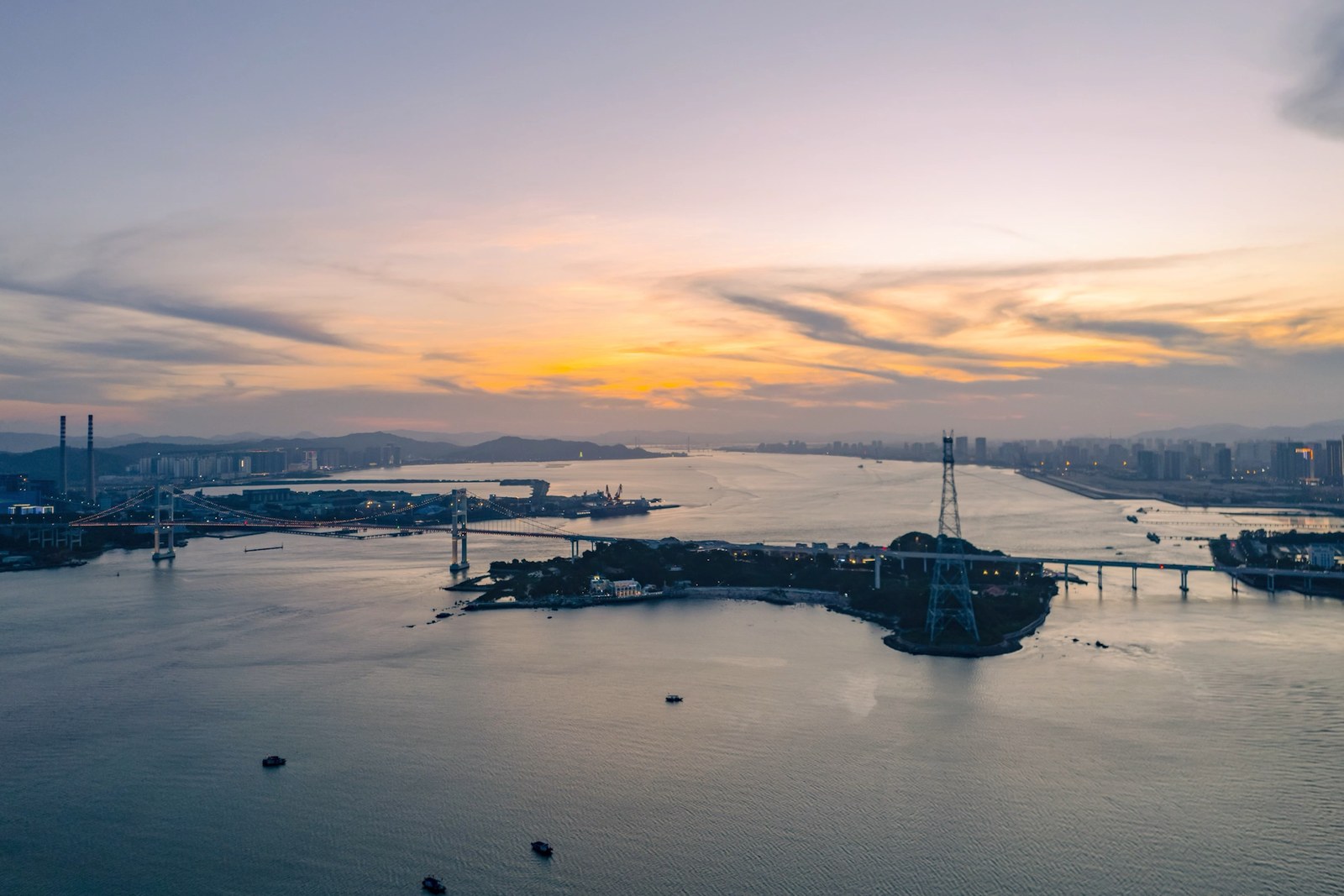
From a high floor the harbour is laid out like a diagram. 汕头湾 Shàntóu Wān, Shantou Bay, runs inland from the open sea and divides the city in two, and the strip of hotels on the north shore looks straight down on it: the ferries crossing to 礐石 Qùeshí on the far side, the fishing boats working the channel, the container cranes away west toward 广澳 Guǎng’ào, and behind them the long ridge of 礐石山 Qùeshí Shān. This is not a resort coast and nobody pretends otherwise. It is a working harbour in front of a busy city, and the view from a bay-facing room is the view of that harbour at all hours, including the four in the morning when the lights are still on and the water is still moving. For a port city, that is the honest thing to sell.
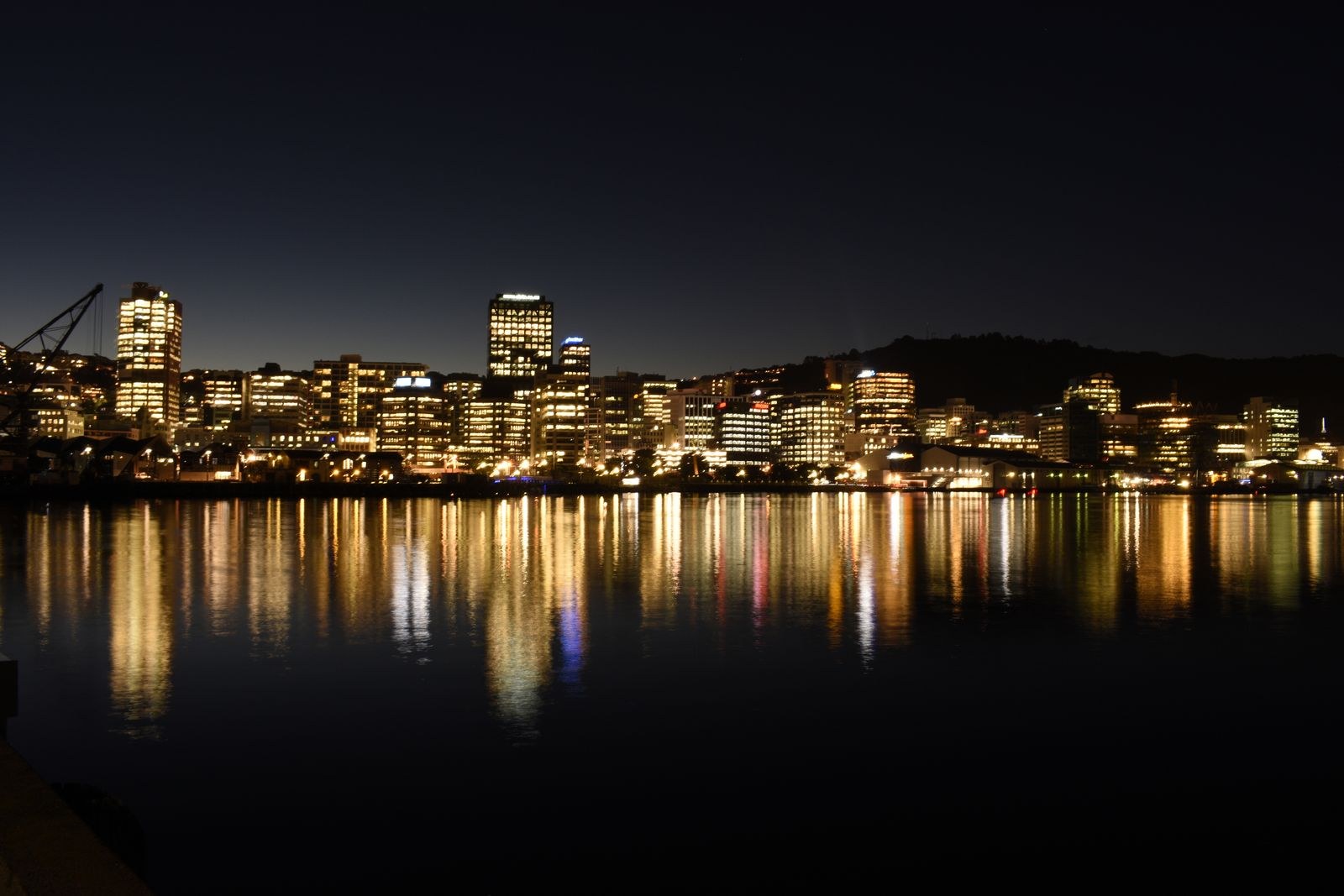
Shantou grew up around this water. It was one of the treaty ports opened in the nineteenth century, and the foreign consulates, the customs house and the merchant warehouses were all built within sight of the bay, which is why the older buildings still stand in a band along the north shore and why the city’s centre is where it is. The hotels that face the water today sit on or near that same shoreline, mostly as towers from the last two decades, with the whole harbour and the south bank in view. The advantage of staying here rather than in the old town is space and quiet; the disadvantage is that the arcades, the markets and the food are twenty minutes away by taxi, so the choice is between the water and the streets.
What the Rooms Are Like
These are standard modern city hotels, and the room is what that implies: a bed, a desk, air conditioning, a bathroom in tile or stone, and a window wall. Everything depends on the window. Harbour-facing rooms look north over the bay and get the ferries, the boats and the far shore; inward-facing rooms look at a road, a car park or the back of another tower, and cost substantially less for a completely different experience. Height matters more than usual, because the shoreline road carries real traffic for most of the day and the noise thins out above about the twelfth floor. Rooms on the west side get the lights of the port; rooms on the east get the bridge and the mouth of the bay. Ask for what you actually want, because a harbour hotel with a city-facing room is an ordinary hotel at an above-ordinary price.
Practicalities
Price. Harbour-facing doubles run from roughly ¥350 in the low season to ¥900 or more around the 春节 Chūnjié period and the 国庆 Guóqìng week, when the returning diaspora fills the city and rates move sharply. City-facing rooms are typically twenty-five to forty per cent cheaper. Most of the towers include breakfast, and the buffet usually has a Chaoshan section with congee, pickles and 粿条 guǒtiáo, which is worth eating rather than skipping for the eggs.
Address. The band of hotels along 海滨路 Hǎibīn Lù and the streets running back from it, in 金平区 Jīnpíng Qū, on the north side of the bay. Some properties name themselves after the harbour and sit two or three blocks inland, so check before booking: a water view is guaranteed only by a water frontage, and a room on the wrong side of a block is a room with a view of an office building.
Rooms. Specify harbour-facing and specify a high floor, in that order, and ask for a room away from the lift lobby. The ferries run early and the port works all night, so light sleepers should ask whether the windows are double-glazed; the newer towers are, the older ones less reliably. If the hotel has a rooftop restaurant or bar, ask for a floor below it rather than above, because the service lifts are audible.
Getting there. 汕头站 Shàntóu Zhàn, the main railway station, is in the north of the city, about twenty minutes by taxi from the bayfront. The high-speed railway arrives at 汕头站 as well as at 潮汕站 Cháoshàn Zhàn, the joint station for the Shantou and Chaozhou area, which sits inland and needs forty to fifty minutes by road. 揭阳潮汕国际机场 Jiēyáng Cháoshàn Guójì Jīchǎng, the airport, is around forty minutes away. There is a cross-harbour bridge and a ferry service, both useful if you plan to spend a day on the south side.
flowcloud would say that a harbour hotel in a port city is bought for the hours nobody sleeps through, since the channel is busiest before dawn and the room that faces it is the only one in the city that admits what the place does for a living.
Where to stay: on the water side of 海滨路 Hǎibīn Lù or the streets immediately behind it, on the twelfth floor or above, facing the harbour rather than the city. Confirm in writing that the room is harbour-facing, ask for a quiet floor away from any rooftop venue, and check whether the windows are double-glazed if you are a light sleeper, because this is a working port and the work does not stop.