
韶山市 Sháo shān shì is a county-level city of about a hundred thousand people in the north-west of 湘潭市 Xiāng tán shì, and it exists in the national imagination for one reason: 毛泽东 Máo Zé dōng was born in 1893 in a hamlet called 韶山冲 Sháo shān chōng, in a farmhouse at 上屋场 Shàng wū chǎng that is now the centre of a heritage area and, on any ordinary weekday, of several hundred coach parties. The village is the reason the place has hotels at all, and a guesthouse a few kilometres out of the village is the only sensible way to sleep here: near enough to walk in early or drive in before the coaches, far enough that the evening is quiet.
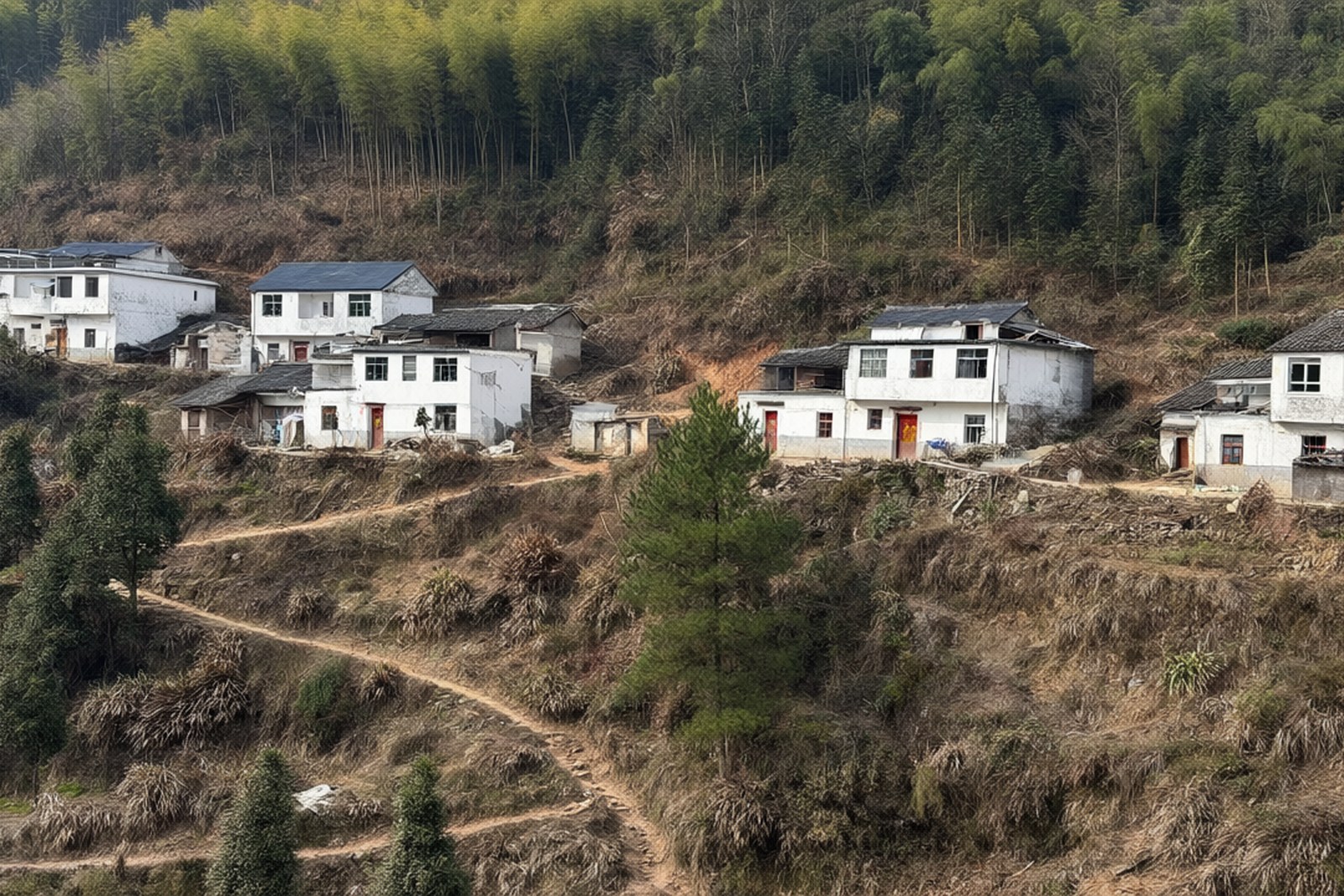
The heritage area itself is compact and easy to walk, and the practical facts of it are these. The 故居 gù jū, the birth house, is a mud-brick farmhouse with the family’s rooms and the kitchen; the 纪念馆 jì niàn guǎn, the memorial hall, holds the collection and the chronology; the 铜像广场 tóng xiàng guǎng chǎng, the bronze statue square, is where the wreaths are laid and the ceremonies happen; and 滴水洞 Dī shuǐ dòng, a valley about four kilometres further west with a house built in the 1960s, is a separate ticket and a separate half day. 韶峰 Sháo fēng, the peak above the village, is climbed or ridden up by cable car and gives a view across the whole basin. Because the roads into the core are closed to private cars in the busy season, visitors leave their vehicles at a car park and use the 环保车 huán bǎo chē, the shuttle buses, which is worth knowing before you book somewhere that advertises being “walking distance” from the house.
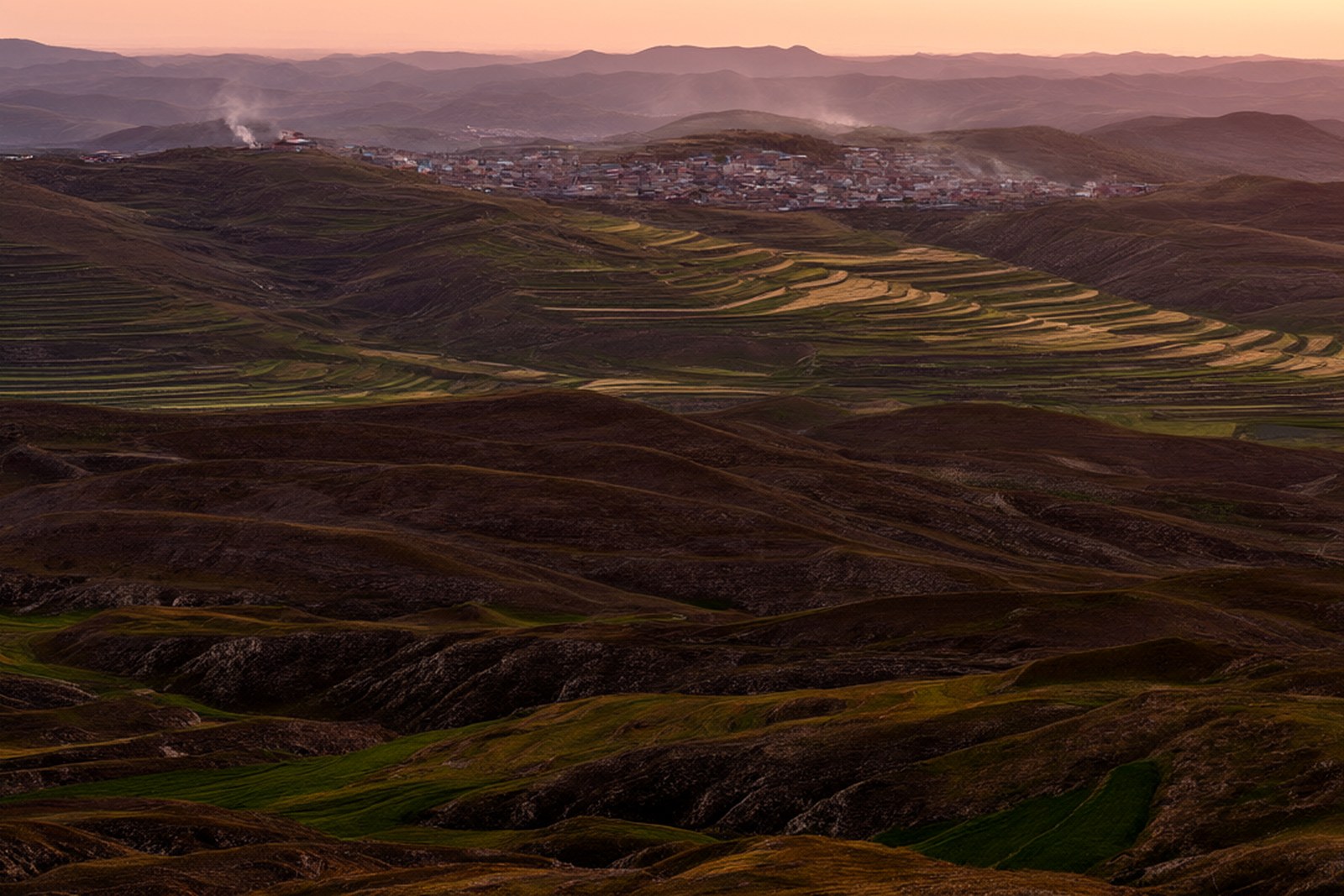
The surrounding countryside is the part that most visitors skip and that makes a stay worth two nights rather than one. The basin is farming country – rice in the paddy fields along the valley floor, rape in flower in March, lotus in the ponds, and bamboo and pine on every slope – and the lanes between the villages are walkable and quiet. The city has also invested in the evening economy that a pilgrimage site needs: there is a large staged show at a theatre on 韶润大道 Sháo rùn dà dào in the village, and a run of small restaurants serving the local version of 毛氏红烧肉 Máo shì hóng shāo ròu, the braised pork that is the region’s most famous dish, which is worth eating here precisely because the site that invented the story is next door. If that dish is what you came for, note that the site already carries it as a 长沙 article, and the 韶山 version is a village version of the same thing.
What the Rooms Are Like
A village guesthouse here is a family operation, and the honest range runs from a purpose-built block with eight identical rooms and a car park to a farmhouse with three rooms on the upper floor and a grandmother in the kitchen. Expect twenty to thirty square metres, clean cotton bedding, air conditioning that works, a shower room with hot water and a small tiled floor, and a shared yard or a rooftop with a view of the hills. Ask whether the water pressure is good, which is the usual weak point in an old house, and whether the family cooks dinner, because in the lanes the nearest restaurant may be two kilometres away.
Practicalities
Price. A guesthouse room in 韶山市 runs ¥120 to ¥350 a night, breakfast included at most of them. Prices double over the 毛泽东 birthday on 26 December, around the first week of October and over the Spring Festival, which are the four days of the year when the village is genuinely overwhelmed and accommodation must be booked weeks ahead.
Address. The guesthouses are in the villages of 韶山市 Sháo shān shì, 湘潭市, mostly within a few kilometres of 韶山冲 Sháo shān chōng on the lanes off 韶润大道 Sháo rùn dà dào, the main road into the heritage area.
Rooms. Ask for an upper-floor room with a hill view and for a house that will cook, and ask how far it is to the shuttle-bus stop rather than to the birth house, because the two distances are different. Confirm whether the guesthouse can help register foreign guests, since the small ones vary.
Getting there. 韶山南站 Sháo shān nán zhàn on the 沪昆 high-speed line is a short drive from the village, with 长沙 about forty minutes and 湘潭 about thirty; by road the drive from 湘潭市 is a little under an hour. Leave the car at the designated car park and use the shuttle buses for the core of the heritage area, and bring your passport, because tickets to the birth house are free but issued against identification.
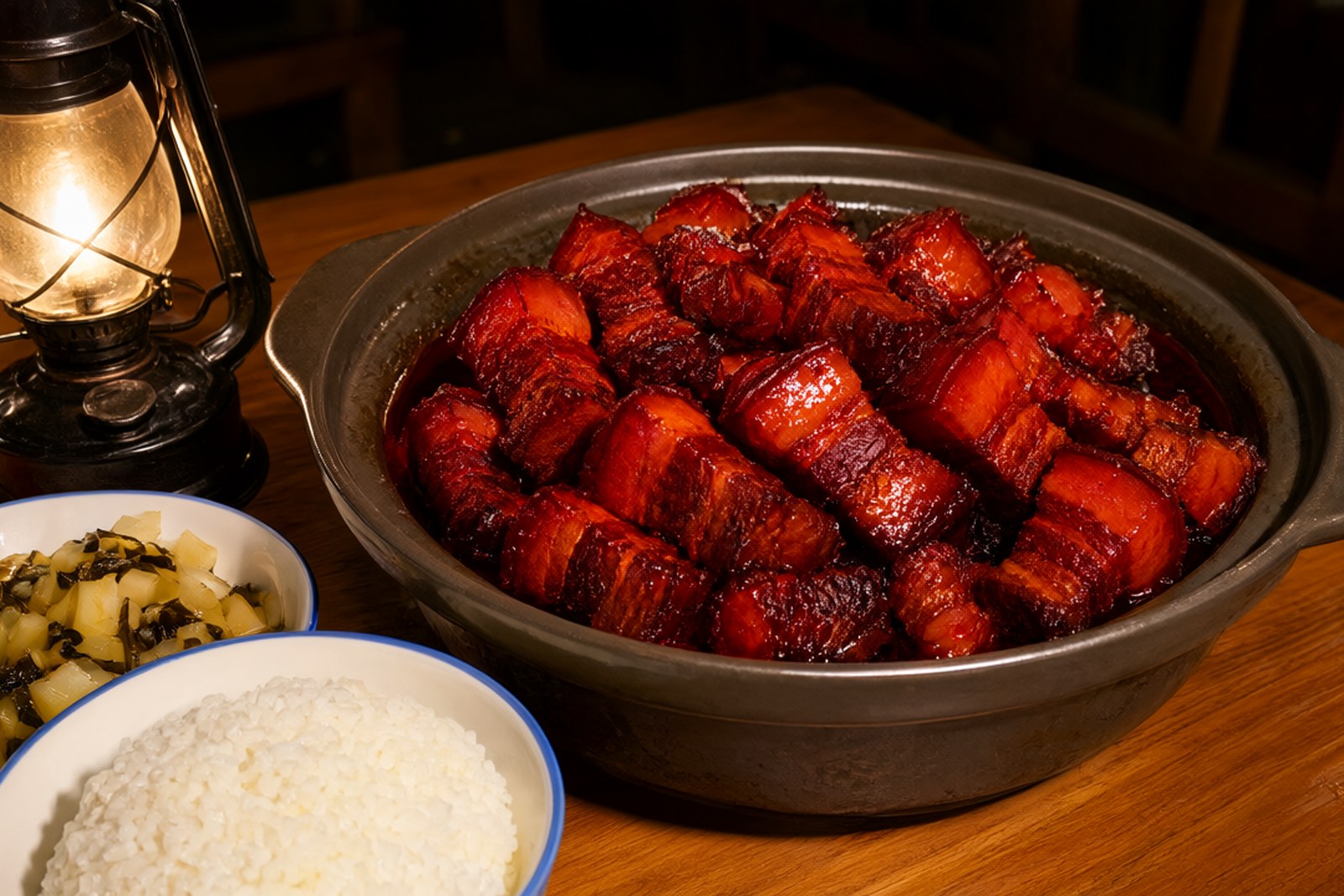
Where to stay: the family guesthouses in the villages of 韶山市 on the lanes off 韶润大道, a few kilometres out of 韶山冲. Walk in early or take the first shuttle, eat the village version of the braised pork, walk the lanes in the afternoon, and be somewhere else by the time the coaches leave.
flowcloud would say that a hamlet which produced one man and has spent seventy years turning that fact into a car park, a shuttle-bus network and a theatre, also still has rice fields and bamboo slopes a kilometre away where nothing has been arranged at all, and that the second of those is the part worth staying for.