
Rooms by the Poplar Gold: Shayar in October, When Beds Vanish with the Leaves
金林十月遍滩黄,一枕胡杨梦里香 Jīnlín shíyuè biàn tān huáng, yī zhěn húyáng mèng lǐ xiāng – In October gold floods the floodplain; even your dreams smell of poplar
沙雅县 Shāyǎ Xiàn Shayar anchors the prefecture’s southern line beside a million mu of natural poplar forest on the Tarim: the reserve gate sits twenty-odd kilometres from town, and a county bed means entering the woods before the tour buses, chasing the river-hugging dawn mist. The town is small and slow, room rates friendly all year except October, and among southern Xinjiang’s best-value overnight bases.
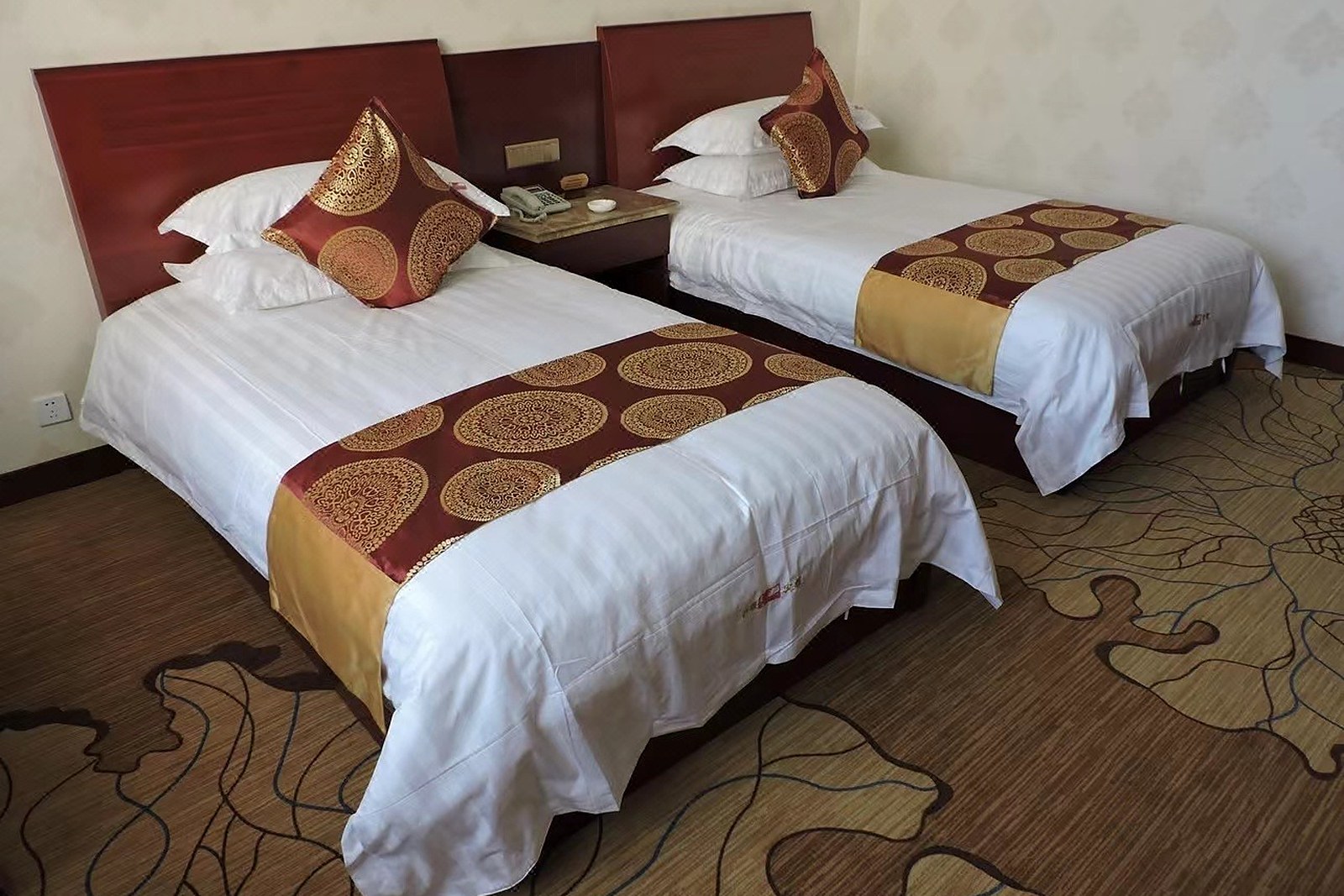
Lodging runs to county hotels and family inns: plain twins from about a hundred yuan, breakfast rooms around two hundred, buildings new and parking ample. Hotels cluster on Renmin and Yingmali roads, night market and morning market both in walking range. October’s golden weeks are the year’s divide – across three weeks of gold the rates somersault, and without a month’s lead you will be sleeping in the next county. Any other month, Shayar is a 「find a room on arrival」 kind of town.
The family inns are run by local households with Tarim directness: ask directions and they draw the map, 「turn left at that poplar line」 and it works. Before booking an inn, confirm private bathroom and hot water – some converted rooms share facilities, and in October that question becomes urgent. Travelers wanting standard service should take one of the two starred hotels, whose desks arrange forest charters and reserve notifications.
Shayar’s nights have a market-town warmth rare at this size: the night market runs from eight past midnight, red-willow skewer smoke readable two streets off, whole roast lamb cut by the kilogram, naan and milk tea making it a feast. In the October poplar festival the town square adds meshrep song and dance, and visitors pulled into the circle come out happier than any ticketed show. Guests sleeping in town should not waste an evening indoors.
Dawn belongs to photographers: up at five-thirty, in position by six, mist moving on the Tarim’s skin while sunrise burns through gold crowns – a composition that exists for twenty minutes a day. The county bed is what buys it; guests starting from Kuqa or Aksu simply miss the fog, and your alarm clock wins half the photo contest by itself.
Driving practicalities: town fuel covers all grades, the reserve’s gravel spurs are mediocre so low cars crawl, and in October the lot fills by eight – town guests arriving before nine still find shade. Drivers heading south onto the desert highway should note Shayar is the ideal last-night stop for its northern section: forty minutes from town onto the highway, an hour saved over a Kuqa start.
Seasonality is sharply drawn: October’s poplar season leaves rooms desperate, November drops the curtain, and inns return to one-two hundred yuan norms. Summer is low season yet the Tarim’s high-water greenery has its own charm – river fishing and reed-bed birding without crowds. Winter is fierce cold and total quiet, for travelers who want the Tarim to themselves.
The rooms carry the river’s temper: floodplain mosquitoes are fierce in summer, and most inns stock coil incense, though bring your own repellent to be sure; October swings fifteen degrees between dawn and noon, so a shell jacket beats a down coat – warm enough for the fog shoot, shed at noon. Inn keepers are mostly fishing families, and their stories of the river’s fish runs are worth more than your photos.
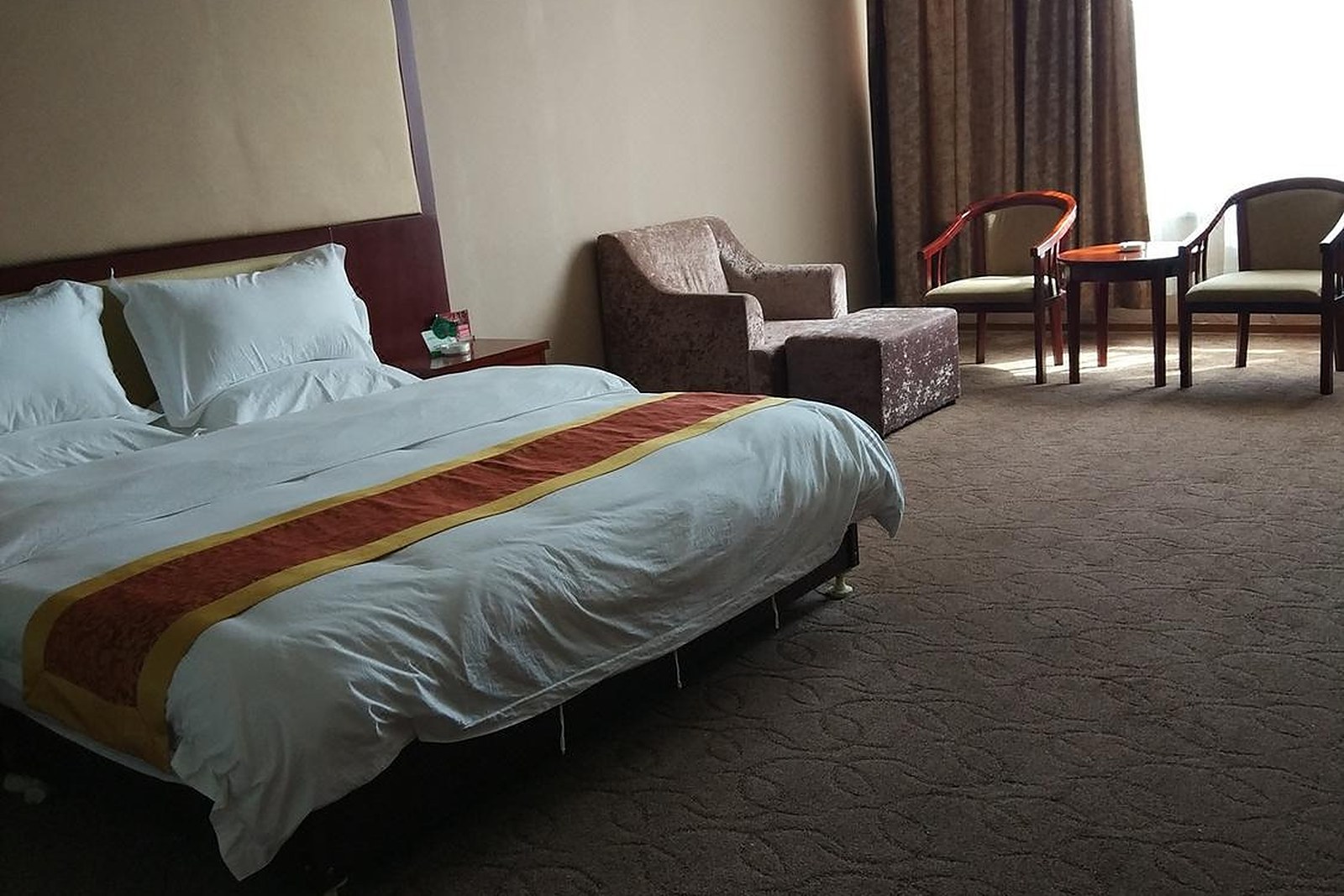
In October the town itself is an attraction: poplar festival decorations line the main street, and the fruit market displays Shayar knives, luobuma tea, and Tarim dried fish in a row – a walkable evening for hotel guests. Festival-day inns need parking and breakfast confirmed ahead – in full courtyards, late arrivals park on the street. Treat booking-site tags of 「near the poplar forest」 with care: fewer than ten inns truly sit at the woods, and the rest are a twenty-minute town departure.
The Stays
Poplar shooters should target hotels near the north exit – straight to the river flats at dawn, ahead of the traffic into the best positions. Guests wanting warmth and buzz should take the family inns around Renmin Road’s night market: downstairs is the skewer smoke, upstairs is sleep.
Families do best in a starred hotel – October is crowded and hectic, and standard service saves nerves; put the poplars at dawn, the night market in the evening, and give the child the afternoon for a hotel nap. Peak rates jump hard, so a month’s lead beats everything.
Wherever you stay, book before building the October itinerary – the poplars wait for no one, and neither do the rooms. Settled in, the dawn mist and the midnight barbecue are both this river town’s own hospitality.
Gold-forest beds settled, the same 阿克苏地区 Ākèsū Dìqū Aksu Prefecture holds other bases: 阿克苏市区住宿 Ākèsū Shìqū zhùsù Aksu city stays for the big-town comforts, 库车市住宿 Kùchē Shì zhùsù Kuqa stays for the old-town lanes, 温宿县住宿 Wēnsù xiàn zhùsù Wensu stays for the canyon drives, 拜城县住宿 Bàichéng xiàn zhùsù Baicheng stays for the cave mornings – four more doors into the same 阿克苏地区 Ākèsū Dìqū Aksu Prefecture. With beds settled, our Aksu travel map fills the days.
The Stays

flowcloud would say Shaya runs on poplar time: gold three weeks a year, fog at dawn, barbecue till midnight, and rooms that vanish fastest exactly when the trees are at their best. All checked November 2026.
Where to stay: Book October weekends a month ahead or lose the room to the poplar crowds, take a town hotel for the night market and a forest-gate homestay for the dawn fog shots, and arrange the shared ride to the county bus station the night before – Shaya’s morning transport leaves earlier than you think. All checked November 2026.