
蛇口 Shé Kǒu is where the reform era started in Shenzhen, and the waterfront still carries the marks of it. In 1979 the 招商局 Zhāo Shāng Jú was given this peninsula to build an industrial zone, and the 蛇口工业区 that resulted put up the slogan 时间就是金钱, 效率就是生命 on a roadside board, which was a startling thing to paint in a Chinese street in 1981 and is now in a museum. The shipyards and container berths have largely gone, and what has replaced them along the water is a strip of offices, a cruise terminal, two or three hotel towers, and 海上世界 Hǎi Shàng Shì Jiè, the plaza built around the 明华轮 Míng Huá Lún, a French-built passenger ship that was beached here in 1983 and turned into a hotel and a park. The sea view from a Shekou hotel room is therefore not a resort view. It is a working water view: 深圳湾 Shēnzhèn Wān to the east, the hills of 香港 Xiānggǎng beyond it on a clear day, the ferry channel in the middle, and 伶仃洋 Língdīng Yáng opening south.
The practical reason to stay here rather than in the city centre is the 蛇口邮轮母港 Shékǒu yóu lún mǔ gǎng, the cruise and ferry terminal at the western end of the peninsula, which runs fast boats to 香港中环 Xiānggǎng Zhōng Huán, to the Hong Kong airport’s 海天客运码头 and to 澳门 Àomén. A hotel on the Shekou waterfront is fifteen minutes from that terminal, which makes it the sensible base for anyone splitting a trip between Shenzhen and Hong Kong, and it is also the closest part of the city to 前海 Qiánhǎi and the western business district. The 深圳湾公园 Shēnzhèn Wān Gōng Yuán runs the whole length of the bay north of the terminal with a continuous cycle path, and the 15-kilometre waterfront promenade is the best thing about living on this side of the city.
Shekou also happens to be where Shenzhen eats best after dark, in a way that surprises people who assume the good restaurants are downtown. The 海上世界 Hǎi Shàng Shì Jiè plaza and the lanes behind it hold a dense run of seafood places, 潮汕 Cháoshàn and 客家 Kèjiā restaurants, and a long tail of small kitchens that open late for the crews and the office workers. 蛇口市场 Shékǒu shì chǎng, the wet market, is a proper one with a cooked-food counter upstairs, and the 渔人码头 Yú Rén Mǎ Tóu end still lands fish. If you take a room facing the water, the evening is the time to use it: the bay lights come on around seven, and the ferry channel is the only part of Shenzhen that is genuinely quiet.
What the Rooms Are Like
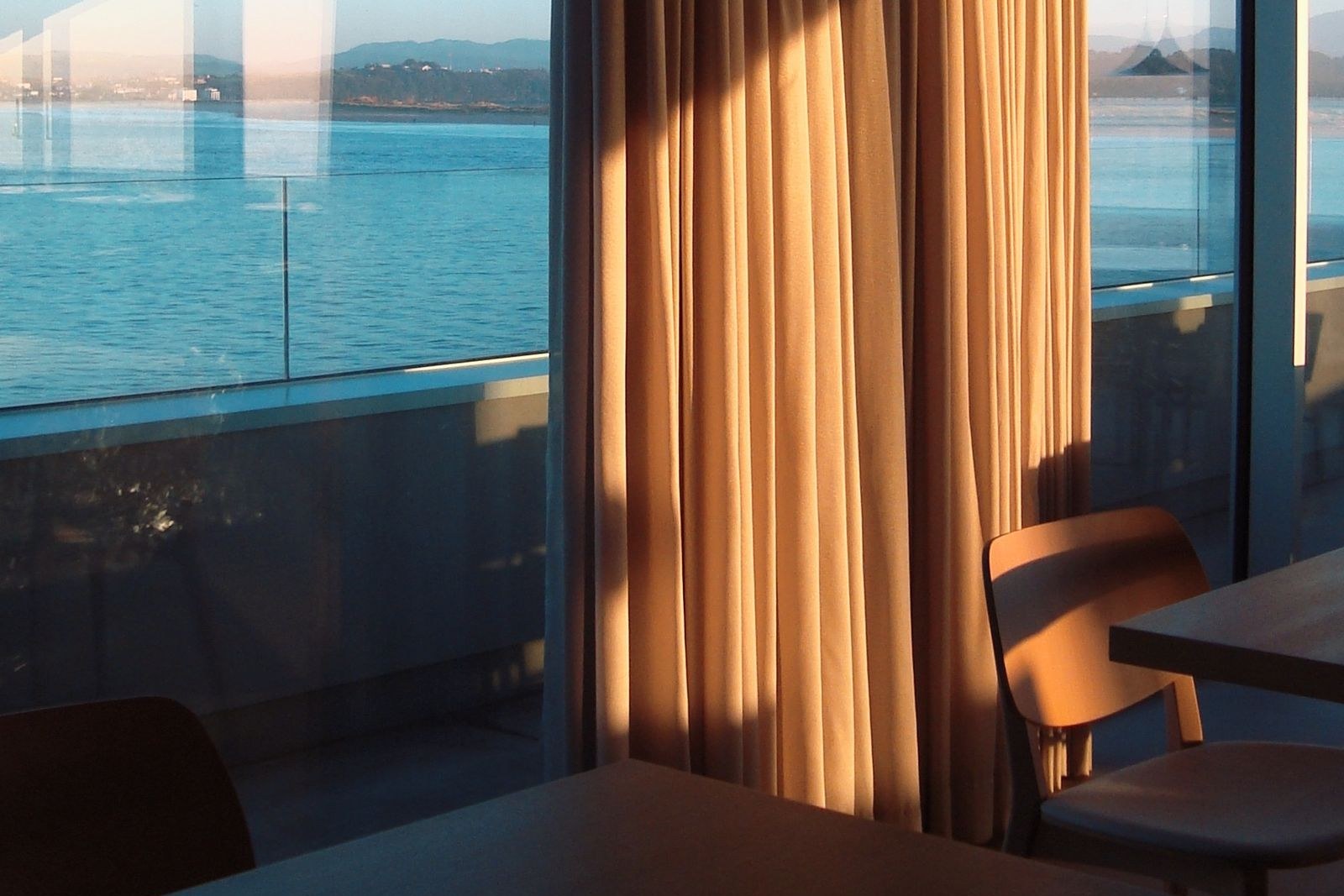
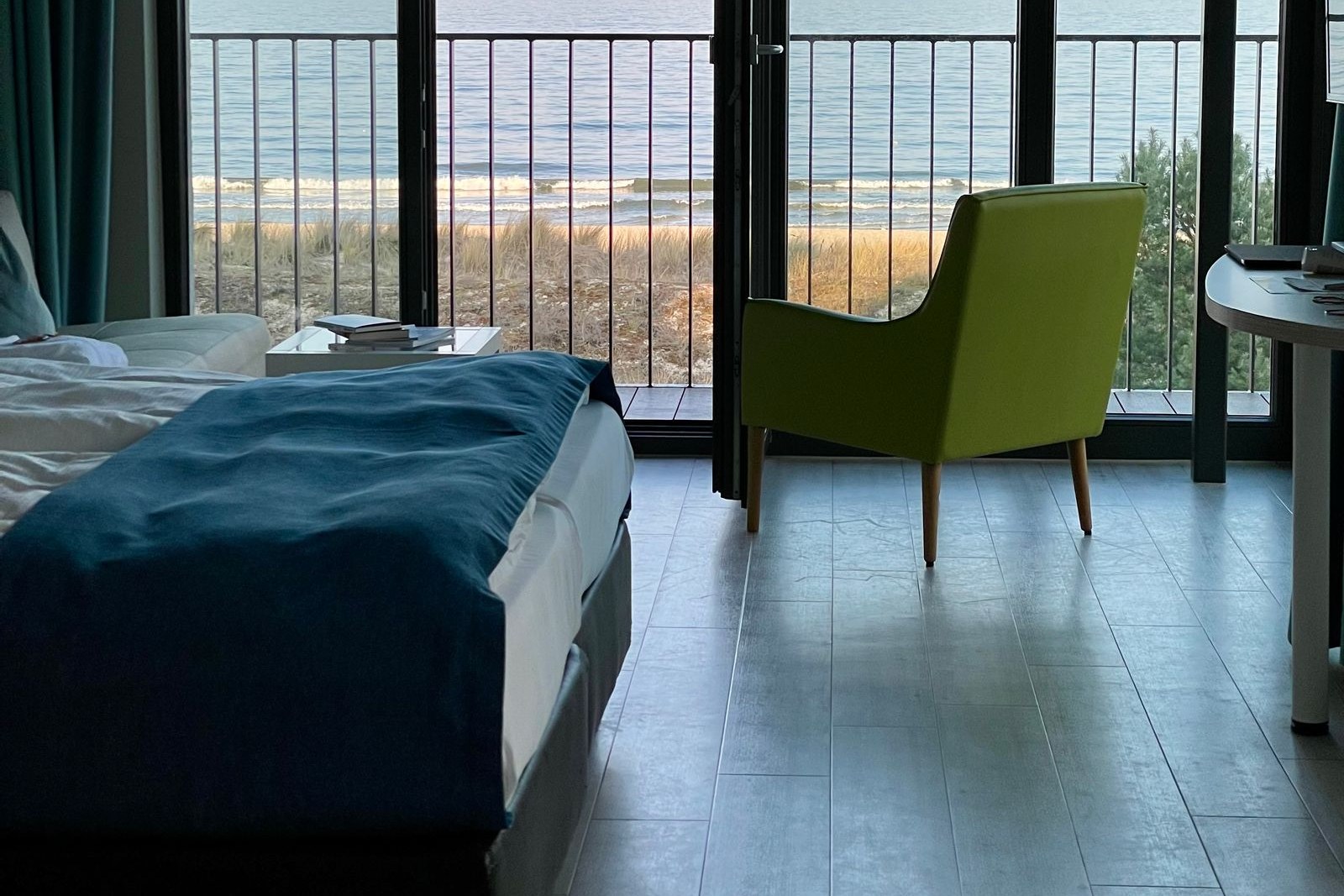
The sea-facing rooms are the whole point and the price difference between a bay view and a city view at the same hotel is usually large enough to be worth deciding about in advance. Expect a modern business room of thirty square metres or so, a large window or a small balcony, blackout curtains that actually work, and a bathroom with a proper shower. The towers on the waterfront are mostly glass on the sea side, which means the rooms are bright and, in summer, gain heat from the afternoon sun, so ask for a west-facing room only if you want the sunset and are prepared to run the air conditioning for it. Sound insulation is good because the road layout keeps the arterial traffic behind the buildings, though rooms low down on the harbour side pick up the ferry horns.
Practicalities
Price. A sea-facing double runs ¥600 to ¥1,500 a night, with the upper end buying a corner room with a full-width window and access to a club floor; city-view rooms at the same hotels start around ¥400. Rates fall sharply on weekdays at the business towers and rise for the Canton Fair and the autumn trade shows, which matter here as much as anywhere in Guangdong.
Address. The hotels cluster along 望海路 Wàng Hǎi Lù and the 海上世界 Hǎi Shàng Shì Jiè waterfront in 南山区 Nánshān Qū, at the southern end of the 蛇口 Shékǒu peninsula, with the ferry and cruise terminal about two kilometres west at 蛇口邮轮母港 Shékǒu yóu lún mǔ gǎng.
Rooms. Ask for a high floor facing the bay rather than the harbour, because the harbour side looks at the terminal and the bay side looks at the water and the Hong Kong hills. A room on the eastern side gets the morning light and the view towards 深圳湾大桥 Shēnzhèn Wān Dà Qiáo; a western one gets the sunset over the 伶仃洋. Confirm whether the window opens, since a few of the newer towers are sealed and rely on central air, and if you are taking the morning ferry, ask for a wake-up call rather than an alarm because the terminal check-in closes early.
Getting there. Metro Line 2 runs to 蛇口港 Shékǒu Gǎng and Line 12 to 海上世界 Hǎi Shàng Shì Jiè, both a short walk from the waterfront hotels, and the ride from 福田 Fútián takes about forty minutes. From the airport take Line 11 to 前海湾 Qiánhǎi Wān and change. By boat, the 蛇口邮轮母港 has fast ferries to 香港中环 and 香港国际机场, which makes the hotel lobby the easiest place in Shenzhen to leave from.
flowcloud would say that the best hotel view in Shenzhen is the one that looks at the water people are still working, and that a harbour with a ferry timetable in it beats a beach with nothing in it at all.
Where to stay: the sea-facing towers along 望海路 Wàng Hǎi Lù and the 海上世界 Hǎi Shàng Shì Jiè waterfront in 蛇口 Shékǒu, 南山区 Nánshān Qū. Take a bay-facing room on a high floor, walk the 深圳湾公园 promenade east at dusk on the first evening, and if you are crossing to Hong Kong, book the room for the night before the ferry rather than the night after.