
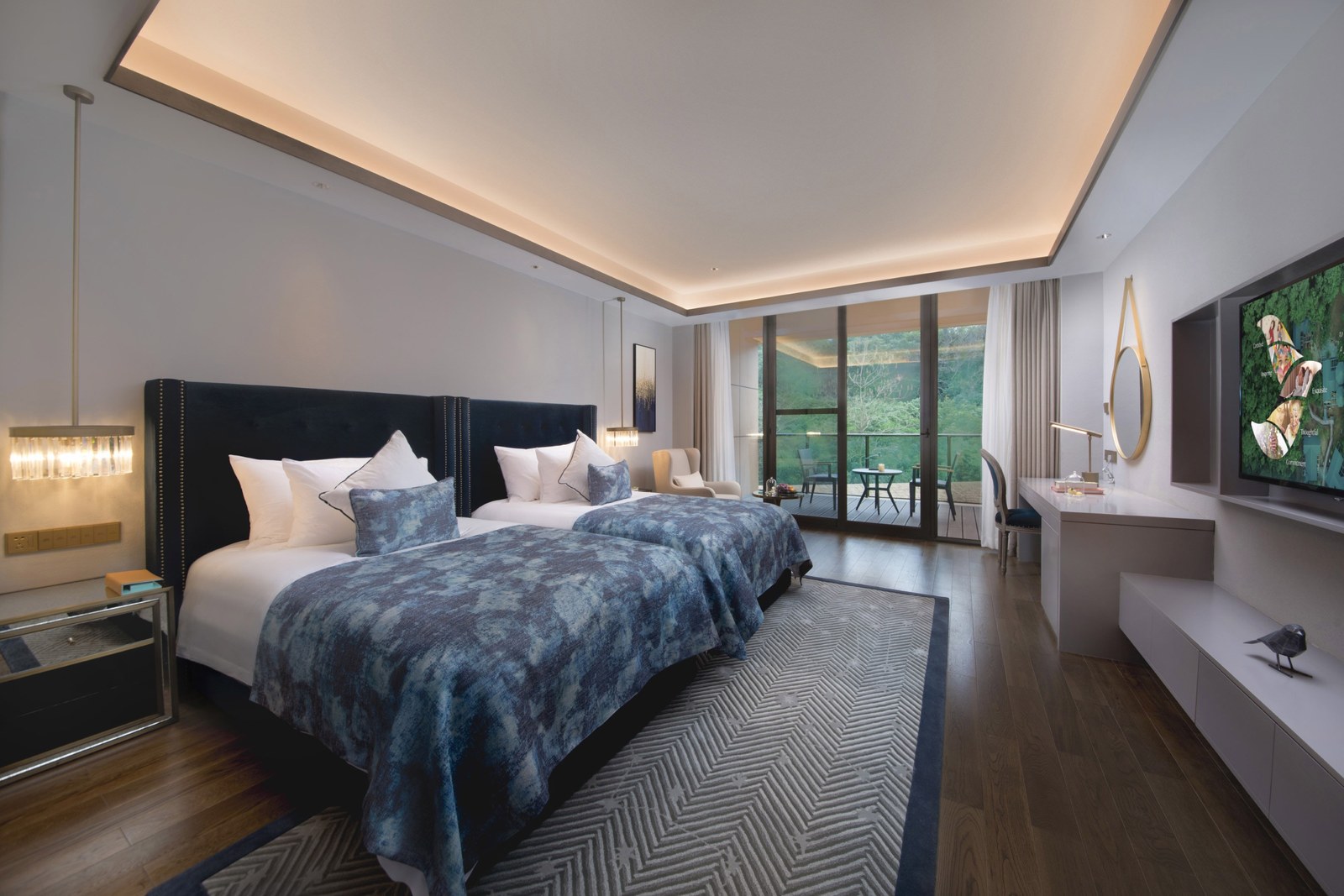
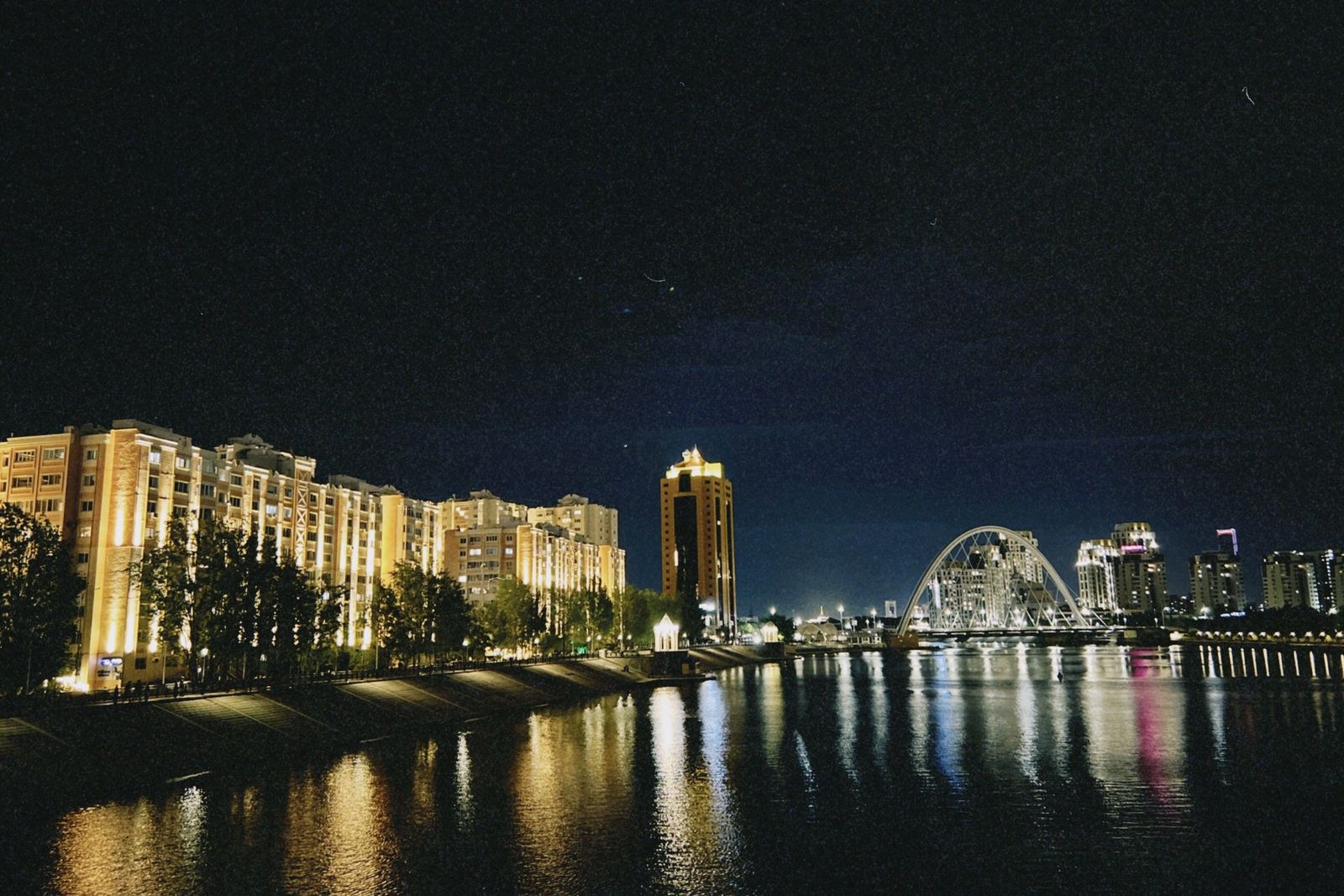
The view from a high floor on the south bank is of a river, a bridge, and a skyline that does not look like it belongs to a city of four million people — because Zhuzhou is not really a city so much as a very large factory with a river through it, and it has spent the last fifteen years trying to look like something else. 神农城 Shénnóng Chéng, the Shennong City development on the west side of the urban core, is the centrepiece of that effort: a landscaped plaza the size of several football pitches with a tower, a lake, a shopping complex underneath and the 炎帝 Yándì statue at the head of it. The hotels around it are the newest in the city, with rooms from ¥320–700 and windows that look out over the plaza or down at the river.
株洲 Zhūzhōu is a city that was made by railways. It had no particular significance before the twentieth century; what it had was a position where the north-south line met the east-west line, and from the 1930s onward that made it the workshop of south China. It is where 中车株洲电力机车 Zhōngchē Zhūzhōu Diànlì Jīchē builds a large share of the country’s locomotives and metro trains, where 株洲硬质合金 Zhūzhōu Yìngzhì Héjīn makes the tungsten carbide that the machine-tool industry runs on, and where the aero-engine plants sit. The city’s own slogan is 中国动力谷 Zhōngguó Dònglì Gǔ, the Power Valley of China, and for once the slogan is not a stretch. The consequence for a visitor is that this is a business city with a business city’s hotels: efficient, well equipped, expensive on weeknights and cheap at weekends, and full of people who are here to visit a factory.
Two things are worth the walk from the plaza. The 湘江风光带 Xiāngjiāng Fēngguāngdài is the riverfront park running along the west bank — a long, well-used strip of paths, exercise equipment, fishing spots and evening dancing that gives the city a pleasant edge. And 清水塘 Qīngshuǐtáng, the old heavy-chemical district north of the river, has been converted into an industrial-heritage park, with the 1956文创园 1956 Wénchuàng Yuán built out of a former factory and lit for night walking. It is the most interesting thing in Zhuzhou, precisely because it does not hide what the city is.
What You Are Paying For
Price. ¥320–700 for a double; the top of the range is the international-brand tower on the plaza, the bottom is a Chinese chain a block away. Weekends are notably cheaper than weeknights because the business trade empties out.
Address. 神农城 Shénnóng Chéng, 天元区 Tiānyuán Qū, 株洲市 Zhūzhōushì, on the west bank of the 湘江 Xiāngjiāng. The cluster around the plaza is walkable to restaurants, the stadium and the shopping centre.
Rooms. Several hundred across the cluster. Ask for 江景房 jiāngjǐng fáng, a river view, and a floor above the fifteenth, since the plaza lights and the ring road are both bright and both at ground level.
Getting there. 株洲西站 Zhūzhōu Xī Zhàn on the high-speed line is about 20 minutes and ¥35–50 by taxi; the older 株洲站 Zhūzhōu Zhàn is in the centre and closer. From 长沙 Chángshā it is 20 minutes by high-speed rail, which makes Zhuzhou an easy day trip or an alternative base for Changsha.
What the Locals Know
Treat it as a base. Zhuzhou sits between 长沙 Chángshā, 40 minutes away, and 炎陵 Yánlíng and 醴陵 Lǐlíng, both within two hours, and the high-speed station connects all of it. The city itself is a half-day.
Eat at the night markets. 株洲 Zhūzhōu is a working city and eats accordingly: 炒粉, skewers, 臭豆腐, rice noodles. The stalls near the older parts of town and around the university are the ones to find.
Ride the riverfront at dusk. The 湘江风光带 Xiāngjiāng Fēngguāngdài is at its best between six and eight, when the whole city is out on it and the bridges are lit.
Go to 清水塘 Qīngshuǐtáng in the evening. The old factory district is lit and the heritage park is open late; it is the one part of Zhuzhou that is unlike any other Chinese city.
Where to Stay
On the plaza if you want new and convenient, near the old station if you want cheap and in the middle of the eating, or in 长沙 Chángshā if you are only passing through — the two cities are a twenty-minute train ride apart and Changsha has far more to do in the evening.
flowcloud would say that a city built entirely by locomotives, which then landscaped a plaza and put an emperor of agriculture at the head of it, is having a perfectly understandable identity crisis, and that the heritage park made out of its own chemical works is the most honest thing it has said about itself.
Where to stay: 神农城 (Shénnóng Chéng), 天元区 (Tiānyuán Qū), 株洲市 (Zhūzhōushì), 湖南 (Húnán). Doubles ¥320–700. About 20 minutes and ¥35–50 by taxi from 株洲西站 (Zhūzhōu Xī Zhàn); 20 minutes by high-speed rail from 长沙 (Chángshā). Ask for a river-view room above the fifteenth floor, and walk the 湘江风光带 (Xiāngjiāng Fēngguāngdài) at dusk.