
神泉镇 Shén quán zhèn is a fishing town on the coast of 惠来县 Huì lái xiàn, and the reason there is anywhere to sleep here is that 惠来 is the only county in 揭阳市 Jiē yáng shì that touches the sea. The town sits seven and a half kilometres south of the county seat, with the 南海 Nán hǎi, the South China Sea, in front of it and 文昌山 Wén chāng shān at its back, and the harbour in the middle is the one the whole coast is arranged around: 神泉港 Shén quán gǎng, built in the thirty-third year of the 嘉靖 Jiā jìng reign, which is 1554, gathering the three rivers of the county – the 龙江河, the 雷岭河 and the 盐岭河 – into a single mouth, and counted as the largest natural deep-water port in eastern 广东 Guǎng dōng. It was approved for foreign trade by the State Council in 2010 and is on the national first-class fishing-port plan, and it has been through the whole cycle in between: thirteen metres of water in the channel between 1938 and 1944, the loss of the port to silt after the 龙江 was diverted downstream in 1979, and a new basin and breakwater dug on the south-east side from 1985 that turned it into an artificial harbour. A guesthouse here is a guesthouse in a working port, and the port is the thing you came for.
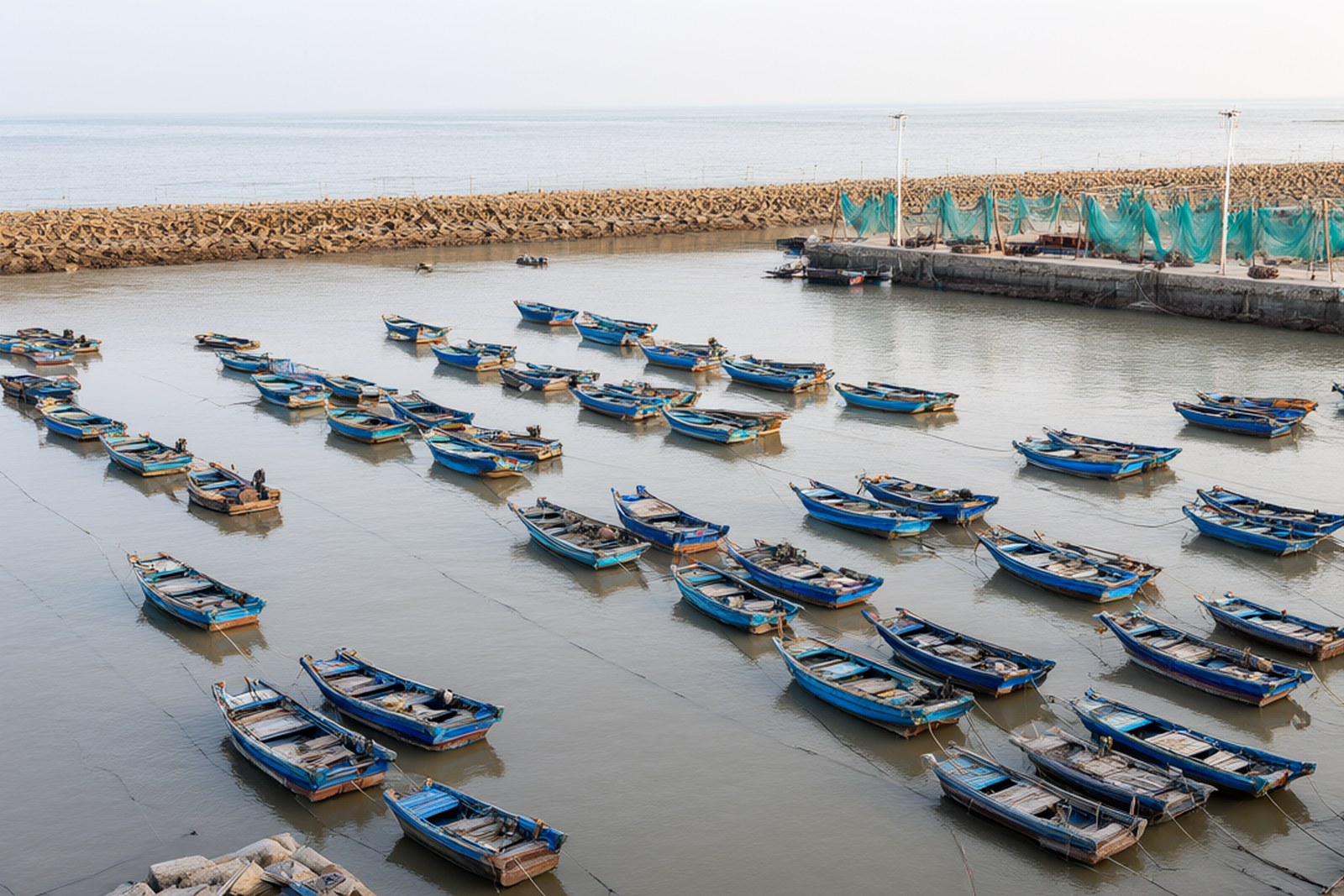
What that means at four in the morning is noise, and the noise is the best thing about staying here. The fleet goes out before light and comes back through the middle of the morning, the quay fills with crates and ice and diesel, and the auction on the harbourside is over almost before a visitor has finished breakfast. The prefecture runs the country’s largest summer-reared abalone-seed operation – better than 4.4 billion seedlings a year out of 惠来, more than 40 per cent of the domestic market – and ships adult abalone packed and out within twelve hours of landing, half a day to a table in 广东. A guest who sleeps beside this eats what was in the water that morning: 白灼皮皮虾 bái zhuó pí pí xiā, blanched mantis shrimp; 蒜蓉生蚝 suàn róng shēng háo, oysters under garlic; 海胆炒饭 hǎi dǎn chǎo fàn, sea-urchin fried rice; and 惠来鱼丸汤 Huì lái yú wán tāng, the county’s own fish-ball soup. The local way to do it is to buy your fish live at the port and carry it to one of the 排档 pái dàng, the open-fronted kitchens along the harbour, where they cook it for 15 to 28 yuan a jin and a table of four eats for 70 to 90 a head.
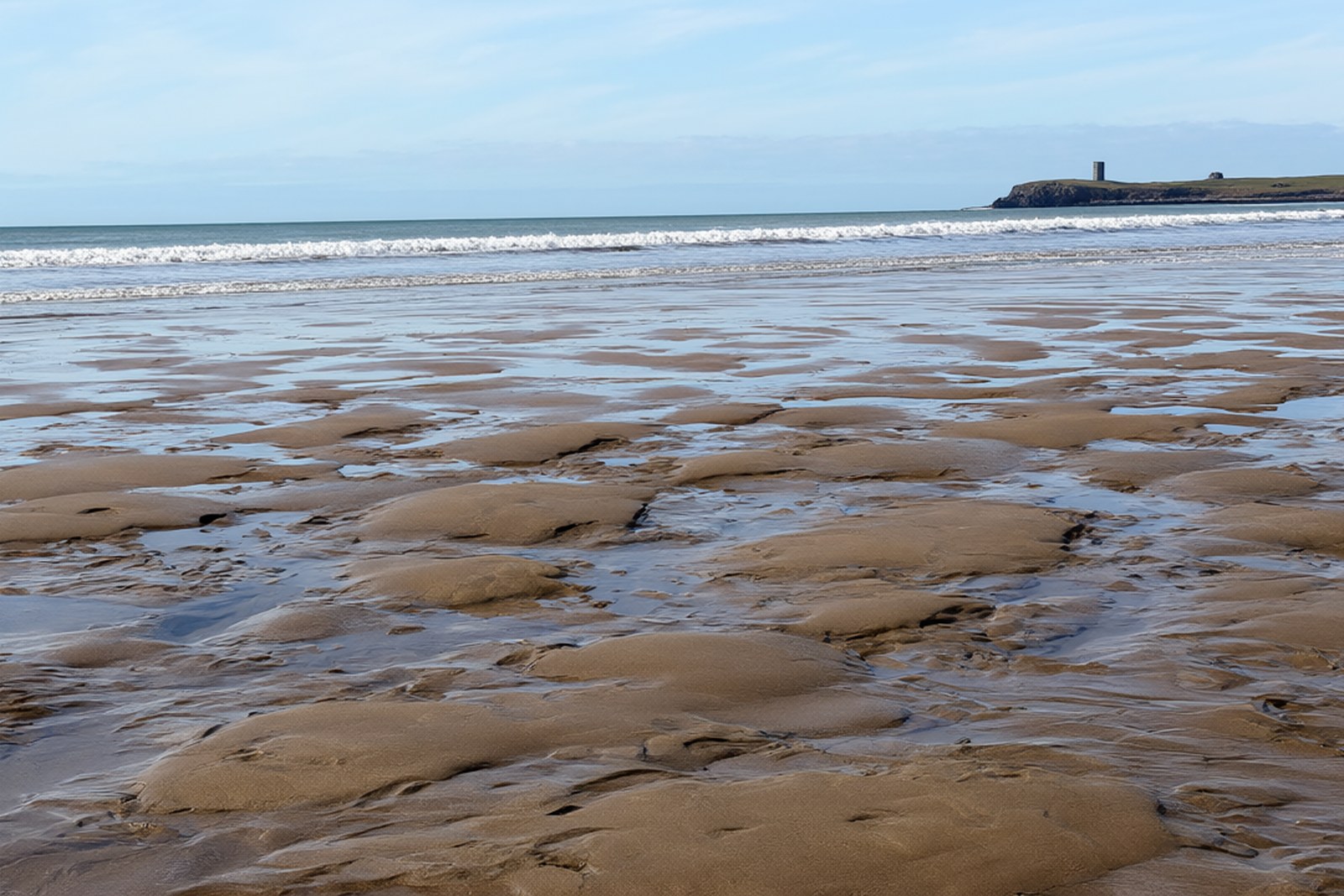
The swimming is at 华家沙滩 Huá jiā shā tān, where the county’s 惠来海滨度假村 Huì lái hǎi bīn dù jià cūn holds a triple-A coastal listing, and it is a better beach than its rating suggests: a flat, gently shelving stretch of sand about three kilometres long, a stone sculpture walk along the shore, a 妈祖 Mā zǔ image at the seaward end, and a rock shelf at the north end that appears at low tide and is worth the walk for the shellfish and the small crabs in the pools. Horseriding on the sand is offered at the resort in season. Two things matter and both are local rules rather than advice: read a tide table before you go anywhere near the rocks, because the flats here fill fast and the water comes round behind you; and do not swim where the fleet is working, because the channel is busy and the current off the harbour mouth is not gentle.
The town’s own ground is what makes this more than a beach stop, and it is a strange collection. 海角甘泉 hǎi jiǎo gān quán, the sweet spring at the edge of the sea, is a freshwater well a few paces from salt water, recorded as a spring on the beach in the Song, walled into a well in the Ming, and reached down twenty-two stone steps – eighteen in the Qing, before it was extended – with a small stone bridge across the water at the bottom that people crouch on to draw. A pavilion stands beside it with a stele 190 cm high and 90 cm wide cut in the 乾隆 Qián lóng reign by a county magistrate named 王玮 Wáng Wěi, whose 神泉亭塔碑记 Shén quán tíng tǎ bēi jì contains the line 到惠必到神,到神必观泉,观泉必赏联 dào Huì bì dào Shén, dào Shén bì guān quán, guān quán bì shǎng lián – arrive in 惠来 and you must come to 神泉, come to 神泉 and you must look at the spring, look at the spring and you must read the couplet. The couplet is the 独脚联 dú jiǎo lián, a single-legged one: an upper line, 抉取携而不竭任卤浸咸蒸独标平淡 jué qǔ xié ér bù jié rèn lǔ jìn xián zhēng dú biāo píng dàn, carved by a Ming prodigy called 苏福 Sū Fú who was born in the town in 1372 and was named a 神童 shén tóng by the 洪武 Hóng wǔ emperor at the age of eight, and no convincing lower line has been written in the several hundred years since. Guo Moruo is said to have stood in front of it for a long while. The 玉华塔 Yù huá tǎ, a solid seven-storey octagonal tower 26.4 m high in lime-and-sand masonry, stands at the harbour mouth where it was built in the 乾隆 years as a landmark for boats coming in, and the 水仙宫 Shuǐ xiān gōng, put up in 1803 and dedicated to 夏禹王, has a terrace known as 登台望舟 dēng tái wàng zhōu, climb the platform and watch the boats. All of it sits inside the town plan the county counts as its 三奇八景 sān qí bā jǐng, three wonders and eight views – the wonders being a threaded bell of 丝线吊金钟, a fish called 拜鱼 bài yú, and this water.
The lodging is thin and mostly new, which is the honest description of this coast. There are small guesthouses and apartment-style lets around the seaside area, some of them within a hundred metres of the resort and others two or three hundred back from the water; there are sea-view rooms in a handful of hotels near 神泉广场 Shén quán guǎng chǎng, several of them with full-height windows onto the water; and there is the county town twenty minutes up the road, where the ordinary chain hotels are cheaper than anything on the beach. A converted guesthouse with an art-hotel name and a 听涛枕浪 tīng tāo zhěn làng pitch – listen to the waves, sleep on the swell – is doing exactly what you would expect at this distance from the harbour, and for two or three nights that is the right thing to buy: a room, a balcony if you can get one, and a walk to dinner.
What the Rooms Are Like
Rooms on this coast are new, plain and salt-affected, and it is worth knowing all three. The newer guesthouses and the sea-view hotels are twenty to thirty square metres with a tiled floor, a big bed, air conditioning, a kettle, a shower and, in the good categories, a floor-to-ceiling window or a small balcony onto the water. The apartment-style lets add a kitchen and a washing machine and are the sensible buy for a group or a family of four. What the salt does over a season is real: fittings pit, hinges rust and anything left on a balcony overnight comes in damp, which is why the newest places use aluminium and glass and the older ones look tired. Ask for a high floor with the sea in front of it, ask whether the window opens, and ask whether the building has a lift, because the walk-up guesthouses are common here and the stairs are steep.
Practicalities
Price. A double on the 神泉 coast runs about ¥150 to ¥450 a night, with the sea-view rooms and the newest places at the top of that, the small guesthouses and the apartment lets lower, and the chain hotels in the county town at the bottom. Summer weekends, the 暑假 shǔ jià school holiday and the 国庆 week are when the beach front fills and prices move hardest; treat the numbers as a range and check the live rate before you travel.
Address. The guesthouses are at 神泉镇 Shén quán zhèn in 惠来县 Huì lái xiàn, some of them within a few hundred metres of 华家沙滩 Huá jiā shā tān and the 惠来海滨度假村 Huì lái hǎi bīn dù jià cūn, others around 神泉广场 Shén quán guǎng chǎng and the harbour; the county town of 惠来 Huì lái is 7.5 kilometres north and the harbour itself is at the south end of the town.
Rooms. Ask for the sea side and a high floor, and ask whether the room has a balcony, because the difference between hearing the water and seeing it is the difference between two grades here; ask whether the window opens, because the newer buildings are sealed and the coast is not somewhere to sleep in air conditioning if you can help it. Ask about the tide table at check-in and where the safe swimming is that week, ask whether the harbour auction still runs in the morning if you want to see it, and ask the desk to write 海角甘泉 hǎi jiǎo gān quán and 玉华塔 Yù huá tǎ in Chinese for a driver, because they are small places in a small town and the names do not survive translation.
Getting there. There is no railway station in 神泉 itself; 惠来站 Huì lái zhàn and 葵潭站 Kuí tán zhàn on the 厦深 Xià shēn line are both a twenty to forty minute taxi from the town, and the county’s own 神泉专线 Shén quán zhuān xiàn bus from 惠来 runs out in about twenty minutes. By road it is roughly an hour from 汕头 Shàn tóu, about two hours forty from 深圳 Shēn zhèn and an hour and a half from 揭阳市 Jiē yáng shì, and 揭阳潮汕国际机场 Jiē yáng cháo shàn guó jì jī chǎng is about an hour and a half away. A car is the practical arrival, because the sights are strung along the coast road and the buses between them are infrequent.
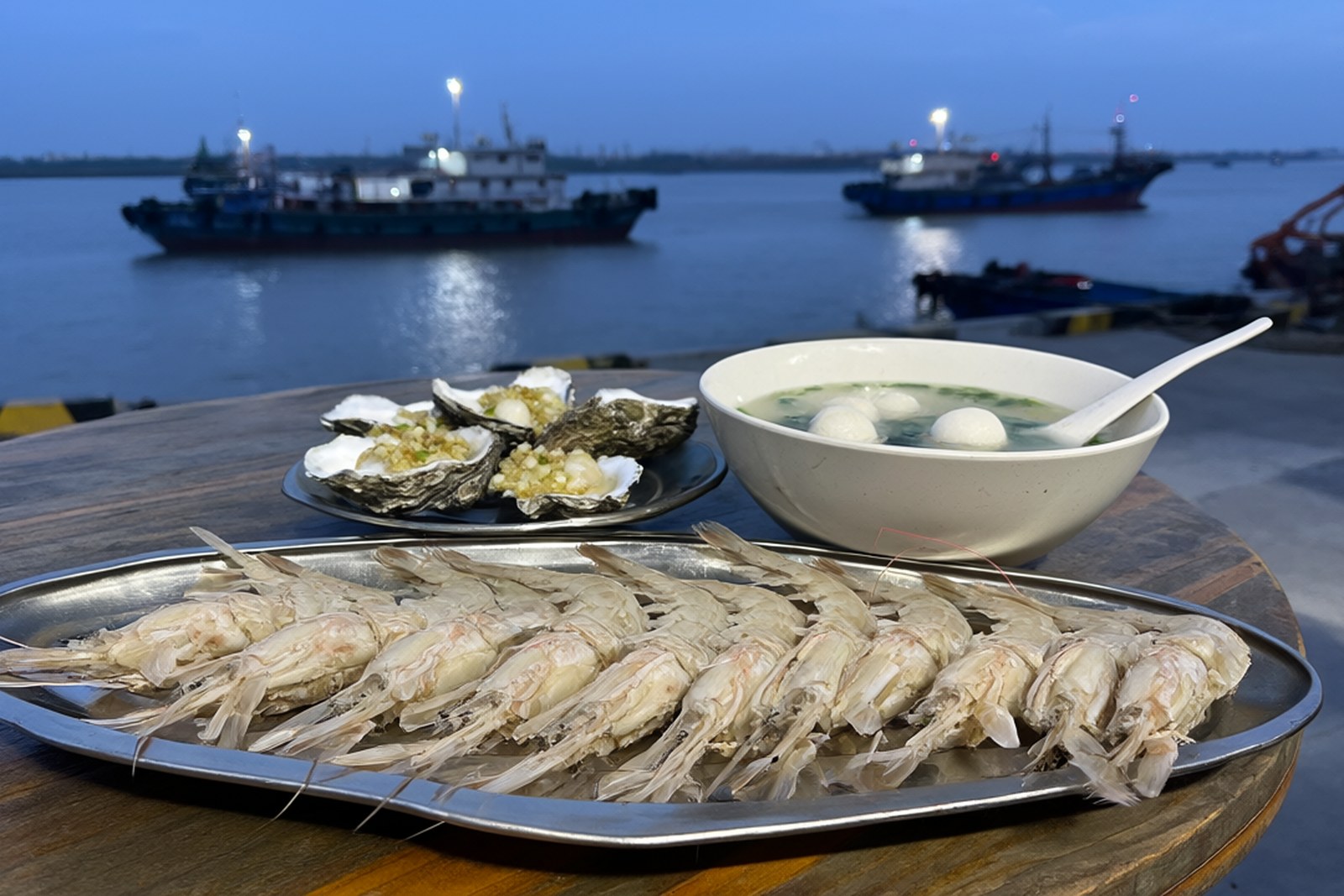
Where to stay: a sea-view room in one of the guesthouses or small hotels at 神泉镇 in 惠来县, a few minutes from the sand and the harbour. Read the tide table before you walk on the rocks, eat the abalone and the mantis shrimp the morning they came in, buy your fish at the port and carry it to a 排档 to be cooked, and take an evening for the sweet spring and the tower at the harbour mouth.
flowcloud would say that a town which kept a freshwater spring beside the sea, put a landmark tower at the mouth of its harbour and never found anyone able to finish a six-hundred-year-old couplet has already told you what sort of place it is, and that the only thing left to do is eat whatever the boats brought in.