
什寒村 Shíhán Cūn lies in a high mountain basin between 黎母山 Lǐmǔ Shān and 鹦哥岭 Yīnggē Lǐng, inside 红毛镇 Hóngmáo Zhèn of 琼中黎族苗族自治县 Qióngzhōng Límé Miáozú Zìzhìxiàn – an autonomous county answering directly to Hainan province, so the town and the village are the whole address – and the basin floor sits at about 800 metres above the sea. The county government and the Hainan Daily print that altitude as “one of the highest villages in the province”; a 2021 Xinhua county-tourism report calls it Hainan’s highest Li-Miao village; and the county’s own pages risk the plain superlative. This article keeps the conservative line and notes the stronger ones, because what is beyond argument is enough for a night’s plan: the county’s official slogan for the place is 天上什寒 Tiānshàng Shíhán, Shihan in the Sky, and it is one of the rare villages in China where Li and Miao families have lived together for centuries.
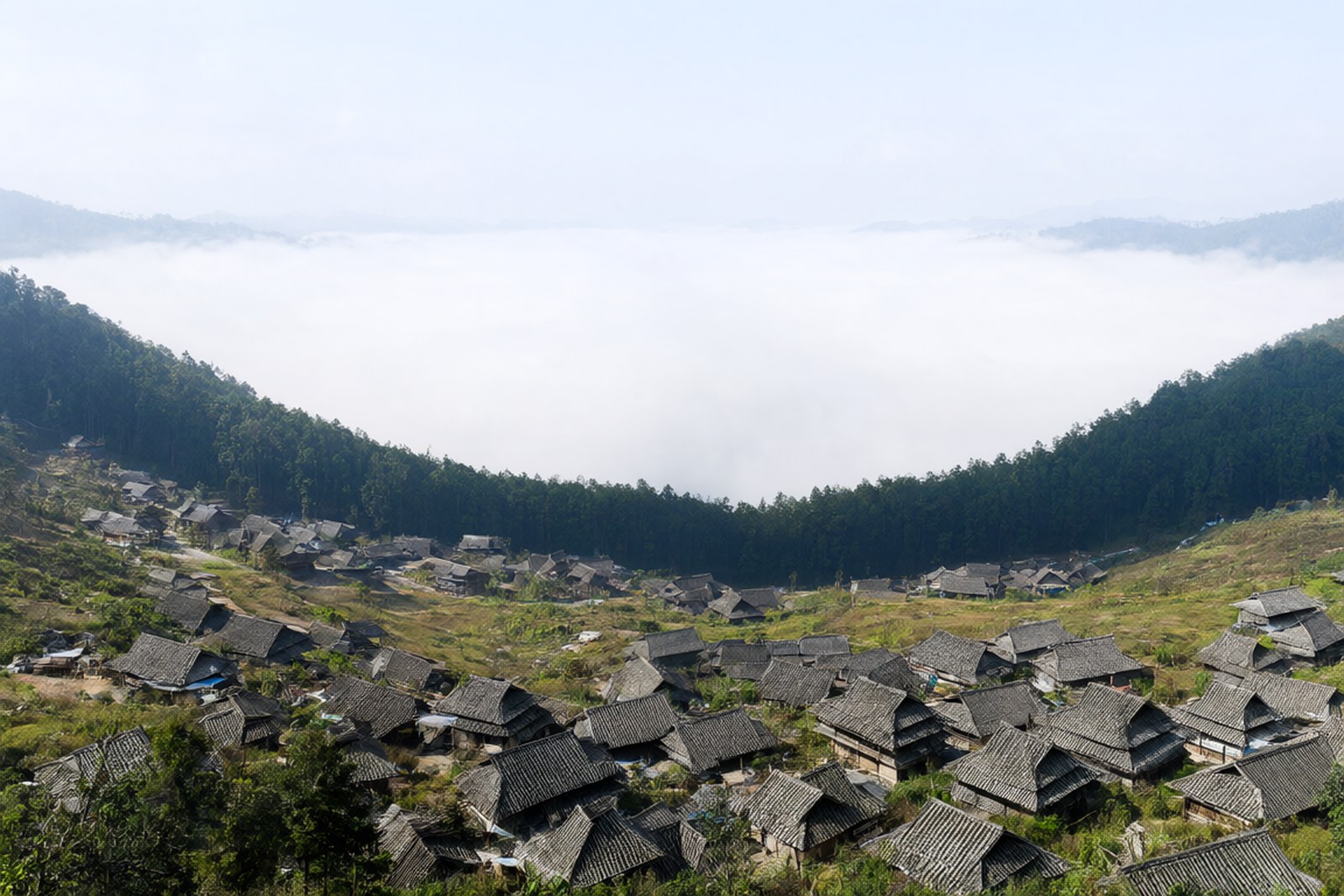
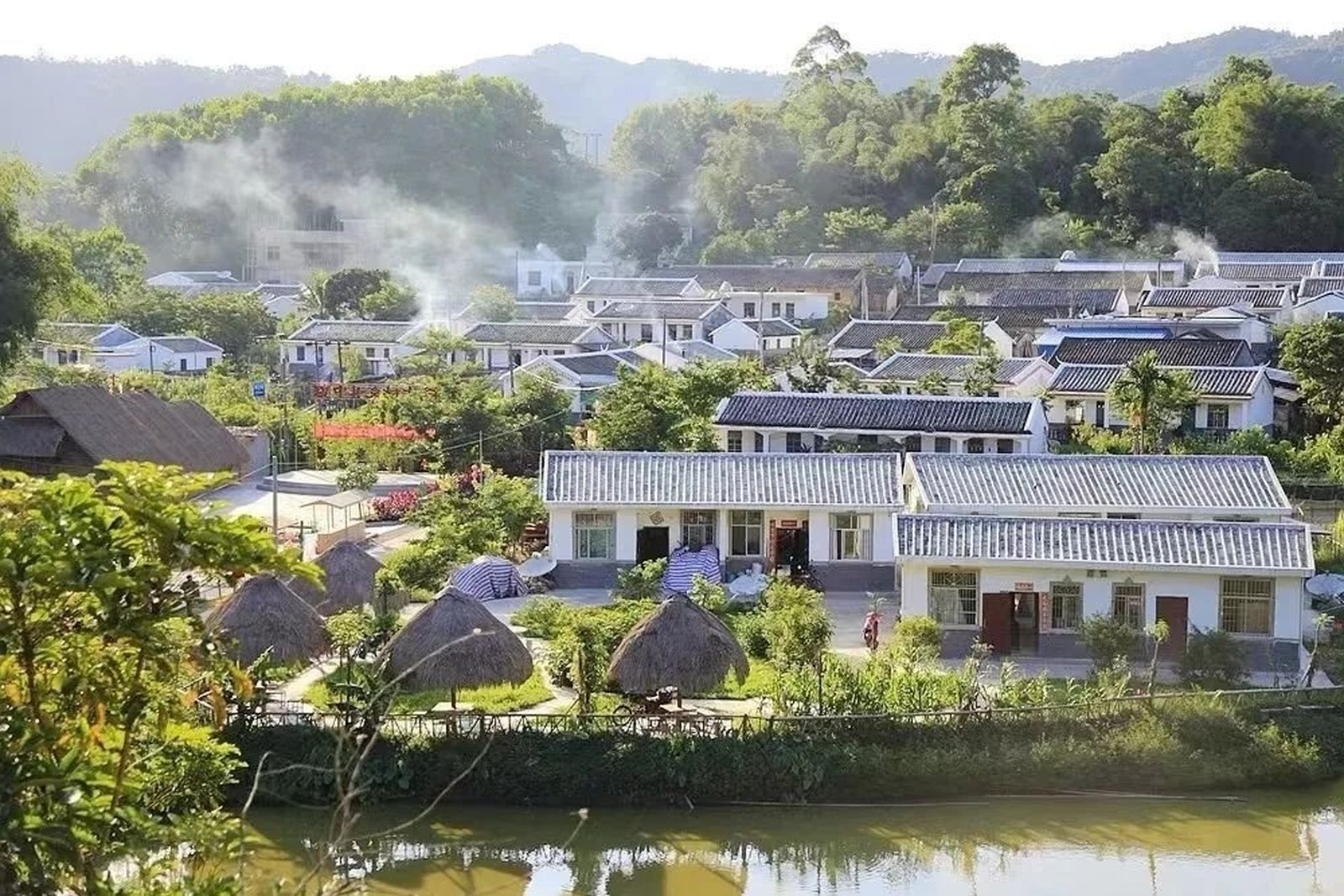
The village’s story explains the slogan. Settlers came from 福门村 Fúmén Cūn in neighbouring 白沙 Bāishā in the late Ming, and the name plays on the local accent – “什” is the Li word for a field, and the field here runs cold, so 什寒 means, roughly, the cold field. Today the village counts 104 households and 522 residents by the Hainan Daily’s interview with its party secretary in October 2020 – a China Web piece two months earlier printed 108 households, and both counts are on the record – split among the four hamlets of 冲沙, 什托, 元也 and the Miao village. The fame arrived by degrees: a first-batch national beautiful-village listing, then in 2013 a place among “China’s ten most beautiful villages”, the award the county still leads its introductions with.
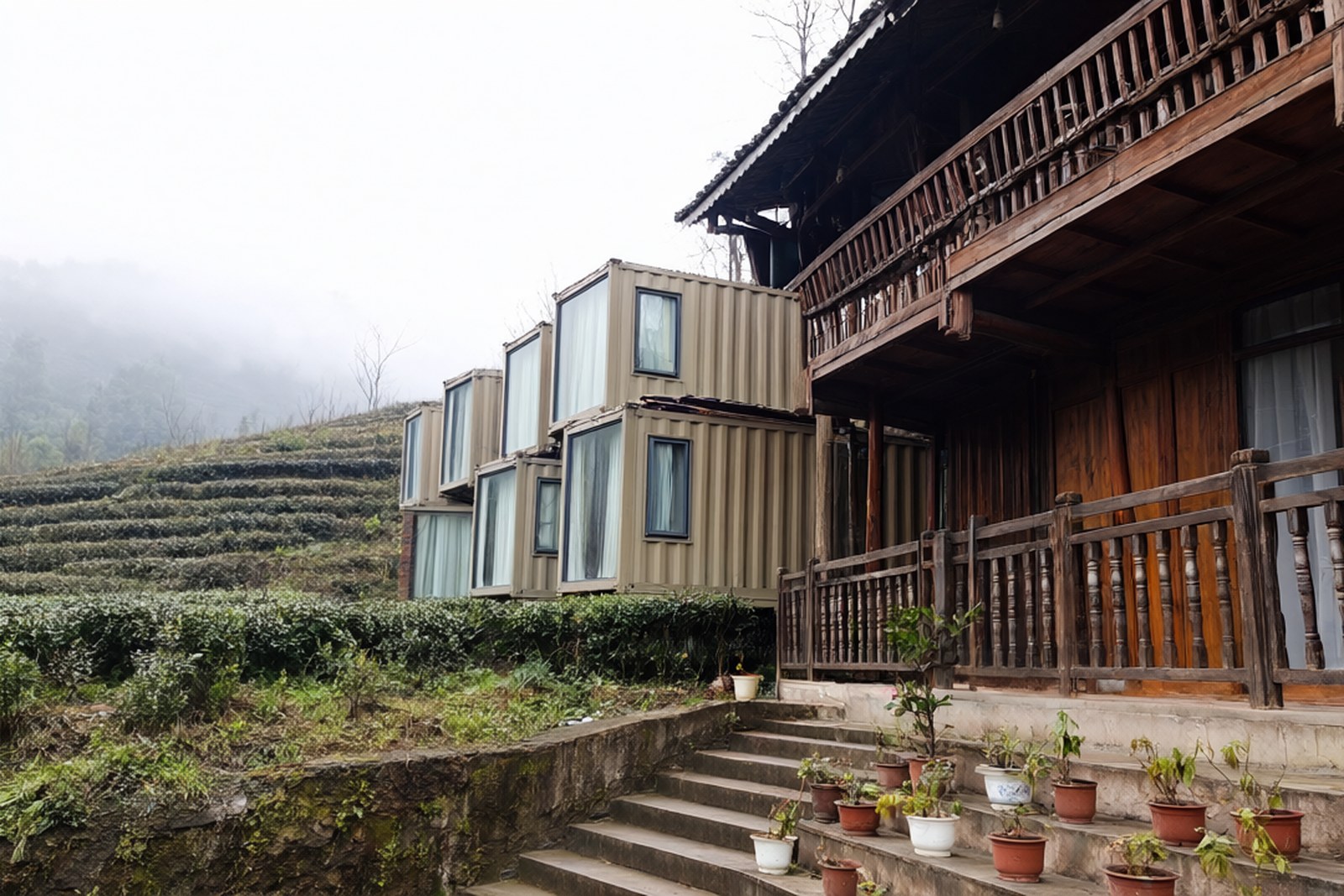
The beds are the reason a traveller comes, and they come in more shapes than a village this size should own. On the Hainan Daily’s count the village held 52 guest rooms with about 80 beds on the eve of the 2020 National Day golden week – a Hainan Special Zone Daily report printed 53 boutique rooms, and both figures travel here – spread across Miao stilt houses such as the 花梨寨 cluster, half-open “industrial style” container rooms with open-air balconies, the 待内典 Dàinèidiǎn station and the 奔格内 youth hostel converted from the old school site, boat-shaped tent rooms, and spare rooms let by villagers themselves. 奔格内 Bēngénéi is the Li phrase for “come here” and the county’s rural-tourism brand, and during that 2020 golden week all 52 rooms and 80 beds sold out at 100 per cent occupancy while the village took nearly ten thousand visitors; 2019 had already brought nearly 130,000 visits and a bit over ten million yuan of tourism income, the village secretary 王国康 Wáng Guókāng’s figures to the Hainan Daily.
The table is the other engine. The village’s long-table banquet, 什寒黎苗特色长桌宴, is bookable on the phone number the provincial tourism office’s own 2021 guide page lists, 15120802915, and the must-orders it names are black lingzhi chicken soup, local five-toe pig, banana-heart salad, cold-dressed 雷公根 Léigōnggēn greens and Miao sour-greens fried with vermicelli; the village farmhouses also cook three-colour rice, bamboo-tube rice, mountain chicken, wild banana flower, 白花菜 Báihuācài and 鱼茶 yúchá, the fermented fish “tea” of the Li table. Villagers sell honey, glutinous rice wine and rosewood bracelets from stalls at their gates, the “Shihan mountain delicacies” shelf runs from jade-bamboo and dendrobium to high-mountain cloud tea and 山兰 shānlān rice, and the farm activities the village built out include honey harvesting and rice-cutting with fish scooping. Above all of it hangs the cloud sea and sunrise, “viewing sunrise and cloud sea” in the county’s own 2020 activity list – no official source prints an exact hour, and the windows that do circulate, six to eight in the morning on Ctrip guide pages or 5:30 to 7:00 on self-media accounts, are platform and self-media claims only, so plan on the hour or two around dawn and treat any narrower window as hearsay.
What the Rooms Are Like
A Shihan night divides by house type before it divides by price. The container rooms – the 云宿 Yúnsù line – come as king, twin and family rooms with the balcony open to the basin; the stilt-house line runs Miao-style twins, a deluxe suite and landscape twins; the 待内典 station adds its own deluxe twin, twin and suite grades; the 奔格内 rooms and the 观云 Guānyún line fill out a Tongcheng snapshot room list sixteen-plus deep, topped by a Miao deluxe landscape suite. Two further shapes sit at the edges: the 琼中云宿房车营地 Yúnsù motorhome camp at the village car park, a 4.4-rated listing from 309 yuan whose longest vehicle runs 10.6 metres and sleeps four by a knowledge-base note, and the tiny 缘来民宿 Yuánlái at village address No. 14, a 4.6-scoring house from about 99 to 100 yuan whose two Miao-style rooms back onto rainforest. The grade the village itself carries is Hainan’s “silver guesthouse” level, as a Xinhua county-tourism report put it in August 2021 – printed here with that year, since Hainan grades village guesthouses gold, silver and copper and the 2023 provincial fifth-batch silver list of fifteen does not carry the Shihan house by name.
Practicalities
Price. On 30 September 2026 the snapshot read: 什寒民宿 from 170 yuan on Ctrip (3.6 across 29 reviews, platform two-star) and 194 on Tongcheng (3.9), the 缘来民宿 from 99 on Tongcheng and 100 on Ctrip at 4.6 across 14 reviews, and the 云宿房车营地 from 309 at 4.4 across 24 reviews. Holiday weeks are the firm season – the village filled every bed in October 2020 – and self-media advice of booking three to seven days ahead for holidays is unverified advice, not a rule. Every figure is a snapshot that floats.
Address. The address anchors to the village, as every address out here must: 琼中黎族苗族自治县红毛镇什寒村 Hóngmáo Zhèn Shíhán Cūn, with the OTA address bars carrying “055 rural road No. 1”, “Shihan village No. 14” and “Shihan village car park” for the camp. Banquet reservations go through the provincial guide’s number above; for rooms the practical route is the OTA platforms, and the county tourism office is the fallback for anything the platforms cannot answer.
Rooms. Ask which cluster your room sits in – container, stilt house, station, youth hostel, villager room, tent or motorhome – because they are different buildings with different bathrooms and different views, and the sixteen-room-type list mixes them all. Ask whether your room’s balcony faces the basin, since the cloud sea is the whole point of an 800-metre bed. And in the cool season pack for it: a mountain basin at 800 metres runs years around 21 degrees Celsius on average, with the nights doing the falling.
Getting there. The village is about 40 kilometres from the county seat at 营根 Yínggēn, an hour or so by car – a First Financial reporter in 2018 timed roughly fifteen minutes out of town and then forty more up a 4.5-metre-wide climbing road, and self-media accounts add that the last five kilometres wind – navigate. The driving line follows the 海榆中线 Háiyú zhōngxiàn (national road 224) past 红毛镇 and turns up at the 天上什寒 signboard. The bus is the 8:20 rural departure from 琼中车站 Qióngzhōng Chēzhàn through 白沙起义纪念园 and 共建村 – a route and time that travel on older sources, so confirm with the station on the day. There is no railway anywhere near: come by car, or by coach to Yinggen and then car.
Where to stay: a 云宿 Yúnsù container room if the basin-and-clouds view is the point, a Miao stilt-house suite if the village’s own architecture is, the motorhome camp if the car park suits the group, and the 99-yuan 缘来民宿 Yuánlái if the budget is the boss – all inside 什寒村 Shíhán Cūn, 红毛镇 Hóngmáo Zhèn, 琼中黎族苗族自治县, the village the county calls Shihan in the Sky.
flowcloud would say that a village which spent three hundred years being too cold for anything but fields now sells that cold by the night, and that the correct way to sleep here is behind whichever window faces the basin, because the cloud sea does not wait for check-in and the banquet phone does not take the mountain’s calls.