
始兴县 Shǐ xīng xiàn is a county in the east of 韶关市 Sháo guān shì that was made a county in the sixth year of 永安 Yǒng ān in the 吴 Wú kingdom, which is 263 AD, and which has been recognised by the United Nations as one of China’s 千年古县 qiān nián gǔ xiàn, a county of a thousand years, on the strength of that. It is also the home county of 张九龄 Zhāng Jiǔ líng, the 唐 Táng chancellor who ordered the 梅关古道 Méi guān gǔ dào cut through the mountains – his birthplace is a fact the county puts on signs. But the thing that makes a night here different from a night in any other county in 广东 is the walls. 始兴 counts itself the 中国围楼文化之乡 Zhōng guó wéi lóu wén huà zhī xiāng, the home of China’s walled-compound culture, under a proverb its own writers use: 有村必有围,无围不成村 yǒu cūn bì yǒu wéi, wú wéi bù chéng cūn – where there is a village there is a walled compound, and no compound means not a village. The records account for more than five hundred of them in the county’s history and 249 still standing today, two of them under national protection, eight under provincial protection, seventeen under county protection and a hundred and seventy-two on the county’s list of immovable relics, which the county says is the densest concentration and the largest number anywhere in the country.
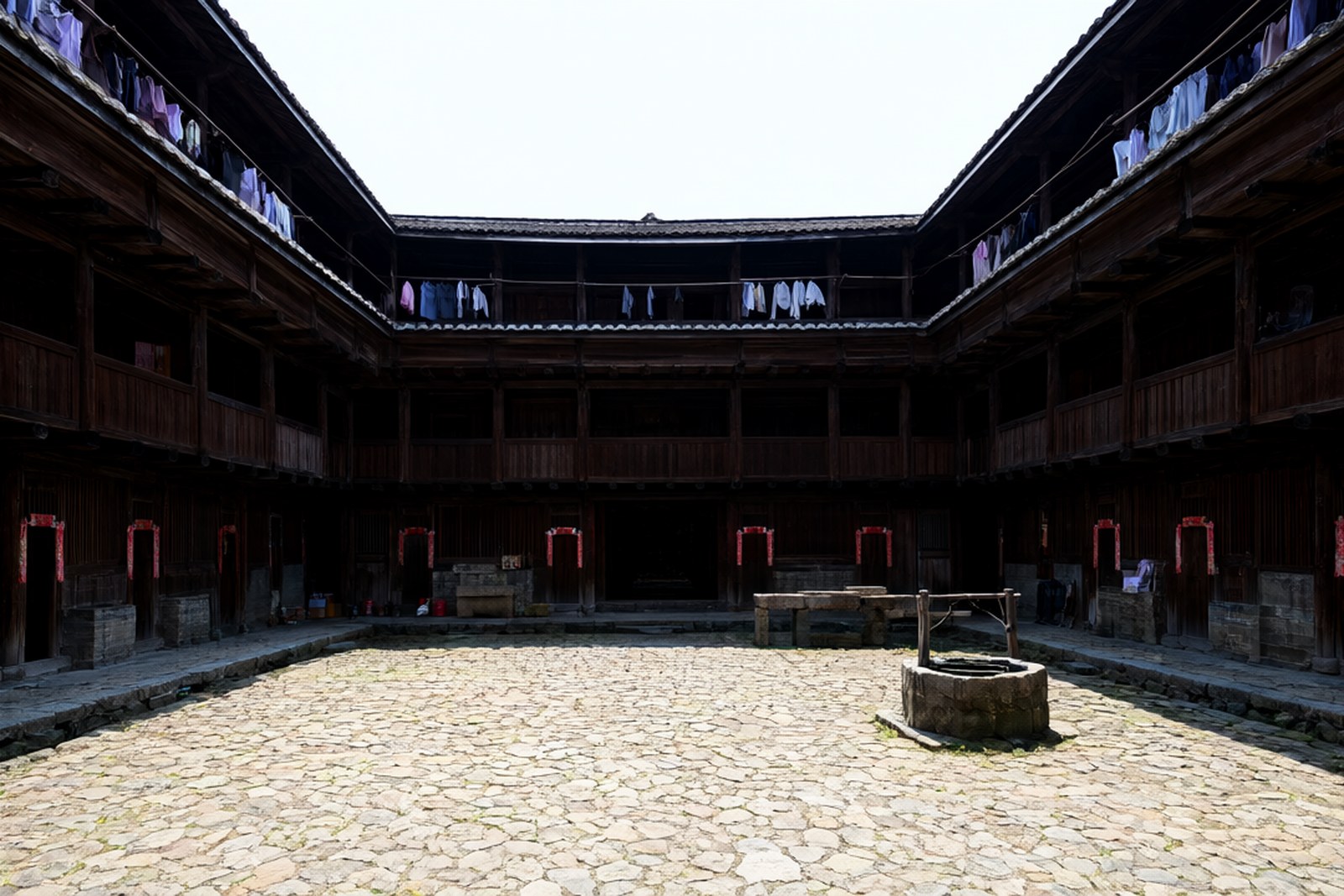
The walls are not the round 客家土楼 Kè jiā tǔ lóu of 福建 Fú jiàn and it is worth saying so at the outset, because the comparison is the first one everybody makes. A 始兴 围楼 is a square or rectangular keep with a courtyard inside it, built with a 中轴对称 zhōng zhóu duì chèn plan, walls in some cases over a metre thick, corner towers, and loopholes at every level; inside, the arrangement is a northern 四合院 sì hé yuàn courtyard plan fitted to southern materials, which is why the county’s writers describe it as a fusion of two traditions. They were built for defence rather than for display – against bandits, against floods, and in some cases against the weather on an earthquake line – and the different walls tell different stories. The county’s own set of superlatives is the easiest way to hold them apart: the reddest is 红围 Hóng wéi at 沈所镇 Shěn suǒ zhèn, whose walls were laid in red stone and bound with a lime-and-glutinous-rice mortar that leaves them crimson, five storeys and about twelve and a half metres high on a footprint of some 995 square metres with walls 1.15 metres thick, and which served in the war years as a headquarters for the provincial party committee; the largest is 满堂围 Mǎn táng wéi at 隘子镇, which has its own article in the travel column; the longest is 长围 Cháng wéi at 罗坝镇, which is under national protection and is called the longest long compound in China; and the smallest is 细围 Xì wéi at 城南镇水田坝, a mini compound whose whole footprint is sixteen square metres. Others in the same catalogue include 永成保障围 at 太平镇东湖坪村, built in 1895, whose door lintel was written by 张之洞 Zhāng Zhī dòng himself, and 笔子薮 bǐ zi sǒu, whose plan is said to look like a turtle carrying a seal.
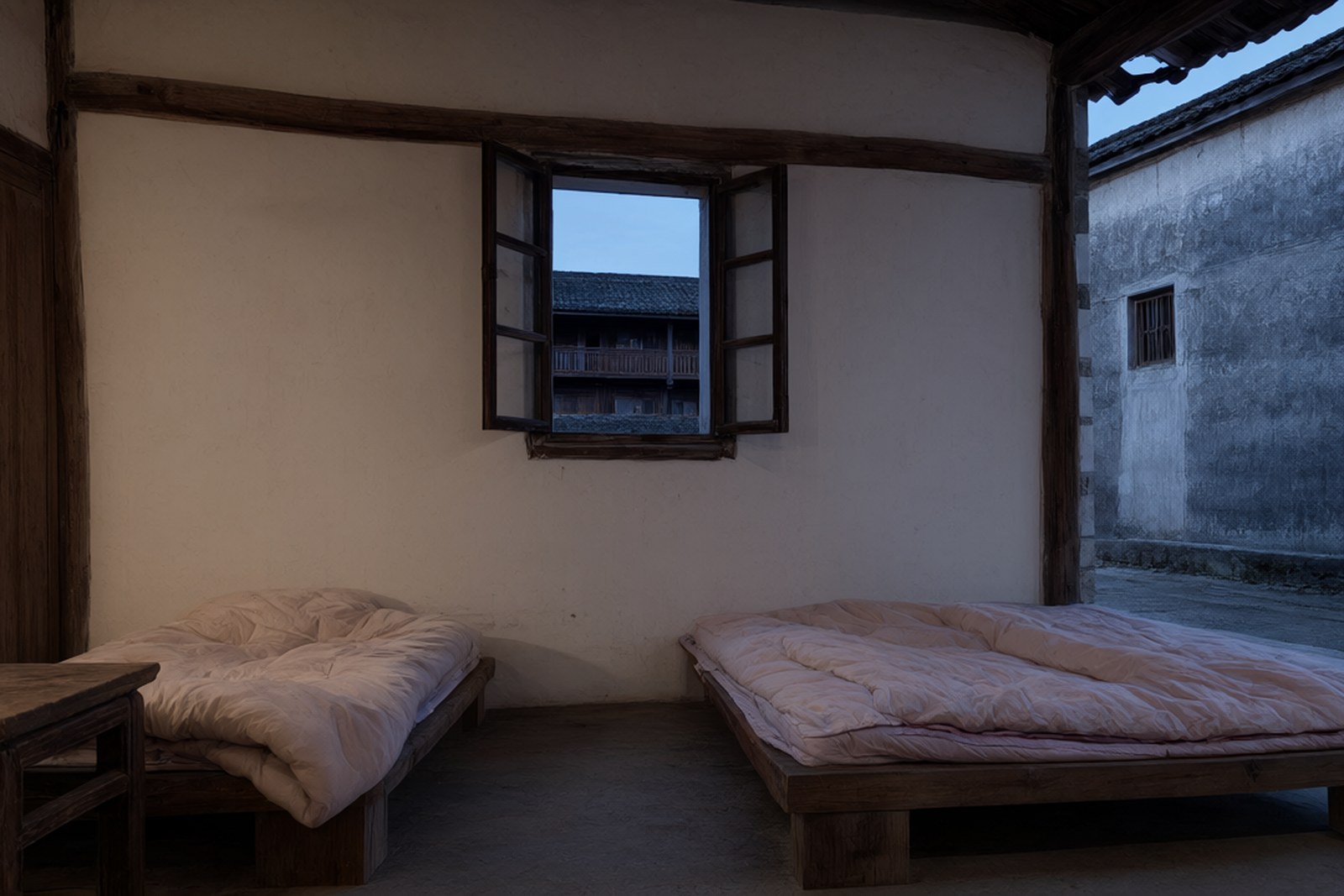
What a visitor can actually sleep beside is more specific than the catalogue suggests, and the county has been working on it. 廖屋围楼 at 罗坝镇田心村, whose old Qing compound survives as four standing walls after the modern village rebuilt on the same site, has been fully repaired and put back into use as the county’s first 围楼 cultural-tourism guesthouse, with rooms, a dining room, a tea room and a calligraphy room in it. That is the direct answer to the question of what it is like to sleep inside a wall, and it is a small place rather than a hotel. Beside it there is a set of new farmhouse stays – 见山悦小院 at 顿岗镇石坪村, done in pale timber; 品碗轩民宿 on the 沈所镇 Shěn suǒ zhèn cultural square, converted from an old school and running meals, farm work and rooms together; and 云威民宿 in the county town on 北门路. Rates across the county’s rural stays sit roughly between ¥150 and ¥300 a night, and the honest position is that the county is adding beds faster than it is adding bookings, so the supply is better than the reputation.
The county’s second life is fruit, and it decides when to come. 始兴 has grown loquat for close to five hundred years and the trade is old enough that the place is known as the land of the loquat; the picking runs from late March into late May, starting with the early variety and finishing with the big 解放钟 jiě fàng zhōng, and the trees in the orchards around 太平镇 Tài píng zhèn are bagged in paper so that a hillside in April looks as though it has been snowed on. Then comes the 杨梅 yáng méi, the Chinese bayberry, in June – the county grows more of it than anywhere else in the province, over thirty thousand 亩 of it – and after that the 石斛 shí hú, the dendrobium the county was named a home of in 2017, which is farmed under shade and sold dried. A guest who comes in fruit season eats it on the ground it grew on; a guest who comes in winter gets the walls to themselves and the coldest mornings of the year, which is also a reasonable thing to want. Getting around is the one part of this county that has to be planned rather than improvised: 始兴 has its own station on the railway and the county town is 465 metres from 始兴车站 Shǐ xīng chē zhàn at the 云威 民宿’s address, but the compounds are scattered across the townships and none of them is on a bus route worth relying on – 红围 is about five kilometres west of the county town at 沈所, 满堂围 is out at 隘子镇, 长围 at 罗坝镇, and the fruit orchards are around 太平镇. A car is the practical arrival and the compounds are strung out along the 323 national road and the county roads off it. Fill the rest of the day from here with 深渡水瑶族乡 Shēn dù shuǐ Yáo zú xiāng, the Yao and 畲 Shē township in the hills, or 周前古村 Zhōu qián gǔ cūn, or the trees at 车八岭 Chē bā lǐng, all of which are inside the county boundary and none of which is more than a short drive.
What the Rooms Are Like
Rooms in this county come in three kinds and they are genuinely different. The converted compound is the first: a room inside a repaired wall, which means thick masonry on the outside, a timber gallery above a courtyard, more likely a shared or semi-shared bathroom in the older layouts, cool in summer and damp in winter, and a ceiling height and a doorway that were not designed for anybody’s modern height. The second is the new farmhouse stay of the 见山悦 and 品碗轩 type: white walls, timber floors, a panel shower and a proper bathroom, air conditioning, a kettle, a window onto a garden or an orchard, and a breakfast of rice noodles and eggs that the family makes in the morning. The third is the county-town chain room, which is the only one with a lift, a desk and heating that works in January. All three are cheap, all three are quieter than a city hotel, and the one question worth asking before you book is about hot water, because several of the converted and farmhouse places heat it on the roof and the supply in the evening stops when the tank empties.
Practicalities
Price. A room in a 始兴 Shǐ xīng rural stay runs about ¥150 to ¥300 a night, with the converted compound rooms and the better new farmhouse houses at the top of that and the plain village rooms and the county-town chain stock at the bottom; a stay inside the repaired 廖屋围楼 is priced as a cultural-tourism guesthouse rather than as a hotel and sits in the middle. The fruit months of April and May and the bayberry run in June are when the county fills, and 五一 wǔ yī and 国庆 guó qìng are the two weeks to book well ahead. Treat every figure as a range and check the live rate, because these are small houses that price by the week.
Address. The stays are spread across 始兴县 Shǐ xīng xiàn – the converted compound at 罗坝镇田心村, 见山悦小院 at 顿岗镇石坪村, 品碗轩民宿 on the 沈所镇 cultural square, and 云威民宿 at 北门路 342 in the county town a few hundred metres from 始兴车站 Shǐ xīng chē zhàn. The compounds are in the townships around them: 红围 at 沈所镇, 满堂围 at 隘子镇, 长围 at 罗坝镇, 永成保障围 at 太平镇东湖坪村, and the orchards around 太平镇; 韶关市 Sháo guān shì and the high-speed line are a drive south.
Rooms. Ask what the bathroom is before you book if you are taking a room inside a wall, because the converted compounds are not all en-suite and that is the difference between a romantic night and a cold one. Ask about hot water and whether it is a roof tank, ask whether the room is heated rather than only cooled if you are here between November and March, and ask which way the window faces, since the county’s April trade is a plate of loquat and the view from the right window is an orchard in blossom. Ask the house to write 红围, 满堂围 and the name of its own village in Chinese for a driver, because the compounds are small, many of them share a name with a village, and none of the road signs will help anybody who does not read the characters.
Getting there. 始兴车站 Shǐ xīng chē zhàn is the railway station and the county town is a short walk from parts of it; 韶关市 Sháo guān shì and the 武广 Wǔ guǎng high-speed line are a drive south, and 韶关丹霞机场 Sháo guān dān xiá jī chǎng is beyond that. By road the county is on the 323 national road with the compounds strung along the county roads off it and the fruit orchards around 太平镇, so a car or a hired one is the way to see more than one wall in a day. The townships of 罗坝, 隘子, 沈所 and 太平 are each a short drive from the county town and none of them is a walk.
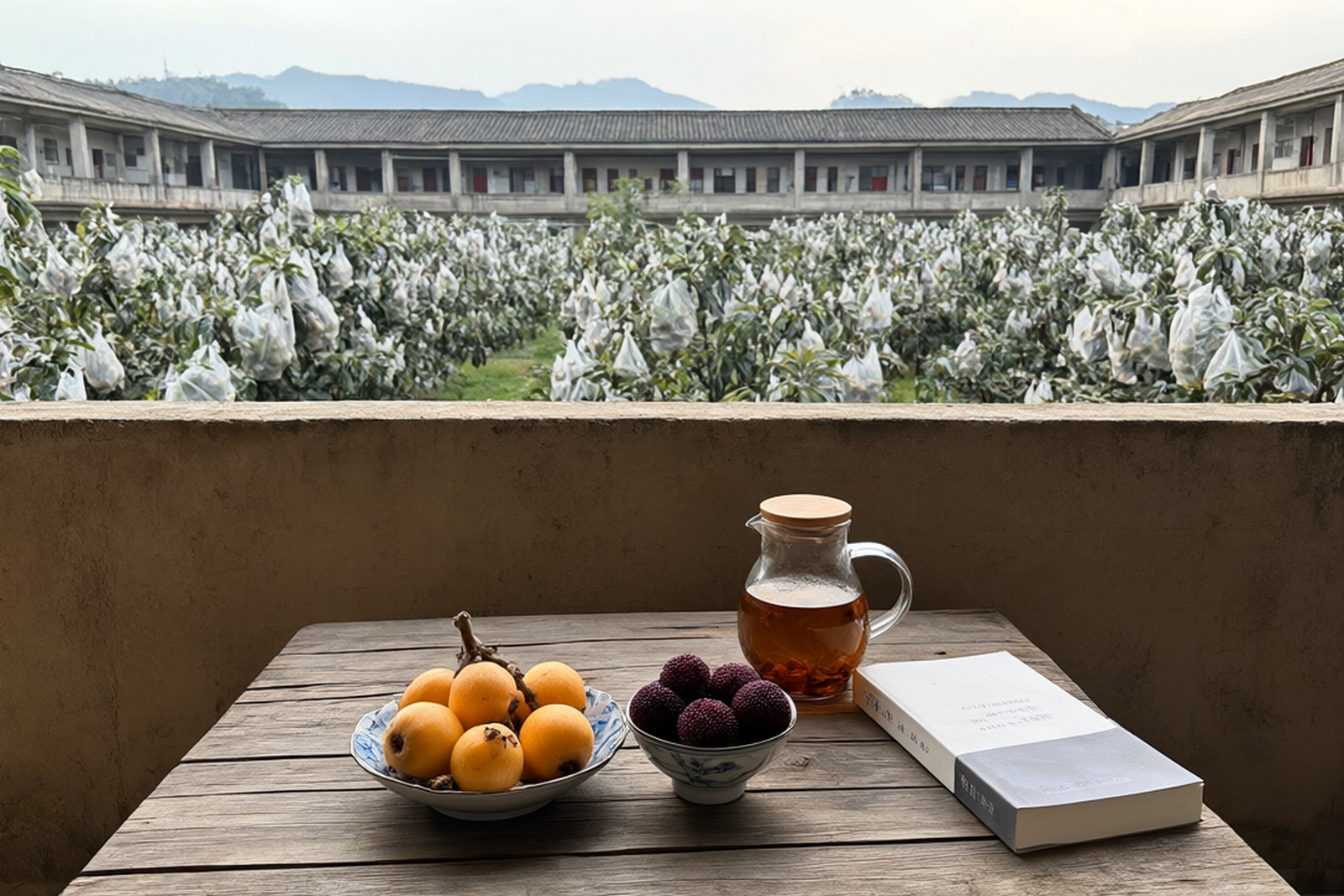
Where to stay: a farmhouse minsu in 始兴县 Shǐ xīng xiàn, ideally one with a wall at the end of the courtyard – the converted compound at 罗坝镇田心村 if you want to sleep inside the masonry, or 见山悦小院 and 品碗轩民宿 if you want a proper bathroom and an orchard window. Come in April or May for the loquat or in June for the bayberry, hire a car because the compounds are scattered, and give a whole morning to one wall rather than an hour to four.
flowcloud would say that a county which has counted five hundred walls in its own history and kept two hundred and forty-nine of them standing has left the visitor one very simple decision – whether to photograph a compound from the outside or pay for a bed on the inside of one – and that only one of those two is worth the drive.