
The pickers start at seven, and from the guesthouse balcony they look like a line of coloured dots moving along the contour of the hill. The tea here is planted in tight hedgerows that follow the terraces, so the whole slope reads as a set of green stripes from the ridge down to the river, and the strips are what the pickers are working: one row each, two leaves and a bud, into a basket at the waist. You are drinking last spring’s version of it with your breakfast, poured from a thermos, in a cup without a handle. Below the balcony, the 水满河 Shuǐmǎn Hé bends around a hill shaped like a screw, and above the far bank the clouds are moving along the ridge in the direction of the mountain. The guesthouses in the tea belt of 五指山市 Wǔzhǐshān Shì are built for exactly this view, and they are selling something quite specific: not luxury, but a seat above a working tea slope at the hour when the tea is being picked.
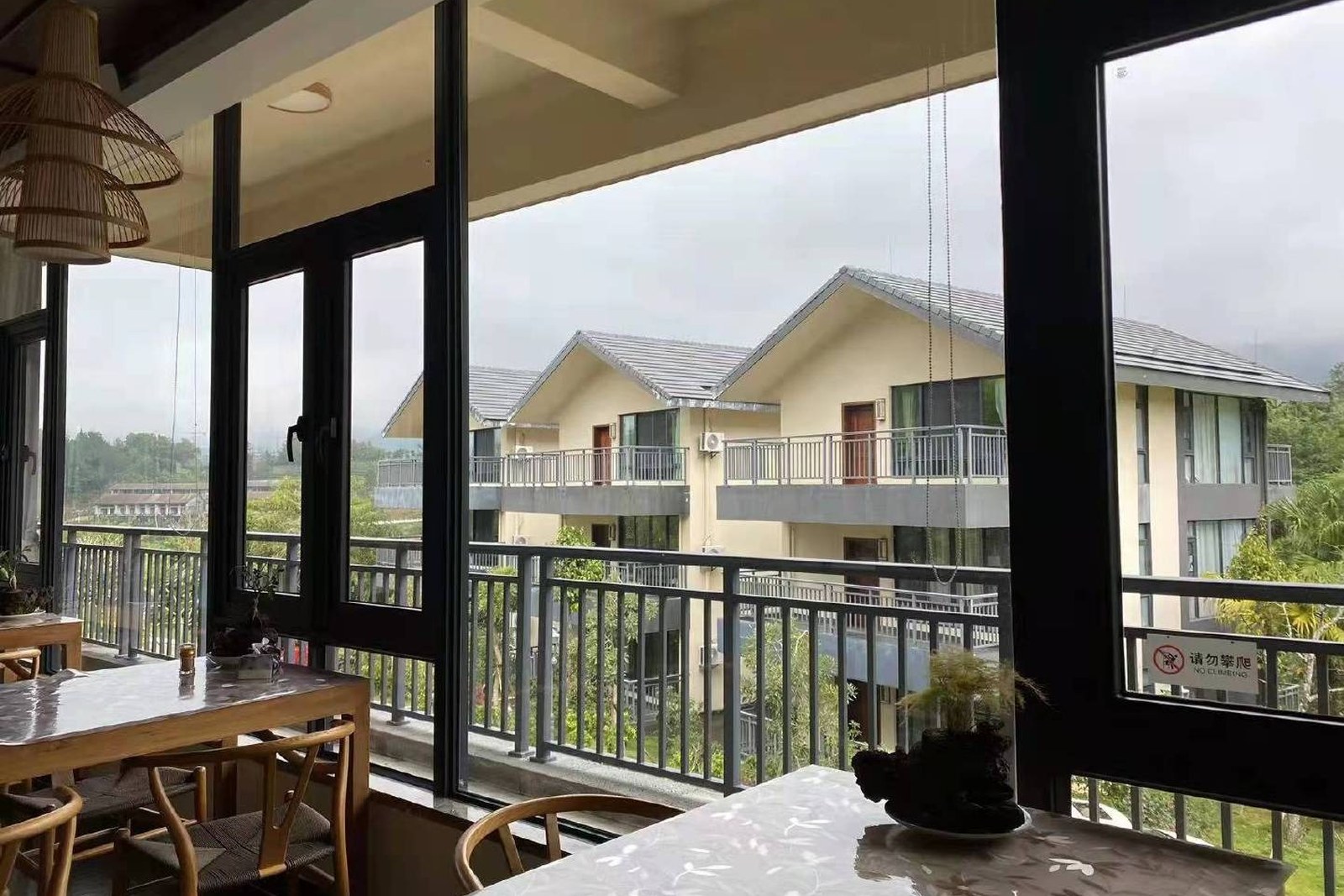
Tea is the mountain’s second economy after tourism, and 五指山红茶 Wǔzhǐshān hóngchá, Wuzhishan black tea, is the product: a large-leaf tea grown in permanent cloud, picked early, and processed in small factories on the same slopes. The claim attached to it is timing. This is the most southerly high-altitude tea belt in China, which means the spring flush comes in during February and March, three months before the inland provinces pick theirs, and the trade has been calling it 华夏第一早春茶 Huáxià dì yī zǎochūn chá — the country’s first spring tea — for long enough that the phrase appears on the packaging without irony. Two places in particular anchor the belt: the organic tea garden at 椰仙 Yēxiān, on the loop of the river that the guidebooks photograph, with a workshop on site, and the village of 番赛 Fānsài over in 通什镇 Tōngshí Zhèn, which has one of the highest tea gardens on the island and a factory of its own. Around both of them the farm stays have multiplied, most of them four or five rooms attached to a house, with the tea slope on one side and the family kitchen on the other.
Practicalities
Price. Farm guesthouses run about ¥200 to ¥450 a night for a double, and the price usually includes breakfast and as much tea as you can drink. The spring picking season from late February to April is the busiest and most expensive window, and it is also when you can actually join a picking row; the autumn months are quieter and cheaper.
Address. The tea stays are spread across the slopes of 水满乡 Shuǐmǎn Xiāng, including the roads around 椰仙茶园 Yēxiān Cháyuán, and over towards 番赛村 Fānsài Cūn in 通什镇 Tōngshí Zhèn, all inside 五指山市 Wǔzhǐshān Shì. Most are reached on farm lanes rather than on named roads, so book by property and ask the host to send a pin.
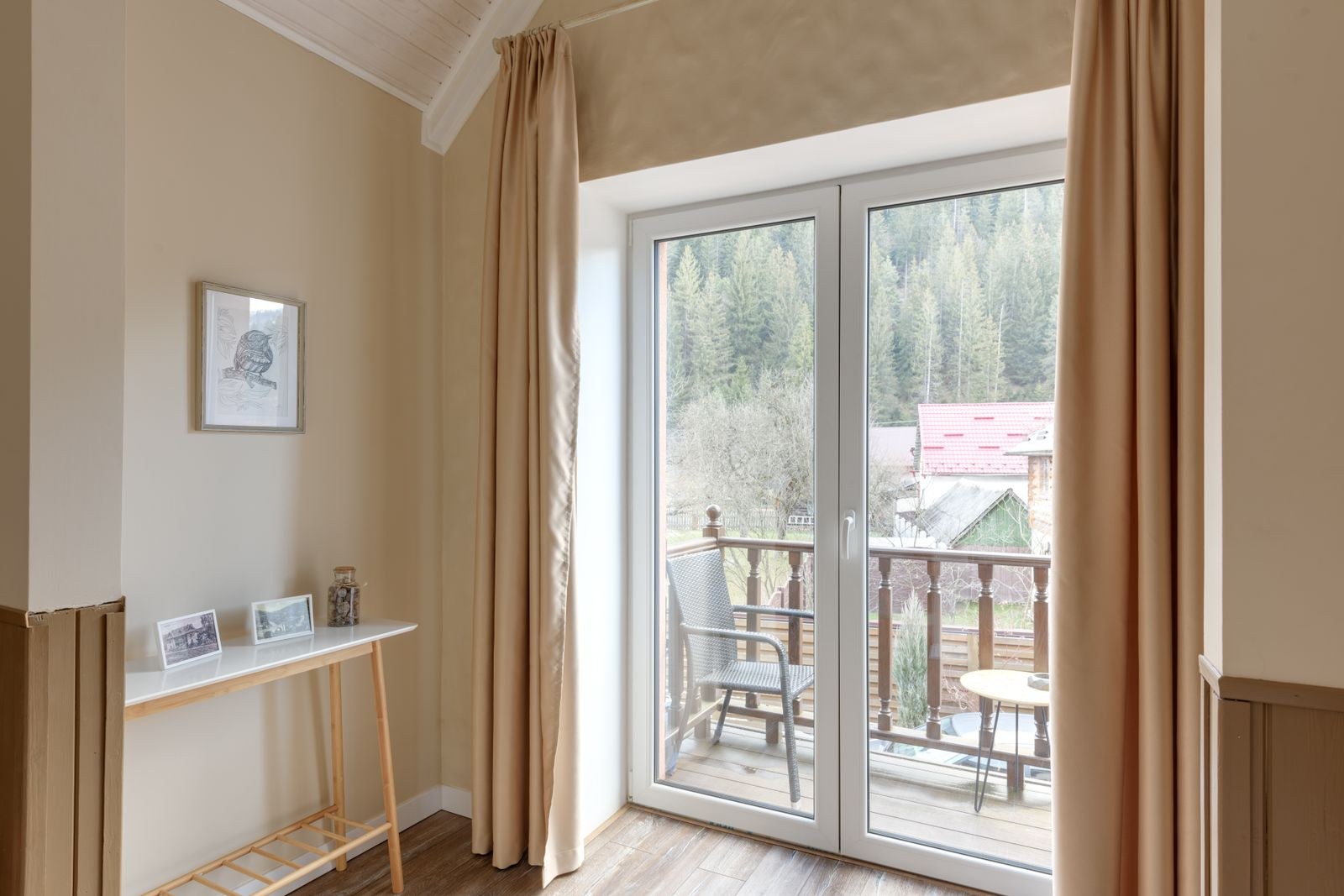
Rooms. Four to six rooms, usually with a private bathroom, a kettle, a fan and air conditioning that you will not need at this altitude. The good rooms are the ones on the upper floor facing the slope; the others face a courtyard, which is pleasant but not the point of the trip. Ask for a room on the tea side when you book, because the difference in what you look at all evening is large.
Getting there. From 五指山市 Wǔzhǐshān Shì, it is roughly twenty kilometres up the mountain road to 水满 Shuǐmǎn and about forty minutes by car; the tea farms are then a further ten minutes off the main road. From 三亚 Sānyà it is about ninety-five kilometres and from 海口 Hǎikǒu about two hundred and fifteen. There is no practical public transport to the individual farms, so either drive or arrange a transfer with the host.
flowcloud would say that the only way to understand why a tea claims a whole season to itself is to stand on the slope in February, in cloud, watching two leaves and a bud being taken off a bush that is already awake.
Where to stay: take a farm guesthouse if your interest is tea and walking, and take the resort belt at the foot of the mountain if your interest is the summit and a pool. Either way, ask to see the processing room, buy directly from the farm rather than the shop in town, and time your visit to the picking if you can — a tea slope in February is a completely different object from the same slope in July.