
Chongqing is a municipality of southwest China, and the 渝北区 Yúběi Qū, Yubei, that used to be its northern district no longer exists: on 7 November 2025 it was abolished and folded into the new 两江新区 Liǎngjiāng Xīnqū, Liangjiang New Area. The name survives on 重庆江北国际机场 Chóngqìng Jiāngběi Guójì Jīchǎng, Chongqing Jiangbei International Airport, 21 kilometres north-east of the centre, open since 22 January 1990. The rooms around it were built for people with a flight at six in the morning, and that traffic sorted them into a ladder unusually legible here: a cheap rung that is not the budget a visitor expects, a middle rung of chain houses doing airport work, a top rung of full-service hotels. What separates the bottom from the rest is the driver who meets you.
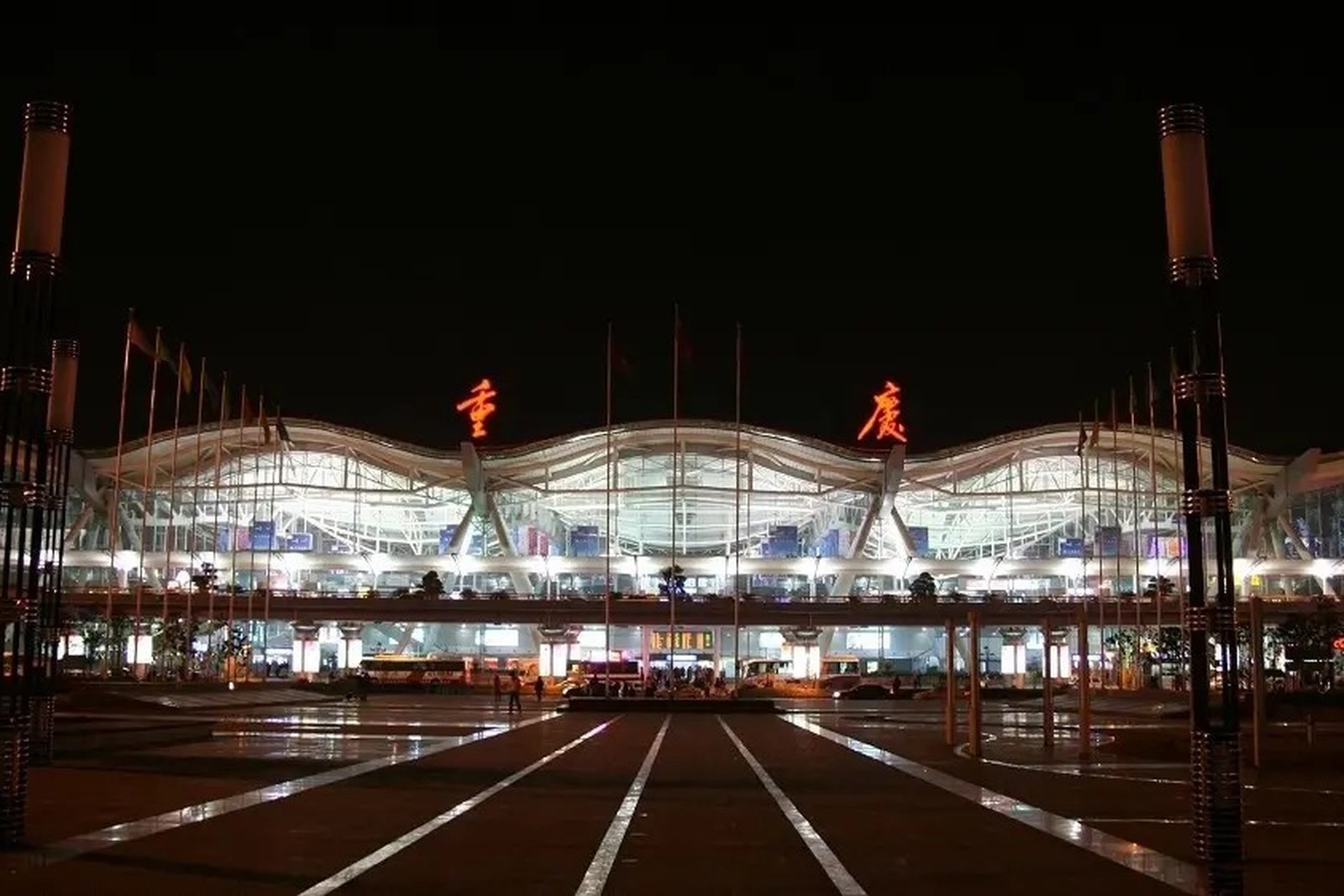
Three terminals now serve the field, together 737,000 square metres, and Terminal 3 is 537,000 of that – an H around a central hall with four piers, 48 metres tall and 1,060 metres from north to south, in service since six in the morning on 29 August 2017, the same six hours in which Terminal 1 closed. The runways measure 3,200, 3,600 and 3,800 metres and the field is rated 4F; in 2023 it handled 44.66 million passengers, sixth in the country. None of that is scenery, and all of it lands in the room stock: a terminal that size needs staff on shift, crews on layover and delegates on nights, and the housing that grows around that demand is what a traveller books into.
The ladder itself is the subject. Read off booking pages in October 2026, the blocks either side of the airport sort into three rungs: about 80 yuan for a two-star room with a car park up to about 160 at the bottom, 150 to 310 for the mid-scale chains in the middle, and 300 to 470 for upper mid-scale at the top. These are area bands, and they describe a neighbourhood rather than any single property. What they do not carry is what decides the bottom rung: the cheap houses advertise an airport pickup as a headline feature, and the reviews keep naming drivers, one repeatedly an ex-soldier who meets the arrivals door.
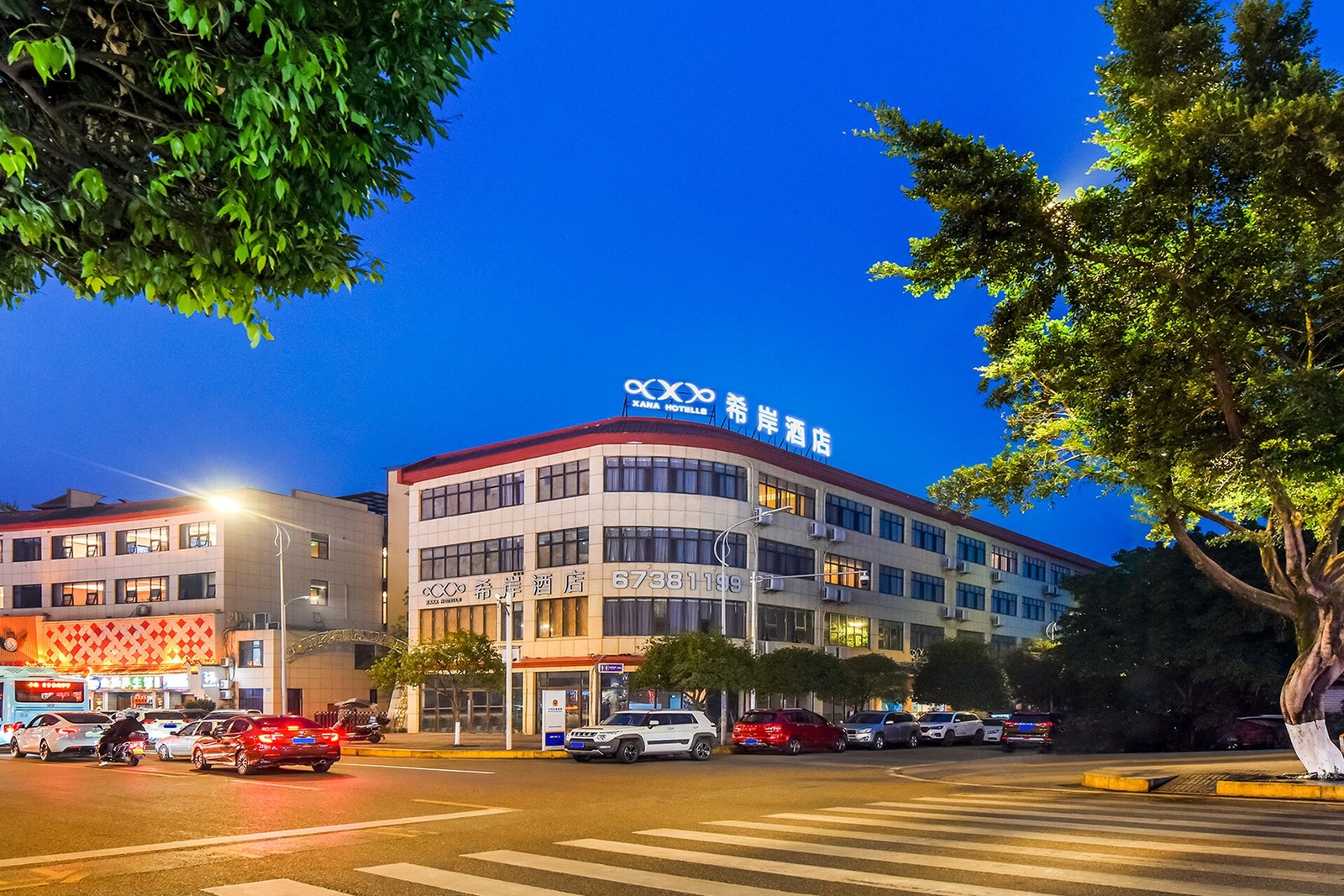
Which end of the ladder you sleep at is a question about terminals, and the rail network answers it precisely. Line 10 stops at both Terminal 2 and Terminal 3, and the first phase opened on 28 December 2017 also runs out past 渝北广场 Yúběi Guǎngchǎng, Yubei Square, so a room can be a five-minute walk from a platform or a fifteen-minute taxi from one, and the gap between those two situations is several hundred yuan. The free shuttle bus between the two terminals takes about twenty minutes: short enough to make the Terminal 3 side the sensible base, long enough that a late arrival who misjudges it walks the loop. The older ground behind the terminals is 两路 Liǎnglù, Lianglu, and 双凤桥 Shuāngfèngqiáo, Shuangfengqiao; the newer stock lines 空港大道 Kōnggāng Dàdào, Konggang Avenue.
Three registers, none of them a resort. The arrival rung is the budget house with the pickup and the car park. The working rung is the mid-scale chain doing crew and business, which is why so much of this stock sits within walking distance of a terminal rather than of anything a visitor came for. The stay-a-week rung is the upper mid-scale and the serviced apartments, which sell a room as a base for a stopover rather than a night. Two boundaries keep this honest: this is not the riverside register the south bank has taken, and it is not a station room, since one line and three terminals is no interchange.
Practicalities
Price. Three bands, all measured off booking pages in October 2026, all describing the neighbourhood rather than any named property, because the platforms re-rank this area monthly. The bottom rung is the economy house, roughly 80 to 160 yuan, and what it really sells is the pickup rather than the room. The middle rung is the mid-scale chain, 150 to 310; the top rung is upper mid-scale, 300 to 470. None of these is a rate you can book: treat them as the shape of the floor and check the date, because a holiday week moves this ladder harder than any other in the city.
Address. Listings still print 重庆市渝北区 at the head of every one of them, because that was the district the street addresses were written under; the ground is now the northern part of 两江新区 Liǎngjiāng Xīnqū, Liangjiang New Area. The lodging clusters along 空港大道 Kōnggāng Dàdào, Konggang Avenue, and 双龙大道 Shuānglóng Dàdào, Shuanglong Avenue.
Rooms. Two kinds sit a few hundred metres apart. The budget house: a two-star room, often a car park, sometimes a driver on call, and a window onto a road; the room is small and that is the trade. The chain and upper mid-scale room: a proper desk and blackout curtains that matter more here than anywhere else, because your alarm is earlier than anyone else’s. Ask two questions first: is the pickup charged, and which terminal the house serves.
Getting there. Line 10 stops at both Terminal 2 and Terminal 3, on the first phase opened on 28 December 2017, and the Terminal 2 station changes in-station to Line 3, which runs down to 解放碑 Jiěfàngbēi, Jiefangbei. The free shuttle bus between the two terminals takes about twenty minutes. Buses and taxis run the airport road into 两路 and up to 渝北广场; a taxi into the centre is a long ride on the elevated expressway.
A night here runs backwards. The useful hours are the small ones: the airport’s rhythm starts in the dark with the first departures, and the shuttle starts carrying staff before most hotels have finished breakfast. Mid-morning is the quietest hour in the district, because the people staying have gone and the people arriving are still in the air. Evening belongs to nobody in particular: the forecourt is bright, the access roads are empty, and the room you booked is ten minutes from a terminal you will re-enter at five in the morning. Sleep here is a shift, and the room that respects it has a working blackout curtain.
flowcloud would say that the airport price ladder is the only one in Chongqing whose bottom rung is not really about the room at all – it is about a man meeting you at the arrivals door – and that the correct way to book at 重庆江北国际机场 Chóngqìng Jiāngběi Guójì Jīchǎng is to price the transfer first and the bed second, because the ladder only begins at the terminal door.
Where to stay: an economy house with a listed pickup if the flight is early and the budget is the point, and only after checking whether the pickup is charged; a mid-scale chain within walking distance of Terminal 3 if you want a desk and a normal room; and an upper mid-scale house or a serviced apartment if the stopover runs past two nights, because above a certain size the same money buys a kitchen and a washing machine instead of a wider bed.