
苏家围 Sū jiā wéi stands where the 东江 Dōng jiāng and the 久社河 Jiǔ shè hé meet in 义合镇 Yìhé zhèn, 东源县 Dōngyuán xiàn, about twenty-six kilometres upriver from 河源市 Héyuán shì, and it is a Hakka village whose whole population descends from 苏轼 Sū Shì, the poet known as 苏东坡 Sū Dōngpō. A guesthouse here is a room or two inside one of the old courtyard houses, five minutes’ walk from the 迎亲桥 Yíng qīn qiáo and the bamboo that runs down to the water, in a village of eighteen old houses that has kept its lanes and its ancestral hall and very little else.
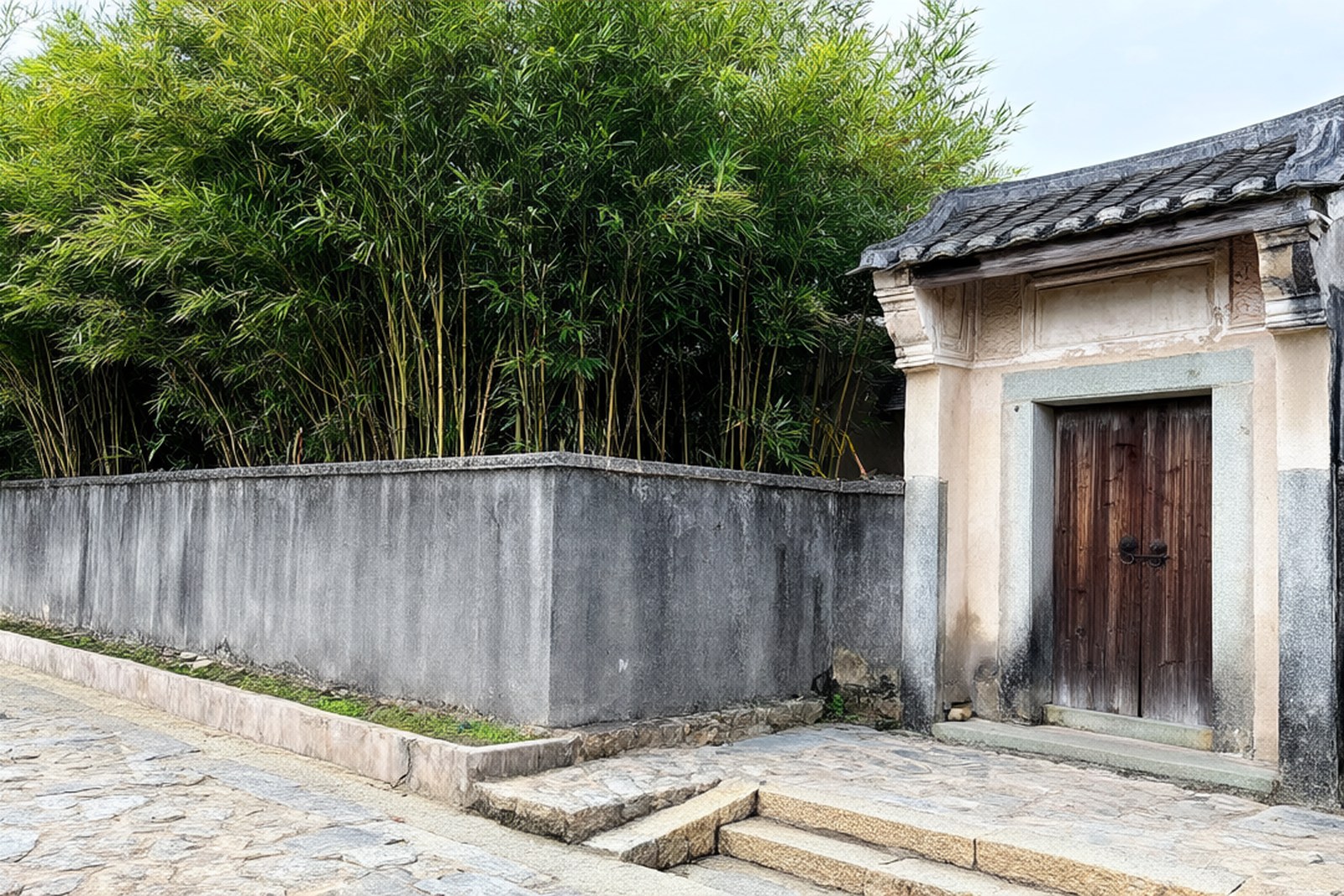
The story the village tells about itself begins on the river. In 1312 苏天荣 Sū Tiānróng, a seventh-generation descendant of the poet, was travelling down the 东江 by boat to take up a teaching post at 番禺 and put in at 义合 for the night, and in a dream five old men told him to go ashore and look at a 紫苏 zǐ sū, a perilla plant. He went, found a great banyan and a good situation, took it as an instruction, and told his family to settle there; his descendants did, and the village that grew up was 苏围, later 苏家围. The oldest surviving building is the 永思堂 Yǒng sī táng, also called the 东山苏公祠, raised in 1481 for the eighth-generation ancestor 苏东山, and beside it stand seventeen more houses, five of them Ming and thirteen Qing. Five banyans on the bank are said to be over a thousand years old.
The houses are the interesting thing, because they are not the round 围龙屋 of 梅州. 苏家围 is built in the 府第式 fǔ dì shì manner, which is to say as squares: a walled compound around a courtyard, with the halls on an axis, the family rooms opening off the yard, and a plan much closer to a northern Chinese courtyard house than to the fortified circles of the eastern Hakka. Inside the ancestral hall the village keeps what it has: a genealogy tracing eight hundred years, more than a hundred land and house deeds from the 嘉庆 Jiāqìng and 道光 Dàoguāng reigns, and sixty-odd boards recording degrees and offices. In one 道光 examination the county produced twenty-four 秀才 xiù cai, the lowest degree, and twelve of them came from this one village, which is where the nickname 苏半县 Sū bàn xiàn, Su Half the County, comes from.
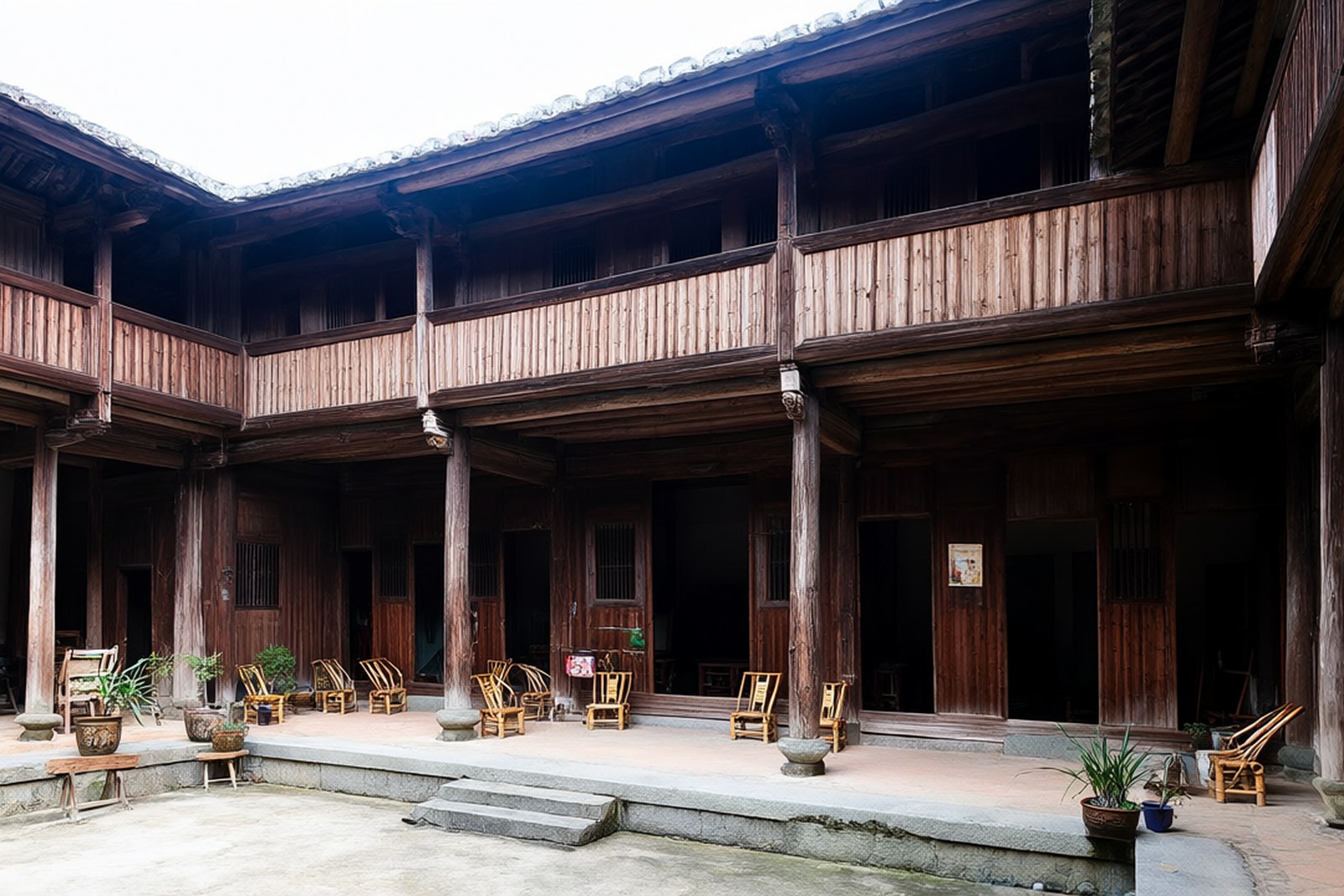
A guesthouse in the village is a converted family house rather than a hotel. Expect a courtyard or a covered skywell, old timber furniture, a few plants, and rooms opening off the yard; the family who run it will cook breakfast and usually an evening meal if asked, and the cooking is the ordinary 客家 repertoire done properly, 酿豆腐, 娘酒鸡, a whole fish from the 东江, and greens from the garden. The standard is simple and clean, and what you are paying for is the building, the bamboo and the quiet. The village is a small tourist area with a ticket gate and a boat on the river gallery, so there is a little traffic in the middle of the day and none at all after five, which is the hour to walk the bank.
The 东江 gallery is the reason the setting works as well as it does. The river here is broad and slow, the banks are lined with bamboo in honour of the poet’s own line about being able to live without meat but not without bamboo, and the boat that runs from the village landing is a fifteen-minute drift past the reed beds and the 望江亭. Above the village the 义合镇 hills hold the 阮啸仙 Ruǎn Xiàoxiān memorial at 下屯村, the birthplace of one of the early organisers of the peasant movement, and 万绿湖 is half an hour east. Two nights is the right length here: one for the village and the river, and one for the lake.
What the Rooms Are Like
Expect a room of fifteen to twenty-five square metres, a firm bed, air conditioning, a clean en-suite bathroom with a shower, and old timber furniture. The finish is homely rather than styled, and the courtyard rooms are the ones to ask for. The village is silent after dark and the lanes are unlit, so bring a torch. Wi-Fi is usually available but can be weak in the older houses, and the family will cook if you ask in advance rather than at the last minute.
Practicalities
Price. A double in a 苏家围 guesthouse runs ¥120 to ¥300 a night in the shoulder season, and more over the October week and Chinese New Year. Breakfast is often included and dinner is charged separately at a fair rate.
Address. The guesthouse is in the village of 苏家围, 义合镇, 东源县, 河源市, on the 东江 about twenty-six kilometres from the centre of 河源. The nearest high-speed rail stop is 河源东站 Héyuán dōng zhàn on the 赣深 line.
Rooms. Ask for a courtyard room rather than one on the lane, and ask the family to cook dinner, which is the best food in the village. Confirm that the room has air conditioning and hot water, because a few of the old houses do not, and note that the village charges an entrance ticket which is separate from the room.
Getting there. From 河源东站 a taxi to 义合 takes about forty minutes; from the centre of 河源 the drive is half an hour. The village is signposted off the riverside road and the whole of it is walkable once you are there; the boat landing is at the bottom of the village and the 迎亲桥 is where the lane begins.
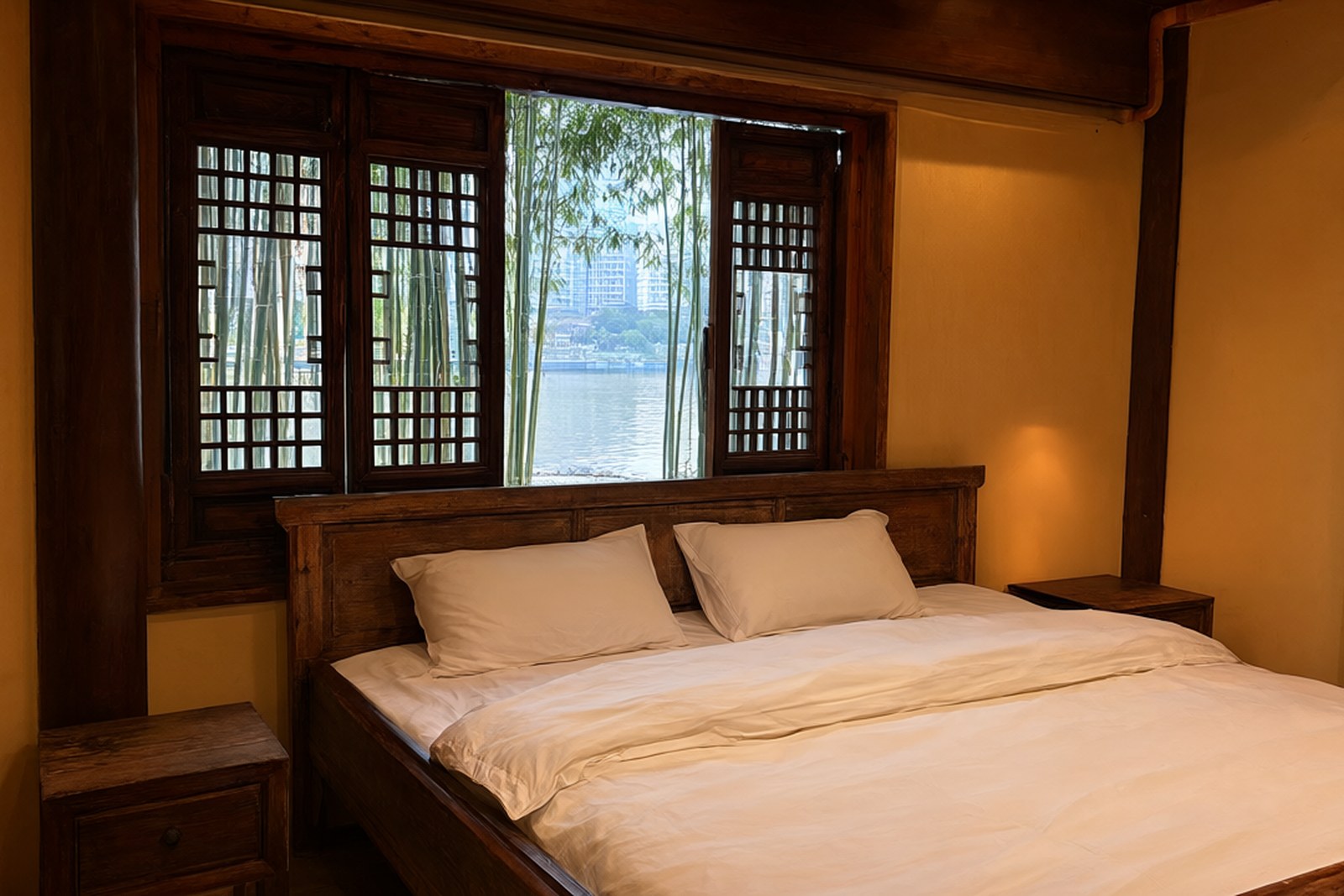
Where to stay: the family guesthouses inside the walled village of 苏家围, 义合镇, 东源县, 河源市, on the 东江. Ask for a courtyard room, have the family cook, walk the bank at dusk when the day visitors have gone, and give the village one night and the lake the next.
flowcloud would say that a village which has kept its deeds, its degree boards and its ancestral hall in a house raised in 1481, and which asks a visitor to sleep inside the same courtyard rather than in a hotel built to look like one, has understood that a family’s history is a fragile thing and best kept where it is lived.