
The town is new and the valley is not. 桃花源古镇 Táohuāyuán Gǔzhèn is a purpose-built village of grey brick, black tile and peach trees laid out in front of the entrance to the 桃花源 Táohuāyuán scenic area in 桃源县 Táoyuán Xiàn, and if you go in expecting a genuine Qin dynasty hamlet you will be disappointed, because it was built in the 2010s. What it is good at is being a place to sleep inside the landscape: the inns are comfortable, the streets are quiet after five o’clock when the coaches leave, and in the morning you walk fifteen minutes to the entrance gate and are in the valley before the first tour group. A double room in one of the guesthouses is ¥220–480, and the experience is very much a function of whether the crowds have gone.
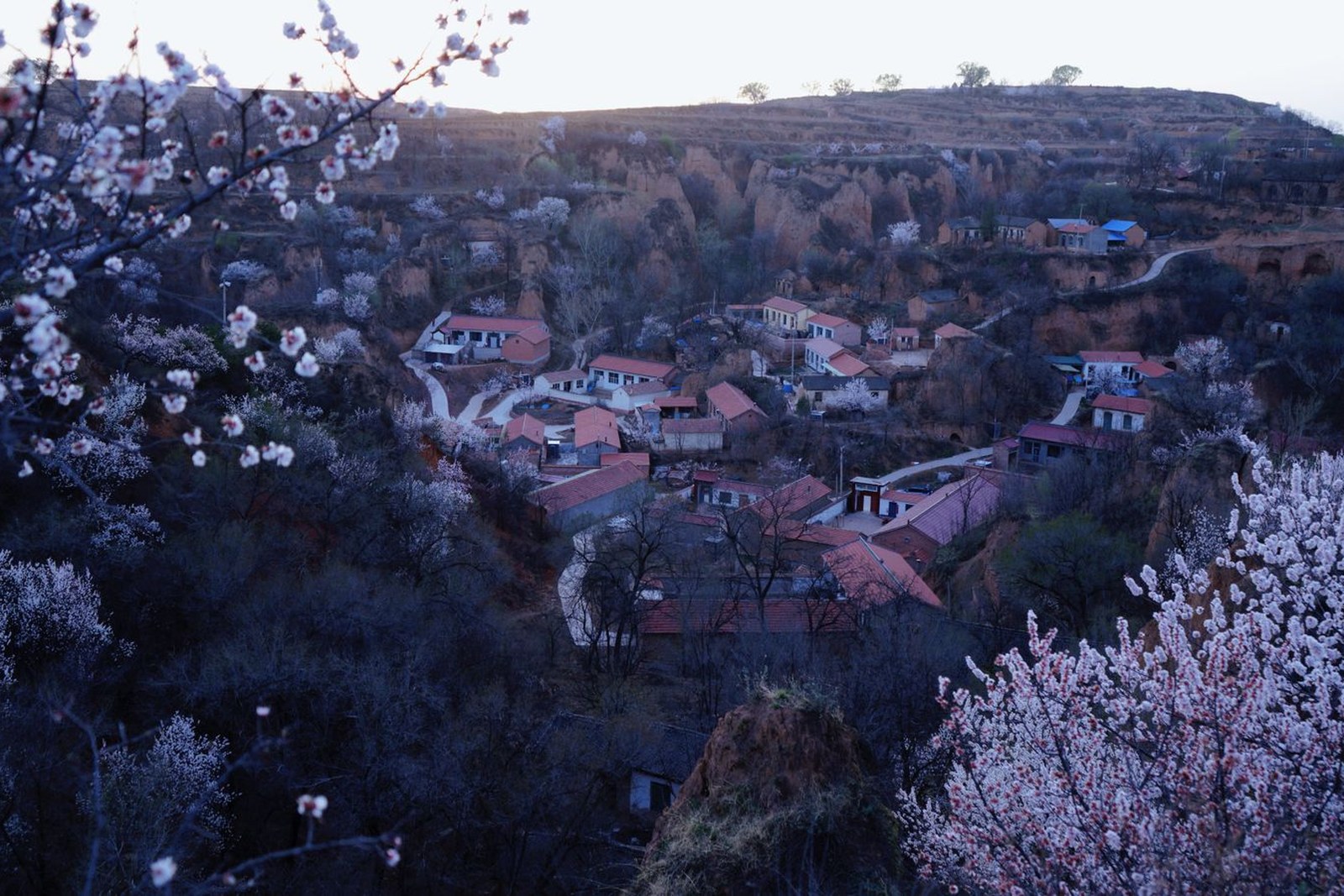
The valley behind it is the thing that matters. 桃花源 Táohuāyuán is the Peach Blossom Spring, the place described in a poem by 陶渊明 Táo Yuānmíng around the year 421, in which a fisherman follows a stream through a grove of blossoming peach trees, finds a hidden valley whose inhabitants have been cut off from the world since the Qin dynasty, is fed and welcomed, and cannot find his way back. The poem is one of the founding texts of the Chinese imagination — it invented the idea of the secluded paradise — and the question of where it is has been argued for fifteen centuries. This part of 武陵 Wǔlíng, because the poem says 武陵, has the strongest claim, and by the Tang the site was already a place of pilgrimage with temples on it.
The present scenic area covers about sixteen square kilometres and is organised into four zones: 桃花山 Táohuā Shān, the hill with the temples and inscriptions, including a 渊明祠 Yuānmíng Cí and the usual crop of Tang and Song carved texts; 桃源山 Táoyuán Shān, across the valley, with the 桃川万寿宫 Táochuān Wànshòu Gōng; 秦溪 Qín Xī, the stream from the poem, which is now the route of a night-time boat performance with the audience in the boats; and 五柳湖 Wǔliǔ Hú, the lake at the centre. The 实景演出 shíjǐng yǎnchū on 秦溪 Qín Xī — an evening cruise past staged scenes of the poem with singing and lighting — is the single most theatrical thing in Hunan and is either wonderful or absurd depending on your appetite for that sort of thing. It costs about ¥238 and needs booking.
What You Are Paying For
Price. ¥220–480 for a double in the town’s guesthouses. The rooms are new, the beds are good, and the decoration is uniform; what varies is size and whether you have a window on the street or the hillside.
Address. 桃花源古镇 Táohuāyuán Gǔzhèn, 桃花源镇 Táohuāyuán Zhèn, 桃源县 Táoyuán Xiàn, 常德市 Chángdéshì. The town is at the entrance to the scenic area, about 15 minutes’ walk from the main gate.
Rooms. Several hundred across a dozen or so guesthouses and small hotels. Ask for a hillside room (quieter) or a street room (prettier). Ask about heating in winter — the buildings are new but the winters here are cold and damp.
Getting there. About 40 kilometres and 45 minutes by car from 常德 Chángdé city centre, taxi ¥100–150; the train station in 桃源县 Táoyuán Xiàn is on the ordinary line and about 20 minutes away. Most visitors come by car or on an organised day trip from Changde.
What the Locals Know
Go in the right fortnight. The peach blossom is late March into early April and it is short. Outside that window the valley is green and pleasant but the trees are just trees, and locals do not pretend otherwise.
Stay the night; do not day-trip. This is the entire reason to take the town rather than the county-seat hotel. Between five in the evening and eight in the morning, the place belongs to whoever is staying.
Book the boat show in advance. The 秦溪 Qín Xī performance sells out in the blossom season and at national holidays. Locals go in September and October, when it is quiet and cheaper.
Walk past the temples and keep going. The valley’s real pleasure is the stream and the bamboo above the built zone, where the crowds stop and the path keeps going.
Where to Stay
In the town if you want the valley at dawn and dusk, which is the point. In 桃源县 Táoyuán Xiàn county town, 30 minutes away, if you want a real hotel with a lift and a proper breakfast at half the price. In 常德 Chángdé city if you want the city — which is a legitimate choice, since the lake and the river street are both there.
flowcloud would say that the Chinese spent fifteen hundred years trying to find a valley that a poem made up, failed, and then built a village at the entrance to the most plausible candidate and furnished it with inns — which is, on reflection, a more practical form of literary pilgrimage than most.
Where to stay: 桃花源古镇 (Táohuāyuán Gǔzhèn), 桃源县 (Táoyuán Xiàn), 常德市 (Chángdéshì), 湖南 (Húnán). Guesthouse doubles ¥220–480. About 45 minutes and ¥100–150 by taxi from 常德 (Chángdé) city. Come for the blossom in late March, stay overnight, and book the 秦溪 (Qín Xī) boat performance ahead.