
热海蒸云,夜半温汤。Rèhǎi zhēng yún, yèbàn wēn tāng – Steam rises over the Hot Sea; a warm soak at midnight.
The stay in 腾冲 Téngchōng Tengchong is a hot-spring stay: the county sits on one of China’s great 火山 huǒshān volcanic fields — the 腾冲火山群 Téngchōng Huǒshānqún, some 99 火山锥 huǒshānzhuī cones — and the heat below it feeds 温泉 wēnquán hot springs across the county, 硫磺泉 liúhuáng quán sulfur springs among them, with the distinctive rotten-egg 硫磺味 liúhuáng wèi smell. The headline area is 热海 Rèhǎi the Hot Sea, a 温泉景区 wēnquán jǐngqū scenic valley about 10 km from town whose 大滚锅 Dàgǔn Guō Big Boiling Pool steams at close to 97°C; the resort 温泉酒店 wēnquán jiǔdiàn hot-spring hotels cluster at its mouth. The October 2026 snapshot runs three bands: mid-range spring hotels 300-700 yuan, upscale resort-and-villa properties 1,000-3,000 yuan (worth confirming — winter is peak and rates roughly double), and village 温泉民宿 wēnquán mínsù spring guesthouses around 200-500 yuan. Stock is 大床 dàchuáng and 双床 shuāngchuáng rooms plus villas with 私汤 sītāng private tubs; what you are really buying is water — whether the 温泉水 wēnquán shuǐ is piped from the real spring or heated in a boiler, which is the honest first question for every property.
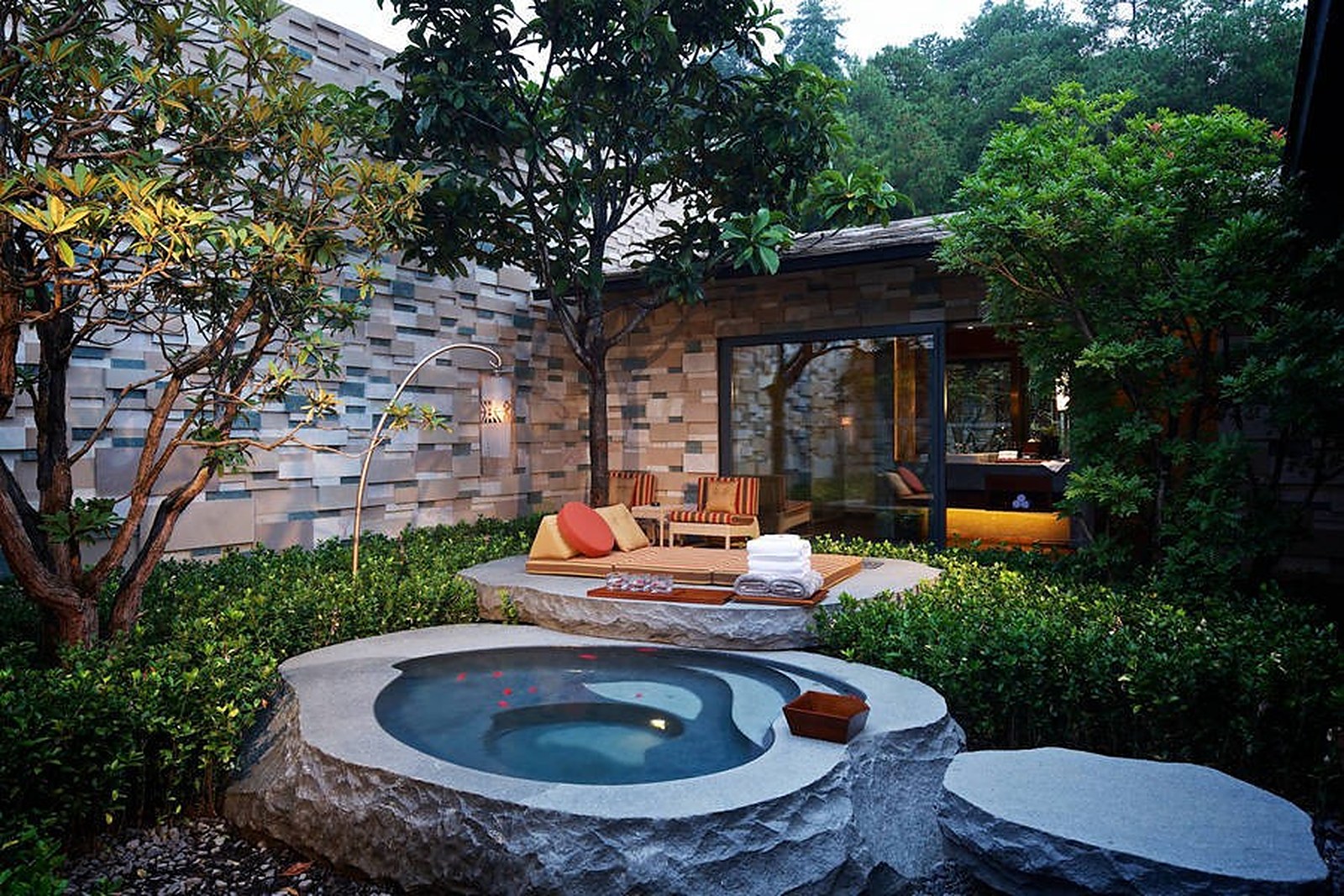
Three clusters, three characters. At 热海 Rèhǎi you buy scenery and the show — the 大滚锅 Dàgǔn Guō, the 珍珠泉 Zhēnzhū Quán pearl spring, the 鼓鸣泉 Gǔmíng Quán drumming spring — and the 美女池 Měinǚ Chí and 浴谷 Yùgǔ soak pools where the sulfur water is piped into open-air tubs; the trade is coach groups and a resort-town feel. At the edge of 和顺古镇 Héshùn Gǔzhèn, village-style resorts — 和顺柏联 Héshùn Bólián is the name to know — put 私汤 sītāng villa pools in a rice-paddy setting: quiet, private, expensive. Inland at 云峰山 Yúnfēng Shān Yunfeng Mountain, the 石头纪 Shítoujì resort, a 隈研吾 Wéiyánwú Kengo Kuma stone-and-timber design by the Daoist mountain, is the stay that trades tour buses for valley fog. Who it suits: winter 康养 kāngyǎng health-seekers (November to March is peak, when northerners come for the sulfur water), couples who want a private tub, and anyone planning to soak twice a day; who it does not suit: anyone who hates the smell of sulfur in the sheets, because you will smell it for two days.
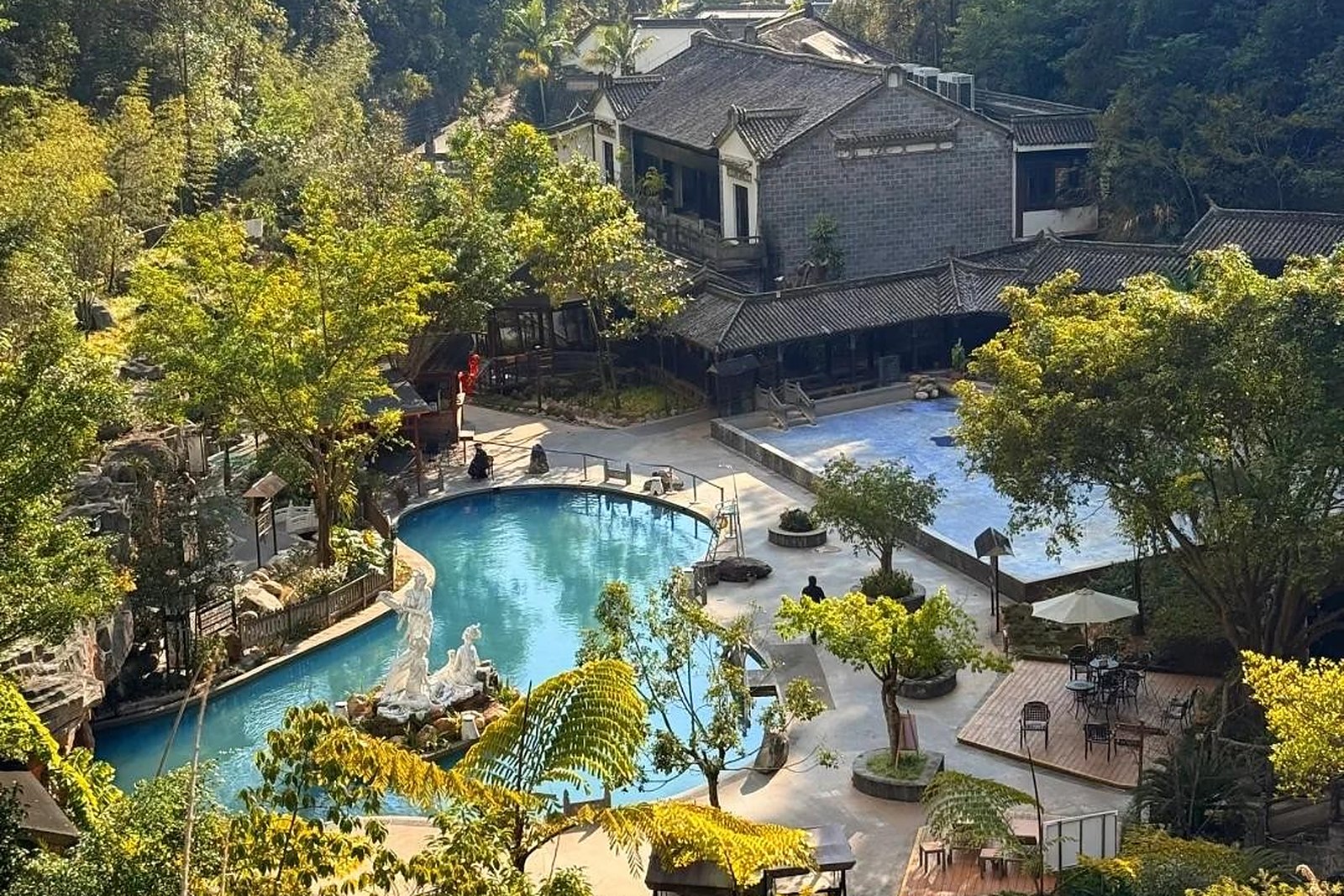
Practical shape: two or three nights, because soaking is a rhythm, not a sight. Book well ahead for December to February, and ask the four questions before you pay: is the water real 温泉水 wēnquán shuǐ from the spring, is the tub 私汤 sītāng private or a 公共池 gōnggòng chí communal pool, what is the 硫磺 liúhuáng content, and is breakfast included (remote properties charge for everything). Scenic-area pools are 男汤 nántāng and 女汤 nǚtāng split; resort 私汤 sītāng tubs are used unclothed by local habit. Getting there: 腾冲驼峰机场 Téngchōng Tuófēng Jīchǎng is 10-15 km from the city and another 20-40 minutes out to 热海 Rèhǎi by taxi (worth confirming current fares), and the 保腾高速 Bǎoténg Gāosù links 保山 Bǎoshān in about two hours. Best season is November to April; the summer 雨季 yǔjì brings rain and mist, which some love and some do not. The honest shape is that the upscale band buys the private pool and the fog, not the thread count. Check band prices in the week you book. All checked October 2026.
The Stays
Tengchong’s hot-spring stays cluster in two belts: the resort strip near 热海 Rèhǎi and the 洞山 Dòngshān village springs south of town, both built around the same sulfur water. The standard room comes with a private 泡池 pàochí soaking tub on the balcony or in the bathroom – the water runs 40-45 °C straight from the spring and smells faintly of 硫磺 liúhuáng, which is the point and also the thing some newcomers dislike. Honest rates run about 400-1200 yuan a night depending on the strip and the season (worth confirming the details), with the cheaper family hotels at the low end and the resort hotels at the high.
The season is the decision. November to February is peak: the outdoor pools steam in the cold air, the 热海 Rèhǎi resort strip is full, and prices climb; summer is quiet and cheaper, and the indoor pools work fine. If you want the public-bath experience instead of a room, the 热海 Rèhǎi park itself has bathhouses fed by the springs (worth confirming the bath ticket), and many visitors do a day of the park plus a cheap city room rather than a resort night.
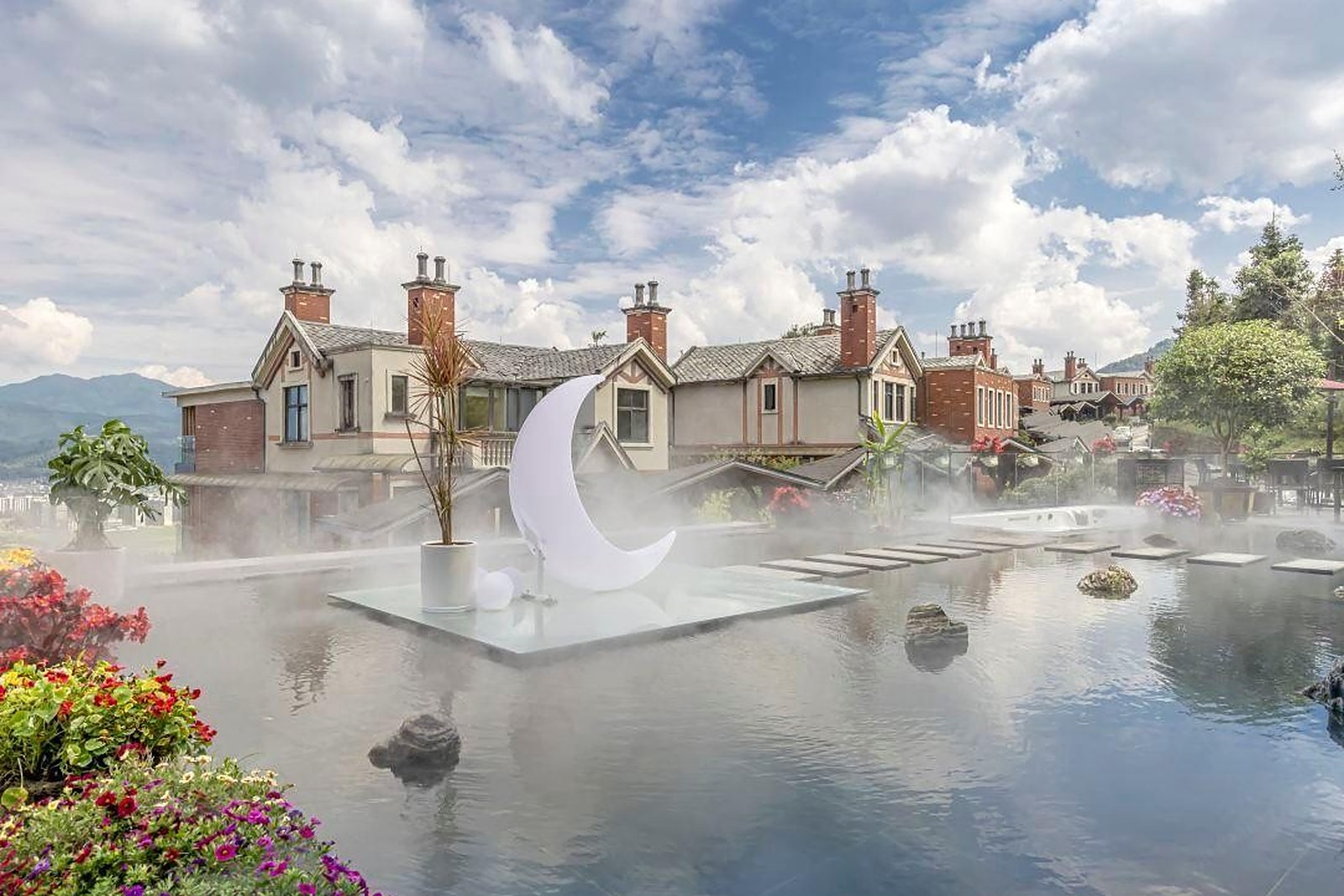
Where to stay: the sulfur hot-spring hotels and resorts of the 热海 Rèhǎi and 洞山 Dòngshān belts south of Tengchong city – private soaking tubs in-room, about 400-1200 yuan a night in the November-to-February peak (worth confirming the details). All checked October 2026.