
The walls are black and they are made of bubbles. In the villages southwest of 海口市 Hǎikǒu Shì, around 石山镇 Shíshān Zhèn in 秀英区 Xiùyīng Qū, almost every old building is built from 火山岩 huǒshānyán, volcanic rock, and the rock is basalt: dense, dark grey to black, and full of the small round holes left by gas escaping as the lava cooled. It is rough enough to grip, light enough to lift, and it has been quarried out of the surrounding fields for centuries, which is why the walls, the gateposts, the pigsties, the water tanks and the paths between the houses are all the same material. Stay in a village like 荣堂村 Róngtáng Cūn or 三卿村 Sānqīng Cūn and the homestay is likely to be a converted house of exactly this stone, with a courtyard in the middle and lychee trees over the wall.
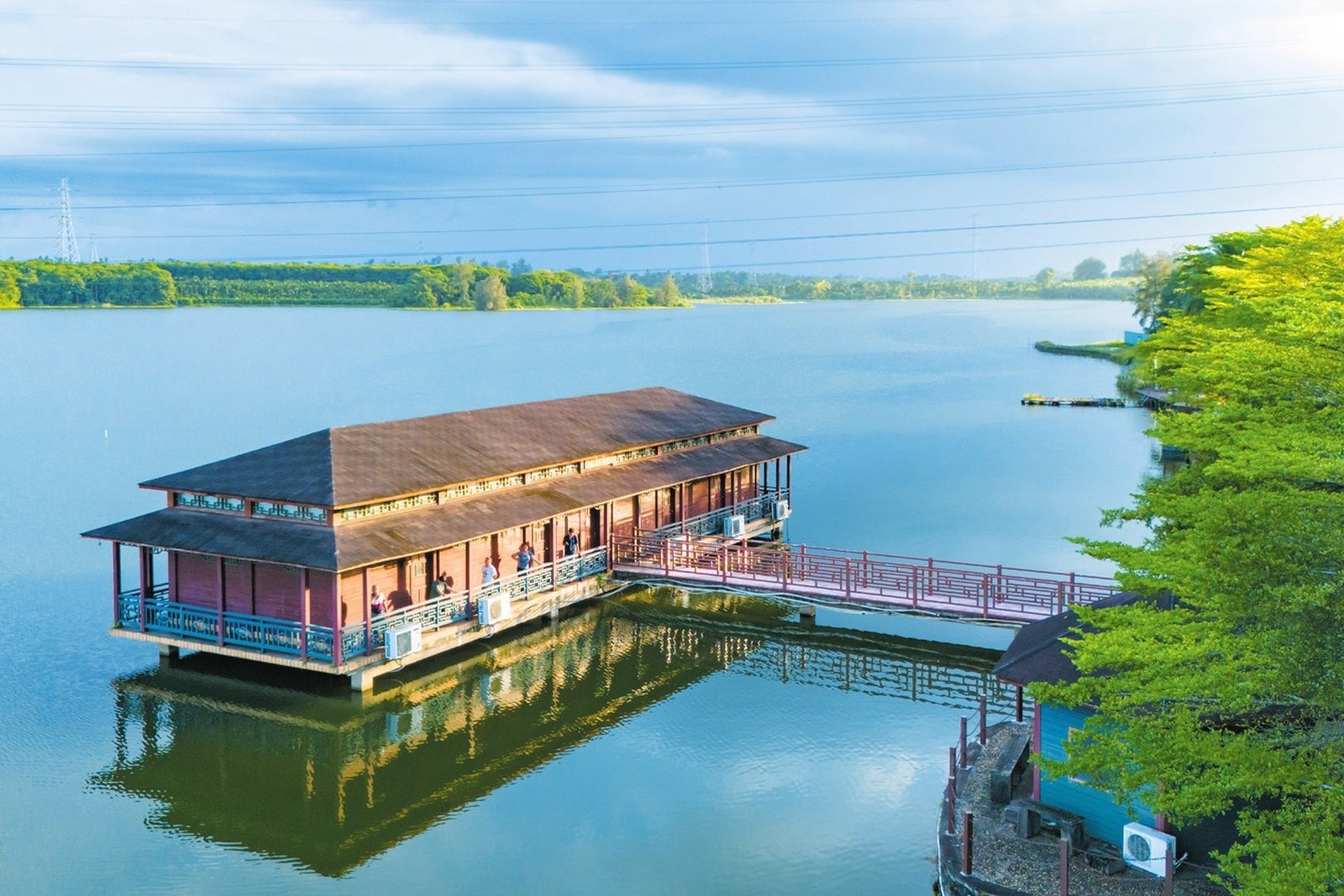
The land around it is the reason the villages are where they are. The 羊山 Yángshān area lies on an old lava field, and the soil is thin, dark, iron-rich and studded with stone, which makes it bad for rice and famously good for 荔枝 lìzhī, lychees, and for 黄皮 huángpí, the small wampee fruit, both of which have been grown here for centuries and are sold dried and fresh under the 火山 huǒshān name. Water is obtained from 火山岩水 huǒshānyán shuǐ, the groundwater that has filtered through the basalt and is locally claimed to be unusually mineral; wells were dug and the stone-lined tanks that hold the rain are still in use. The villages that survive best are the ones that were too poor to rebuild, which is the usual story: the absence of money preserved the architecture.
What the Rooms Are Like
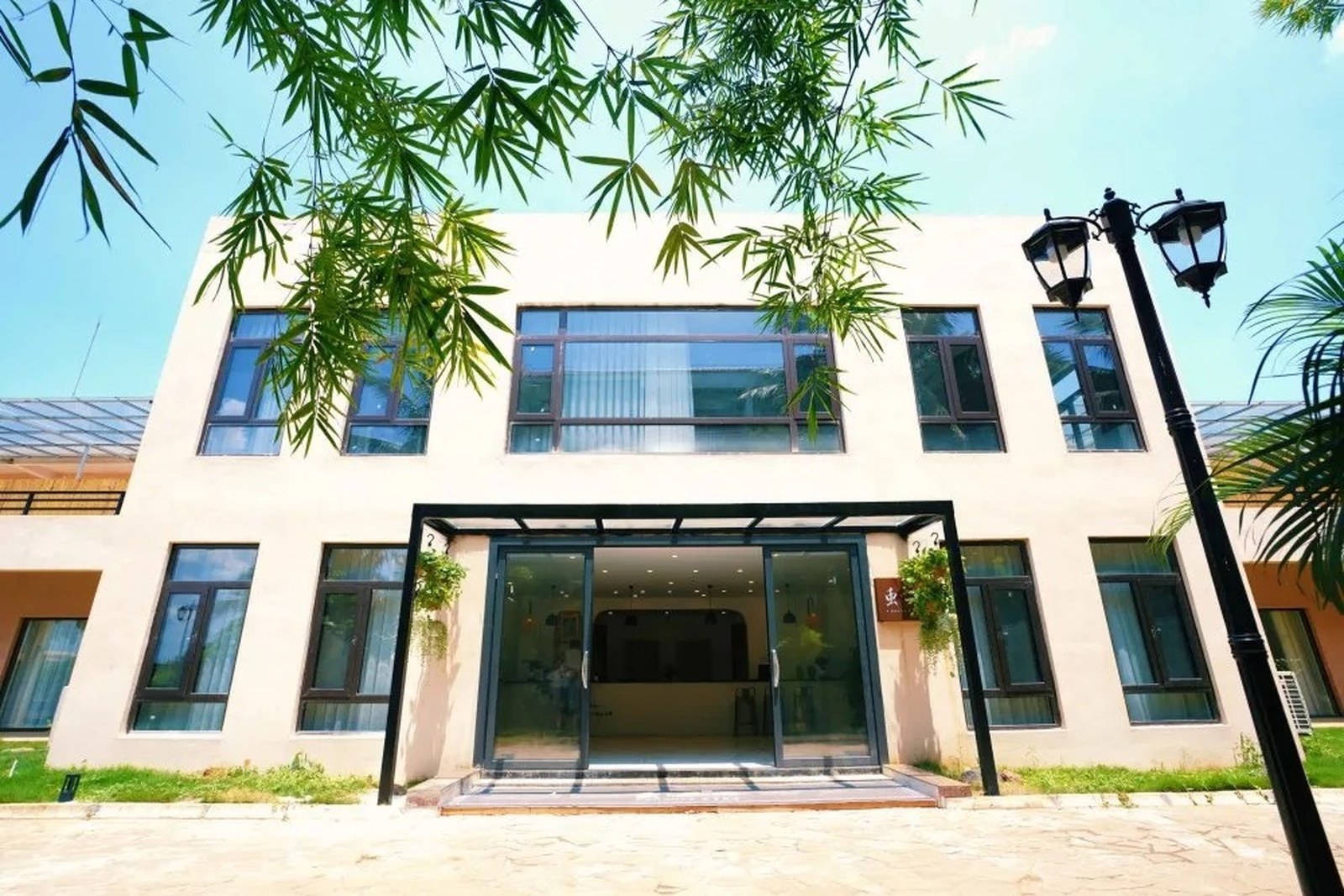
The conversions vary enormously and it is worth being specific. The good ones have kept the stone walls exposed inside, added a timber ceiling under the tiled roof, kept the courtyard as the centre of the house and put modern plumbing into a new block at the back. The plain ones are simply a village house with a bed, a fan, a shared bathroom and the family in the next room. Almost none have central heating or double glazing, and the winters, which are short, are wetter and colder than the latitude suggests. What they do have is quiet and dark at night, a courtyard to sit in, and a host who will cook vegetables from the plot and fruit from the trees.
Practicalities
Price. A double room in a converted stone house runs roughly ¥150 to ¥400 a night, and rates barely vary with the season because demand does not change much. Some hosts charge separately for dinner, which is usually the best meal available for miles and worth the extra thirty or fifty yuan a head. Whole-house rentals are common for groups and cost proportionally less per room.
Address. The homestays are in the villages of the 石山 Shíshān area of 秀英区 Xiùyīng Qū, ten to twenty-five kilometres southwest of central 海口市 Hǎikǒu Shì, on the road out toward the 火山口 Huǒshānkǒu geopark. Most are booked through a platform and listed by village rather than by street, and drivers will need the village name, not an address.
Rooms. Ask whether the bathroom is en suite and whether the hot water is a boiler, a solar unit or a small instant heater, because a solar unit in the rainy season means cold showers. Ask whether the room has air conditioning as well as a fan, which matters from May to September. Ask about the courtyard: a room opening directly onto it is the reason to be here and a room opening onto a corridor is not.
Getting there. By car or taxi from central Haikou takes thirty to fifty minutes; there is no railway station and the public buses stop on the main road, leaving a walk of a kilometre or more to the village. Coming from 海口美兰国际机场 Hǎikǒu Měilán Guójì Jīchǎng takes around an hour by road. The 火山口地质公园 Huǒshānkǒu Dìzhì Gōngyuán, the volcanic geopark, is a short drive from most of the villages, which makes the area easy to combine with a day of walking on the old lava flows.
flowcloud would say that a night in the lava villages is the only place in Haikou where the building material and the farming are the same subject, since the stone in the wall came out of the field next door and the lychee tree over it grew in what was left.
Where to stay: in a converted stone house in 荣堂村 Róngtáng Cūn, 三卿村 Sānqīng Cūn or one of the other 羊山 Yángshān villages, in a room that opens onto the courtyard rather than a corridor. Confirm the bathroom arrangement and the hot-water system before booking, ask whether dinner is available and whether the hosts will show you the old stone water tanks, and bring a layer for the evening even in winter, because the stone holds the damp.