
东源县 Dōngyuán xiàn is the county that wraps the northern and western shore of 万绿湖 Wàn lǜ hú, the reservoir that supplies 河源市 Héyuán shì with its water and its name for greenness, and the lake’s own little port of 新港 Xīngǎng is where the boats leave and where the resorts stand. A lakeside hotel here is a low building of white walls and timber a few dozen paces back from the water, with the wooded hills of the 新丰江国家森林公园 Xīn fēng jiāng guójiā sēnlín gōngyuán behind it and the islands out in front, and the day arranged around a boat, a slow afternoon and a dinner of the lake’s own fish.
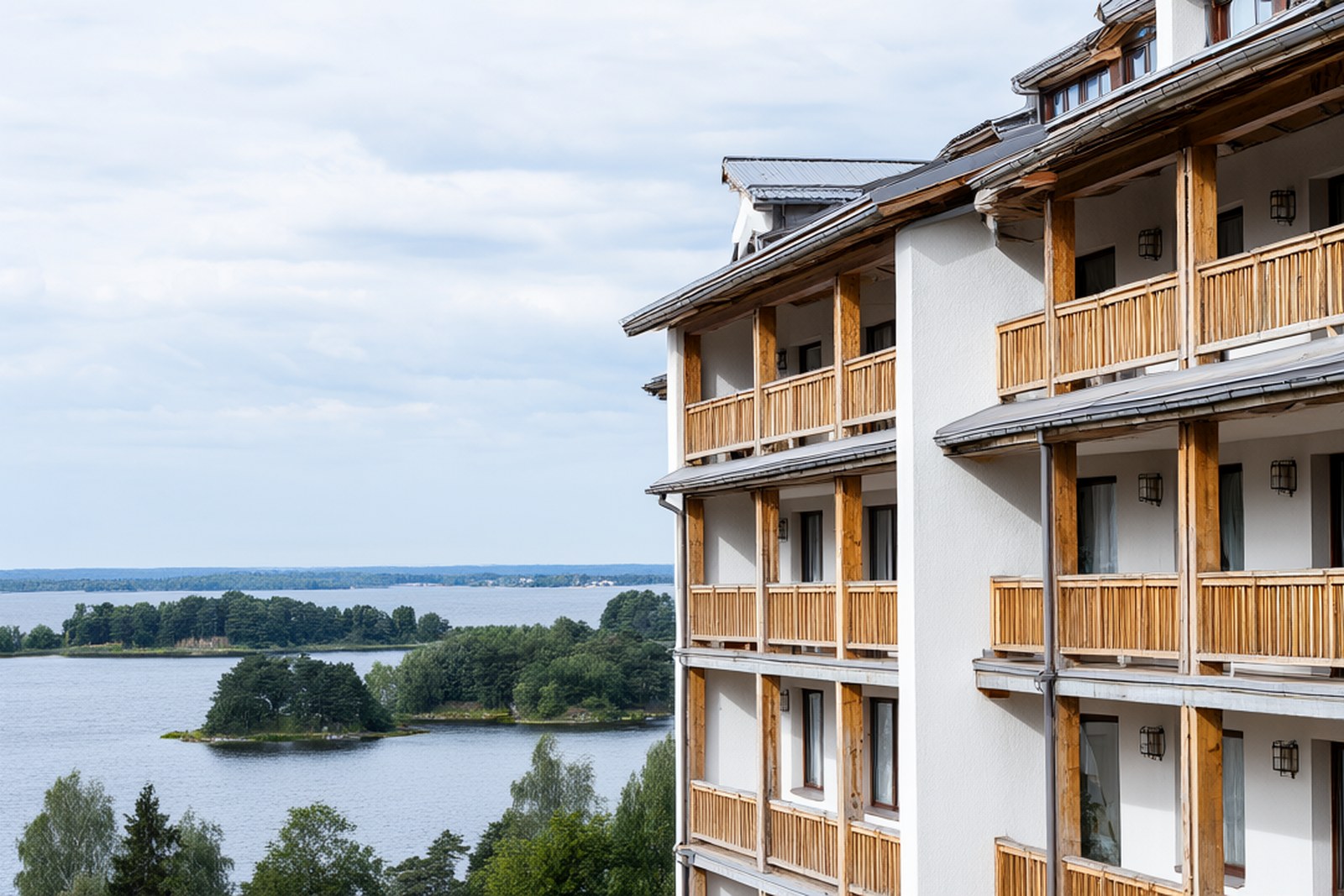
The lake was made by people and does not look it. The 新丰江 Xīn fēng jiāng, the New Feng River, was dammed just above 河源 in 1958, and the water backed up the valley until it swallowed the fields and the lanes and left the tops of the hills standing as islands. What is there now is three hundred and seventy square kilometres of water holding nearly fourteen billion cubic metres, the seventh-largest reservoir in the country and the largest artificial lake in Guangdong, with more than three hundred wooded islands strung across it. It is a working reservoir and not a pleasure lake that happens to be big, and the water is kept at the best quality grade there is, clean enough to drink out of the lake, at a temperature between nineteen and twenty-three degrees the year round.
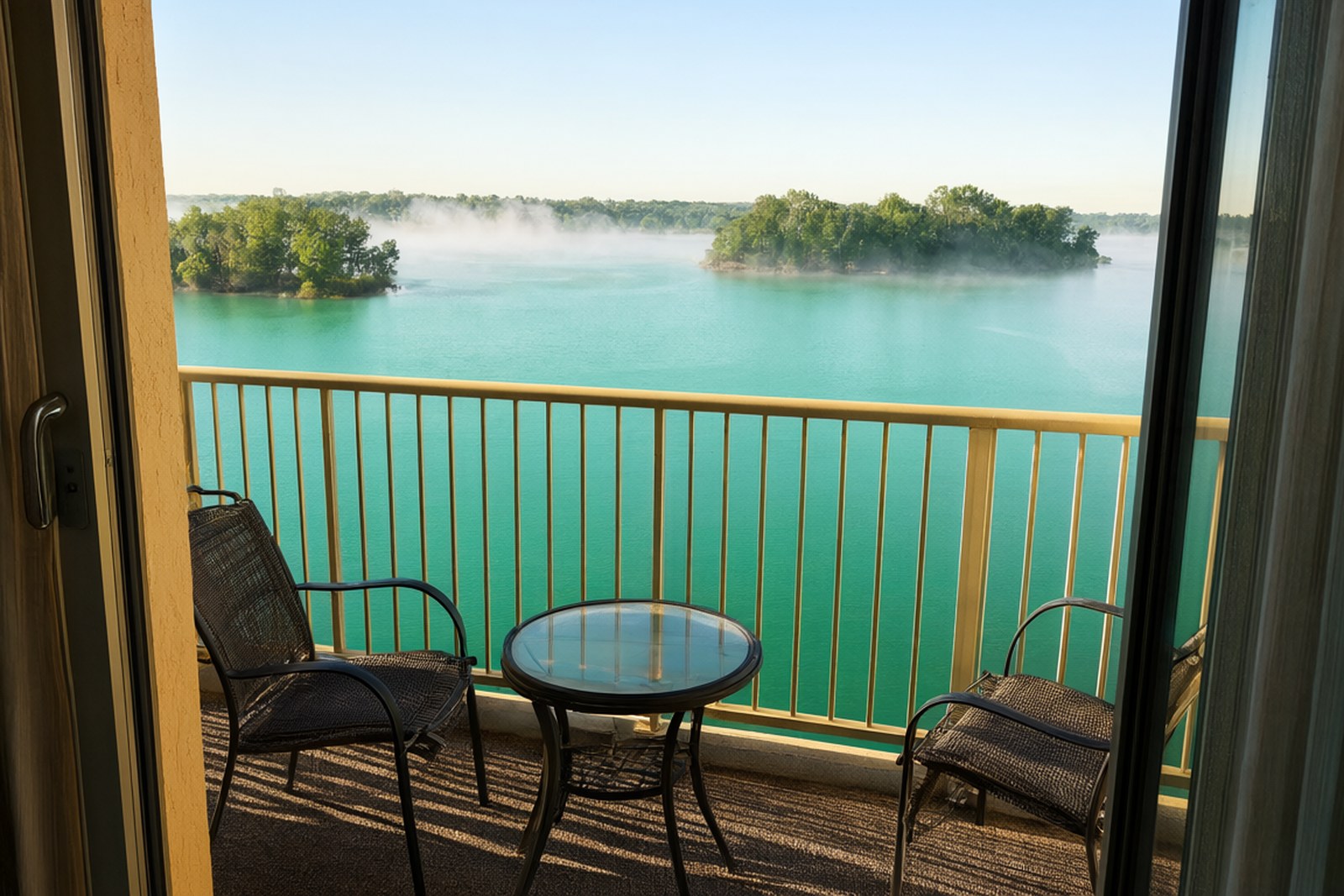
That cleanliness is the reason the lake is protected so fiercely and the reason it is so green. The hills that come down to the water are forest, the counties on its shores have refused a long list of industrial projects to keep it that way, and the reservoir discharges into the 东江 Dōng jiāng, the East River, which is where 深圳, 东莞 and most of 中国香港 get their fresh water. It is also a piece of natural history in its own right: the 桃花水母 táo huā shuǐ mǔ, the peach-blossom jellyfish, a small and extremely fussy freshwater medusa that only appears in water of the first quality, is found here. Sitting on a balcony above it, with the mist coming off the water in the morning, is the whole appeal.
The hotels are strung along the shore road at 新港 and further north at 万绿谷, and they come in two kinds: the older resort hotels, with a pool, a Chinese restaurant, a spa and a run of rooms with a balcony over the water, and the newer, smaller places, some of them cabins or capsule units on the bank, which trade the lobby for the lake view. Both work on the same rhythm, since the lake is a protected supply and swimming is confined to the areas the operators have laid out; the day is a boat in the morning, an afternoon of nothing at all, and a kitchen in the evening. The restaurants are worth the stay on their own: the lake’s fish, steamed whole with ginger or sliced raw, the 客家 Kèjiā standards of 酿豆腐 niàng dòu fu, stuffed bean curd, and 娘酒鸡 niáng jiǔ jī, chicken in sweet rice wine, and the county’s own vegetables.
What the position gives you is the lake and everything around it. The 旅游码头 lǚ yóu mǎ tóu, the tourist pier at 新港, runs boat routes out to 水月湾 Shuǐ yuè wān, 龙凤岛 Lóng fèng dǎo and 镜花缘 Jìng huā yuán, the last of them named for a Qing novel about the land of the flower fairies and laid out with the gardens and the pavilions that go with it; the 客家风情街 and its small museum are at the pier. 苏家围 Sū jiā wéi, the walled village of 苏东坡’s descendants, is forty minutes down the river, and 河源市 itself, with the Song pagoda and the dinosaur eggs, is twenty minutes beyond. Come between November and February for the clearest water and the fewest people; come on a weekday if you can, because at weekends the pier queue is the one part of the lake that is not peaceful.
What the Rooms Are Like
Expect a room of twenty-five to thirty-five square metres at the older resorts, a firm bed, good air conditioning, a clean en-suite bathroom with a shower and often a bath, and a balcony or a window wall facing the water. The lake-facing rooms are the ones to book and cost more; the rooms looking back at the hills cost less. There is a restaurant, usually a pool, a lift and reliable Wi-Fi, and the finish is comfortable four-star rather than grand. Ask for an upper floor, because the trees between the building and the shore take the view from the ground floor, and confirm that the rate includes the boat if the hotel is selling one.
Practicalities
Price. A double at a 万绿湖 lakeside resort runs ¥400 to ¥1,000 a night in the shoulder season, and more over the October week and Chinese New Year. Rooms facing the water carry a premium, and the capsule and cabin units on the bank are the cheapest way to sleep by the lake.
Address. The resorts are on the shore at 新港镇 Xīngǎng zhèn, 东源县, 河源市, within a few minutes of the 万绿湖旅游码头 at 港中路 Gǎngzhōng lù; the city centre of 河源 is about fifteen kilometres south. The nearest high-speed rail stop is 河源东站 Héyuán dōng zhàn on the 赣深 line.
Rooms. Ask for a room facing the water rather than the hill, and for a floor above the treeline. Confirm whether breakfast and the boat fare are included, and ask the desk which boat route is running, because the routes change with the season and the water level. Bring a light jacket for the evening, since the lake is cooler than the city.
Getting there. From 河源东站 a taxi to 新港 takes about forty minutes; from the centre of 河源 it is twenty. By road 万绿湖 is roughly two hundred kilometres from 广州 and a hundred and eighty from 深圳, both about three hours; a car makes the county villages and 苏家围 easy, though the lake itself is best left to the boats.
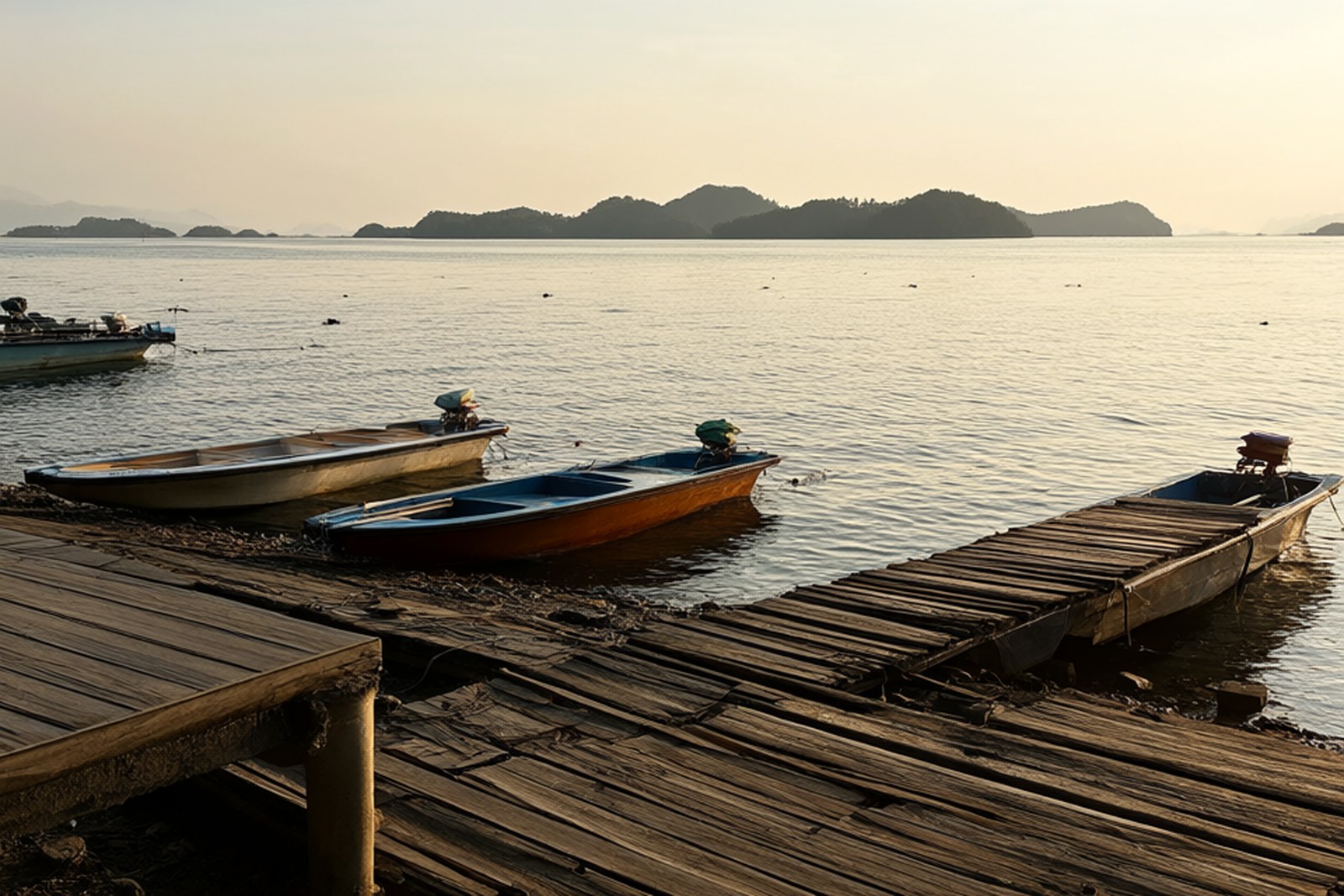
Where to stay: the lakeside hotels and bank-side cabins at 新港 on the western shore of 万绿湖, 东源县, 河源市. Book a room over the water on an upper floor, take a boat route in the morning and the lake’s fish at dinner, and use the shore as the base for 苏家围 and for the city.
flowcloud would say that a valley which was drowned on purpose to give a great city its drinking water, and which then kept the water so clean that a jellyfish with no tolerance for anything else chose to live in it, has produced a lake that is beautiful for the least sentimental of reasons.