
The upper 万泉河 Wàn quán hé is the part of 琼海市 Qiónghǎi shì that most visitors never see, and an eco lodge up here is a house among rubber and betel palm above the water, an hour upstream of the last bridge into town. The river is the third longest on the island, running about a hundred and sixty kilometres from the 五指山 Wǔ zhǐ shān country down to the sea at 博鳌, and above 嘉积 it is still a river in a valley rather than a river in a town: narrow, banked with forest and plantation, loud at night, and cold enough in the early morning that the mist sits on it until the sun is properly up. The road in climbs through 会山镇 Huì shān zhèn, the one Miao township in the county, and past the reservoir that the dam upstream has made of the river’s middle reach.
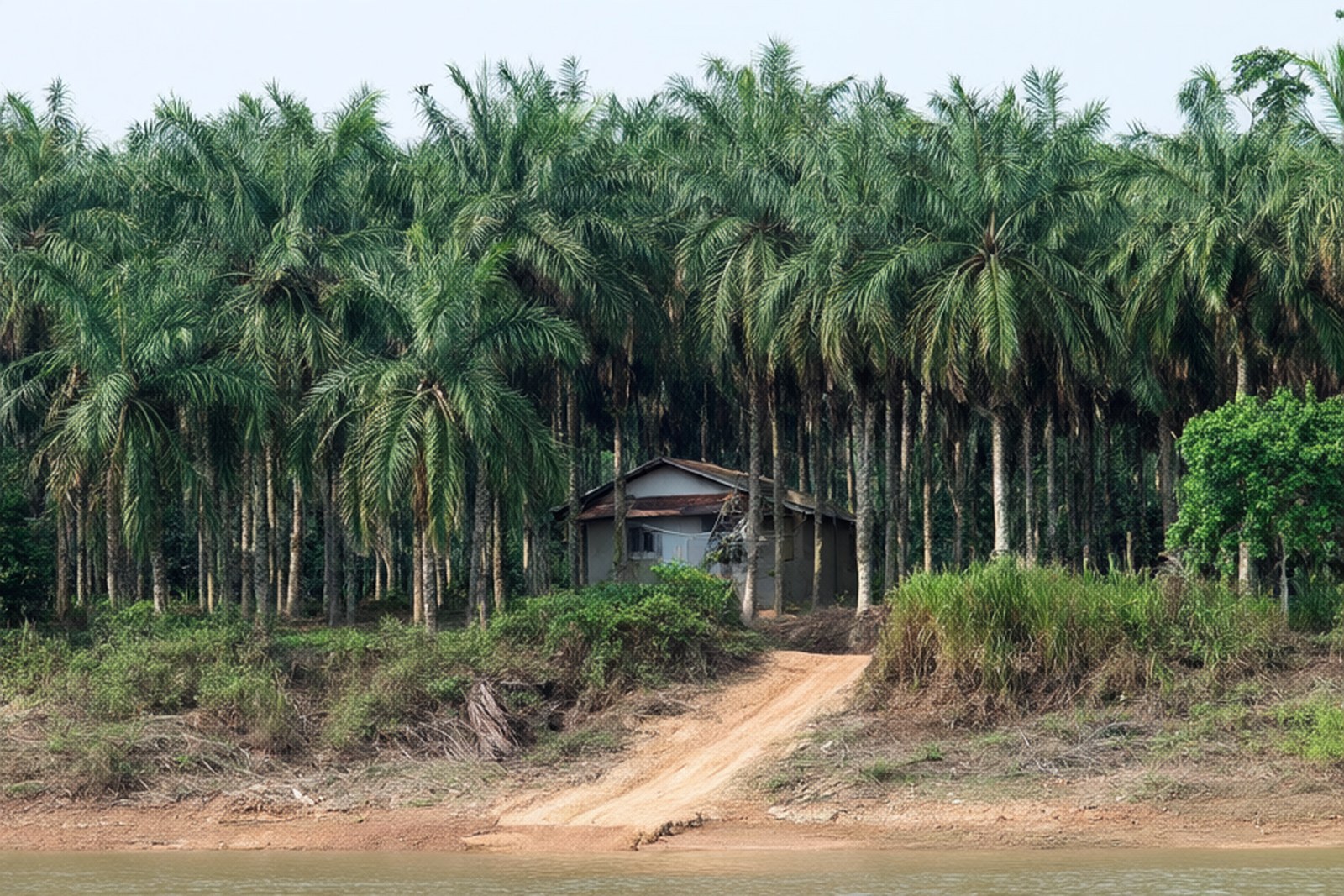
What grows here is what the county sells. The valley and the country behind 中原镇 Zhōng yuán zhèn are planted with 槟榔 bīng láng, betel palm, and 橡胶 xiàng jiāo, rubber, with 胡椒 hú jiāo, pepper, and coconut, and the numbers the county quotes for 中原 alone give the scale of it: eighteen thousand eight hundred mu of betel, fourteen thousand three hundred of rubber, seven thousand one hundred of pepper, twenty thousand of rice and eighteen thousand five hundred of vegetables. The lodge sits in the middle of that, which means the mornings are given to the plantation rather than to the visitor, the light under the palms is the light the county’s photographs are taken in, and the food is what comes off the nearest stall rather than off a menu – river fish, river prawns, mountain vegetables, chicken, and fruit straight off the tree.
The 万泉河 Wàn quán hé is also where the county puts its own history. 琼海 is where the 红色娘子军, the Red Detachment of Women, was raised in 1931, and the unit’s operations were fought out in these river valleys and along the roads between the villages; the memorial park for it is in the city, and the story is on the walls of every village hall between here and 嘉积. The river itself is used the way rivers on the island are used: drifting and rafting on the upper reaches where the water runs and falls, bathing and fishing on the lower ones, and irrigation everywhere. The reservoir behind the dam upstream has taken the name 万泉湖 Wàn quán hú and is a quiet stretch of open water with drowned hills standing in it, reached by the same road that serves the Miao township.
The days arrange themselves around the water rather than around a sight. Early morning is the mist and the bird noise and, if you go with a boatman, the fishing; the middle of the day is hot everywhere on the island and is best spent swimming or under a roof; the late afternoon is when the plantation is worth walking through and when the light comes sideways under the palms; and after dark the valley is completely quiet except for the river. It is a two-night place rather than a one-night one, because the first afternoon goes on arriving and the second is the one you came for, and it works best as the quiet end of a trip that has already been to 博鳌 and 潭门 and needs somewhere to stop.
What the Rooms Are Like
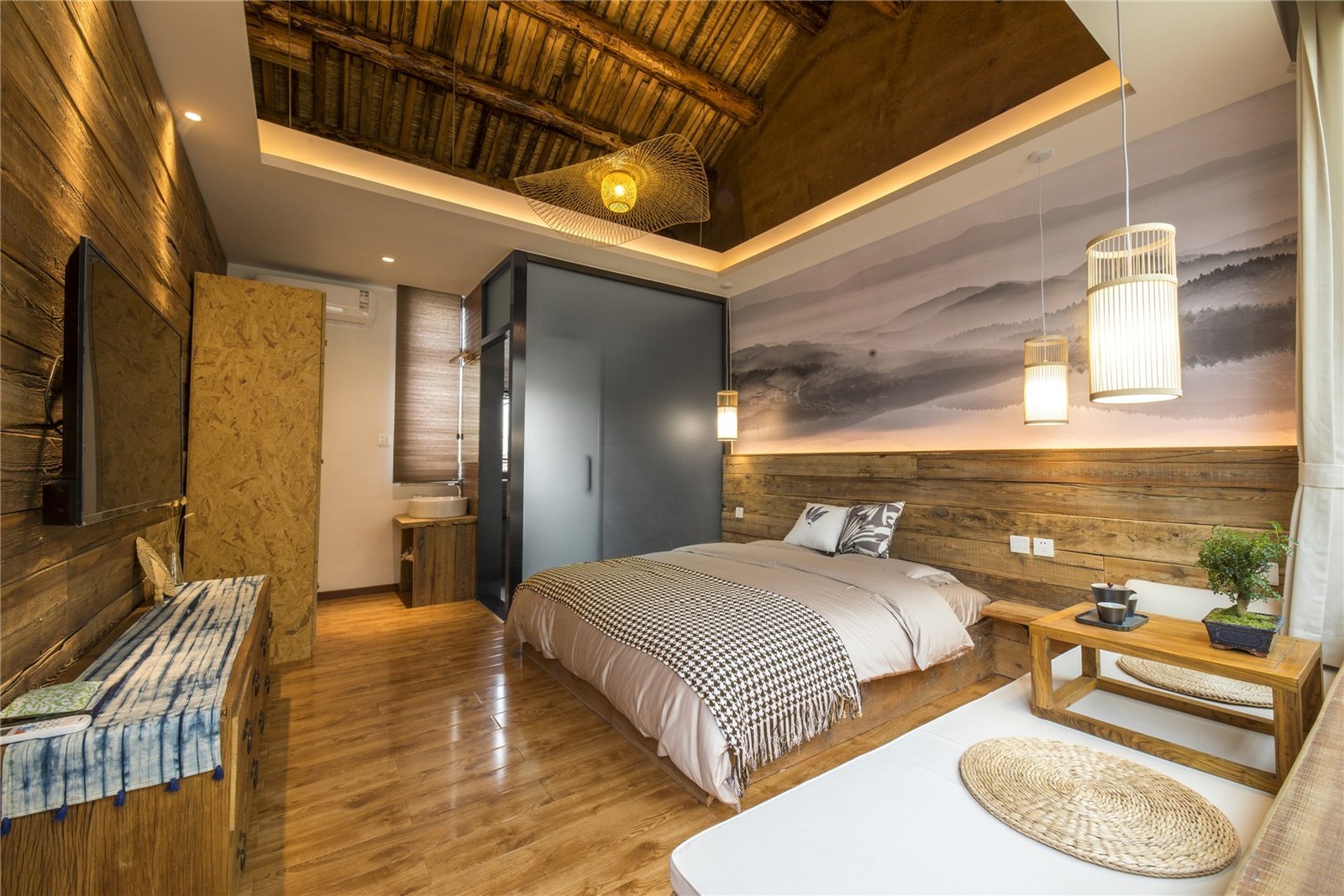
Expect a room in a low building among the trees, with a double bed, an air conditioner, a bathroom with a shower, and a balcony or a wide window facing the water or the plantation. The construction is timber and tile or rural brick and the standard is that of a good Chinese rural guesthouse: simple, clean and not luxurious, with the compensating advantage of sitting in something rather than in front of it. Ask for a room with a river-facing window and an upper floor, check the hot water and the air conditioning, and take insect repellent and a torch, because the valley nights are wet and the paths are unlit.
Practicalities
Price. A double room at a valley lodge runs ¥150 to ¥380 a night, and river-facing rooms upstairs are at the top of that. Meals by arrangement are ¥50 to ¥100 a person, and the rafting and drifting on the upper river is charged separately, at roughly ¥150 to ¥250 a head for a half day.
Address. The lodge is on the upper 万泉河 Wàn quán hé in 琼海市, Hainan, reached by the road through 会山镇 Huì shān zhèn, about an hour upstream of 嘉积镇 Jiā jī zhèn and within reach of the reservoir on the river’s middle reach.
Rooms. Ask for a river-facing room on an upper floor with a balcony, confirm the hot water and the air conditioning, and ask whether the house cooks for guests and whether it can arrange a boat or a raft, since both are local arrangements and neither is available at short notice. Ask for directions in Chinese to send to a driver, because the last stretch of road is unsignposted, and take a torch and repellent.
Getting there. There is no station in the valley; 琼海站 Qiónghǎi zhàn on the 东环 high-speed line is about an hour away by road, and 琼海博鳌机场 Qiónghǎi Bó’áo jī chǎng about ninety minutes. By car 嘉积 is an hour downstream, 中原镇 about forty minutes, and 万宁 Wàn níng across the hills. A car or a hired driver is essential for everything here, and the road in is single-carriageway once it leaves the plantation belt.
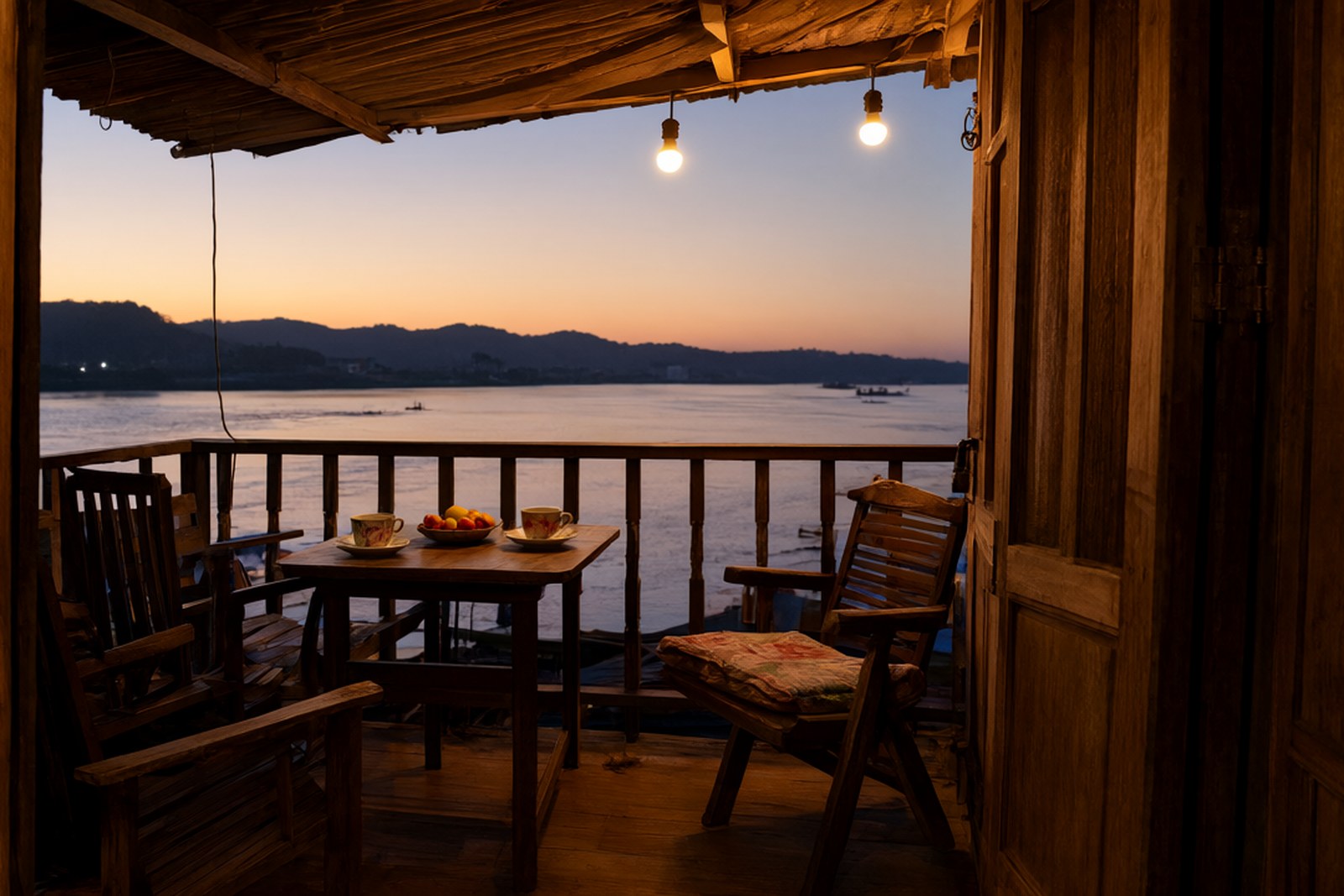
Where to stay: the lodges on the upper 万泉河 in 琼海市, reached through 会山镇 and an hour upstream of 嘉积镇. Take a river-facing room on an upper floor, go out on the water in the morning and again in the late afternoon, and let the house feed you from the plantation.
flowcloud would say that a valley which grows betel and rubber and pepper on every slope, and which offers a visitor nothing but a river, a balcony and a very long silence, is selling the one crop the rest of the island has already used up.