
临高县 Lín gāo xiàn is one of the counties that 海南省 Hǎi nán shěng runs directly rather than through a prefecture-level city, and its seat is 临城镇 Lín chéng zhèn, a county town of the ordinary sort that happens to sit astride a river. The county occupies 1,317 square kilometres at the north-western corner of 海南岛 Hǎi nán dǎo, roughly 34 kilometres east to west and 47 north to south, with 澄迈县 Chéng mài xiàn to the east, 儋州市 Dān zhōu shì to the south-west, 琼州海峡 Qióng zhōu hǎi xiá to the north and 北部湾 Běi bù wān to the north-west. The river that organises the town is the 文澜江 Wén lán jiāng, which runs the length of the county north to south for 86.5 kilometres with an average flow of about 14.5 cubic metres a second and comes out at last at the coast near 临高角 Lín gāo jiǎo. The county’s own coastline runs about 116.84 kilometres and carries seven working fishing ports, among them 新盈 Xīn yíng, 武莲 Wǔ lián, 调楼 Diào lóu, 美夏 Měi xià, 头咀 Tóu zuǐ, 黄龙 Huáng lóng and 抱才 Bào cái, which is worth knowing from a town hotel because the fish on the table came off one of them this morning. The town itself is a set of named streets rather than a grid: 文明东路 Wén míng dōng lù, 解放路 Jiě fàng lù, 二环路 Èr huán lù, 江北路 Jiāng běi lù, 临美路 Lín měi lù, 前进路 Qián jìn lù and 中镇街 Zhōng zhèn jiē do the work, and the two banks of the river do the rest. For a visitor who has come from 海口 Hǎi kǒu in an afternoon, the useful shape of the place is a simple one: the water runs through the middle, the town’s business is on both sides of it, and the walk along it after dinner is the thing the county is proudest of.
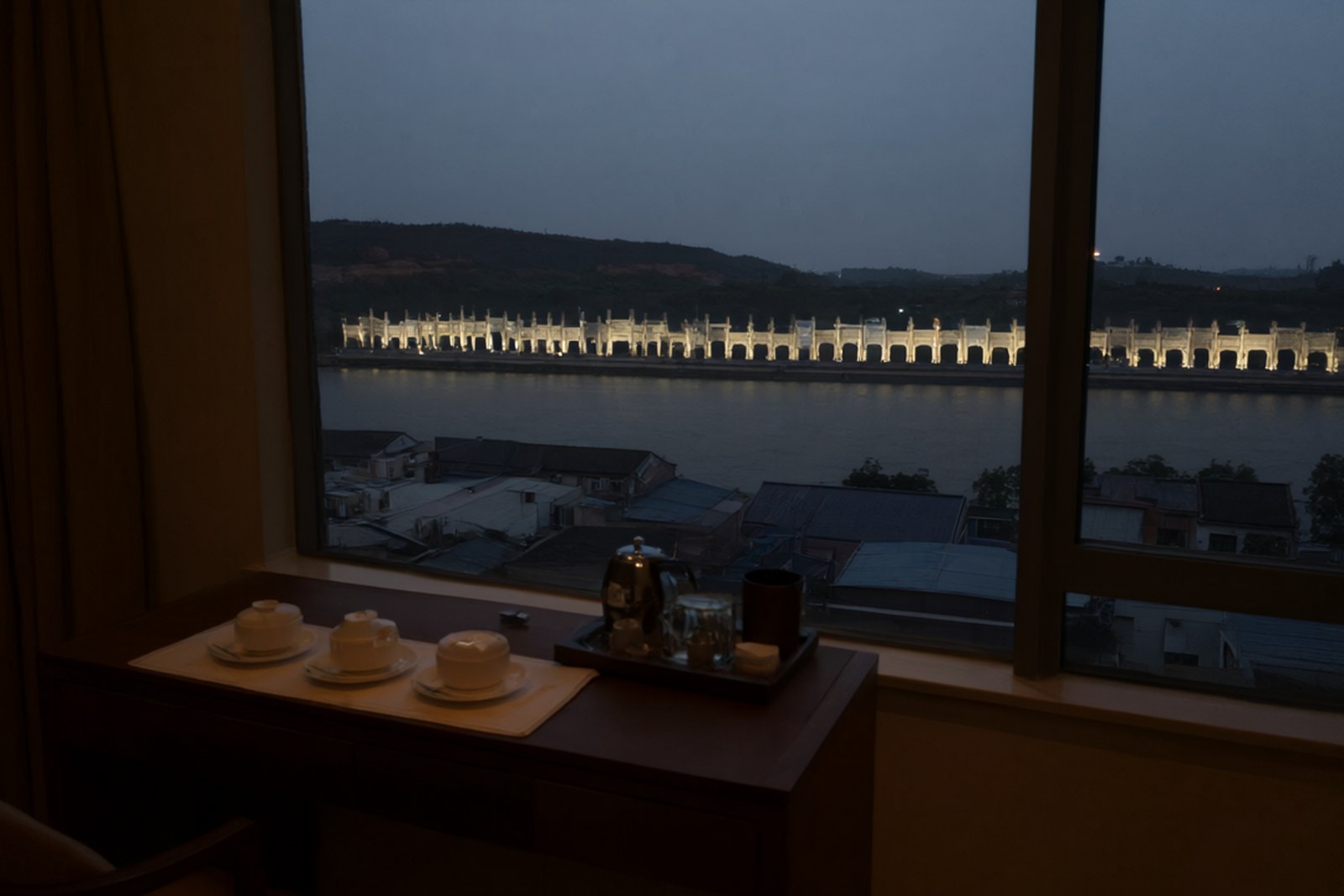
The reason a county town in the west of the island bothers with a river walk is the 文澜文化公园 Wén lán wén huà gōng yuán, the Wenlan cultural park, and it is bigger than its role suggests. The park covers 193.33 hectares on the bank, running from 文澜大道 Wén lán dà dào in the south to 金澜大道 Jīn lán dà dào in the north and out to the east bank of the river, and its signature is a line of eighty-seven memorial archways, 牌坊 pái fāng, carrying carved couplets drawn from the Chinese classical canon. The provincial gazetteer gives the line as about two kilometres; a travel account gives about 1.7; the count of eighty-seven is the same in both, and either version means the same thing on the ground, which is that the archways are a walk rather than a monument and that they are lit at night. Inside the same park there are seventy-five columns for world history and seventy-five for Chinese history, a recreated 临高古城 Lín gāo gǔ chéng, the old-town exhibit, and a planning hall for the county, which together make the park the largest cultural and ecological park in 海南 Hǎi nán. The archways are the part a hotel guest will actually use. They run between the town and the river in a way that lets a visitor walk out of a lobby, along the water, and back through two kilometres of cut stone without ever crossing a main road, and the county’s own material notes that the small town’s evenings became brighter once they were lit, which is a small claim and an accurate one. The park also holds the 文澜塔 Wén lán tǎ and, down at the water, the 滨江公园 Bīn jiāng gōng yuán waterfront with its stepped access to the river, which is where the town’s own evening walk actually happens; the archways are the ceremony and the embankment is the habit.
The newest reason to be here after dark is younger than the park by a decade. On 13 February 2026 the county opened 夜游文澜江 yè yóu Wén lán jiāng, a night cruise on the river, with bamboo-raft dragon boats, sightseeing boats and a performance boat, a combined single-trip capacity of 142 passengers, and a family boating area on the 滨江公园 Bīn jiāng gōng yuán waterfront with twenty-eight pedal and electric boats. The performance on the water uses the county’s own intangible heritage – 人偶戏 rén ǒu xì, the puppet opera the county is known for, and 哩哩美 lī lī měi, the fishermen’s song – along with mist and laser effects and the iron-flower firework tradition 打铁花 dǎ tiě huā on the bank, and a 滨江夜市 Bīn jiāng yè shì, a riverside night market, opened alongside it. In the first weeks the county reported 1,106 passengers on the raft boats and 1,327 on the small family boats, numbers small enough to be honest and large enough to show the thing runs. A guest sleeping on the river can walk to the pier, which is the whole of the argument for the address: the one piece of evening entertainment in the county that a visitor would otherwise have to drive to is, on this bank, a five-minute stroll. The 滨江夜市 Bīn jiāng yè shì beside it sells the county’s own street food, and the town’s eating is worth a paragraph of its own because it is the other reason to sleep here rather than on the coast. 临高 has a roast suckling pig street at 新南桥街 Xīn nán qiáo jiē, where the county’s signature 烤乳猪 kǎo rǔ zhū goes at about 98 yuan a jin and is eaten in the morning alongside rice wine, which is a breakfast no other county in 海南 Hǎi nán serves; there is a snail night market on 中镇街 Zhōng zhèn jiē where a plate of 嗦螺 suō luó and a bowl of congee comes to about fifty yuan; there is a pigeon rice congee near the 解放路 Jiě fàng lù junction at around twelve yuan; and there is 临高粉 Lín gāo fěn, the county’s own rice noodle, at about eight yuan a bowl, which is cheaper than a hotel breakfast and better than most of them. A further row of open-fronted kitchens runs along 党校街 Dǎng xiào jiē.
What the town offers a bed is a complete price ladder inside one small area, which is unusual for a county seat in this part of the island and is the reason a visitor can choose rather than settle. At the bottom are the local guesthouses and small hotels, the sort of building that has been taking guests since before booking platforms existed, with an inside room for about 90 to 120 yuan. Above them are the national chains and the better local business hotels, which is where most visitors land, at roughly 120 to 230 yuan for a room with a lift, a card key, a kettle and a shower that works. Above that is the small group of newer brand hotels on the river and around the commercial blocks, at roughly 250 to 350 yuan, which is the top of the market inside the town. There is one five-star-grade property in the whole county and it is not here: it stands at 龙波湾 Lóng bō wān in 博厚镇 Bó hòu zhèn, well outside the county town, which is a genuinely useful fact rather than a curiosity. It means that a visitor who wants a beach resort and a visitor who wants a town bed are booking in two different places about twenty kilometres apart, and that the town’s own ceiling is a good business hotel rather than a resort. The chain names a reader can look up include the local branches of 如家 Rú jiā, 格林豪泰 Gé lín háo tài, 全季 Quán jì and 锦江之星 Jǐn jiāng zhī xīng, along with a set of county hotels whose names mean nothing outside 海南 Hǎi nán; the listings run from about 88 yuan at the bottom to about 224 at the top of the local tier, and the newest of the brand buildings on 江北路 Jiāng běi lù is a sixteen-storey tower with 120 smart rooms, ninety-eight parking spaces and two meeting rooms, which tells a visitor what kind of guest the town is built for. Two seasonal facts belong with those prices. The first is the damp: 回南天 huí nán tiān, the returning-south spell that arrives just before 春节 Chūn jié, turns every hard surface in a cold building wet for a few days, and a published travel account of arriving in this county describes exactly that, a guesthouse floor beaded with water and bedding damp to the touch. The second is the calendar, which peaks in the dry winter from November to April and thins from May to October, and because the county’s annual average is about 24 degrees the low season here is a rain season rather than a cold one, which means a cheap summer room and a wet afternoon rather than a cheap winter room and a cold one.
What the Rooms Are Like
A room in 临城镇 is a standard Chinese business hotel room and there is very little mystery to it. The essentials are a bed or two, split-unit air conditioning that doubles as the heater in January, a kettle, a television, a desk, a tiled or laminate floor, a shower over a tray or behind glass, and a window; the differences between the grades are the size of the room, the age of the building, whether the window faces the river or a wall, and whether the hotel has a lift, a breakfast room and a car park. Two local details are worth more than the fittings. The first is that this is a wet county in a wet season. A visitor arriving in the days before 春节 Chūn jié can meet 回南天 huí nán tiān, the returning-south damp, when warm moist air meets a cold building and every hard surface sweats; one published travel account describes arriving to find the guesthouse floor beaded with water and the bedding damp to the touch. It runs for a few days, it is not the hotel’s fault, and the remedy is an upper floor, air conditioning left running on dry, and a room with a window that actually opens. The second is the question of what the window looks at. A river-facing room in one of the 江北路 Jiāng běi lù towers looks across the water at the archway line and the commercial blocks opposite, which is the view worth paying a little more for; a room on the other side of the corridor looks at a street of shopfronts, which is cheaper and honest about it. Ask for the floor as well as the side, since the town is low enough that a third-floor room on the river may look over the embankment trees into nothing but leaves. One last local detail is worth having before you choose. The river holds fish, and the embankment below the river-side hotels fills with anglers most evenings, in ones and pairs, with lines out and buckets beside them; it is the cheapest entertainment in the county, it is the reason the 文澜江 Wén lán jiāng bank is the pleasant side of town rather than simply the scenic one, and it is the sight a guest will remember from a window rather than the archways.
Practicalities
Price. A double in 临城镇 Lín chéng zhèn runs about 90 yuan to about 350 yuan a night, and the ladder is unusually clear: the county’s older guesthouses from roughly 88 to 120; the chain and business tier from roughly 120 to 230, which is the widest band and where most of the stock sits; and the newer river-side brand buildings at roughly 250 to 350. The county’s one five-star-grade property is not in the town at all but at 龙波湾 Lóng bō wān in 博厚镇, where platform snapshots in 2026 put its entry rate at roughly 340 to 380 yuan with much higher categories above it. The 春节 Chūn jié week and the first week of October are the two times the town fills, and the wet season from May to October is the cheap one. Treat every figure as a range and check the live rate.
Address. The hotels are in 临城镇 Lín chéng zhèn in 临高县 Lín gāo xiàn, along and beside the 文澜江 Wén lán jiāng on 江北路 Jiāng běi lù and the 文明东路 Wén míng dōng lù and 二环路 Èr huán lù corridors, with the 文澜文化公园 Wén lán wén huà gōng yuán and its archways on the river banks between 文澜大道 Wén lán dà dào and 金澜大道 Jīn lán dà dào, the 临高文庙 Lín gāo wén miào on 江北路 Jiāng běi lù by the water, and 临高南站 Lín gāo nán zhàn the rail arrival a short drive out of town.
Rooms. Ask whether the window faces the river, and ask which floor, because on a low building the difference between a river room and a street room is a hundred yuan and a whole evening. Ask whether the air conditioning is reversible if you are here between December and March, since the damp and the nights are colder than the latitude suggests and a cooling-only unit is a cold room. Ask for an upper floor in the weeks around 春节 Chūn jié for the same reason. Ask whether the rate includes breakfast and, if it does, whether it is worth staying for when there is a bowl of 临高粉 Lín gāo fěn for a few yuan within a few streets. And ask the desk for the walking distances to the archways, the river pier and the market rather than for a taxi number, because the town is a river town and the whole of it is walkable.
Getting there. 临高南站 Lín gāo nán zhàn, on the 海南西环高铁 Hǎi nán xī huán gāo tiě, is the rail arrival: a second-class seat to 海口东 Hǎi kǒu dōng costs about 29 yuan and takes 36 to 46 minutes, to 海口站 it can be as little as 22 to 28 minutes, and to 美兰机场站 Měi lán jī chǎng zhàn about 35 yuan in under an hour, which makes the county town an easy stop on the island ring. By road, 海口 is roughly 87 kilometres away, or about an hour and a half on the western expressway, and the drive to 儋州 Dān zhōu on the other side is about forty minutes. Inside the town the distances are all pedestrian and the county’s streets are flat, which is the practical reason to choose a river-side address over a cheaper room on the ring road.
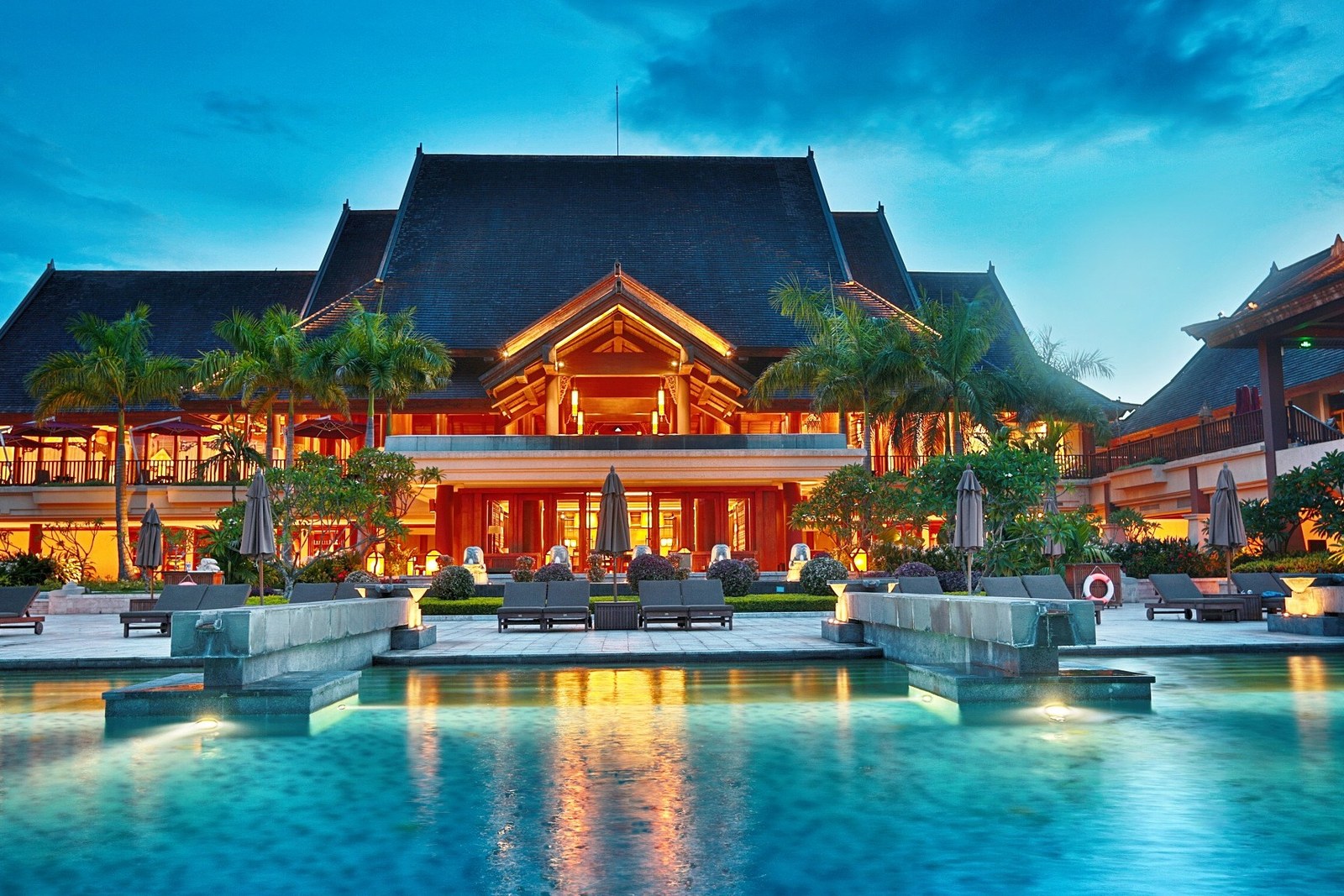
Where to stay: a river-facing room on an upper floor of a hotel on 江北路 Jiāng běi lù in 临城镇 Lín chéng zhèn, the seat of 临高县 Lín gāo xiàn, where the 文澜文化公园 Wén lán wén huà gōng yuán and its archways, the 临高文庙 Lín gāo wén miào and the dinner trade of the town are all on foot. Take the window that looks at water rather than at a wall, walk the archway line before the light goes, and keep the evening for the river cruise and the night market instead of driving out to the coast for it.
flowcloud would say that a county town which plants eighty-seven stone archways along a river and then lights a floating stage beneath them has understood something the resort coast has not, which is that the way to hold a visitor overnight is to give them somewhere to walk – and that the right room in a place like this is the one with the water in the window, because the whole town is already outside the door.