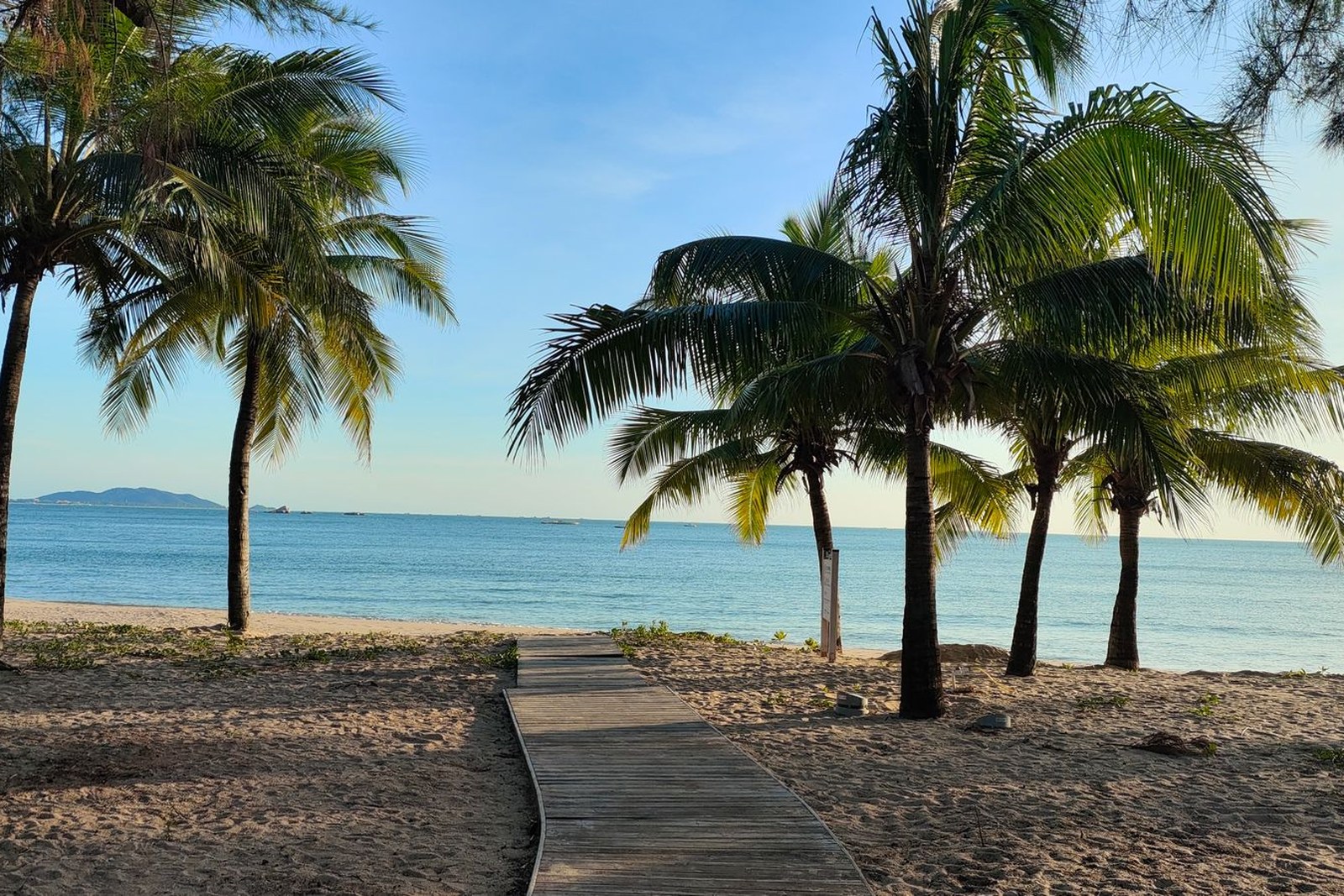
West Island Homestay
There is a village on an island just off the coast of Sanya where the houses are built of coral stone, the streets are too narrow for cars, and the sea is so clear you can watch the fish from the lane. It is not a resort. It is a working fishing village, and you can stay in it.
This is 西岛 (Xī Dǎo, West Island), also called 玳瑁岛 (Dàimào Dǎo, Hawksbill Island), and it is the closest thing Hainan still has to a live fishing community you are welcome to sleep in. Where 蜈支洲岛 is a polished marine-park island, West Island is the real thing: a small, inhabited, 400-year-old village where the 疍家 (Dànjiā, the boat-dwelling fishing people) have lived for generations, and where the quiet of an inhabited island is the whole appeal.
A Working Village on an Island
West Island sits about a twenty-minute ferry ride from the Sanya mainland, and it is small — you can walk across the inhabited part of it in not much time. The village is old, with roots going back roughly four centuries, and it is home to the 疍家 people, the fishing folk who once lived on their boats along this coast and who have now settled ashore but kept their closeness to the sea.
The island’s name, 玳瑁, comes from the hawksbill turtles that once came here, and you may still see the islanders’ connection to the sea in the fishing nets, the small docks and the daily catch coming in.
What makes a stay here different from anywhere else in Sanya is that you are staying in a real village. The streets are lined with old coral-stone walls and houses, the lanes are too narrow for cars, and life here runs on the tides and the catch rather than on a resort schedule. There is a gentleness and a slowness to it that the big resort bays cannot give you.
The Coral Stone and the Clear Water
Two things define the island experience, and both are worth coming for.
The first is the village itself and its 珊瑚石屋 (shānhú shí wū, coral-stone houses). The island’s old walls and buildings were built from coral stone — blocks of ancient coral — and they give the lanes a pale, porous, weathered texture you will not see elsewhere. It is one of the few places on the island where this building tradition is still visible in everyday use.
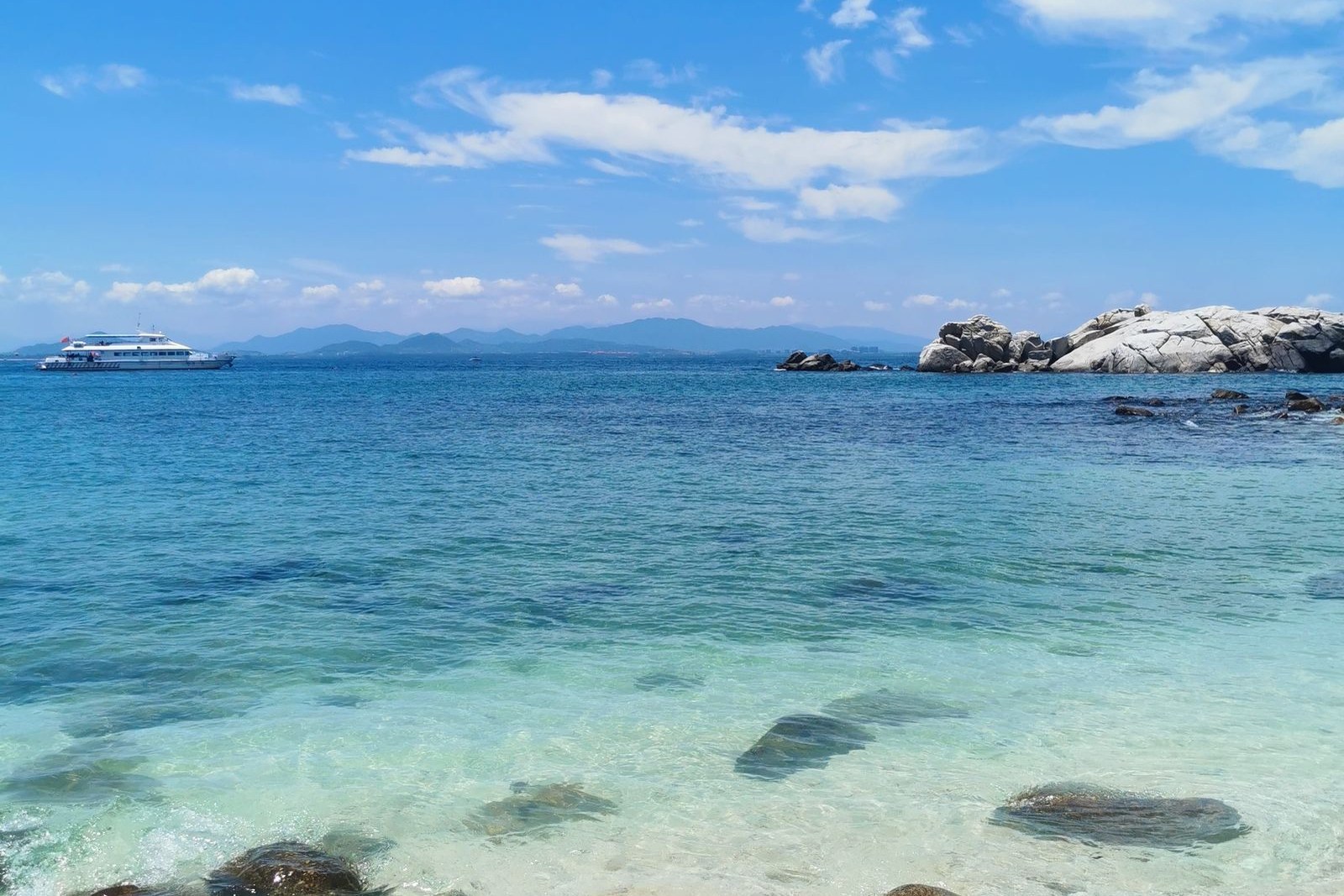
The second is the water. West Island has a lovely clear-water beach — the 海滨浴场 (hǎibīn yùchǎng), the Sea Bathing Beach — with shallow, glassy water and a soft-sand shore, and it is far less crowded than the famous beaches because far fewer people make the trip. The island is also a decent spot for snorkelling and for simple water activities, and the way the reef shows through the clear shallows is exactly what you came to the tropics for.
The Staying
The accommodation on West Island is a homestay scene rather than a hotel scene. There are a number of small guesthouses and village rooms run by the islanders, and staying in one is the difference between visiting West Island and being on it.
The rooms are not luxury. They are clean, simple, and honest — the sort of place where the point is the setting and the slow pace, not the thread count. In exchange you get a genuinely different holiday: you wake up in a fishing village, you can walk to the clear-water beach in a few minutes, and at night the island goes quiet in a way that no resort on the mainland does.
It is worth being honest that the homestays here are simple, and you should not expect a spa or a pool. What you get is an authentic place to sleep on a real, inhabited island, and a chance to experience the 疍家 fishing life from the inside.
The Practical Bits
Getting to West Island is easy and it is one of the reasons it works as a base: the ferry leaves from 肖旗港 (Xiāoqí Gǎng) on the mainland, and the crossing is around twenty minutes. You can day-trip it, but the whole point of staying is to have the island to yourself after the last ferry leaves.
There is a small village with places to eat — mostly simple seafood and home cooking — and there is the clear-water beach. The island also has the 疍家 culture to explore: you can watch the islanders at work, and in some places try local crafts and the fishing life.
A note for travellers who need certain comforts: West Island is deliberately undeveloped compared with the rest of Sanya. There is no big nightlife, no fancy shopping, and the eating is unpretentious. It is for people who want the slow, real Hainan — and it is a better choice for that than almost anywhere else.
What the Locals Know
- Stay the night, not the afternoon. The island empties out when the last ferry goes, and the evening belongs to the village and the guests.
- The coral-stone lanes are the walking highlight. Take the time to wander the narrow streets and look at the houses.
- The clear-water beach is the swimming spot. It is far quieter than the famous mainland beaches.
- Eat the island’s seafood. The village cooking is simple and fresh.
- The homestays are simple. Come for the setting and the slowness, not for luxury.
flowcloud would say that a coral-stone fishing village you can sleep in is worth more than another resort tower — and that the rarest thing on an island this developed is a place that is still a village.
Where to stay: 西岛 (West Island / 玳瑁岛), 天涯区, Sanya — a 400-year-old 疍家 (Danjia) fishing village on an island about 20 minutes by ferry from 肖旗港 on the mainland. Homestay and small guesthouse rooms run by the islanders; simple, clean and honest rather than luxurious. Coral-stone houses, narrow car-free lanes, a quiet clear-water beach (海滨浴场) and the chance to experience the island’s fishing life. Best as an overnight stay to enjoy the island after the last ferry leaves. Eat the simple seafood, wander the coral-stone streets, and expect a slow, undeveloped, real Hainan — not a resort.