
A Minsu on the Bay at Wuchuan’s Jizhao
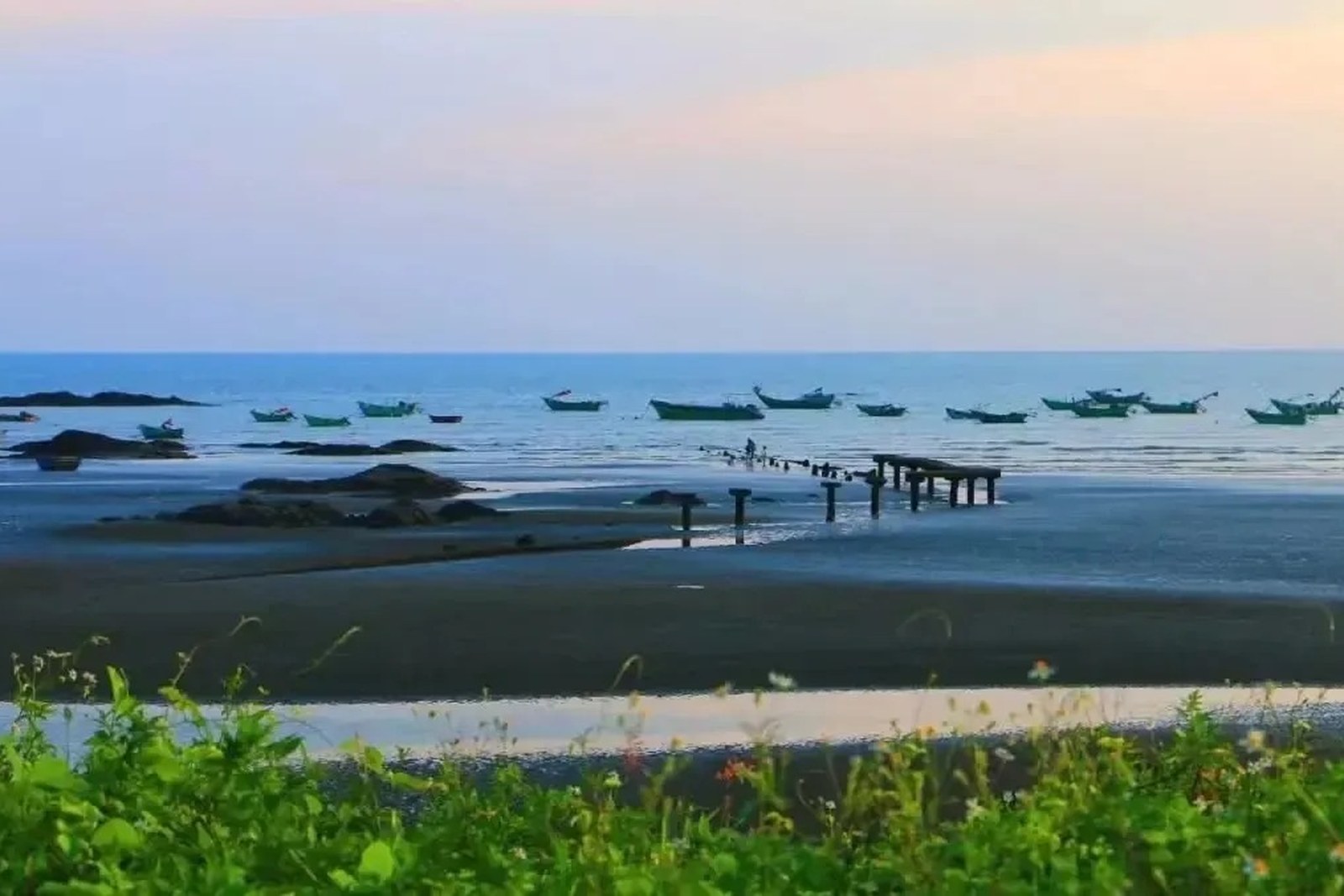
吉兆湾 Jí zhào wān is the coast of 吴川市 Wúchuān shì, and the local description of it is 石多湾多 shí duō wān duō, many rocks and many bays, which is exactly right: the shore is not one beach but a series of small ones separated by headlands and stacks of weathered granite, and a family minsu on it is a house a few dozen metres from the sand, usually two or three storeys, with a yard, a barbecue, and a boat or two belonging to somebody in the family.
吴川 is an old county of the 鉴江 Jiàn jiāng delta and it has quietly produced more than its share of the province’s culture. It is the 状元 zhuàng yuan county of the far west of Guangdong: 林召棠 Lín Zhàotáng, the only first-place graduate the region ever had, came from 吴阳镇 Wú yáng zhèn, which is now a 中国历史文化名镇 with the 双峰塔 standing over it and a long spit of sand running out to sea. The county is also where 飘色 piāo sè comes from, the float acrobatics in which children are carried in the air on hidden steel frames during the spring festival parades, entered on the national intangible heritage list in 2008, and where 泥塑 ní sù, clay figures, and 花桥 huā qiáo, the flower bridge, come from too; the three together are 吴川三绝, the three marvels of Wuchuan.
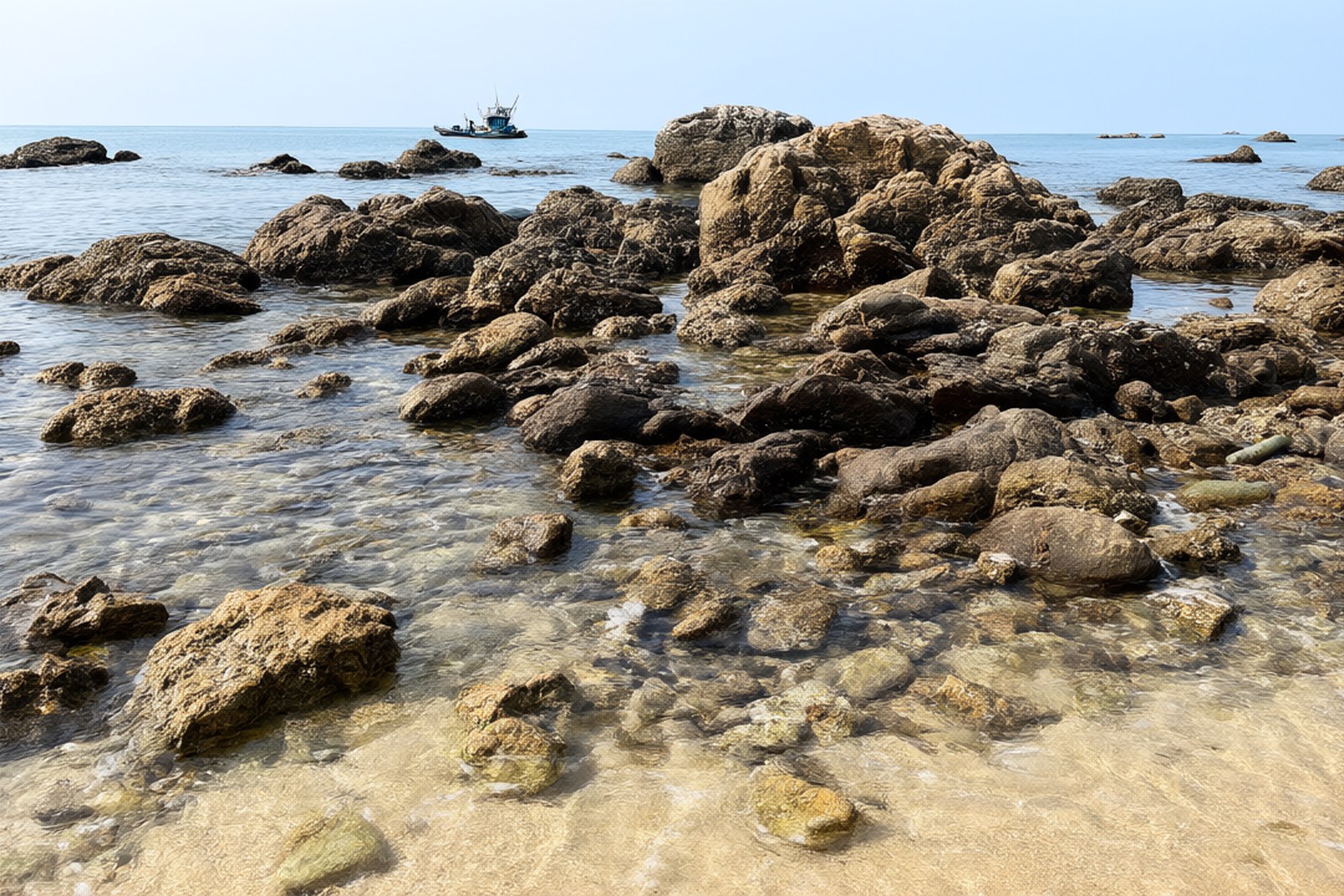
The coast at 吉兆湾 runs south-west from 吴阳 and is a provincial tourist resort with a low-key feel. The sand is coarse and shell-flecked, the water is the 南海 Nán hǎi, and the rocks in and out of the sea mean there is no real surf and no current worth worrying about, which is why families use it; the bays between the headlands are shallow and the fishing boats work out of them. Further east along the same shore 鼎龙湾 Dǐng lóng wān has sixteen kilometres of coast and the large resort development that 吴川 now advertises on the roads in. Inland the 鉴江 runs down through the 梅菉 Méilù old town, and the county is flat and green and given over to rice, vegetables and the 北运菜, the winter crops that leave for the northern cities by truck.
The food of the coast here is the ordinary 湛江 seafood plus the county’s own noodle. 烂镬炒粉 làn huò chǎo fěn, the fried rice noodle of a wok with its rim beaten flat, is written up elsewhere on this site and is what 梅菉 is known for after dark; at the bay the eating is 生蚝, 花蟹, 沙虫 and prawns grilled or steamed at a table in the yard, with a 沙姜 dip and a cold beer, and the family will cook whatever came in that morning if you ask at breakfast. 吴川 also makes 田艾籺 tián ài hē, the mugwort dumpling of cassava flour with peanut and sugar inside, and 吴川月饼, which is a serious local industry and better than most of what the province sells.
What the Rooms Are Like
Expect a room in a family house of two or three storeys with a double bed or two singles, an air conditioner, a bathroom with a shower and a balcony facing the water or the yard. The standard varies house by house, so ask for photographs and confirm that the room has an en-suite and hot water; in the better ones there is a shared kitchen and a barbecue in the yard, and in the simplest there is a fan and not much else. Ask for an upper floor and a sea-facing balcony, take insect repellent, and expect the family to be around and to be helpful.
Practicalities
Price. A double room in a 吉兆湾 minsu runs ¥130 to ¥350 a night, and sea-facing rooms with a balcony sit at the top of that. Meals by arrangement are ¥40 to ¥100 a person, and a plate of crab or prawns at the yard table is priced by weight, with 花蟹 at ¥60 to ¥120 a 斤 in season.
Address. The minsu is on the 吉兆湾 Jí zhào wān coast of 吴川市, 湛江市, Guangdong, south-west of 梅菉 and within an hour of 吴阳镇, the old 状元 town.
Rooms. Ask for an upper-floor room with a balcony on the water side, confirm the en-suite and the hot water, and ask whether the family cooks and whether there is a barbecue. Ask which part of the bay is safe for swimming at the state of the tide, because the rocks that make the place worth looking at also make the water uneven, and take a written Chinese address for the drive in.
Getting there. 吴川站 Wúchuān zhàn on the 深湛 high-speed line is at the north of the county, about forty minutes from the bay by road, and 湛江吴川机场 Zhànjiāng Wúchuān jī chǎng, the airport, is in the county about half an hour away. By road 湛江市 is an hour south-west, 茂名 about an hour north-east, and 梅菉 half an hour inland; a car or a taxi is needed for everything except the beach.
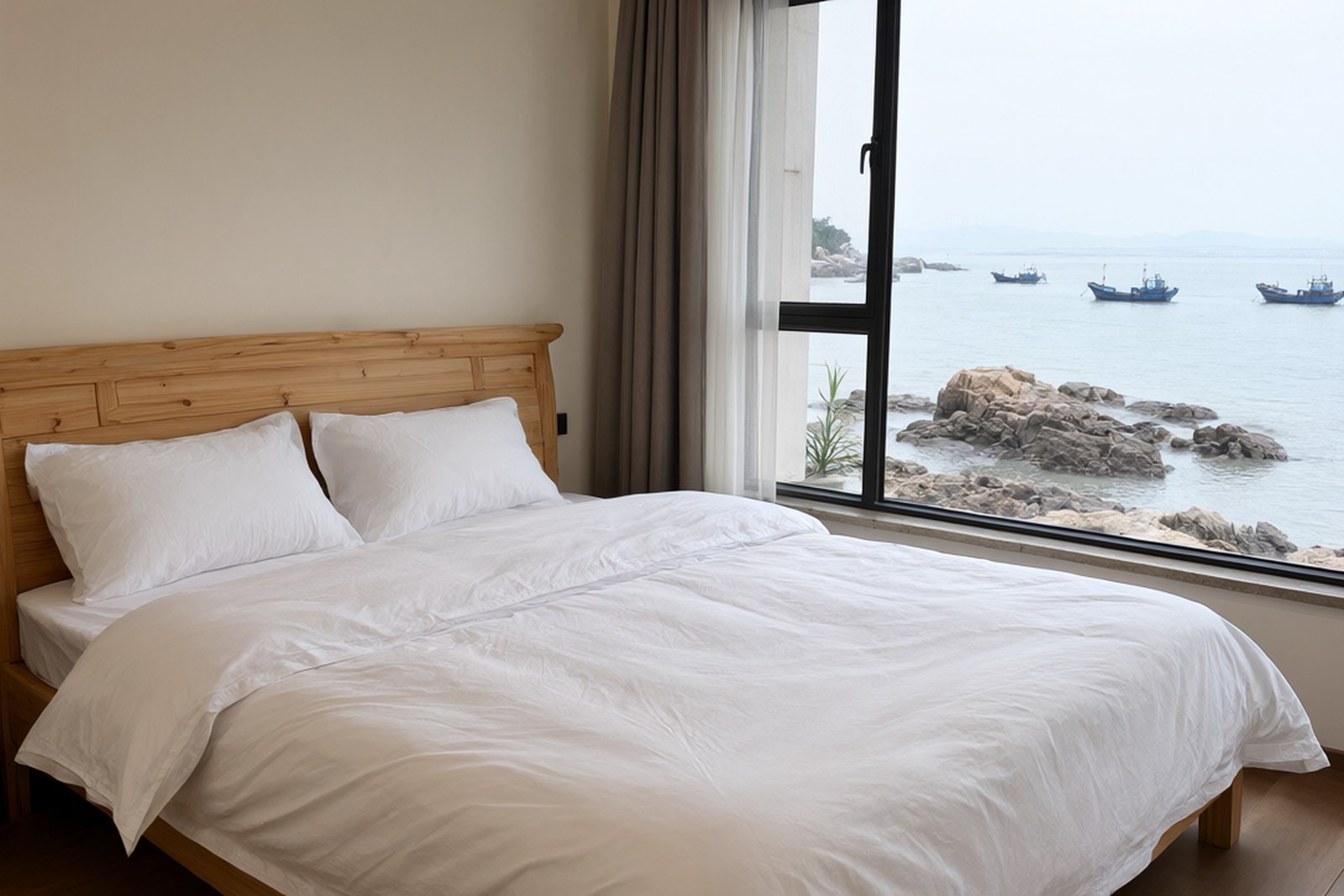
Where to stay: the family minsu of the 吉兆湾 coast of 吴川市, a few dozen metres from the sand and within an hour of 梅菉 and the 吴阳 old town. Take an upper floor with a balcony on the water, have the family cook what the boats brought in, and go into town for the 烂镬炒粉 on the night you do not want fish.
flowcloud would say that a county which produced the province’s great examination success, three forms of street spectacle and a noodle fried in a broken wok, and which now keeps its coast as a string of small rocky bays rather than one long beach, has understood that the useful thing about a shore is the way it breaks up.