
Qixi Village, Six Homesteads in the Hills of the City’s Lung
五桂山街道 Wǔguìshān Jiēdào is the forested middle of 中山市 Zhōngshān Shì – the range locals call the city’s lung, in a prefecture city with no counties or districts, so the subdistrict and its villages are the whole address – and in 桂南村 Guìnán Cūn lies the hamlet of 旗溪村 Qíxī Cūn, a Hakka valley village that now keeps six guesthouses. One of them, 原野之上 Yuányě zhī Shàng, became in 2025 the first guesthouse in Zhongshan to reach the national C-grade – 丙级 bǐngjí, the graded rung of the national tourist-guesthouse ladder – which makes this the village where the city’s eco-stay idea was first certified.
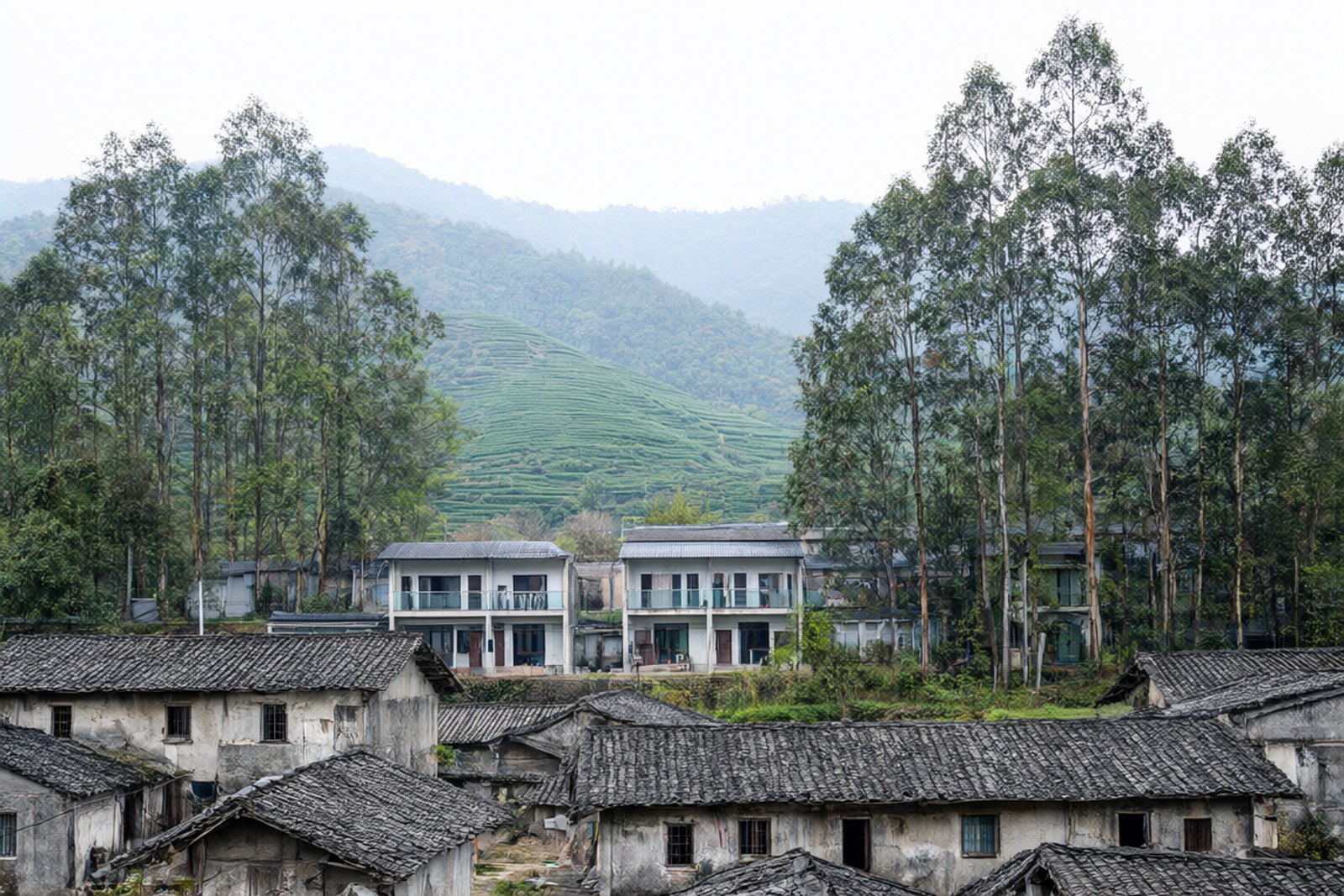
The certified house has a maker’s story. 刘昆 Liú Kūn came to 旗溪 in 2020, spent half a year settling, then fourteen months turning abandoned farm buildings into 原野之上 · 原野之居 Yuányě zhī Shàng – guesthouse, cafe and camp-ground in one – at 桂南旗溪村 105 号 Guìnán Qíxī Cūn 105 Hào; it has since taken some 150,000 visitors and more than a hundred cultural events, and in 2025 the national C-grade listing made it the first in the city. The newest house is 愈见宿集 Yùjiàn Sùjí at 旗溪村 49 号 Qíxī Cūn 49 Hào: 刘苍鸿 Liú Cānghóng, from the sleep-management trade, and 关媛艺 Guān Yuǎnyì took the houses over on 1 October 2025, soft-opened in early November and took on a neighbouring house’s operating rights to grow; in spring 2026 the village’s food appeared on CCTV’s 寻味山海 Xúnwèi Shānhǎi Zhongshan episode.
The policy wind is at the village’s back. The city’s implementation opinion on service-industry development, issued in March 2026, names a 环五桂山绿色文旅发展带, a green culture-tourism belt around Wugui Mountain – nature education, ecological hiking, mountain biking, camping, homestay clusters and Hakka culture as the product list. The village already runs that ecology: the 旗溪生态农场 Qíxī Shēngtài Nóngchǎng, a digital-nomad base, a “Qixi venture valley” project and young “new villagers” from several countries, as the March 2026 feature in 南方+ records. The camphor park at 桂南 and the 田心公园 Tiánxīn Gōngyuán are the walks, and the hot-spring estate at 三乡镇 Sānxiāng Zhèn is the pairing along the old 岐澳古道 Qí’ào Gǔdào corridor.
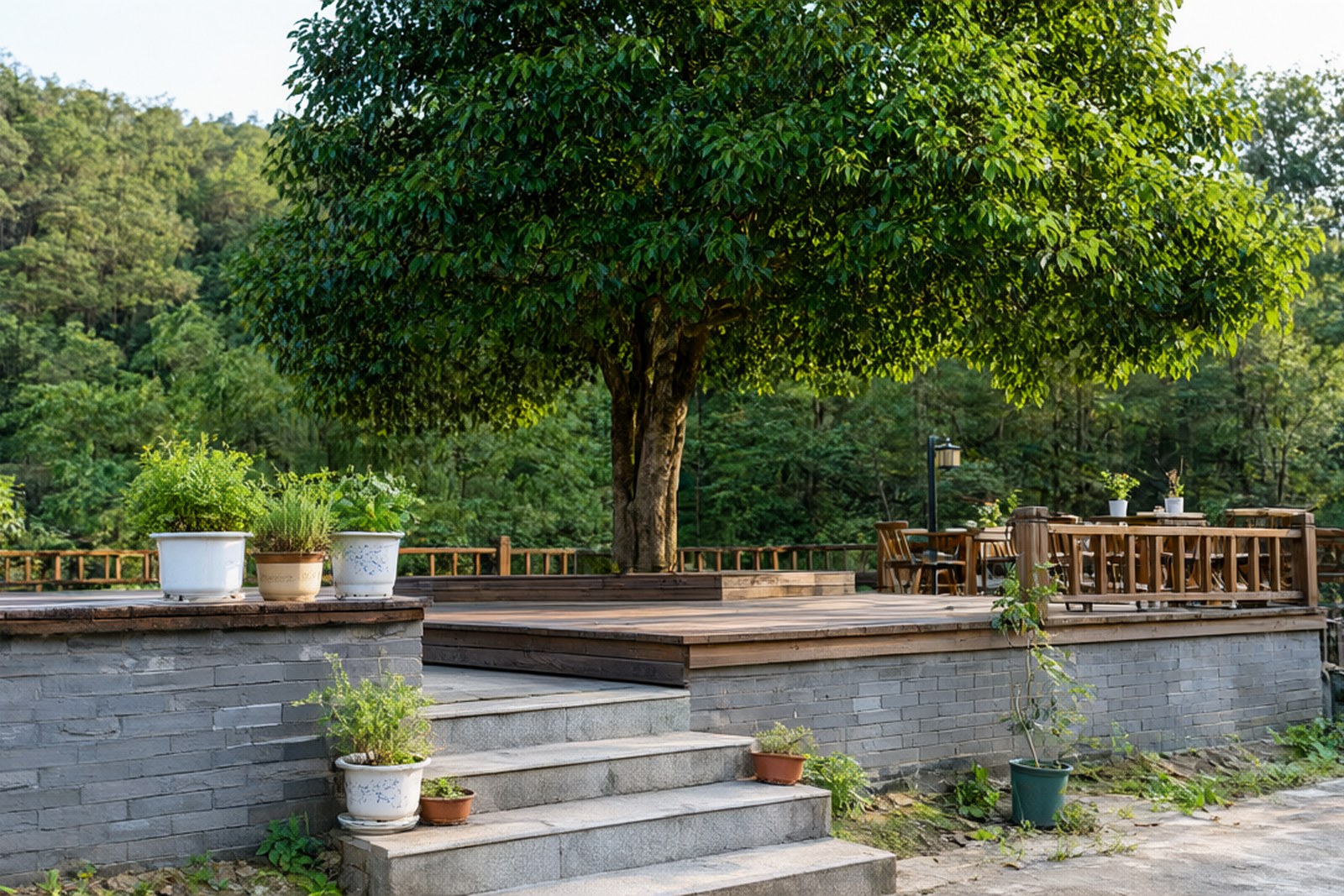
The cluster quotes like this on 30 September 2026: 愈见宿集 Yùjiàn Sùjí from 486 yuan at 4.8 on 同程 Tóngchéng, with whole-house lets available; 原野之上 Yuányě zhī Shàng from 776 at 4.7 on the same platform and 4.4 across 90 reviews on Ctrip; MANSION 漫墅杉水营地 Mànshù Shānshuǐ Yíngdì, the lakeside camp rooms in neighbouring 南桥村 Nánqiáo Cūn, from 547 at 4.8; and the 小石潭 Xiǎoshítán forest camp from 653 at 4.9. The complaints the Ctrip reviewers leave are worth printing beside the prices: no television in the rooms, beds on the firm side, cars parked some way off with staff running the transfer, and in August the flooded paddies thin the green view. None of it stopped the 4.4 – this is a trade-off village, not a resort village.
What the Rooms Are Like
A 旗溪 room is a converted building, and the two kinds feel different. The village houses – 原野之上 Yuányě zhī Shàng, 愈见宿集 Yùjiàn Sùjí – are Hakka farmhouses rebuilt around courtyards, with the cafe and the camp-fire doing the evenings; the camp rooms at 南桥村 Nánqiáo Cūn are lodge rooms over water and under trees. What the village does not have is noise, shops or a bus stop, and what it has is the walk out of the door: camphor shade, farm breakfasts, the ridge trails of the city’s lung. The calendar rule: spring and autumn are the walking windows, August is the wet and the paddy-water month, and winter is when the city’s own visitors come up for the quiet.
Practicalities
Price. On 30 September 2026 the village band ran from 486 yuan at 愈见宿集 Yùjiàn Sùjí to 776 at 原野之上 Yuányě zhī Shàng, with the two camp houses at 547 and 653, and whole-house rates available at 愈见宿集. Holidays and the walking seasons firm the calendar. Every figure is a snapshot that floats.
Address. The addresses anchor to the subdistrict and villages, as Zhongshan addresses do: 五桂山街道桂南村旗溪村 Qíxī Cūn, 中山市 Zhōngshān Shì – 愈见宿集 at 旗溪村 49 号 Qíxī Cūn 49 Hào, 原野之上 at 桂南旗溪村 105 号, and the two camps at 南桥村 Nánqiáo Cūn 南坑尾, one of which a platform page muddles as “三乡镇五桂山街道南桥村”; the subdistrict is 五桂山街道 Wǔguìshān Jiēdào. The city centre at 石岐 is some twenty kilometres away, an estimate; navigate.
Rooms. Ask about the television and the bed before you book, because the reviews are honest that the rooms trade both away. Ask where you park and how the staff transfer works, since the lane does not take cars to every door. Ask whether the whole-house rate fits your group at 愈见宿集 Yùjiàn Sùjí. And if the paddy view is the reason, avoid the August flooding month, when the fields go under water.
Getting there. There is no railway in the subdistrict and no published bus line that this article could verify, so the arrival is by car or taxi – about thirty minutes from the city centre by the estimate here; navigate – and at least one house sets parking at a distance and runs the last stretch itself. By rail, 中山站 Zhōngshān Zhàn and 中山北站 Zhōngshān Běi Zhàn on the 广珠城际 Guǎngzhū Chéngjì reach Guangzhou South in 29 to 40 minutes for about 40 yuan second class on the timetable checked on 30 September 2026 – 12306 has the live version – then a car south. From Shenzhen the 深中通道 Shēn-Zhōng Tōngdào, open since 30 June 2024 at about 24 kilometres and roughly thirty minutes, then across the city; about an hour door to door, an estimate.
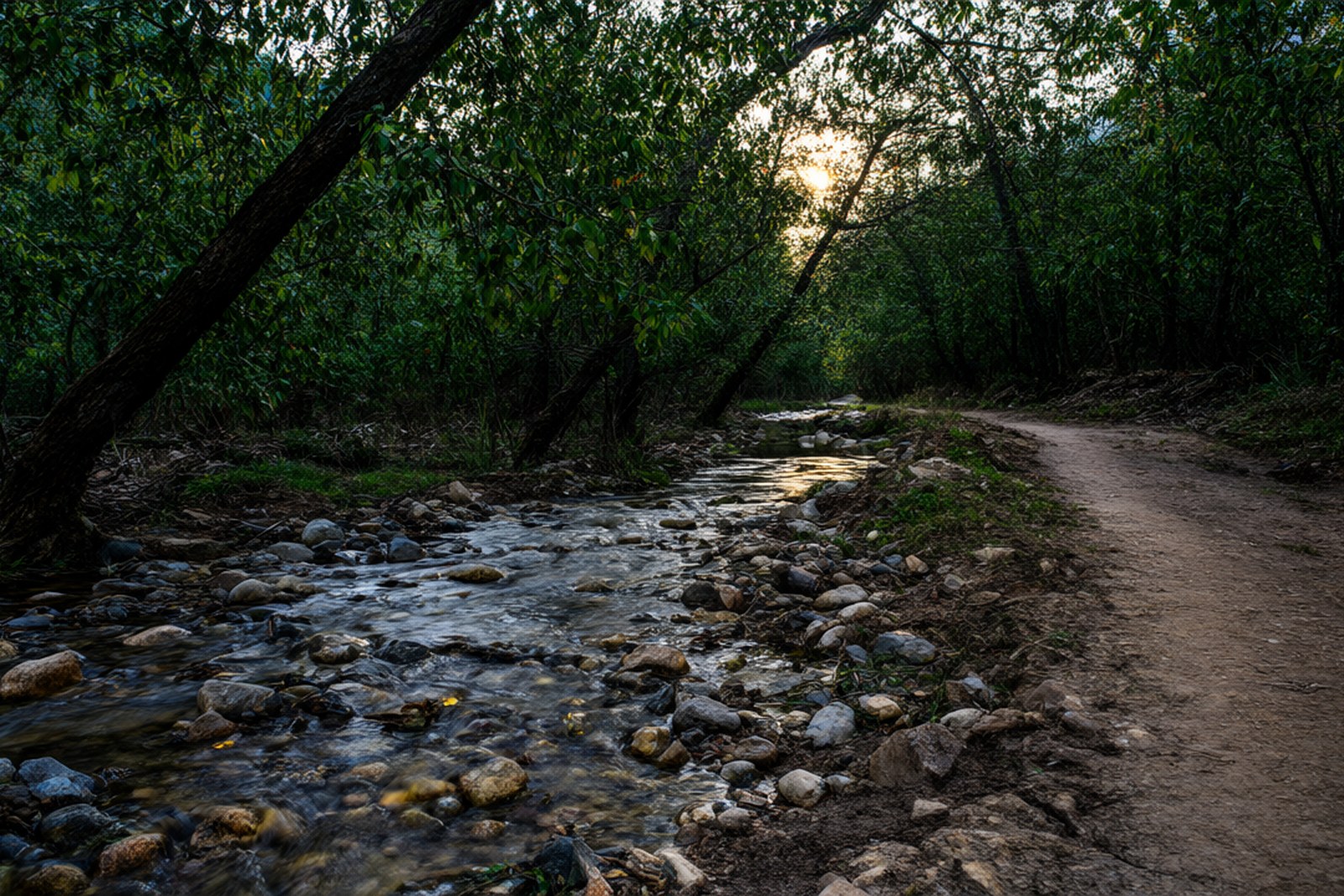
Where to stay: the certified house, 原野之上 · 原野之居 Yuányě zhī Shàng, if the national C-grade story and the cafe are the reason, 愈见宿集 Yùjiàn Sùjí if you want the newest conversion or the whole house, and a lakeside room at MANSION 漫墅杉水营地 Mànshù Shānshuǐ Yíngdì if the camp is the mood – all in 旗溪村 Qíxī Cūn and 南桥村 Nánqiáo Cūn, 五桂山街道 Wǔguìshān Jiēdào, 中山市 Zhōngshān Shì, inside the green belt the March 2026 document drew around the city’s lung.
flowcloud would say that a village six guesthouses deep has sold the city its own lung back by the night, and that the correct way to sleep here is in the converted barn with the firm bed and no television, because the programme is the forest and the forest does not do room service.