
The tea-garden bed of this batch hangs its name on a measured distance. 五里路茶韵共享农庄 – the Wulilu tea-rhyme shared farmstay, wulilu meaning five li, a five-li road – sits about 2.5 kilometres from the impact point of the Baisha meteorite crater, the ring an ancient impact left in these hills some 700,000 years ago, and founder Fu Xiaofang named the garden for exactly that walk. The estate is the crater country’s own lodging: a working organic tea garden in the fifth team of Yacha town’s outskirts, registered in 2018 as one of Hainan’s first twenty shared farms, rated a four-coconut rural tourism site and a Silver-grade Hainan homestay in 2021, with treehouses and tea-named rooms standing among the rows.
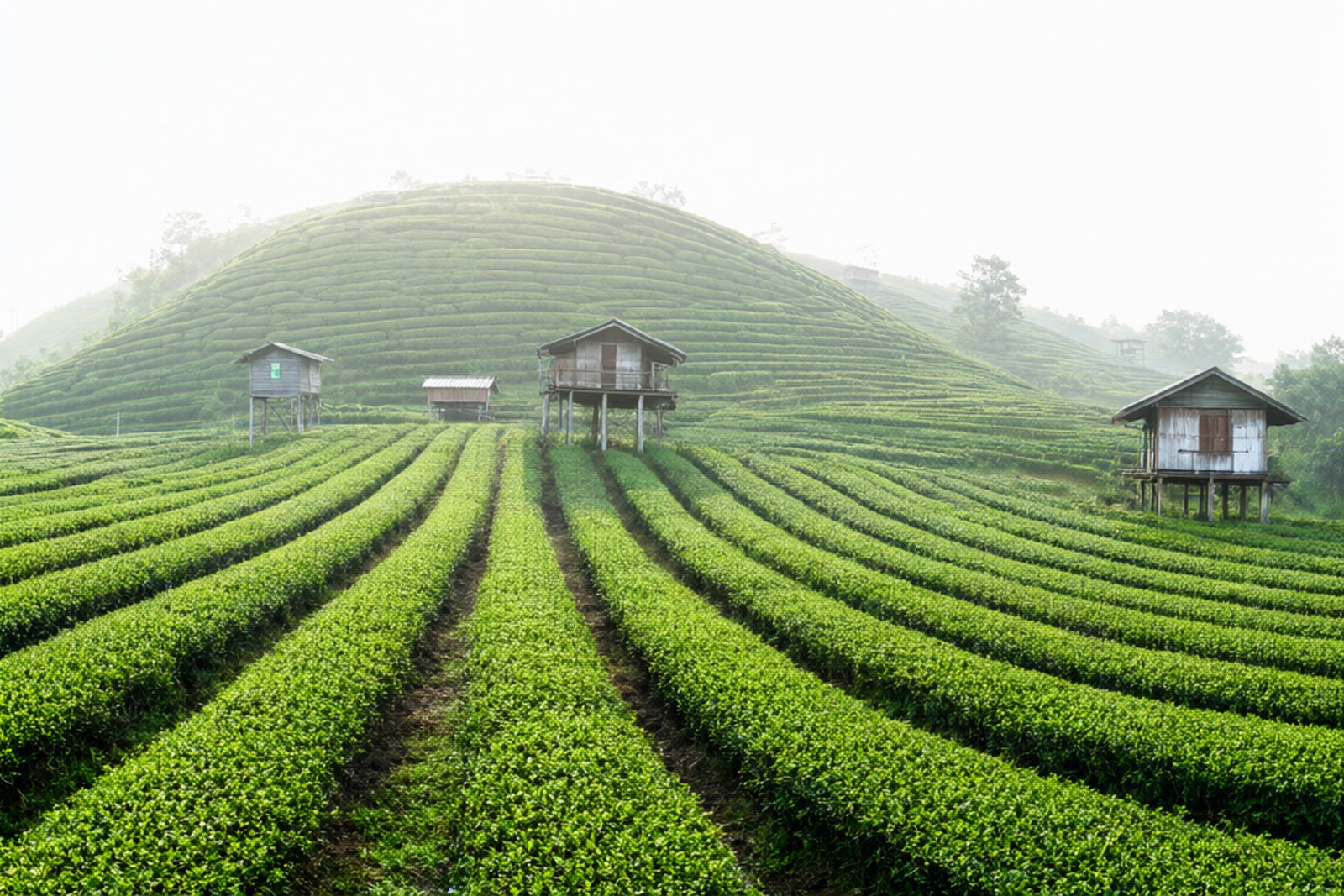
The story starts in 2008, when Fu Xiaofang, a Li woman the central media call the tea sister of these hills, left a public-institution job and went back to the land, opening a tea garden on the old Baisha farm with five neighbouring households as the first members of the Wulilu Tea Growers’ Cooperative and 22 mu – about one and a half hectares – of the county’s early organic tea. The first six years yielded almost nothing, and the 2014 harvest the garden finally got could find no buyers until Fu carried it herself to the winter and provincial trade fairs. The leaf now sells from 2,000 to more than 8,000 yuan a jin, against the 160 it fetched at the start, and by the central radio account the Wulilu trademark is the only minority-produced tea brand in Hainan carrying Chinese, European and American organic certificates at once.
The scale is official and it grew the hard way: from 22 mu to some 300 mu of organic tea, pulling in 153 tea-growing households by the People’s Daily account – the central radio’s report a day later prints 186, and both lines travel here – plus 365 registered-poor households, 1,211 people, growing a further 500 mu with 3.4 million yuan of industry dividends paid out to date. The honours stack up in the same register: a national women’s poverty-alleviation demonstration base, a provincial poverty-alleviation leading enterprise, 48,091 visitors received in 2021. And the address now has a wider frame: on 30 June 2025 the province listed the crater’s tourism area – some 4.2 square kilometres of tea garden and crater rim with Wulilu named inside it – as a Hainan provincial rural tourism resort. What it has not got is a ticket gate: the crater’s plank-road and forest-trail project is still at the design stage, so the rim walk is free and no admission figure belongs in any plan.
What the Rooms Are Like
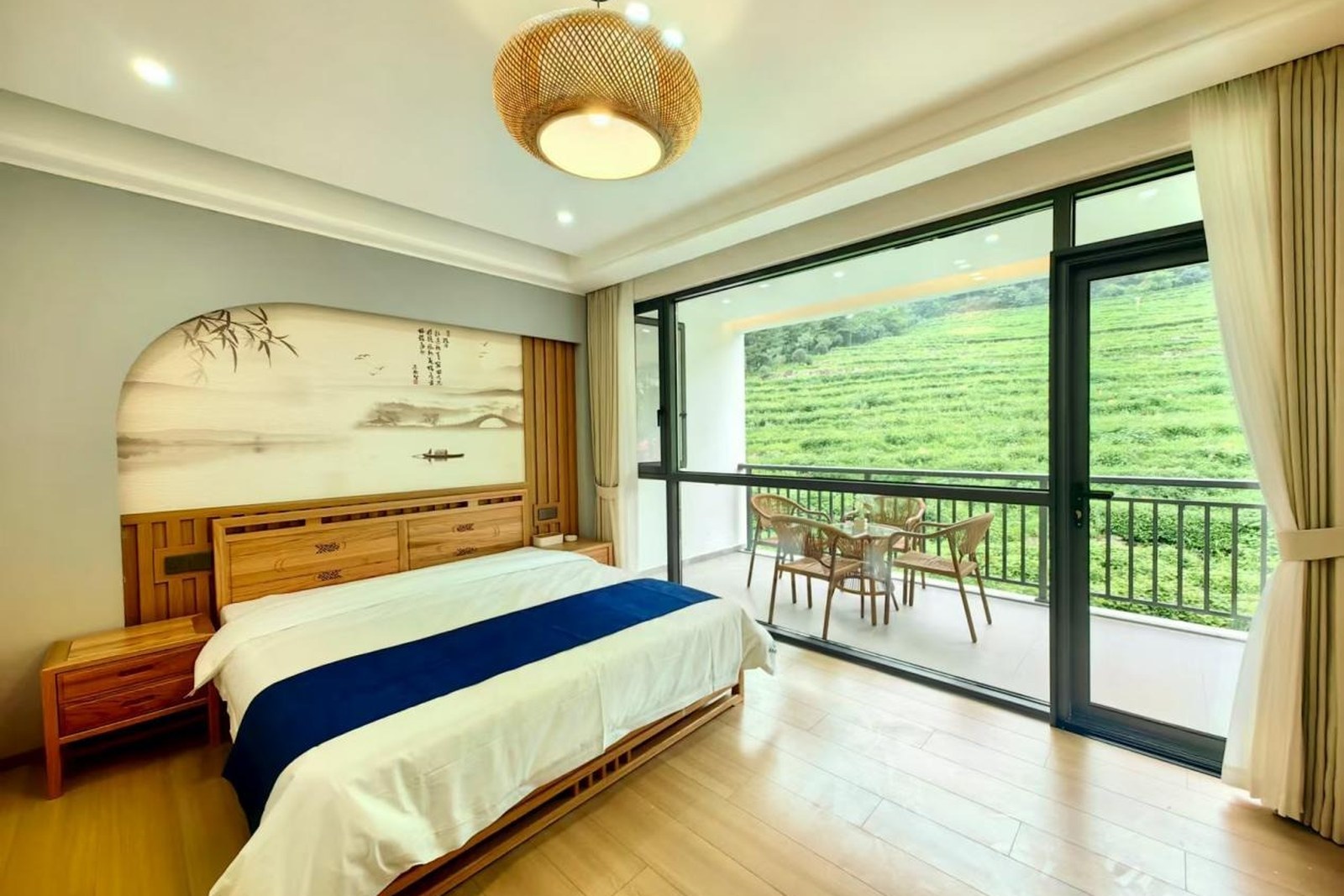
The room names are the tea list, and the categories are two. The treehouse line stands the rooms up in the trees – the Junlü and Fanghong treehouses among the named picks – while the white-tea series fills standalone stilt houses on the ground: Libai Yinzhen, named for silver-needle; Bai Mudan, white peony; Shoumei. Further rooms answer to Jianshan, facing-the-mountain; Guichun, returning-spring; Songfeng, pine-wind; and Wangxing, star-watching – ten-plus types in all. No reliable total room count is published on any platform, so this article prints none. The shared ground is farmstay-grade: a tea room for tastings, barbecue pits, a camping ground that takes its own tents overnight with power on tap, a paid KTV room and fruit-and-vegetable picking – book the room shape first and the treehouse second.
Practicalities
Price. On 1 October 2026 the snapshot read: from 257 yuan on Tongcheng (4.5), with the same garden filed on Meituan at 4.0 under an organic-tea-garden guesthouse name; festival and picking-season weekends firm the rates. Every figure is a snapshot that floats.
Address. Inside the Wulilu organic tea garden at 牙叉镇牙叉五队 Yáchā Wǔduì, the fifth team of Yacha town – one platform adds a street number and another drops it, and inside-the-tea-garden is the pin that navigates; phone 18089710332 on the Tongcheng listing.
Rooms. Decide between the two categories before booking: a treehouse among the rows or a standalone stilt house named after a white tea, and book the specific room name – the tea list is the room list here. Confirm breakfast, and whether the camping ground’s power hookups matter to your group.
Getting there. The garden sits in Yacha town’s own fifth team, a ten-odd-minute drive from the county town by the local estimate – navigate – with the Rainforest National Park Ring Tourism Highway’s 76-kilometre Baisha section, open and officially strung through the county’s tea-country nodes, as the scenic approach. The county town is the transfer point for everything else: twenty minutes by expressway from Danzhou, the 78-yuan hourly shuttle from Haikou East, and no rail option of any kind. Walk the crater rim from the garden’s side for free; the plank-road project is still on the drawing board.
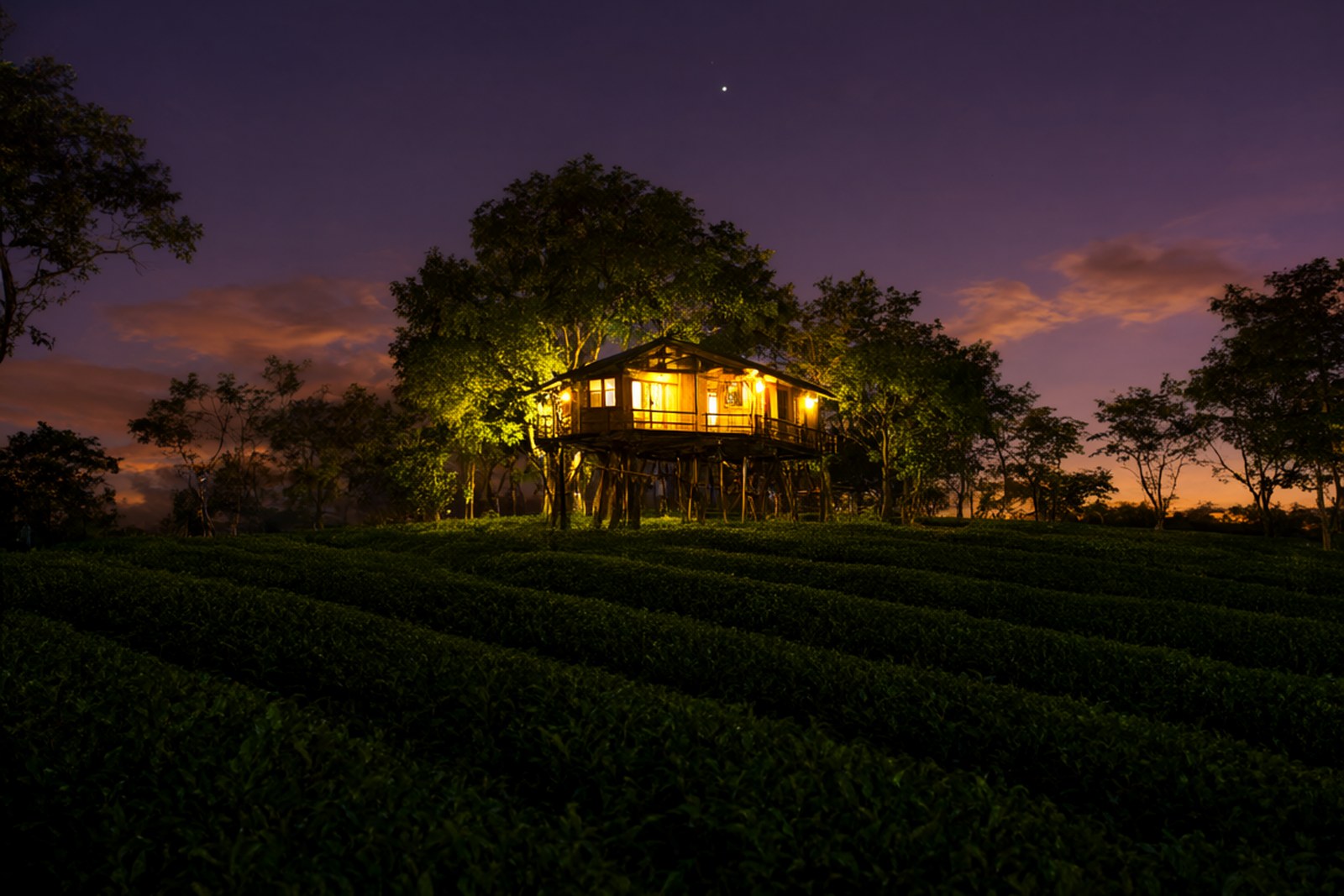
Where to stay: a Junlü or Fanghong treehouse if sleeping above the tea rows is the whole point, a Libai Yinzhen stilt house if the tea list should reach the door plate, and a Jianshan room if the mountain view outranks the novelty – all inside one working organic garden 2.5 kilometres, five li, from the crater’s impact point in 牙叉镇 Yáchā Zhèn.
flowcloud would say that a woman who named her garden for the distance she could not shorten has now made the distance the reason people come, and that the correct way to sleep here is in a treehouse with the lamp off, because the rows were planted through the dark years and do their best work before sunrise.