
At six in the morning the cloud is below the window. Not mist, not fog from the valley — actual cloud, sitting in the gorge at eye level, with the tops of the stone pillars standing out of it like the teeth of something. It moves while you watch, sliding up and thinning, and then a gap opens and you see the valley floor a kilometre down with a river in it. Staying up here rather than down in the town is the single best decision you can make in 武陵源 Wǔlíngyuán, and the reason is entirely about the hour before breakfast.
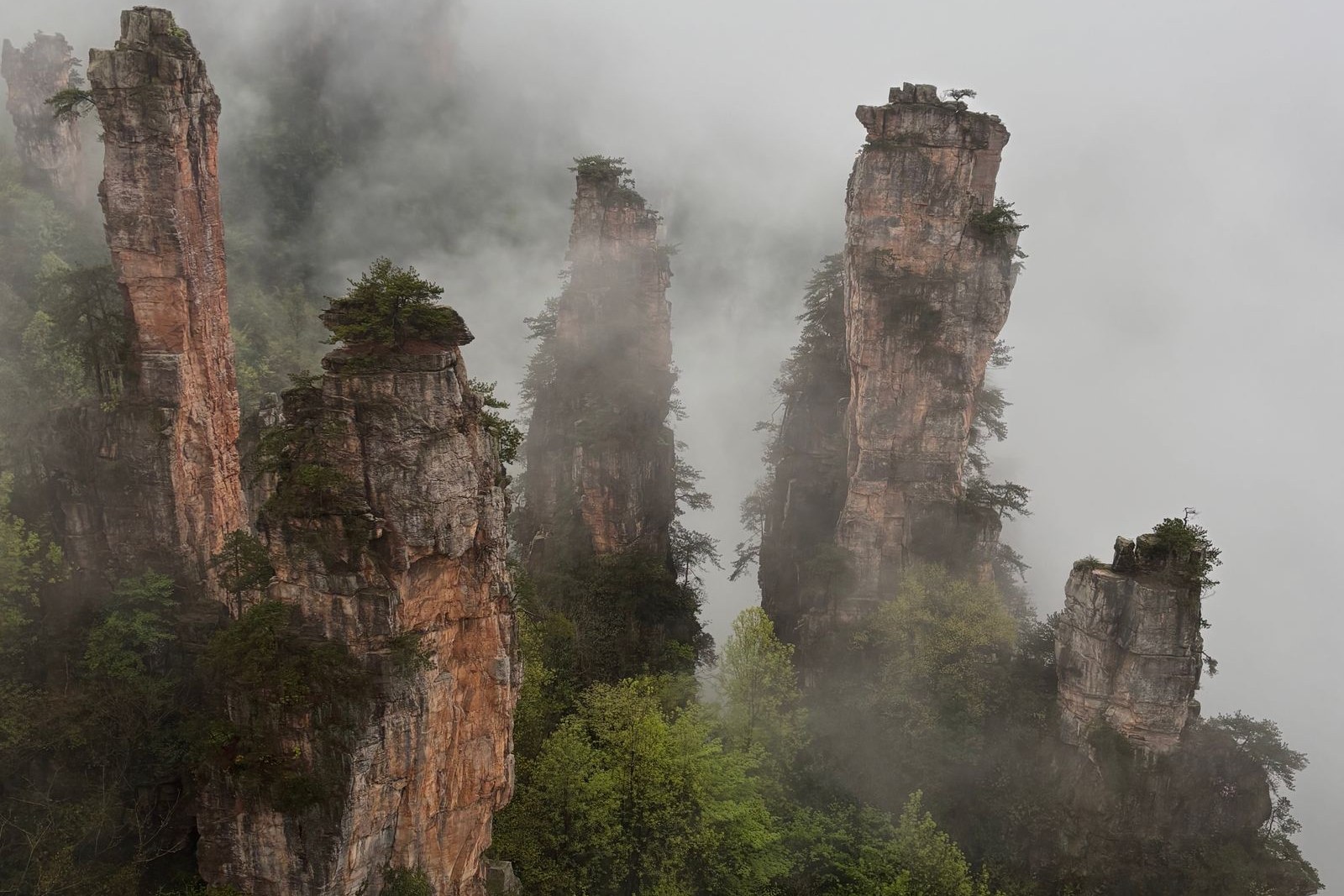
天子山 Tiānzǐ Shān, Son of Heaven Mountain, is one of the four areas that make up the 武陵源 Wǔlíngyuán scenic landscape, in 张家界 Zhāngjiājiè, north-western 湖南 Húnán. Its summit plateau sits at around twelve hundred metres, which is high enough to be in the cloud for much of the year and cool enough that the forest on top grows thick and the evenings require a jacket. The villages and hamlets on and around that plateau have filled with small 民宿 mínsù, family-run guesthouses, over the last fifteen years, and staying in one of them changes the whole shape of a visit to the park.
Why Sleep Up Here
The 武陵源 Wǔlíngyuán park is enormous and its famous viewpoints are spread across a landscape of ridges and gorges with no road along the bottom that connects them usefully. Almost everybody does the same thing: sleep in 武陵源 Wǔlíngyuán town or 张家界 Zhāngjiājiè city, take the park shuttle bus in, ride the lifts or the cable car up, see the sights, and come down in the late afternoon along with everyone else.
Staying on 天子山 Tiānzǐ Shān inverts that. You are already at the top when the park opens. The viewpoints that will have three hundred people on them at eleven in the morning are empty at seven, and the light in the first hour, when cloud is still moving through the gorges, is the light that makes the place look like the paintings it inspired. You can walk back to your room for lunch and go out again at four, when the day-trippers are queuing for the cableway.
The trade-off is real and you should know it. Up here there are no shops to speak of, no nightlife, a handful of small restaurants that all close by nine, and the only way up or down is by the shuttle buses that run between the park’s internal hubs, or by the 百龙天梯 Bǎilóng Tiāntī, the Bailong Elevator — a glass lift built into a cliff face that rises 326 metres in under two minutes and is an experience in itself. Luggage is a consideration: some homestays will arrange for a porter or send someone to meet you at the bus stop, and you should ask before you book.
Rooms and the View to Ask For
The accommodation here is domestic tourism at its most comfortable and least glamorous: a room with a bed, a bathroom with a water heater, an electric blanket for the winter — genuinely necessary, the nights at twelve hundred metres get cold — and very often a balcony. The nicer places have underfloor heating, a small terrace with chairs, and a kitchen that will cook for you at a set price per head.
The instruction that matters is the same everywhere: ask for a room with the gorge view. Most of these buildings are simple rectangular blocks and half the rooms look at a hillside or the road. East-facing rooms get the cloud at dawn, west-facing rooms get the sunset on the pillars, and either is enormously better than facing the car park. Ask specifically for 看景房 kànjǐng fáng, a view room, and pay the small premium.
Two other things worth confirming when you book. First, whether the homestay is inside the park boundary or outside it, and if outside, which gate it is near — this determines how you get in and out and whether you need a park ticket every day. Second, whether they will provide meals, and at what price; a homestay that cooks is worth a great deal up here, where the alternative is a twenty-minute walk in the dark to a restaurant that may or may not be open.
What to Do With the Days
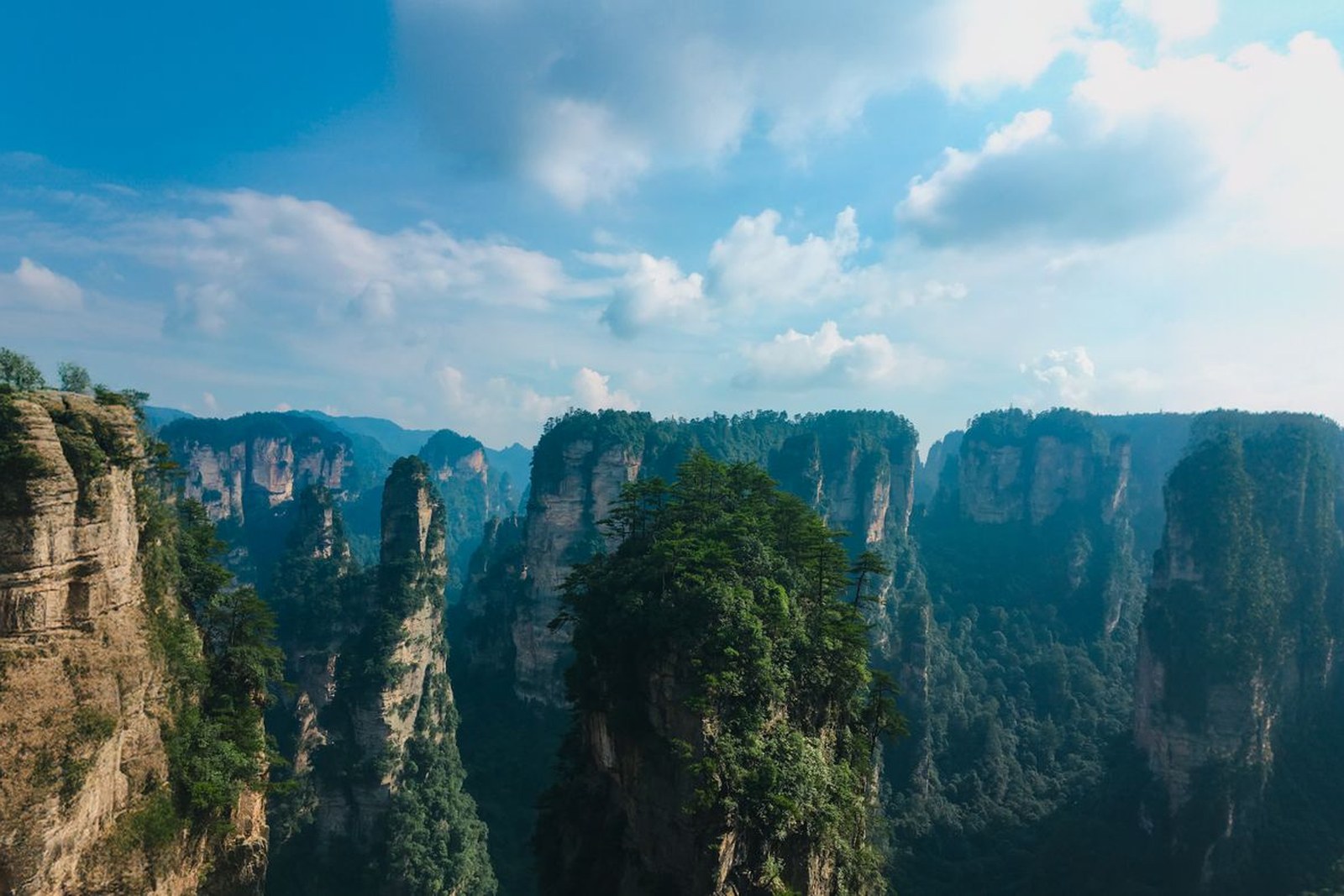
The summit has its own list of sights, and they are not the same as the ones in the gorge. 御笔峰 Yùbǐ Fēng, the Imperial Brush Peaks, is the iconic cluster — a group of slender pillars whose tops are conveniently tufted with pines, which the naming tradition has read as a set of brushes standing in a rack. 仙女散花 Xiānnǚ Sànhuā, the Fairy Scattering Flowers, is a rock formation read as a figure with an armful of blossoms. 贺龙公园 Hè Lóng Gōngyuán holds a large bronze statue of 贺龙 Hè Lóng, the marshal born in neighbouring 桑植县 Sāngzhí Xiàn, who is a local hero and whose name is on a great many things in this part of Hunan.
From the plateau you can walk down into 十里画廊 Shílǐ Huàláng, the Ten-Mile Gallery, or take the shuttle across to 袁家界 Yuánjiājiè and walk the cliff-edge path above the gorge, which is where the most famous views in the park are and where the crowds are heaviest. Doing those in the late afternoon from a base on the ridge, and skipping them at midday, is the whole art of a stay up here.
Practicalities
Price. Simple village guesthouse rooms on the plateau run about ¥180–350 a night, and the better places with a gorge view, heating and a kitchen go from about ¥400 to ¥800. Rates roughly double over the October holiday and 春节, and are lowest in the wet weeks of late spring. Meals, where provided, are usually ¥60–120 per person for dinner.
Address. 天子山 (Tiānzǐ Shān) plateau, 武陵源 (Wǔlíngyuán), 张家界 (Zhāngjiājiè), north-western 湖南 (Húnán), at roughly 1,200 metres inside the 武陵源 (Wǔlíngyuán) scenic area. Access is by the park’s internal shuttle buses from the 武陵源 (Wǔlíngyuán) entrances or by the 百龙天梯 (Bǎilóng Tiāntī) elevator.
Rooms. Family-run 民宿 (mínsù) with doubles, twins and family rooms, generally simple and clean, with electric blankets or underfloor heating for the winter nights and often a balcony. Ask for a 看景房 (kànjǐng fáng), a room with the gorge view, and confirm whether the property is inside or outside the park boundary and which gate it uses.
Getting there. 张家界 (Zhāngjiājiè) is served by high-speed rail and by an airport; from either, the drive to the 武陵源 (Wǔlíngyuán) park entrances takes about 40 minutes. From the entrance you buy the park ticket, take the shuttle to a hub, and either continue by shuttle to 天子山 (Tiānzǐ Shān) or ride the 百龙天梯 (Bǎilóng Tiāntī) up from the 袁家界 (Yuánjiājiè) side. Tell your homestay which entrance you are using and ask them to meet you — the internal bus network is easy to use but not easy to guess at on a first visit.
flowcloud would say that a landscape which is famous for its cloud should be slept in rather than visited, because the people who arrive at eleven are looking at the same rocks with more humanity in front of them and less weather.
Where to stay: Tianzi Mountain guesthouses, 天子山 (Tiānzǐ Shān), 武陵源 (Wǔlíngyuán), 张家界 (Zhāngjiājiè), north-western Hunan. Village 民宿 (mínsù) from about ¥180 a night, better rooms with a gorge view ¥400–800, roughly double over the October holiday and 春节; dinner ¥60–120 per person where provided. Reach it by park shuttle or the 百龙天梯 (Bǎilóng Tiāntī) elevator; about 40 minutes by road from 张家界 (Zhāngjiājiè) city or its rail station to the park entrance. Ask for an east- or west-facing 看景房 (kànjǐng fáng), let the homestay cook for you, and be outside at dawn with the cloud.