
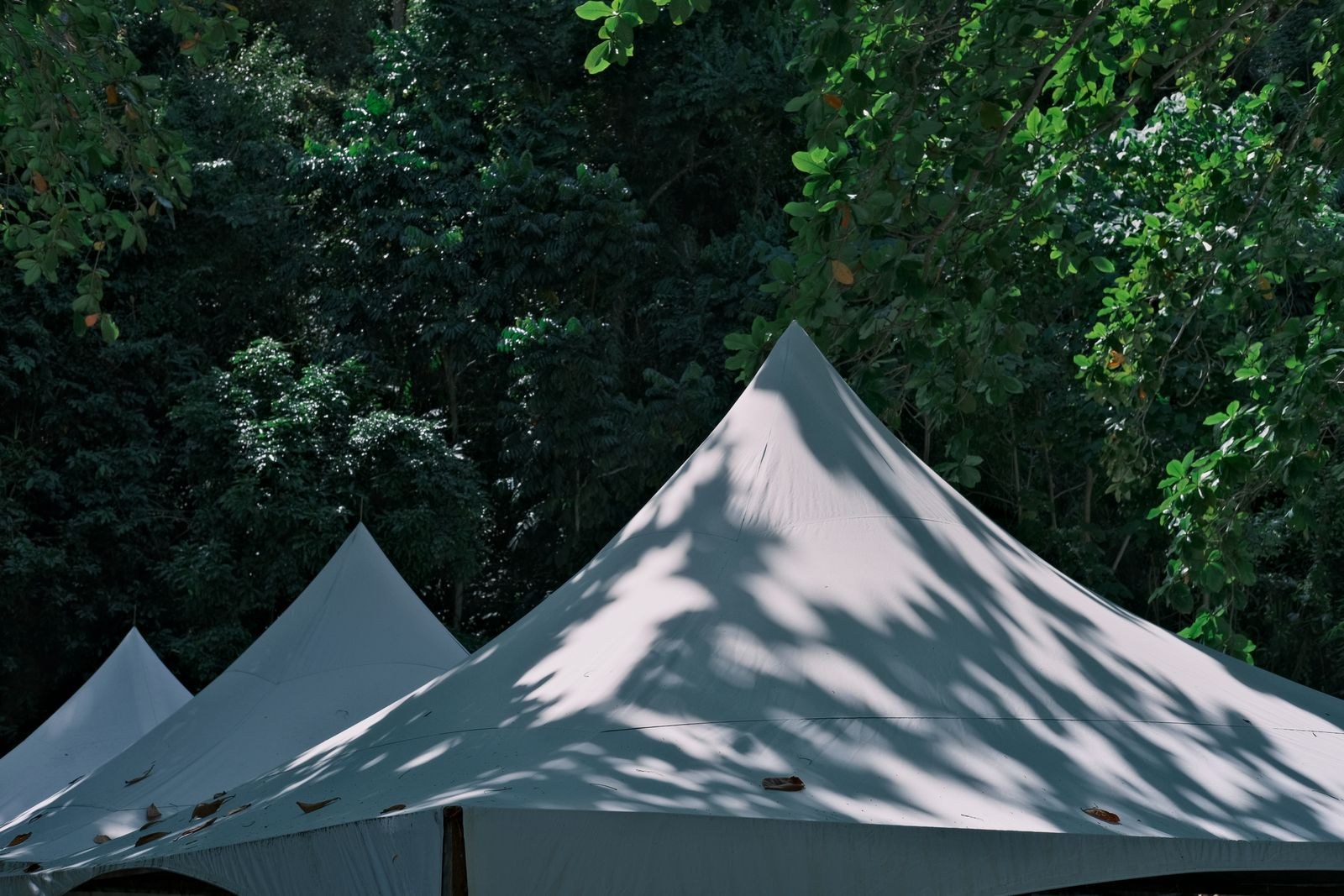
By eleven at night the fog has come down to the level of the tent and turned the whole camp into a single grey room with no walls. Your torch beam stops about four metres out. Water is dripping somewhere behind the tent, and every thirty seconds or so the frog chorus stops completely for two seconds and then starts again, which is either a bat or a snake moving through, and you decide not to investigate. Inside, on a raised platform, with a real mattress and a quilt, it is warm and dry, and the canvas above your head is beaded with condensation that glitters when you move the light. This is the tented end of accommodation on 五指山 Wǔzhǐshān — canvas camps pitched at the edge of the rainforest belt in 五指山市 Wǔzhǐshān Shì — and it is a very different proposition from the coastal glamping that most of Hainan sells.
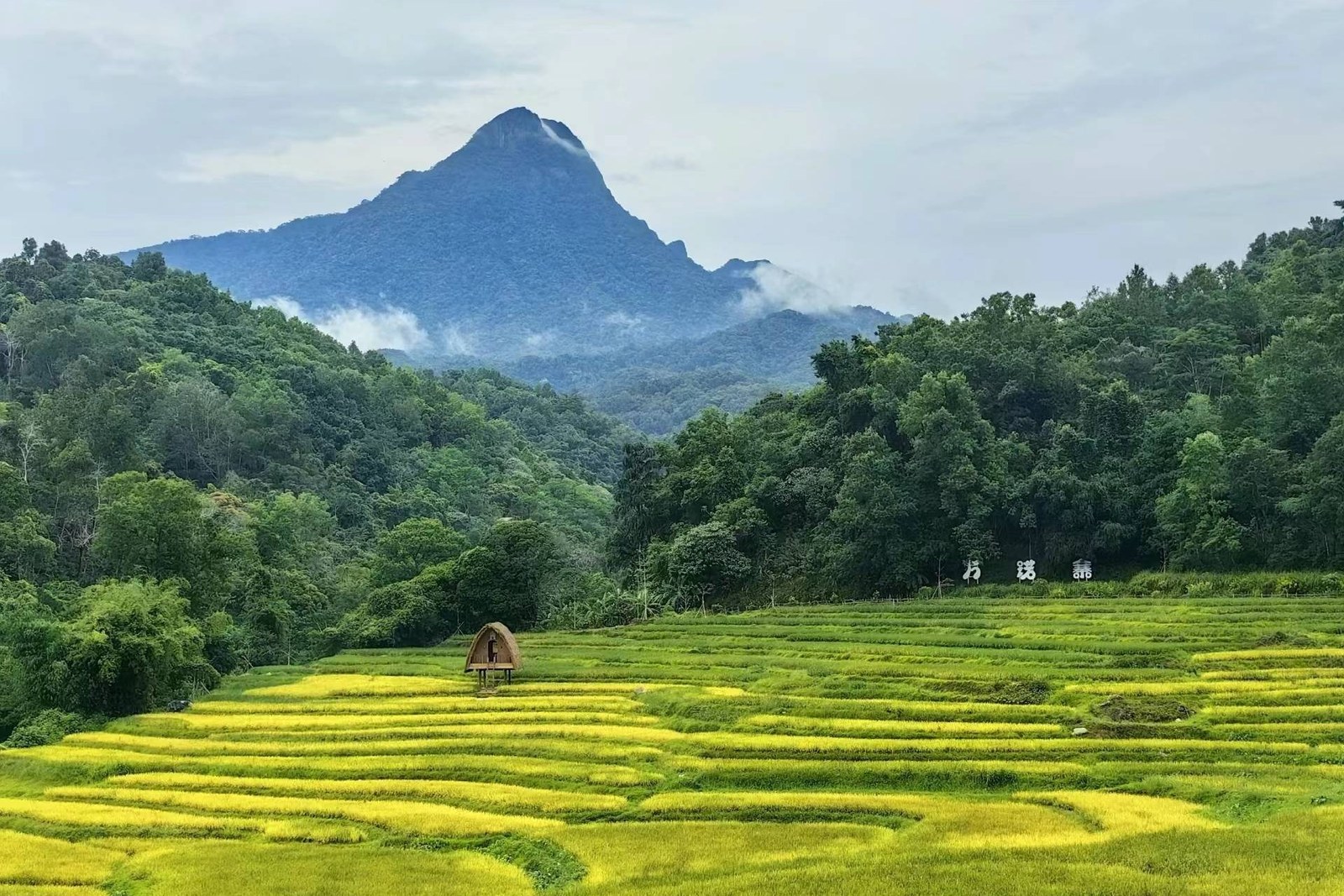
Camping in this landscape has a long local history that has nothing to do with tourism. The mountain rescue and mountaineering community around 五指山 Wǔzhǐshān has been running expeditions, bivouacs and forest camps for years, and the outdoor culture here is genuinely hiking-led rather than spa-led. The commercial camps that have grown out of it fall into three kinds. The first is 露营 at the organised end, inside a developed area such as the 红峡谷 Hóngxiágǔ canyon zone, where a tent pitch comes with a barbecue, a wash block and a car park. The second is the riverside and hillside camps and 小院 xiǎoyuàn compounds on the edges of the villages, where you can pitch on grass next to a stream, with a fire pit and a shared kitchen, sometimes with paddleboards and a coffee bar thrown in. The third is walk-in camping on the mountain’s own paths, which requires experience, a permit where relevant, and a proper respect for how fast this forest soaks a person. Almost everyone who is not a serious trekker should be looking at the first two.
Practicalities
Price. A pitched tent on a maintained site runs ¥100 to ¥250 a night for a platform and basic facilities; canvas tents with beds inside are closer to ¥300 to ¥500 for two, with a barbecue package adding perhaps ¥100 a head. Riverside camps in the villages are usually the cheapest option in the whole accommodation market here, and the sites inside canyon tourism zones the most expensive.
Address. The camps sit around the edges of the reserve belt in 五指山市 Wǔzhǐshān Shì: the canyon-side sites on the 南圣镇 Nánshèng Zhèn road, the stream and meadow pitches on the 水满乡 Shuǐmǎn Xiāng slopes, and the 通什镇 Tōngshí Zhèn compounds near the city that mix camping with a courtyard café.
Rooms. A tent is not a room, and the camps here are honest about it: a platform, a mattress, a thick quilt, a light, and a shared wash block with hot water in most sites. Assume everything you bring will be damp by morning, and pack accordingly — dry bags, a headtorch, a rain shell and shoes with grip. There is no air conditioning and there are no walls, so the noise of the forest is the entire soundtrack of the night, and it is loud.
Getting there. All the sites are reachable by car, and the ones near the city are a short taxi ride from the centre. The canyon-side camps are about twelve kilometres out on the 南圣 Nánshèng road; the village camps require an hour up the mountain road from the city. None of them are on a bus line, and mobile signal is patchy at the more remote pitches, so download an offline map before you go.
flowcloud would say that camping under this canopy is less about roughing it than about letting the night into the room, and that the forest here charges a fair price for that, in damp.
Where to stay: pitch at a maintained site with a wash block if it is your first night in the rainforest, and go with a guided camp if you want to be on the mountain’s own trails rather than beside them. Check the forecast and be prepared to leave early — this is one of the wettest corners of the island, and a camp in a stream valley during a Hainan downpour is an experience best avoided rather than collected.