
The road up to 水满乡 Shuǐmǎn Xiāng ends in a car park with a gate at the back of it, and the gate is the trailhead for 五指山 Wǔzhǐshān, the mountain the whole island is named after. The resort sits between the two. You can walk out of your room in the morning, cross the car park, sign the register at the gate and be on the mountain’s lower staircase before the tour buses have finished loading, which is the entire argument for staying here rather than in the city twenty kilometres below. The other argument arrives at about ten past six, when the mist that has been sitting in the valley all night lifts off the canopy in sheets and the five peaks appear above it, briefly, in the wrong place — closer than they looked yesterday and much higher than they should be.
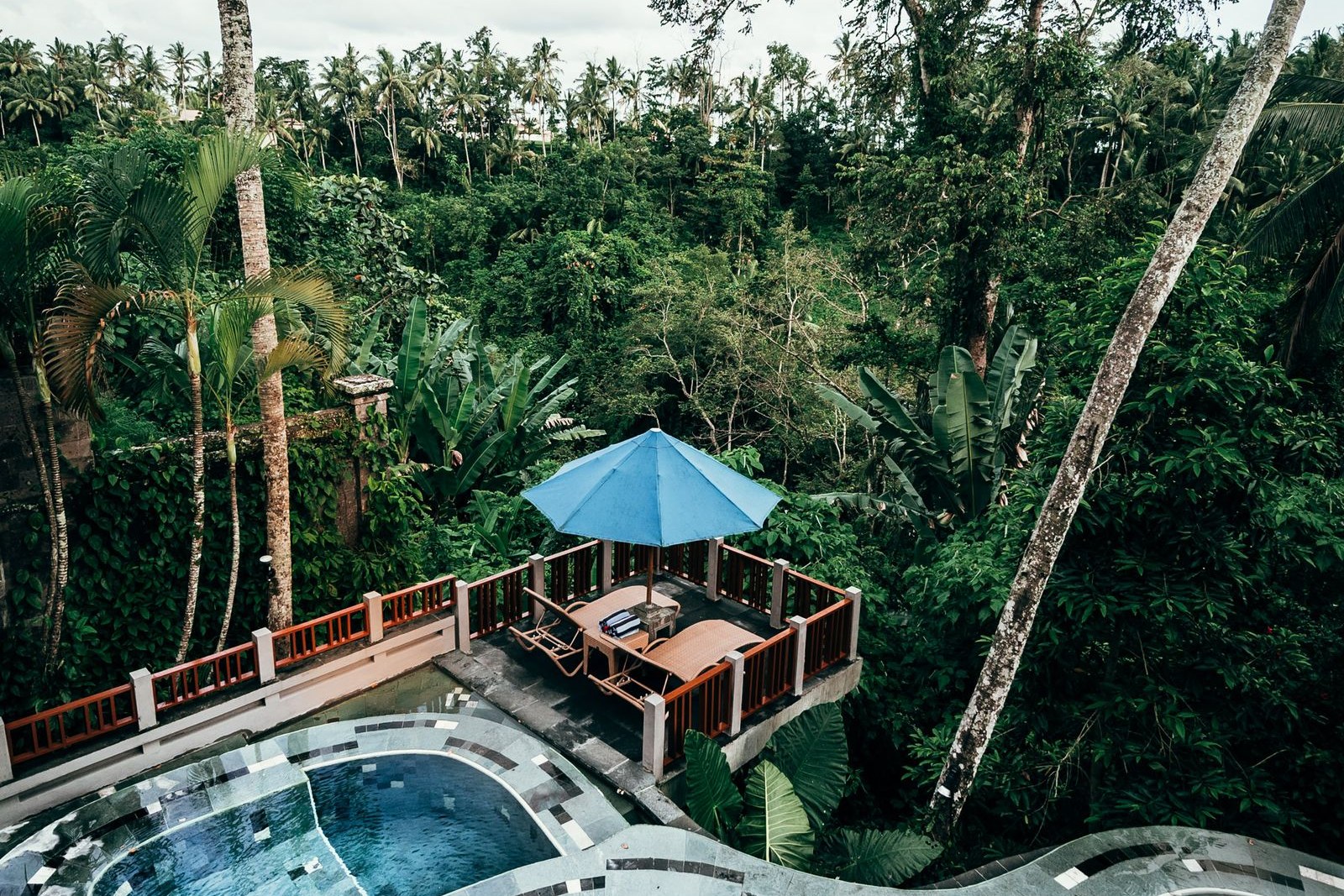
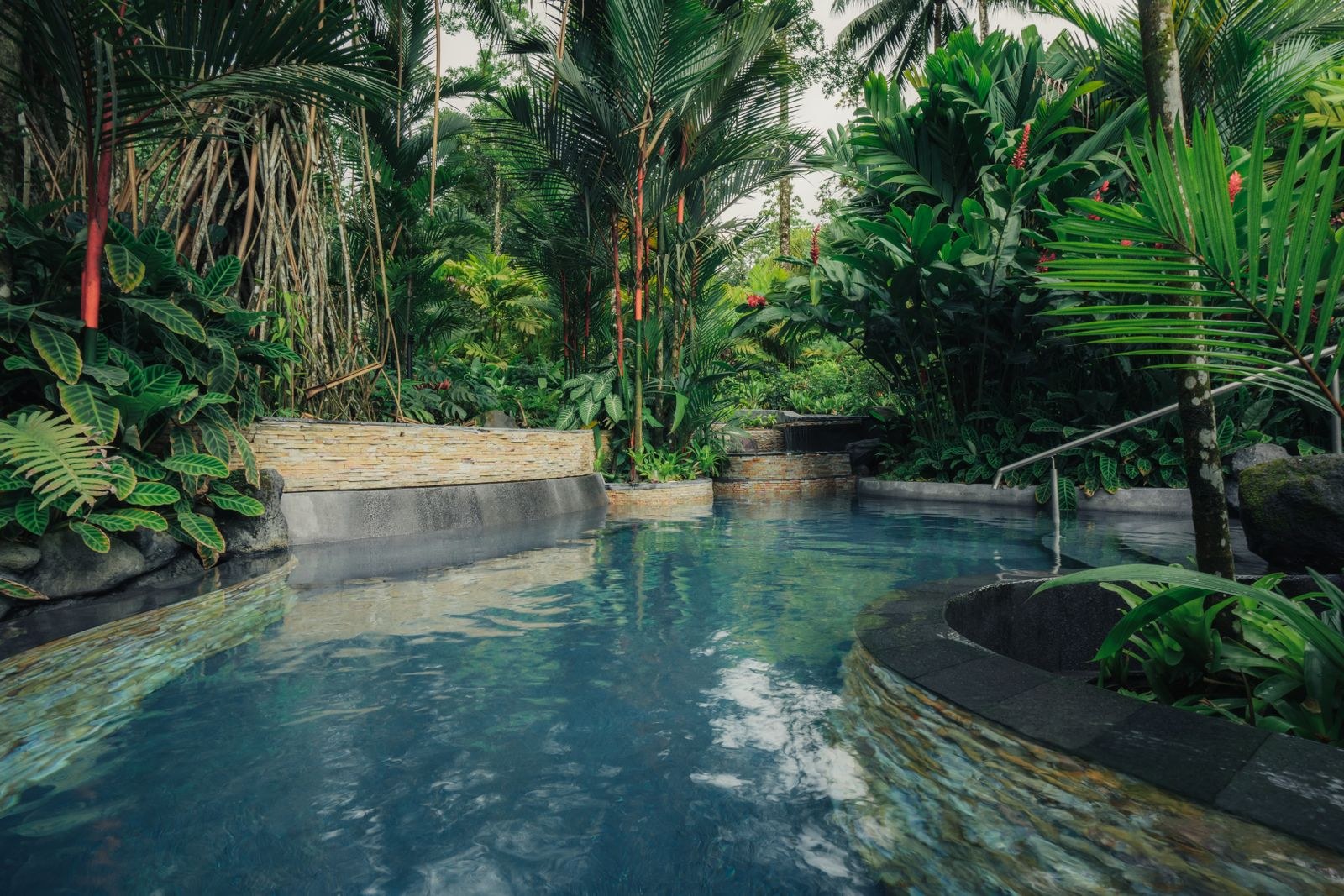
This is the top end of accommodation in 五指山市 Wǔzhǐshān Shì, and it works differently from the rest of Hainan. There is no beach, no sea breeze and no night market within walking distance. What there is instead is altitude: the village sits at around seven hundred metres on the wet southern flank of the mountain, which knocks five to eight degrees off the coastal temperature and puts the whole property inside a belt of rainforest that gets more than two thousand millimetres of rain a year. The result is a hotel that behaves like a mountain lodge in the tropics. Rooms are timber and stone, low-rise, scattered through the trees rather than stacked, and the architecture is deliberately quiet — dark roofs, local stone, glass where the view needs it and solid wall everywhere else. The pool is fed by mountain water and is cold enough that most guests look at it before they swim. There is a spa that uses the hot springs of the 七仙岭 Qīxiānlǐng tradition and a kitchen that cooks the mountain’s own food, which means five-toe pig, wild greens, river fish and 水满鸭 Shuǐmǎnduck, the village duck that lives on stream shrimp.
Practicalities
Price. Rooms run roughly ¥600 to ¥1,500 a night depending on season and outlook, with the top rate paid for the rooms facing the mountain over the pool. Chinese New Year, the first week of May and the 三月三 Sānyuèsān festival in the third lunar month are the peaks; a rainy Tuesday in September is the bargain, and it is also when the forest is at its best.
Address. The resort belt is on the edge of 水满乡 Shuǐmǎn Xiāng, on the road that runs from the 国家公园 guójiā gōngyuán gate at the foot of the mountain, in 五指山市 Wǔzhǐshān Shì. The 观山点 guānshān diǎn, the viewing platform that faces the five peaks head-on, is a short drive away along the same road.
Rooms. Ask for a room on the upper floors or the outer edge, because the ground-floor rooms look into vegetation rather than over it. Expect good beds, decent wifi in the main building and patchy wifi in the outer villas, air conditioning you will not need at night, and a humidifier worth using. The rooms with a balcony and a mountain view are the ones people come back for.
Getting there. From 五指山市 Wǔzhǐshān Shì take the mountain road up to 水满 Shuǐmǎn, about twenty kilometres that take forty minutes; a taxi costs around ¥60 to ¥80. From 三亚 Sānyà it is roughly ninety-five kilometres, and from 海口 Hǎikǒu about two hundred and fifteen; both routes end in a long, slow climb that is worth doing in daylight the first time.
flowcloud would say that the point of paying resort money up here is not luxury, it is proximity: the difference between staying at the trailhead and staying in the town is two hours of the mountain’s best light.
Where to stay: take the resort if you intend to climb, photograph or simply sit still above the cloud line; take a village guesthouse if you want the price and the food to be more interesting than the room. Either way, book directly rather than through a coastal package, and ask what time the gate opens — it moves with the season, and the answer decides how your morning goes.