
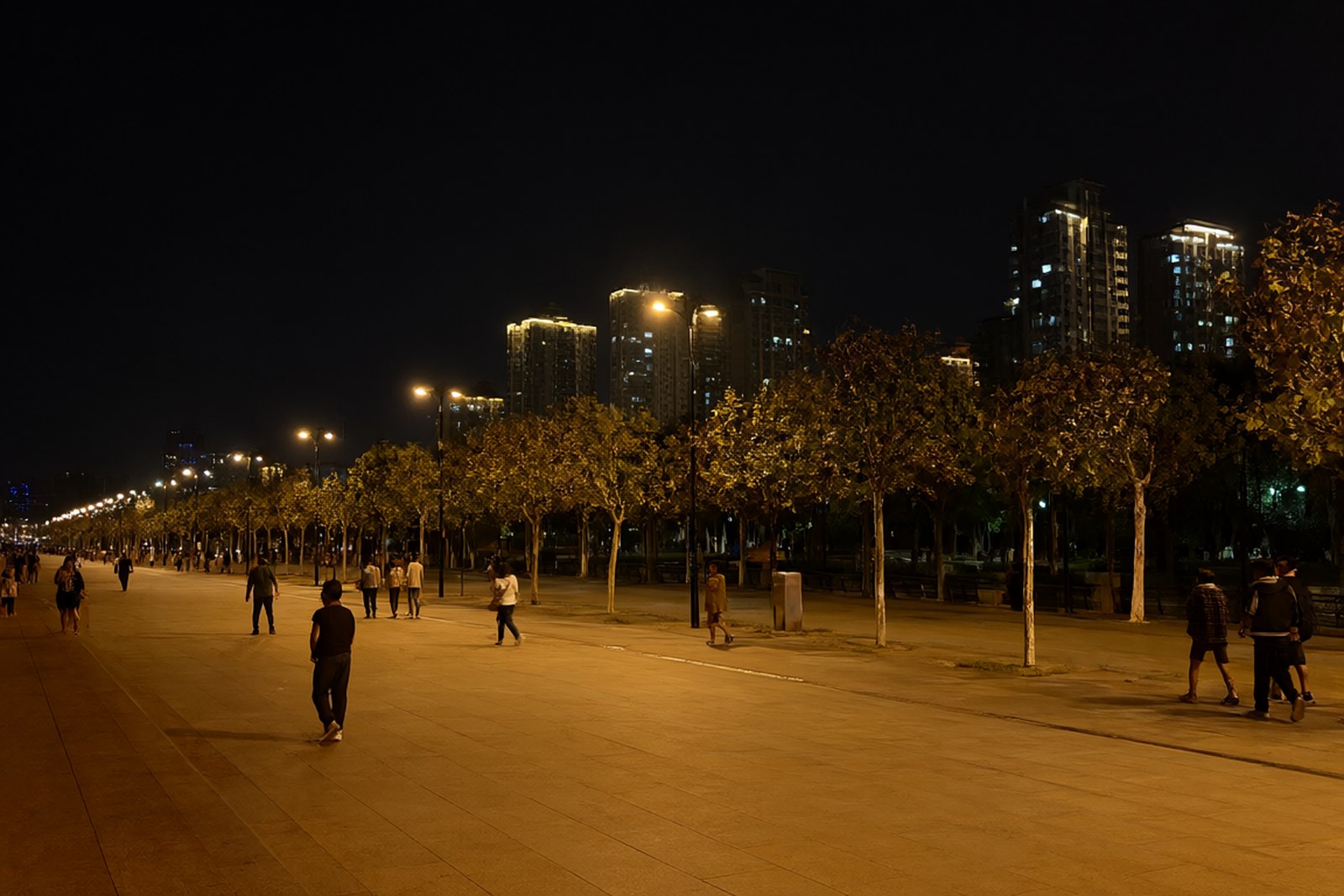
湘潭市 Xiāng tán shì is a river city that has been a river city for seventeen hundred years, and the 湘江 Xiāng jiāng does not run past it so much as round it. The river comes down from the south, turns through a long bend of some forty kilometres along the western edge of the built-up area, and leaves to the north; the old town sits on the west bank and the newer districts on the east, with three road bridges and a rail bridge between them. A city hotel here means a tower on the riverfront or a few streets back from it, and the riverfront is where the city walks in the evening: a long embankment park, lit, with the bridges in view and the water doing what rivers do.
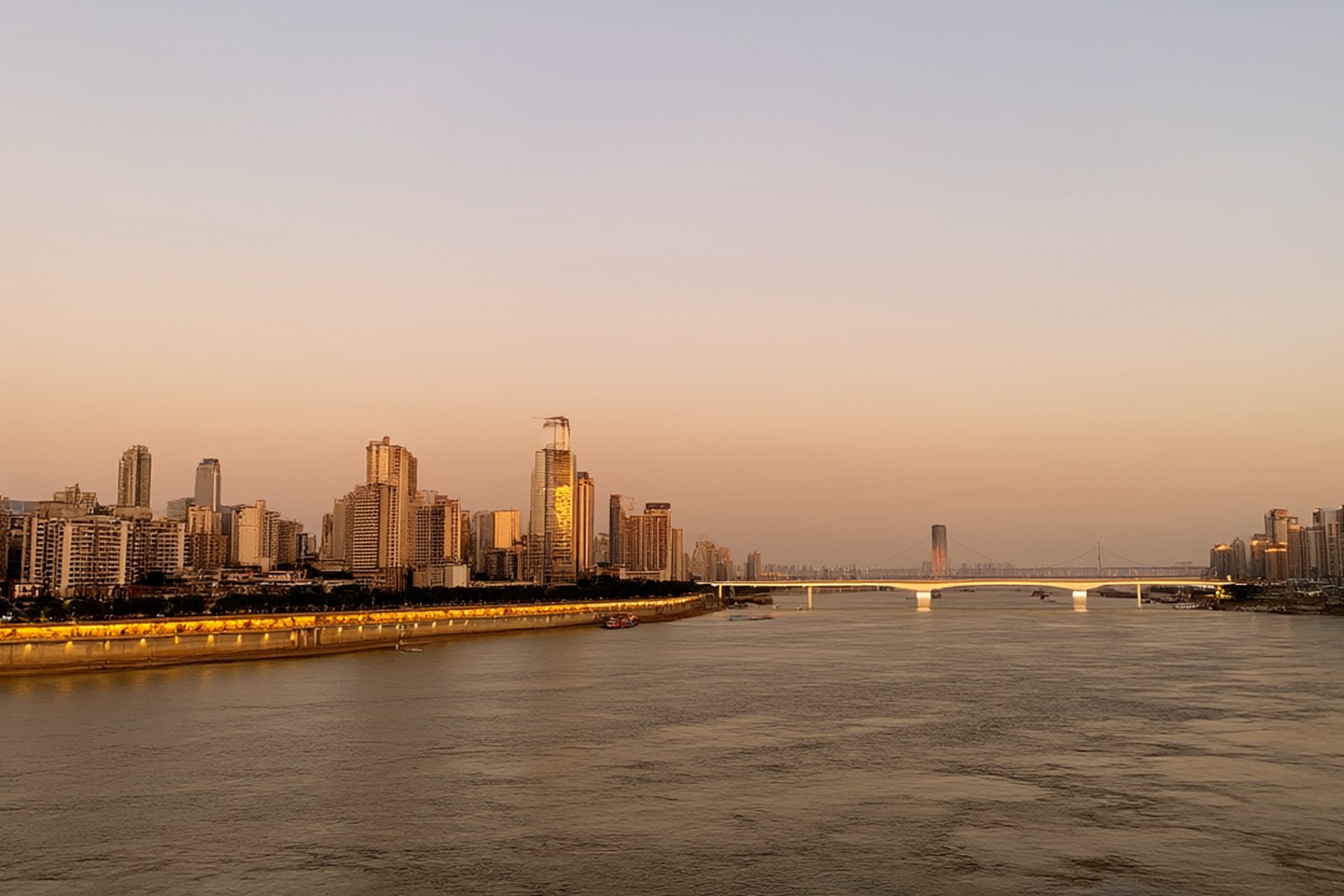
The city is one of the three that make up the 长株潭 Cháng zhū tán conurbation with 长沙 Cháng shā and 株洲 Zhū zhōu, and it is the smallest of the three and the one that kept its own pace. It is an industrial city – steel, machinery, and for a century the town that made much of the province’s sauce and its betel nut – and it is also the birthplace of the artist 齐白石 Qí Bái shí, whose memorial hall and park are on the western side of town, and the place where 秋瑾 Qiū Jǐn, the revolutionary and poet, kept a house before she went to her death in 浙江. The riverfront gives you all of this at walking distance: the embankment, the old commercial quarter of 窑湾 at the southern end of it, the 白石 park and the 雨湖 Yǔ hú park inland, and the food streets that run back from the water.
The reason to sleep here rather than in 长沙 is that everything the city is famous for is within a few minutes of the river. The 窑湾 quarter, the old wharf where the eighteenth-century 十八总 shí bā zǒng, the eighteen wharves, handled grain and timber and medicine, is at the south end of the embankment a short walk or a two-stop taxi ride from the bridges. The pastry shops and the sauce counters are inland. The city’s own food is 米粉 mǐ fěn in the morning, 槟榔 bīng láng sold from every third doorway, and the local sweet 灯芯糕 dēng xīn gāo in a box to take away, and all of it is nearer from a riverfront room than from anywhere else. In the evening the embankment fills up with families and the bridges light, and that is genuinely the best two hours the city has to offer.
What the Rooms Are Like
Expect a room of twenty-five to forty square metres with a firm bed, reliable air conditioning, a clean bathroom with a proper shower and a desk, and a window over the river or over the street. The mid-range city hotels here are plain and well kept rather than designed, and the finish is a step behind what the same money buys in 长沙, which is the price of the smaller town. River-facing rooms on a high floor are worth the premium in 湘潭 more than in most Chinese cities, because the view is genuinely the reason to be here; the inland side is quieter and cheaper. Check that the hotel registers foreign guests – the larger ones do, the small ones frequently do not – and ask whether breakfast is included, because the better breakfast is a bowl of 米粉 at a shop on the street.
Practicalities
Price. A double in a riverfront or central 湘潭 hotel runs ¥220 to ¥500 a night in ordinary weeks, and rather more over the October week and the Spring Festival. High floors facing the 湘江 cost a little more; the older business hotels two streets back cost a good deal less and are perfectly serviceable.
Address. The hotels are in 湘潭市 on the 湘江 Xiāng jiāng, most of them along the riverfront roads of 雨湖区 Yǔ hú qū on the west bank or 岳塘区 Yuè táng qū on the east, within a short taxi ride of 湘潭站 Xiāng tán zhàn and about thirty minutes from 湘潭北站 Xiāng tán běi zhàn on the 沪昆 high-speed line.
Rooms. Ask for a high floor facing the river and for a room away from the bridge approach if you sleep lightly, because the traffic noise carries. Ask the desk for a written Chinese address to hand a driver, for the nearest 米粉 shop that opens before seven, and for the opening hours of the 窑湾 quarter, which changes with the season.
Getting there. 湘潭 is on the 沪昆 high-speed line with 湘潭北站 about thirty minutes from the centre by taxi, and 湘潭站 on the older line is much closer in. The 长株潭 intercity railway links 湘潭 directly to 长沙 and 株洲, which makes the city a reasonable base for a stay that mostly happens elsewhere; by road the 京港澳 and 沪昆 expressways both pass close by. The centre itself is walkable along the river and a taxi is needed for 窑湾, 白石 park and the food streets inland.
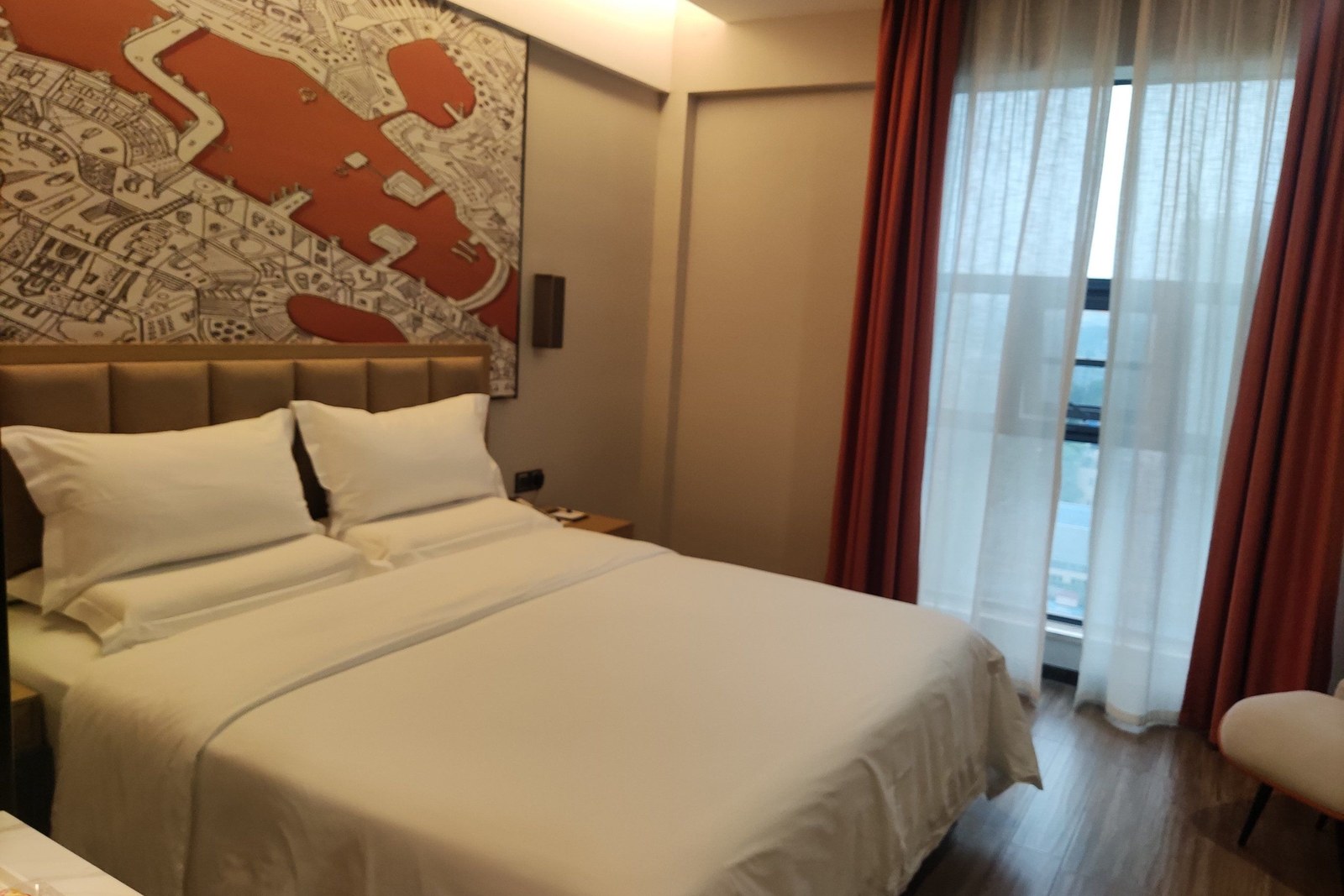
Where to stay: the city hotels of 湘潭市 on or near the 湘江 riverfront, in 雨湖区 or 岳塘区. Take a high floor facing the water, eat breakfast on the street rather than in the hotel, and walk the embankment at dusk before going inland for dinner.
flowcloud would say that a city which turned a forty-kilometre bend of river into its own front garden, lit it, planted it and left the old wharves standing at the end of it, has understood that the cheapest amenity a river town owns is the river.