
咸六村 Xián liù cūn is a village in 南吕镇 Nán lǚ zhèn, in the central-south of 屯昌县 Tún chāng xiàn, the inland county that 海南省 Hǎi nán shěng administers directly and that has no coastline anywhere along its border. It is an ordinary Hainanese village of coconut palms, betel-nut and paddy, with one thing that is not ordinary: it has been making painters since the 1980s. A farmer named 陈友俊 Chén Yǒu jùn opened a village art school there, 研璞轩美术学校 Yán pǔ xuān měi shù xué xiào, with no proper classrooms, no standard easels and no textbooks, and over the thirty-six years from 1984 to 2020 it turned out more than six thousand farmer painters, who took the trade to the Pearl River Delta and took Hainan’s coconut palms and village scenes with them. A hundred or so painters from this one village still work professionally away from home. The village’s answer to that, since 2024, is the reason a traveller would ever sleep in 南吕镇.
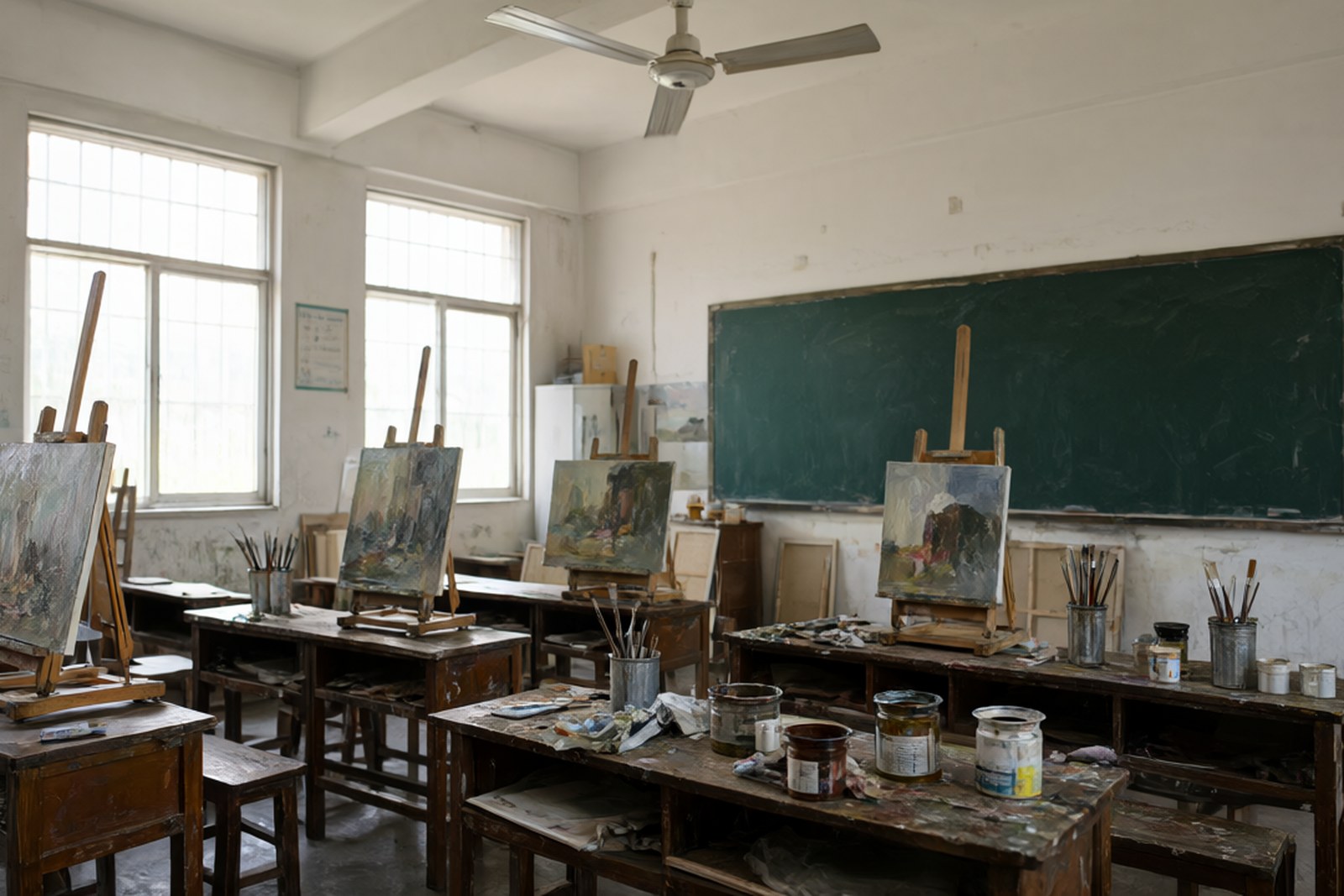
The school in the second half of the story is a different building. 咸六村小学 Xián liù cūn xiǎo xué sent away its last pupil about eight years ago and then stood empty, and the village party secretary 陈益 Chén Yì has described it in exactly those terms: the classrooms empty, the playground grown over, eight years of nothing. In March 2024 six artists of a group calling itself the 乡野艺术部落 Xiāng yě yì shù bù luò, the Rural Art Tribe – oil painters and clay sculptors – came to the village to work alongside the local farmer painters; their founder, 朱鲲 Zhū Kūn, is a national first-class artist, and the reason they stayed, as he tells it, is the light, the plain manners and the villagers’ own appetite for the work. Through 2024 the idle school was converted: classrooms were partitioned into studios, an open space became an exhibition hall, and the weedy playground was planted by the artists with whatever they liked. By early 2025 a sign reading 乡野艺术部落 was hanging over the school gate. In March 2025 the tribe put on its first exhibition, more than forty works by over twenty painters from around the country, and kept it up for a month. On the May Day holiday the township ran a painting and clay event for families, free of charge; by September 2025 the tribe had brought more than a hundred children through its studios. The plan on the table now is to count the empty houses around the tribe – something over fifty of them – and turn them into studios for incoming painters, and the county has undertaken to fund renovation of the site, its infrastructure and a sales point for the village’s produce.
The people in those studios are the second reason to come. 刘旭辉 Liú Xù huī is a sixty-eight-year-old clay sculptor and intangible-heritage inheritor from Shenyang, and the line the reporters keep quoting from him is that even the clay he needed was carried across the river by the village party secretary. 吴静雨 Wú Jìng yǔ, a member of the China Artists Association, spent half a year at 咸六村 working on a canvas nine metres long and three metres high of the Himalaya, which has since been collected and shown by cultural authorities in Tibet. 邱野 Qiū Yě, another national first-class artist, paints on site and has proposed weekend classes in painting, sculpture, craft and Chinese painting for the village’s children and adults, using the converted school, the gallery and the empty houses as the rooms. Which brings the article to the only question that really matters here, and the material is unusually straight about it. The official formula repeated by three separate news organisations is that the old 咸六小学 is now an art community combining creation, exhibition, teaching and 食宿 shí sù – board and lodging. That word is the entire documented basis for sleeping here. There is no room count, no rate, no opening date and no booking channel anywhere in the record, and 南吕镇 Nán lǚ zhèn has no hotel or homestay on sale at all. So the honest position is this: the tribe is a working residency for artists, sculptors and study groups, it can provide board and lodging, and whether it will take you for a night is a question you ask it directly rather than book. Everyone else sleeps in 屯城镇 Tún chéng zhèn, about 20 kilometres away, or at the paddy camp at 坡林村 Pō lín cūn in 南坤镇.
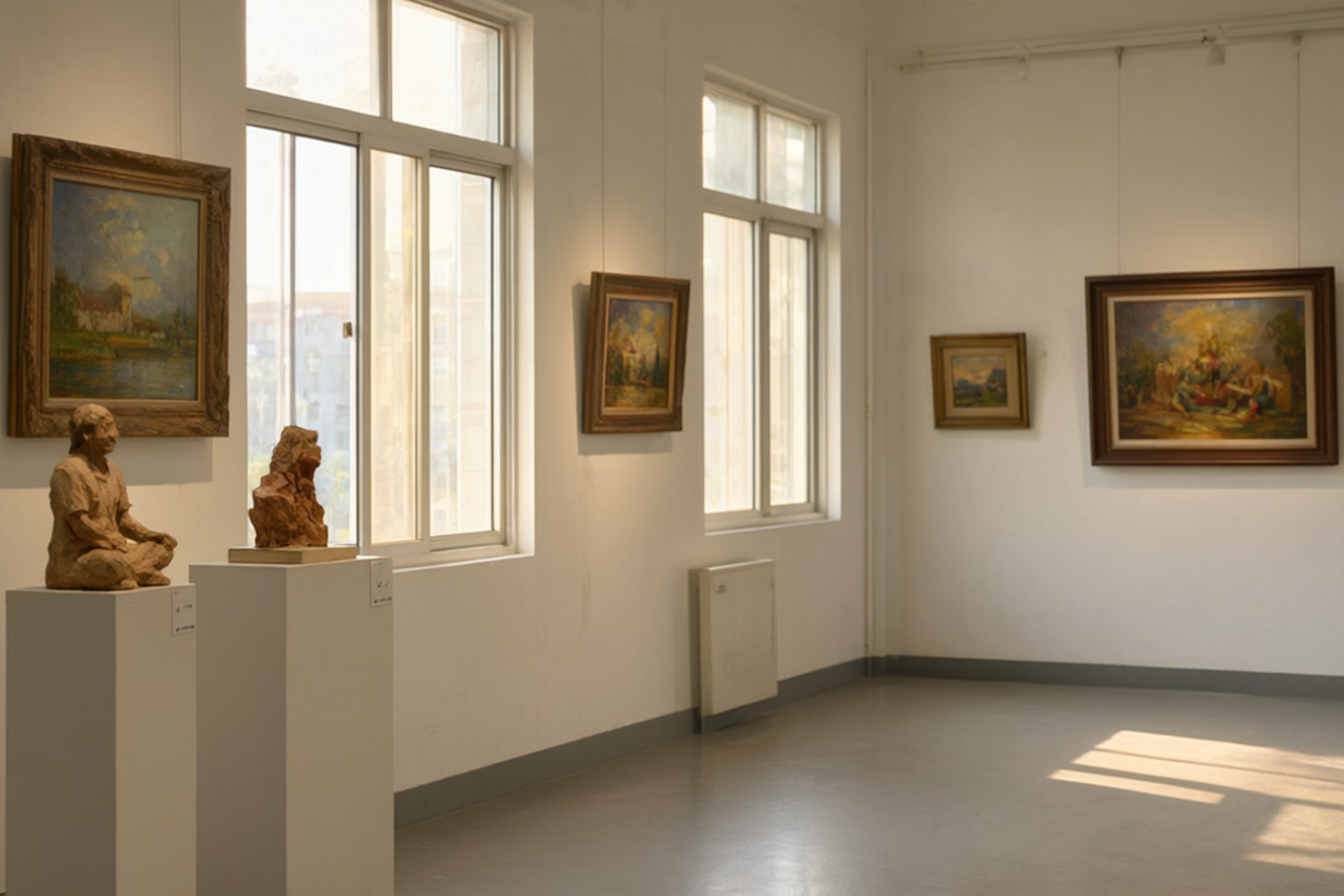
The county town holds the other half of the same trade, and it is where the money is made. 油画步行街 Yóu huà bù xíng jiē, the oil painting pedestrian street on 兴业路 Xīng yè lù, was laid out by the county government in January 2011 and runs about two hundred metres, the only scaled professional painting block in 海南. It has twenty-five galleries by the county’s latest count, or twenty-four shopfronts in the older ones, and fifty-six painters, or forty-eight painters and thirty workers, of whom eight are provincial art association members and one is national. It is open year-round and free, visitors walk in and watch painters work and can commission pieces, and in the first half of 2025 it drew nearly seventy thousand visitors. The county’s painting industry as a whole is seventy-eight painters and painting workers, twenty-seven related businesses turning over close to ten million yuan a year, more than two thousand orders and more than a hundred orders from abroad, with exports reaching Europe and the domestic trade going to Xiamen, Shenzhen, Beijing and Shanghai; a painter standing at his easel on the street told a reporter that in the village he could only sell through acquaintances and that on the street tourists watch him work and order on the spot. The county’s model has a name – create in the villages, trade in the county town, extend across the county – and it works through rent-free shopfronts and renovation subsidies to bring painters home, plus an art industry park, 自然之声艺术产业园 Zì rán zhī shēng yì shù chǎn yè yuán, built on public rental housing for incoming artists. Two plein-air bases, at 雨水岭 and 南熙村, serve the same population. A painter planning a week should know the light: the dry months from December to March are the clear ones and March, April, October and November give the steadiest working conditions, while from May to October the county takes 77 to 81 per cent of its annual rain, most of it in afternoon storms, and July to September is the typhoon window even in a district the province calls lightly affected.
What the Rooms Are Like
Nobody should arrive expecting a hotel, and the material is precise about the size of the gap. What exists on the site is a converted primary school, so a room is most likely a former classroom or a partitioned studio, with whatever bed, desk and storage the conversion put in, sharing whatever washing facilities the building has. The county’s own description of what the site offers stops at the phrase board and lodging, and beyond that sentence the record is silent: no room types, no rate, no photographs of beds. That silence is not a gap to be filled in with an invented guest room. It is the answer. If you are an artist, a sculptor or part of a study group, ask the tribe directly what a stay involves, what it costs and whether meals are included, and understand that you are asking to join a working community rather than to check into a property; if you are not, the practical version of this article is a day trip and a room in the county town. Whichever applies, two things are constant. This is Hainan’s wet interior, so the mosquitoes are industrious and long sleeves are sensible, and since 1 January 2023 the province’s hotels, guesthouses and homestays no longer put out single-use plastic items, so a toothbrush travels with you. There is also no published restaurant in the village, so plan on eating in 南吕镇 or back in town.
Practicalities
Price. The material carries no rate, no room count and no booking channel for the 乡野艺术部落 Xiāng yě yì shù bù luò at 咸六村 Xián liù cūn, and none should be inferred. What can be priced is the alternative, a room in 屯城镇 Tún chéng zhèn, which runs from about 68 yuan a night at the bottom of the market to about 604 at the top, with the working middle between about 130 and 200; and the 2011 figure for the village school’s output, which is not a price at all. The best time to come to paint or watch is the dry season from December to March, with March, April, October and November the steadiest light; May to October is the wet season and July to September the typhoon window. Treat every figure as a range and check the live rate.
Address. The village is 咸六村 Xián liù cūn in 南吕镇 Nán lǚ zhèn, 屯昌县 Tún chāng xiàn, on the 国道 224 and county road X380 running south out of 屯城镇, about 20 kilometres from the county town; the converted school and the tribe sit inside the village, the bamboo village 美鹤园村 is in the next township west, and the 油画步行街 yóu huà bù xíng jiē is in the county town on 兴业路 at the corner with 兴业横路.
Rooms. Ask the tribe in advance, not on arrival, whether it can take you, what a night costs, whether meals are part of it and for how long it prefers people to stay, because this is a residency and its rhythm is the painters’. Ask whether there is a bathroom in the building and what the water is like, since a converted village school is not a hotel conversion. Ask where you would eat, because the village has no documented restaurant and the nearest reliable food is in the township or the county town. Ask before photographing anything: several of these studios are a working artist’s private space, and the weekend classes for village children are not an attraction to be walked into. And ask what the plan has built so far, because the tribe is a project in progress and what is finished this year will differ from what was there last year.
Getting there. 屯昌县 Tún chāng xiàn has no passenger railway station – 屯昌站 is a proposed stop on the proposed central-line high-speed railway, still at the pre-feasibility stage – and 咸六村 has neither a station nor a tourist shuttle. The road route is the 海三高速 Hǎi sān gāo sù to the 屯昌 Tún chāng interchange, then the 国道 224 and the X380 south past 南吕镇 Nán lǚ zhèn; from 海口 Hǎi kǒu the promotional line says an hour and real driving is nearer two. The one public service that helps is the county route 屯昌 Tún chāng to 乌坡 Wū pō, licensed in 2026 to run along the 国道 224 and the X380 through 南吕镇 with a floor of six departures a day, which is a bus you can catch if the timing suits you and not one you can build a trip on. From 三亚 Sān yà the coach is about 216 kilometres and two and a half hours. A car or a hired car is the realistic answer.
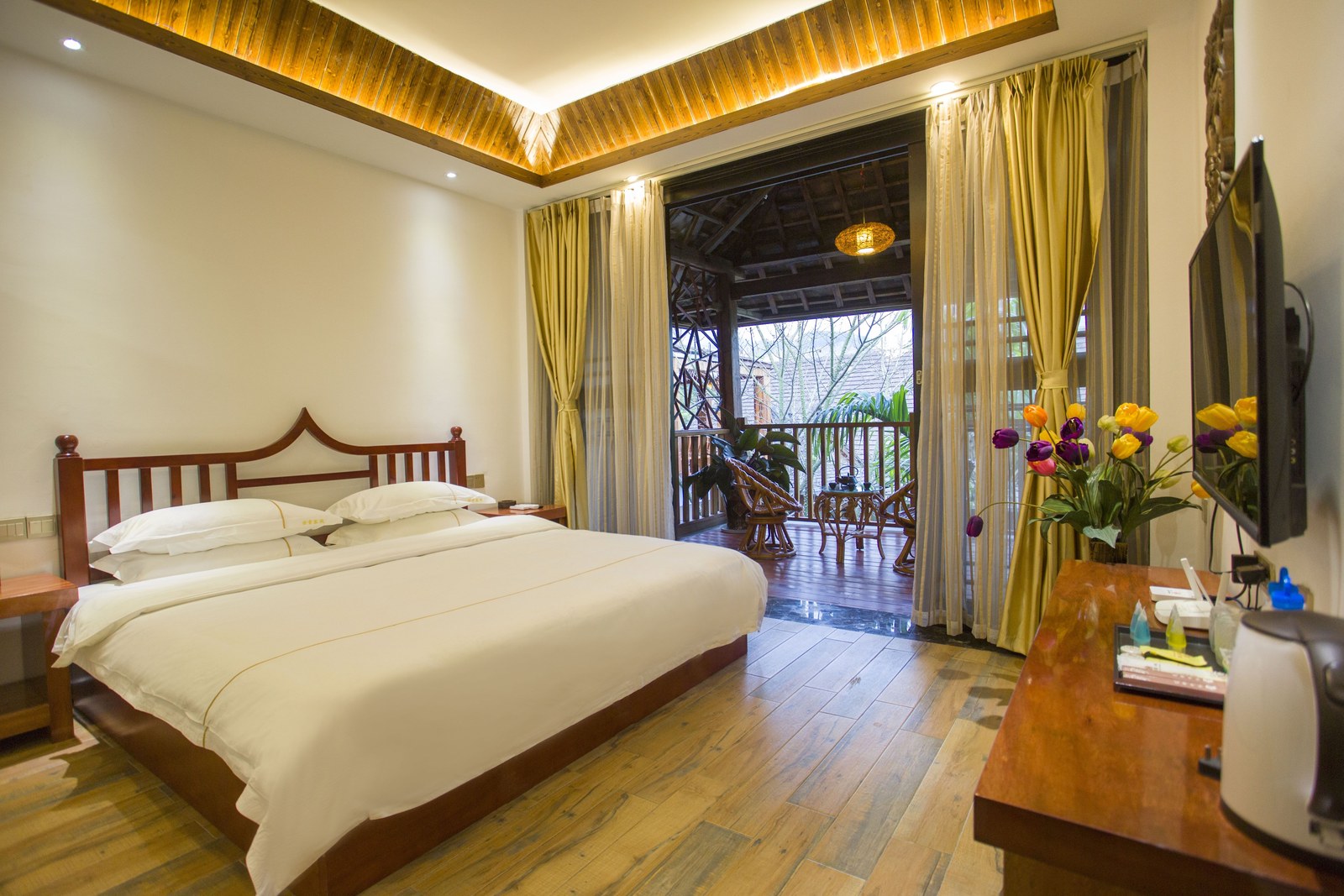
Where to stay: a room at the 乡野艺术部落 Xiāng yě yì shù bù luò in the old 咸六小学 Xián liù cūn xiǎo xué at 咸六村 Xián liù cūn, 南吕镇 Nán lǚ zhèn, 屯昌县 Tún chāng xiàn, if the tribe agrees to take you, and otherwise a room in 屯城镇 Tún chéng zhèn 20 kilometres north with the village as a day trip. Ask before you go, come in the dry months for the working light, walk the two hundred metres of the oil painting street while you are in town, and treat the visit as a look at a community rather than at an exhibition.
flowcloud would say that a village which spent thirty-six years sending six thousand painters out into the world and then let its own school stand empty for eight has finally worked out what the building was for – because the correct use of a village primary school is not a car park or a shop, and the correct way to sleep in one is to accept that the people who take you in are still, at this moment, moving the desks.