
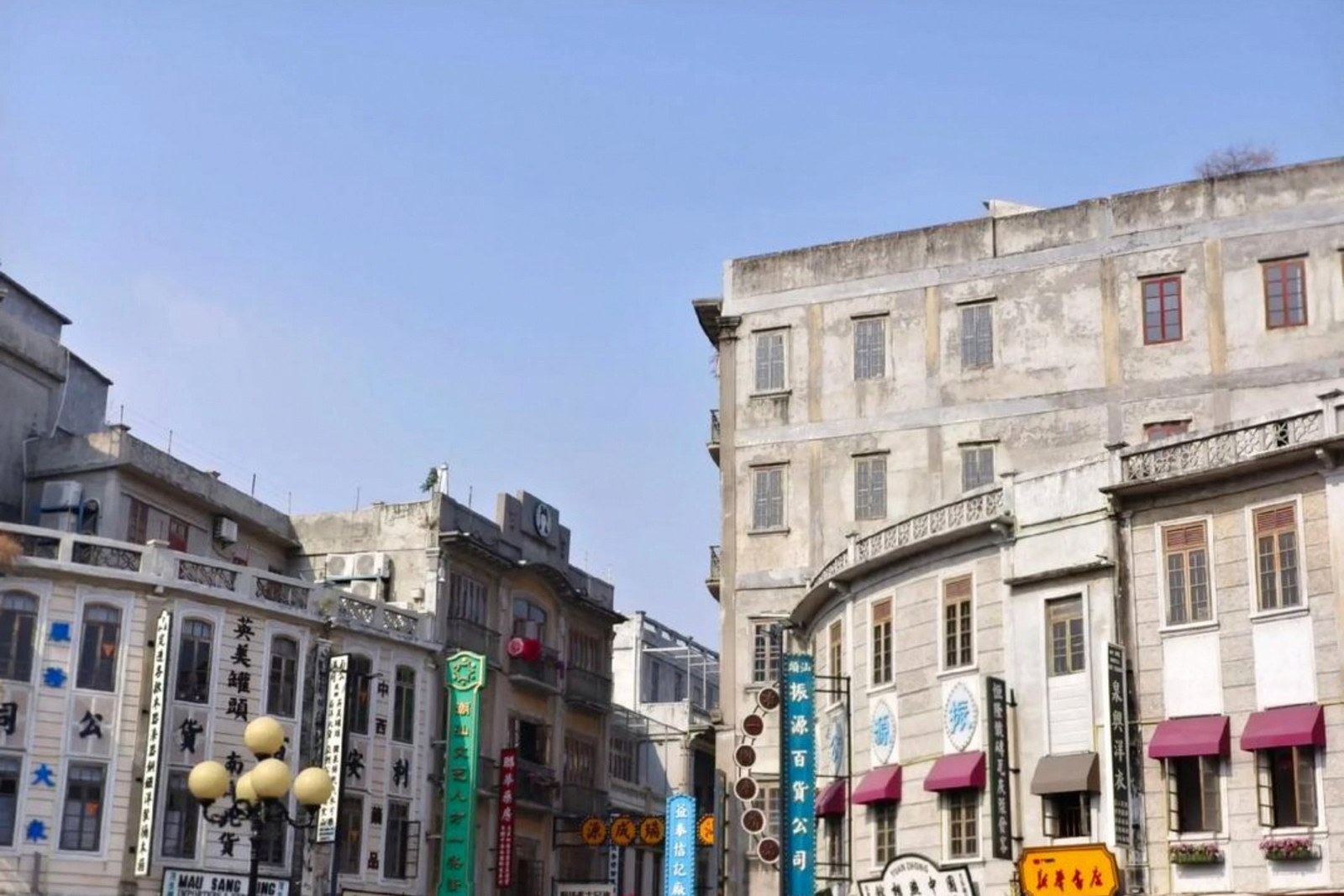
The room is on the upper floor of a colonial-era shophouse, and the way into it is along a covered walkway rather than a corridor. 小公园 Xiǎogōngyuán is the old commercial heart of Shantou, laid out in the 1920s and 1930s as a radial network of streets around a small park, and the buildings that line it are 骑楼 qílóu, arcade shophouses whose ground floors are set back behind a colonnade so that pedestrians walk under the buildings rather than past them. Several of these blocks have been restored, and a handful of houses have been converted into small guesthouses that keep the timber floors, the high ceilings, the shuttered windows and the walkway. Staying in one means sleeping inside the architecture the city is known for, in a room about four metres wide, with the life of the street happening directly below the window.
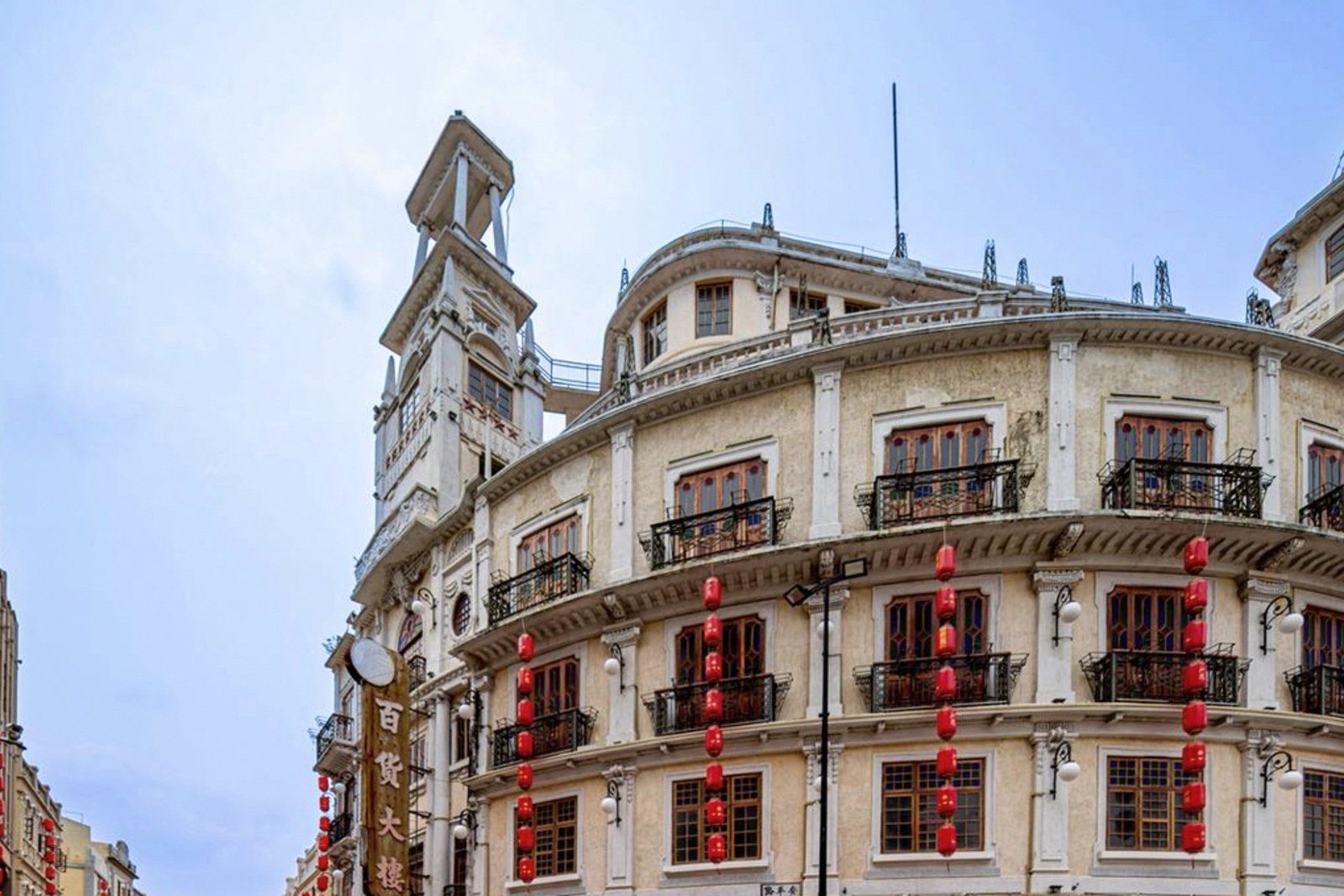
The district was built when Shantou was one of the busiest ports in southern China, and the money that paid for the arcades came from trade, from remittances sent home by emigrants in Southeast Asia, and from a merchant class that wanted a modern city with the density of an old one. The result was a grid of narrow shophouses, each plot one room wide and several rooms deep, arranged so that every ground floor opened onto a colonnade and every upper floor got light from the front and back. After decades of decline the area was restored in stages, and walking it now is a strange experience: a continuous run of colonial facades on both sides of the street, some finished, some still raw, with the colonnade doing exactly what it was designed to do, which is to keep the rain off the shoppers and the sun off the shopfronts.
What the Rooms Are Like
The shape of the building dictates everything. A shophouse floor is roughly four metres across, so rooms are narrow and deep; the front room looks onto the walkway and the street and takes all the noise and all the light, while the back room faces a light well or a blank wall and is quiet and dim. The good conversions have used the height rather than the floor area, keeping the tall ceilings, the timber floors and the original shuttered windows, and squeezing a bathroom into what was once a service space. The result can be beautiful and it can be eccentric, sometimes in the same room. Sound travels through timber, so a guesthouse above a shop that opens at six will wake you at six, and the walkway outside the window carries conversation until late. None of this is a defect of the building; it is the building working as intended.
Practicalities
Price. A double room runs roughly ¥200 to ¥500 a night depending on the house, the floor and the size of the window. The lower end buys a back room with no view and a bathroom assembled with more enthusiasm than skill; the upper end buys a front room with shutters onto the arcade and, in one or two houses, access to a small roof terrace above the colonnade. Rates are steadier here than at the waterfront hotels, and the high season is the winter, when the mainland comes south.
Address. The converted guesthouses cluster on and around 小公园 Xiǎogōngyuán itself and the radial streets that run off it, in 金平区 Jīnpíng Qū, a few minutes’ walk from 汕头市博物馆 Shàntóu Shì Bówùguǎn and the restored 中山纪念亭 Zhōngshān Jìniàntíng at the centre of the park.
Rooms. Ask which floor and where the window looks, because the answers differ more than the photographs suggest. A front room on the arcade is the whole experience and the whole noise; a third-floor room is quieter than a second; a room onto the light well is the only genuinely dark one, which matters if you want to sleep in. Ask whether the bathroom is en suite and whether the hot water is a boiler or a small heater, because a converted shophouse is not always generous with either. If the house has a roof terrace, ask whether it can be used at night.
Getting there. The old quarter is in the centre of 汕头市 Shàntóu Shì, walkable from most of the historic sites and about fifteen to twenty minutes by taxi from 汕头站 Shàntóu Zhàn, the railway station. 揭阳潮汕国际机场 Jiēyáng Cháoshàn Guójì Jīchǎng is around forty minutes by road. The old streets are narrow and largely one-way, so if you arrive by car, park in one of the lots off 海滨路 Hǎibīn Lù and walk in rather than trying to reach the door.
flowcloud would say that a room in the qilou is a room inside the colonnade rather than beside it, and that the noise from the arcade is not something the building failed to keep out but the very thing it was built to hold.
Where to stay: in a converted house on 小公园 Xiǎogōngyuán or one of the radial streets off it, on the second or third floor, with a window onto the arcade and, if the house has one, a claim on the roof terrace. Ask at booking whether the room faces the street or the light well, whether the shutters open, and whether the bathroom is en suite, because part of the pleasure of staying here is being able to close the shutters and part of the risk is finding that they do not move.