
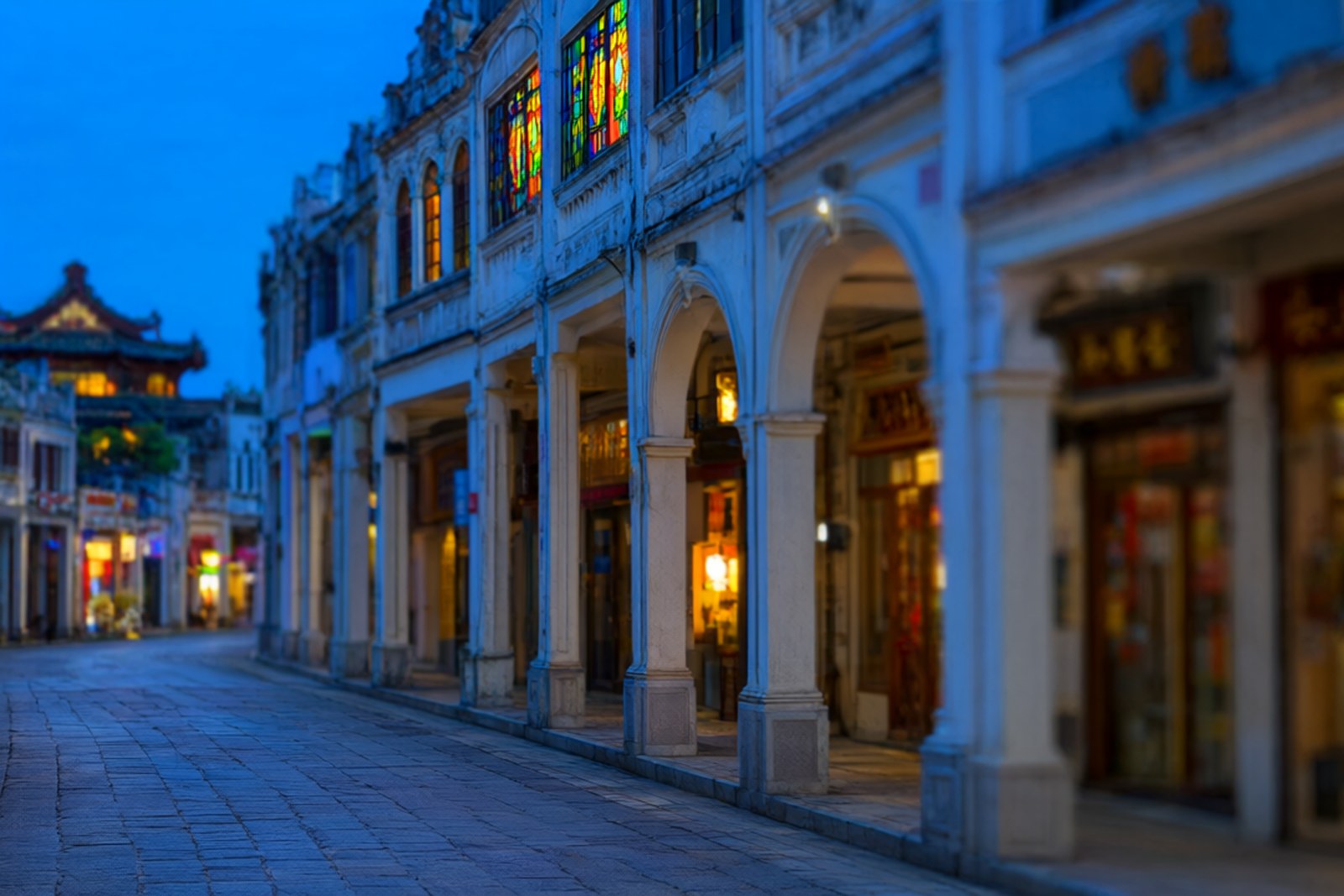
Guangzhou is the provincial capital of Guangdong in southern China, and its old west gate quarter – 西关 Xīguān, Xiguan, in 荔湾区 Lìwān Qū, Liwan District – is where this piece sleeps. 恩宁路 Ēnníng Lù, Enning Road, was laid out there in 1931, in the Republican era, and stands among the longest and most complete qilou arcade streets the city has left; along it runs 永庆坊 Yǒngqìng Fāng, Yongqing Fang, the 2016 micro-renovation that became the city’s sample for renewing an old quarter without demolishing it – a national 4A scenic area since 2020, with the city’s first intangible-heritage street, and on the first national list of tourism and leisure streets since 2022. This piece is about the beds inside that fabric: small minsu conversions in a working neighbourhood, where the street itself is the amenity.
The decade of argument behind those beds explains the mood. The Enning Road renewal project started in 2006; in 2007 the street entered the old-city redevelopment plan with every building in the planning area listed for demolition, clearance ran ahead of any detailed plan, and residents pushed back – the trade press records more than 180 households petitioning that year for a replan – and the project stalled. In December 2015 the Liwan district government picked the Yongqing block as its pilot; early in 2016 the city’s renewal measures established micro-renovation as the method, and in February 2016 the district tendered the restoration on a BOT basis, the winning developer taking eight months of building and fifteen years of operation. Phase one – about 8,000 square metres of the pilot block, about 65 million yuan invested – was completed at the end of September 2016 and opened to the public that autumn. In February 2017 sixty households sent a joint letter to the municipal people’s congress and the city government alleging the phase had cut procedural corners; in August 2018 the district answered with a co-creation committee for residents, experts and the operator. The two petitions – 180 households in 2007, sixty in 2017 – are two events eight years apart, and this piece keeps them apart.
Phase two, launched in August 2018, was the argument at ten times the scale: some 70,000 square metres of housing across eight sub-zones, about 1 billion yuan, boutique minsu planned among the offices and bars, open across the board by the end of 2020. The city evening paper’s 2021 report gives the critics and the officials the same page: expert committee members charged that most buildings outside the protected list had been demolished and rebuilt rather than repaired, and the paper recorded a house associated with the Cantonese opera singer Hong Xiannu, then on a draft protection list, torn down by the developer without approval. By 2025 the work had reached a third phase. The honest reading for a guest is that the argument about how to renew an old city is still audible between the opera rehearsals.
What a guest walks into is the quarter the listings describe: the three-horizontal, five-vertical lane fabric kept whole, 83 heritage buildings guarded and 26 intangible-heritage items counted across it by the provincial gazetteer office – the official figure for the quarter, beside a Xinhua report’s six for the street proper and the encyclopedias’ ten masters’ studios with thirteen workshops; different scopes, not merged here. More than 150 merchants trade in the lanes. Entry is free and the quarter stays open round the clock; heavy-oil-smoke cooking is barred, which is why the evening air smells of tea and rain rather than frying. Bruce Lee’s ancestral home – his father Li Haiquan’s house, Li Haiquan a great clown of Cantonese opera – stands on the lane, with the Qing-era Bahe Guild Hall of the opera’s performers and the Cantonese Opera Art Museum at 127 Enning Road, free performances daily against a reservation. Three areas are three different things: the pilot block of about 8,000 square metres, the tourism area of about 113,700 square metres that takes in the museum and the Liwan canal side, and phase two’s 70,000 square metres of housing.
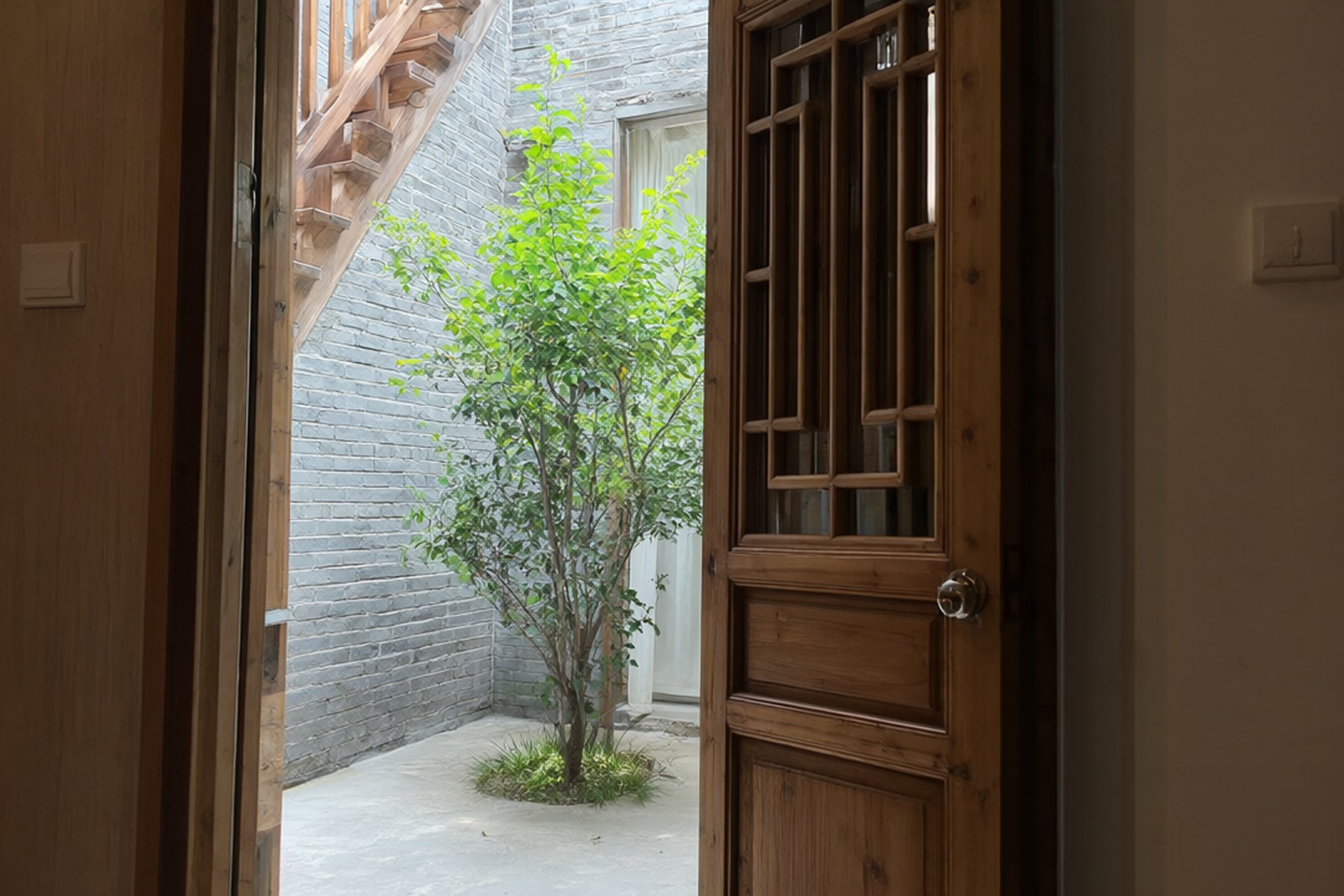
The beds are the point, and they are small. Nothing here is a hotel floor: the inventory is houses converted a door at a time – tanglong sliding timber gates, Manchu-style coloured glass windows, granite underfoot, a courtyard where the old plan put one. Phase one already mixed tea rooms with guest rooms; phase two planned boutique minsu into its brief; and the streets around Duobao, Baohua and Fengyuan roads and the Liwan canal hold family conversions and small boutique houses. In an October 2026 platform snapshot the old-town band ran from about 300 to 800 yuan a night, boutique above it, holidays and Canton Fair weeks above that; no single property is priced here, because no government or operator source confirms one.
Four boundaries place the piece. Dongshankou sleeps in detached 1920s villas set behind garden walls, built by officials and returned merchants; Xiguan sleeps inside the working old town – arcaded shophouses, shared walls and courtyards, where the room above your head has been a home since 1931. The White Swan is one address with five hundred rooms on Shamian island; the West Gate quarter is a hundred small addresses threaded through a living neighbourhood, and nobody watches your luggage for you. The Garden Hotel is the 1980s planting a twenty-one-thousand-square-metre Lingnan garden beside the ring road; Yongqing Fang is the same city deciding, thirty years later, to renovate one alley at a time. Against this batch’s Canton Tower piece: that one buys altitude on the new axis; this one sleeps at ground level in the arcade city.
What the Rooms Are Like
Expect a room inside a house that predates the booking platform: a bed over a courtyard or up an arcade stair, windows of coloured glass, a gate you slide rather than a door you swipe. Exact room counts and opening years for individual properties are not confirmed in government or operator sources, so treat any precise figure as the platform’s own. Three checks earn their cost: which lane the door actually stands on – navigate it rather than trusting the listing map; whether breakfast exists at all, since many of these are self-service houses; and whether the room is reached by a narrow stair with luggage.
Practicalities
Price. In an October 2026 platform snapshot the old-town band ran from about 300 to 800 yuan a night, boutique conversions above it and holidays and Canton Fair weeks above everything; every figure floats.
Address. 广州市荔湾区恩宁路一带 Guǎngzhōu Shì Lìwān Qū Ēnníng Lù Yīdài, the Enning Road area, Liwan District, Guangzhou – the main entrance of Yongqing Fang stands around 99 Enning Road, the guesthouses scatter along Enning, Duobao, Baohua and Fengyuan roads and the Liwan canal lanes.
Rooms. Small minsu conversions of old houses – courtyard rooms, arcade-floor rooms and whole-house rentals, with tanglong gates, Manchu-style coloured glass and granite paving – plus a boutique tier; room counts and opening years are not confirmed in government or operator sources.
Getting there. Metro 黄沙 Huángshā, Huangsha, on Lines 1 and 6, and 陈家祠 Chénjiācí, Chenjiaci, on Lines 1 and 8, are the usual drops, each an honest walk from the lanes; the middle of Enning Road is about ten minutes on foot from the nearest station by the platform’s measure – navigate on the day. The quarter is free and open round the clock; the opera museum is free with a reservation.
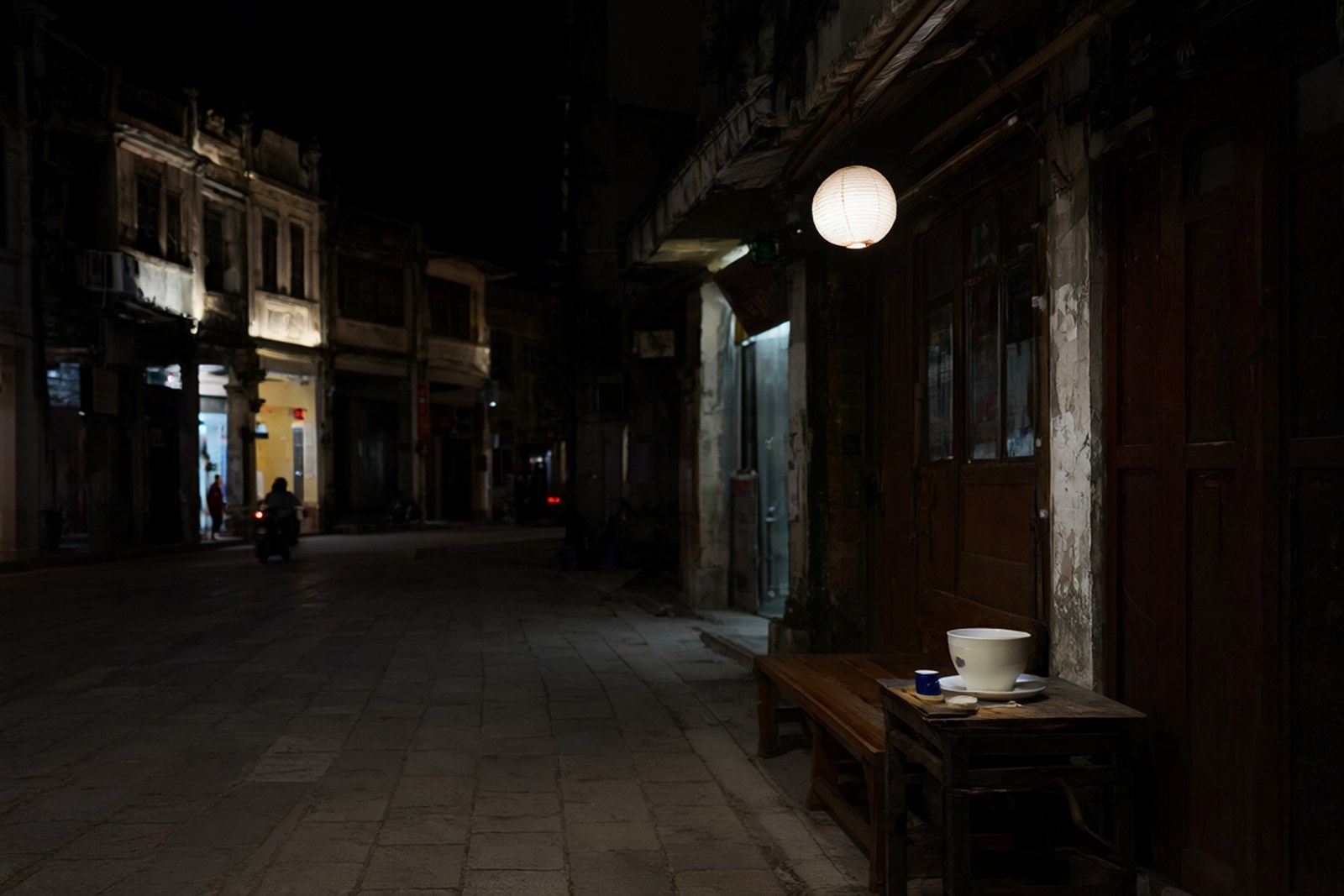
Where to stay: a courtyard room behind Enning Road from about 500 yuan if the lanes and the opera are the point, an arcade-floor room out towards Duobao Road from about 300 if the budget is the point, and a whole-house rental if the family is – because in 西关 Xīguān, Xiguan, you are renting a bed inside a living street, not a hotel beside one.
flowcloud would say that the micro-renovation is the amenity – that the correct way to sleep in Xiguan is in a room small enough to have survived every argument about the street it stands on, with the opera rehearsals for a lullaby.